An introduction.
Researched by the Audiala editorial team from historical records, architectural archives, and local expertise.
TThe most French building in Valletta, Malta, is the one that no longer exists — and the one that does exist, most people walk past without a second glance. The Auberge de France is actually two buildings, separated by eighteen years of construction and four centuries of confusion, and understanding the difference between them is the key to understanding how Valletta remembers and forgets its own past. Come here not for a grand façade but for a ghost story written in limestone.
The second Auberge de France — the one tourists look for — was obliterated by a German bomb in April 1942. Its site on South Street now holds the Workers' Memorial Building, a 1960s concrete block that serves as the General Workers' Union headquarters. There is no plaque, no interpretive panel, nothing to tell you that one of the Order of St. John's great residences once stood on this ground. The erasure is total.
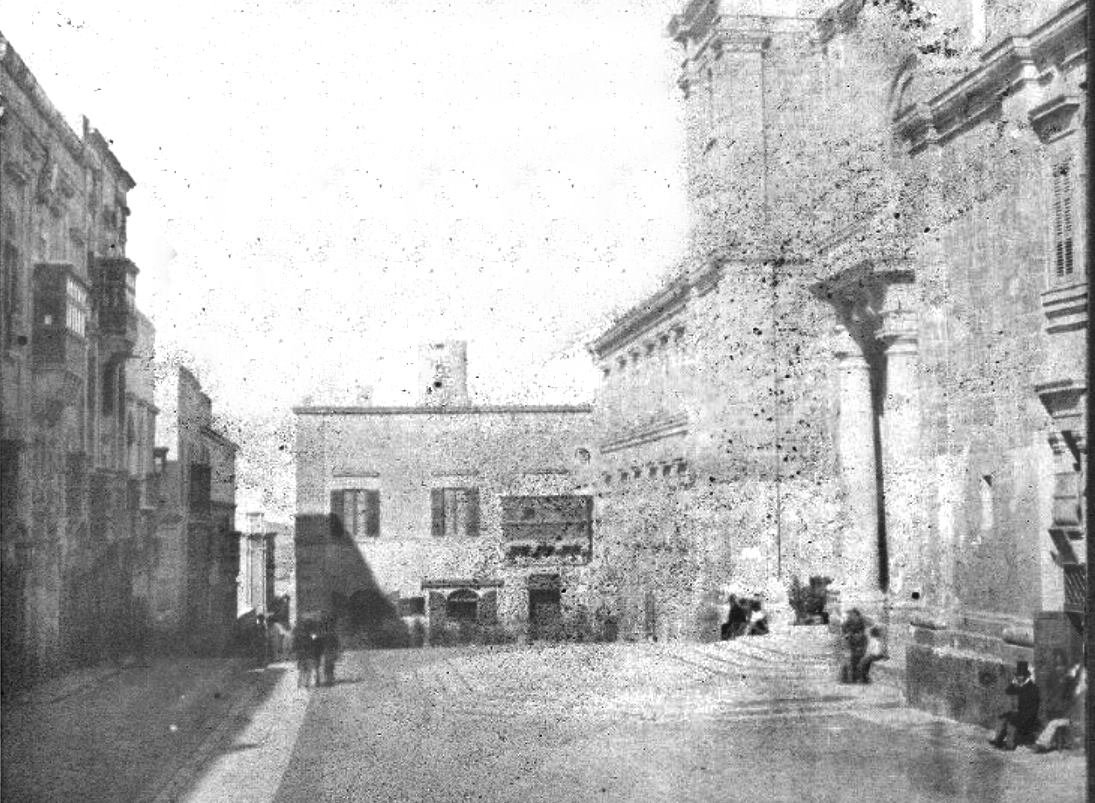
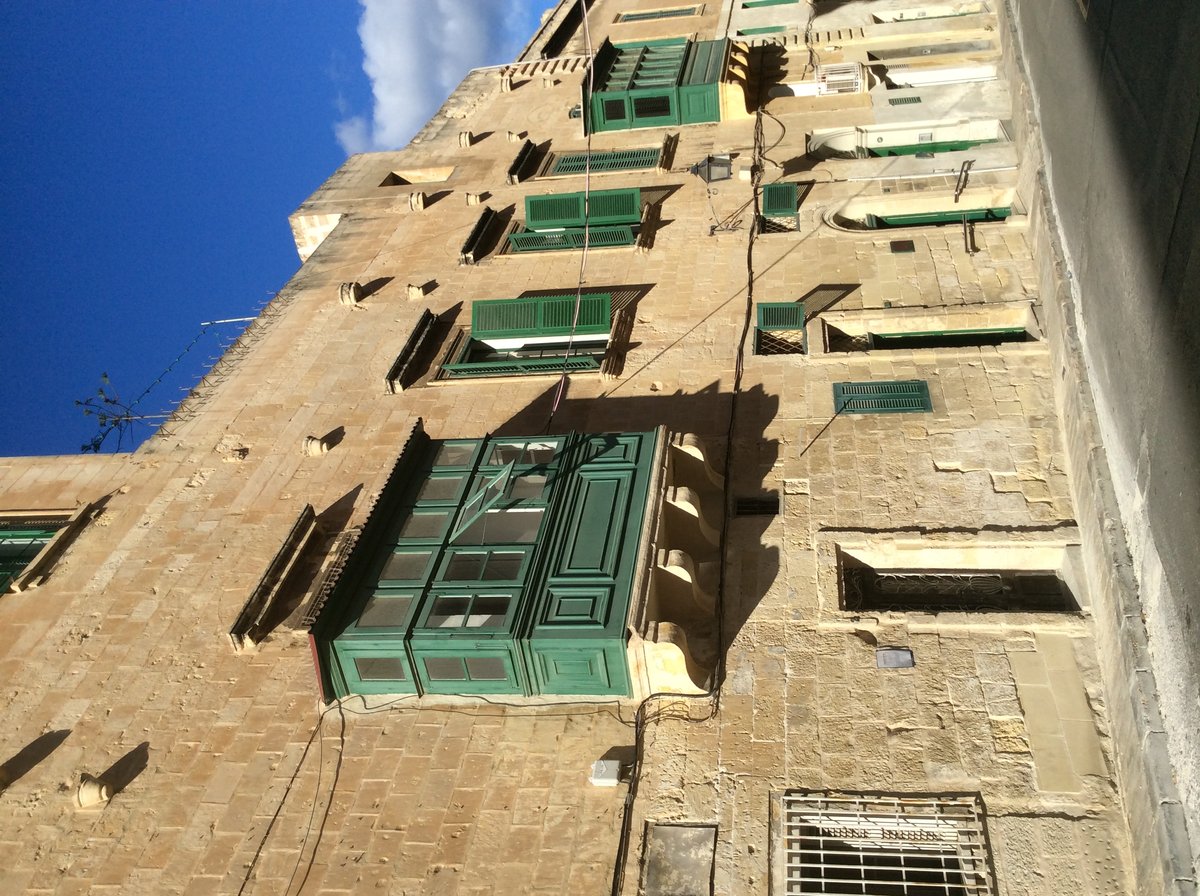
But the first Auberge de France, built around 1570 on Old Mint Street, still partially survives. Its façade retains four original windows and a rusticated pilaster. Inside, behind what appears to be an unremarkable commercial ground floor, a groined vault carries a carved fleur-de-lis on its keystone — the heraldic lily of France, embedded in the ceiling for over 450 years. Almost nobody knows it's there.
Visiting both sites takes about fifteen minutes on foot. The distance between them — roughly 200 meters, shorter than two football pitches — is the distance between a building that history swallowed whole and one that history simply forgot.
01 What to see.
The Surviving Façade on Old Mint Street
The Workers' Memorial Building and Its Plaque
A Walk Between Ghosts: Old Mint Street to South Street
02 In pictures.

Plan and listen to Auberge De France with Audiala.
Audio guide in your pocket, itinerary in your browser. Built for the way you actually visit.
03 Visitor logistics.
The practical scaffolding for a good visit — kept short.
Getting There
Every bus route in Malta terminates at Valletta Bus Terminus, just outside City Gate. From there, walk down Republic Street, turn right onto Old Theatre Street, and continue to Old Mint Street — about 10 minutes on flat ground. From Sliema, the ferry (€2 single, 15 minutes) lands at the Grand Harbour waterfront; take the Barrakka Lift up (€1) and walk 10 minutes north. Driving into Valletta is a bad idea — park at MCP Car Park in Floriana (~€10/day) and walk in.
Opening Hours
As of 2026, there are no opening hours because there is no building to enter. The surviving façade of the first Auberge de France lines public streets — Old Mint Street, South Street, Scots Street, Windmill Street — accessible 24/7, year-round, free. The Workers' Memorial Building on the bombed second Auberge's site is a trade union office (Mon–Sat 08:30–17:30), but its commemorative plaque is visible from the pavement at any hour.
Time Needed
A focused visit — photographing the surviving Mannerist façade on Old Mint Street and reading the plaque on the Workers' Memorial Building — takes 10 to 15 minutes. This is not a standalone destination. Fold it into a Valletta walking circuit that includes the Auberge de Castille (5 minutes away), St. John's Co-Cathedral (3 minutes), and Upper Barrakka Gardens (8 minutes) for a full half-day.
Accessibility
The streets around the Auberge de France sit on relatively flat terrain near the centre of Valletta's grid — no steep slopes here. Some uneven limestone paving and cobblestones on side streets may require assistance for wheelchair users. Polished Maltese limestone becomes dangerously slippery when wet, so rubber-soled shoes matter more than you'd expect.
04 Tips for visitors.
Small things that change the day.
Watch Your Pockets
Valletta is one of Malta's top pickpocket hotspots, with organized gangs targeting tourists using distraction techniques at bus stops and busy streets. Keep bags zipped and in front of you, especially on Republic Street and around the bus terminus.
Old Mint Street Shot
Stand at the top of Old Mint Street for the famous U-shaped slope with the Carmelite Church dome floating above the roofline — Trip.com ranks it among Malta's top five sights, and it's 30 seconds from the Auberge façade. Cars still use this street, so watch your back while framing.
Eat Like a Local
Trabuxu Bistro (8 South Street, literally 50 metres from the Workers' Memorial Building) does excellent Mediterranean food at mid-range prices. For the real Valletta breakfast, grab a 50-cent pastizz from Jeff's Pastizzeria on Merchants Street — cash only, open from 5am, gone by early afternoon.
Combine the Auberges
Valletta once had eight auberges for the Knights' different langues — three survive intact. After the Auberge de France façade, walk five minutes to the Auberge de Provence (now the National Museum of Archaeology, housing Malta's 5,000-year-old 'Sleeping Lady' figurine) and then to the Baroque Auberge de Castille, the grandest of all, now the Prime Minister's office.
Best Light, Fewer Crowds
Old Mint Street faces roughly north-south, so morning light catches the upper limestone façade beautifully while the street is still quiet. By midday in summer, the narrow streets become shadowed canyons — atmospheric, but harder to photograph.
Know the Two Buildings
Tourists often confuse the two Auberges de France in Valletta: the partially surviving first one (c. 1570, Old Mint Street) and the completely destroyed second one (bombed 8 April 1942, now the GWU Workers' Memorial Building on South Street). The plaque on the 1960s office block is the only acknowledgment that one of the Knights' finest palaces once stood there.
05 Two Buildings, One Name, and the Architect Who Couldn't Keep His Secrets
The Knights Hospitaller arrived in Malta in 1530, granted the archipelago by Holy Roman Emperor Charles V. They settled first in Birgu, where they built an auberge for the French Langue around 1533. After repelling the Ottoman siege of 1565 — four months of bombardment that killed roughly a third of the defenders — Grand Master Jean de Valette founded a new fortified capital on the Sciberras Peninsula. The Italian military engineer Francesco Laparelli drew the grid plan. A Maltese-born master builder named Girolamo Cassar would construct nearly everything on it.
By 19 July 1570, records show the French Langue had acquired a site of 572 square canes on what is now Old Mint Street. Cassar designed the first Auberge de France here. But the French knights were ambitious and dissatisfied. By 1588 they had commissioned a larger, grander building on South Street — absorbing the existing house of a French knight named Bali Fra Christopher le Bolver dit Montgauldry. That second auberge would stand for 354 years before vanishing in a single afternoon.
Girolamo Cassar: The Tradesman Who Built a City and Buried His Past
Girolamo Cassar was born around 1520 into a family of Sicilian immigrant craftsmen — a capomastro, a master builder, not a nobleman. He had no birthright to greatness. During the Great Siege of 1565, he repaired fortifications under Ottoman cannon fire, sometimes at considerable personal risk. When Laparelli left Malta in 1569, Cassar — a local tradesman in an institution run by European aristocrats — inherited the commission to build an entire capital city. On 22 April 1569, the Grand Master formally received him into the Order of St. John and issued him a passport to study architecture in Naples, Rome, and Lucca. He returned and designed everything: St. John's Co-Cathedral, the Grandmaster's Palace, all seven original auberges, the Sacra Infermeria. Both Auberges de France were his.
What the official histories rarely mention is the chaos of his private life. Cassar's first marriage, to Isabella de Torres, ended when he claimed it was never consummated — a probable act of perjury, according to historian Joan Abela's 2007 study in Melita Historica. He then entered a relationship with Matthia Cassia, a young woman from an impoverished noble family who had been widowed at twelve and prostituted as a teenager by a procurer from Żebbuġ. They had five children before they could legally marry. In his 1589 will, Cassar disinherited his out-of-wedlock son Gio Domenico, writing that the boy was "consistently disobedient and rebellious." The man who built the sacred buildings of a celibate military order was living a life of spectacular domestic irregularity.
His death is unrecorded. The second will, dated 9 January 1589, is the last firm trace. He is believed to have died around 1592 and was buried in the Church of Porto Salvo in Valletta. No grave marker survives. The architect of the city has no monument in it.
From Auberge to Mint to Memory
Easter Sunday, 1942
Listen to the full story in the app
The whole Auberge De France,
told well.
Listen to sourced travel stories with local history and practical context — ready offline.

06 Frequently asked.
The questions travellers send us most about Auberge De France.
Is the Auberge De France in Valletta worth visiting?
That depends on what you mean by 'visiting' — there's no building to walk into. The famous second Auberge de France was flattened by a German bomb on 7–8 April 1942, and a 1960s trade union office block now stands on the site. What does survive is the façade of the first Auberge de France (built c. 1570 by Girolamo Cassar) on Old Mint Street — four original Mannerist windows, a rusticated corner pilaster, and flagpole brackets for the French Langue's standards, all hiding in plain sight among ordinary residential buildings. If you're the kind of traveller who finds an absence as powerful as a presence, the commemorative plaque on the Workers' Memorial Building calling the lost auberge 'one of the finest buildings of the Knights of St. John' will stop you cold.
Can you visit the Auberge De France in Valletta for free?
Yes — it's entirely free because everything you can see is on public streets, accessible 24 hours a day. The surviving façade of the first Auberge de France lines Old Mint Street, and the commemorative plaque on the Workers' Memorial Building faces South Street. No tickets, no gates, no opening hours.
What happened to the Auberge De France in Valletta?
The second Auberge de France — the larger, grander one on South Street — was destroyed by a German heavy-calibre bomb during the devastating Easter raids of April 1942, when 156 Junkers and Stukas dropped 280 tons of explosives on Valletta in a single afternoon. The Royal Opera House, the Governor's Palace, and dozens of other buildings were wrecked in the same attack. The site stood empty until the 1960s, when the General Workers' Union built its headquarters there. The first, older Auberge de France (c. 1570) on Old Mint Street partially survives — most of its façade is still standing, though its main doorway is gone and the interior isn't accessible to the public.
How do I get to the Auberge De France from Valletta Bus Terminus?
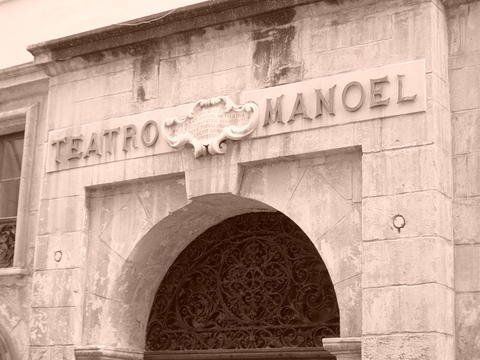
Walk about 8–12 minutes from the Valletta Bus Terminus at City Gate. Head down Republic Street for roughly 500 metres, turn right onto Old Theatre Street past the Manoel Theatre, then follow Old Mint Street — the surviving first Auberge de France façade is at the block bounded by South Street, Scots Street, and Windmill Street. The Workers' Memorial Building (site of the destroyed second Auberge) is about 100 metres further along South Street at the corner of Old Bakery Street.
How long do you need at the Auberge De France in Valletta?
Fifteen to twenty minutes is enough to walk the four streets bounding the surviving façade, photograph the Mannerist stonework, and read the plaque on the Workers' Memorial Building. This isn't a standalone destination — it's best folded into a broader Valletta walk that includes the Auberge de Castille (5 minutes away, the grandest surviving auberge) and St. John's Co-Cathedral (3 minutes away, with two Caravaggios inside).
What should I not miss at the Auberge De France in Valletta?
Three things most visitors walk straight past. First, the flagpole brackets on the Old Mint Street façade — the original supports where the standards of the Langue of France and the Religion once flew, still bolted to the stone after 450 years. Second, the commemorative plaque on the Workers' Memorial Building on South Street, which is the only public acknowledgment that one of the Order's finest buildings once stood on that spot. Third, the street name itself: 'Old Mint Street' (Triq iz-Zekka) records the fact that the Order's coin mint operated inside the abandoned first Auberge from 1604 to 1788.
What is the best time to visit the Auberge De France in Valletta?
Late afternoon, when the sun hits the Globigerina limestone and turns the surviving façade from pale cream to deep honey-gold — the same stone that looks almost bleached at noon glows amber by 5 PM. Old Mint Street runs roughly north-south, so the western-facing walls catch the best light in the hours before sunset. Avoid midday in summer: the narrow streets trap heat, and the limestone reflects glare with real intensity.
Are there two different Auberge De France buildings in Valletta?
Yes, and the confusion between them is the most common mistake in guidebooks about this site. The first Auberge de France (c. 1570) was built on Old Mint Street and partially survives today — its façade, windows, and corner pilaster are still visible. The second Auberge de France (built after 1588, about 100 metres away on South Street) was the grander replacement — and was completely destroyed by German bombing in April 1942. A third Auberge de France also exists in Birgu across the Grand Harbour, built c. 1533, now serving as Birgu's city hall.
Verified, and shown.
Researched and written by the Audiala editorial team from historical records, architectural archives, and local expertise.
Primary reference for the history, architecture, and destruction of both first and second Auberges de France in Valletta, including construction dates, architect attribution, and WWII bombing details.
History and current status of the Birgu Auberge de France, including its post-Knights uses and transfer to Birgu Local Council.
Biography of the architect who designed both Valletta Auberges de France, including his training, Italian tour, personal life, and attributed buildings.
Primary academic source confirming the surviving features of the first Auberge de France, including the groined vault with fleur-de-lis boss, based on original notarial records and on-site examination by Chev. Vincenzo Bonello.
Detailed architectural notes on all Maltese auberges, including the asymmetrical façade of the second Auberge de France and the incorporation of Fra Montgauldry's house.
Detailed wartime diary entry with photograph of the destroyed Auberge de France, documenting Air Raid No. 2013 and the Easter Sunday bombing of Valletta.
Retrospective account of the April 1942 bombing raids, including eyewitness descriptions of Valletta's destruction.
Peer-reviewed academic paper on Girolamo Cassar's personal life, including his disputed first marriage and relationship with Matthia Cassia.
Detailed account of Cassar's family scandals, including his disinherited son and domestic irregularities.
Current visitor information including 24/7 accessibility, free admission, and site status as of 2025.
Current bus routes, fares, and schedules for reaching Valletta from across Malta.
Confirmed address and contact details for the Workers' Memorial Building on South Street.
Geological and physical properties of the limestone used in all Valletta's historic buildings, including porosity, colour variation, and fossil composition.
Academic analysis of Cassar's Mannerist architectural vocabulary, including rustication, moulding profiles, and courtyard plans.
History of the GWU, its founding in 1943, political associations, and the Workers' Memorial Building.
Traveller reviews and photographs of Old Mint Street, including its ranking as a top Malta attraction and the 'Inception street' nickname.
Built from cited sources · see the method · How we make our guides →