Historical Background and Architecture
Origins and Establishment
The Malay and Islamic World Museum was established to highlight the intertwined histories of the Malay Archipelago and Islamic civilization. Housed in Bastion House—a colonial building constructed in 1910 for the Dunlop rubber company—the museum’s adaptive reuse reflects Melaka’s layered history, blending colonial architecture with Malay-Islamic aesthetics (Wikipedia; visitmelaka.com.my).
The museum’s mission is to showcase the arrival and spread of Islam in the Malay Peninsula, Melaka’s prominence as a trading hub, and the resulting cultural, religious, and artistic developments.
Architectural Features
Bastion House itself is an architectural highlight, featuring a rectangular design, deep slanted roofs, and large windows—classic elements of British colonial architecture. The museum’s interior is thoughtfully arranged to guide visitors through the evolution of Malay and Islamic cultures, with galleries flooded by natural light and adorned with traditional motifs (Academia.edu).
Exhibitions include models and images tracing the development of mosque architecture, from vernacular timber mosques influenced by Hindu-Buddhist traditions to grand stone structures incorporating Middle Eastern, Chinese, Indian, and European elements. This architectural synthesis demonstrates the region’s openness to external influences while retaining a distinct local identity (GoMelaka.my).
Museum Collections and Exhibitions
Permanent Collections
Manuscripts and Written Heritage
Explore rare Qur’anic manuscripts and documents in Jawi script, legal texts, and treatises that chronicle the spread of Islam and the evolution of Malay governance, law, and literature (The Star).
Ceramics and Porcelain
The museum’s ceramics collection showcases the Malay world’s role as a maritime trade hub, featuring Chinese porcelain with Arabic inscriptions and pottery from India, China, and the Middle East, reflecting centuries of cross-cultural exchange (IAMM).
Textiles and Songket
Admire handwoven limar songket (silk and gold-threaded fabrics) alongside batik and other traditional textiles, which serve as cultural markers and ceremonial attire in Malay society (The Star).
Arms and Armour
View traditional weaponry, including kris daggers, spears, shields, and helmets that exhibit intricate Islamic and cross-cultural motifs (The Star).
Architectural Elements
Notable exhibits include a 19th-century gebyok (wooden façade) with Islamic motifs and scale models of historical mosques, such as the Kampung Laut Mosque (The Star).
Coins, Seals, and Trade Artefacts
Discover coins, royal seals, and trade items that underscore the region’s economic history and participation in the global spice trade (The Star).
Jewellery and Personal Adornments
The museum showcases gold and silver jewellery, headpieces, and brooches, many of which were worn during royal ceremonies and reflect the cultural and religious identity of the Malay world (IAMM).
Special and Temporary Exhibitions
"Oceans That Speak: Islam and the Emergence of the Malay World" (Until June 15, 2025)
This flagship exhibition examines the role of maritime trade in the spread of Islam, featuring over 100 artifacts from across the region. Highlights include early Qur’anic manuscripts, luxury textiles, weapons, architectural models, and trade goods from Malaysia, Indonesia, Brunei, Singapore, Thailand, the Philippines, China, India, Saudi Arabia, and Turkey (The Star).
Interactive programs include Jawi script workshops, lectures on Malay maritime heritage, guided tours, and sessions with researchers.
Visitor Information
Visiting Hours and Tickets
- Hours Daily, 9:00 AM – 5:30 PM (last admission at 5:00 PM); closed on major public holidays.
- Admission RM2 for adults, RM1 for children under 12. Discounts may be available for students and seniors (HalalTrip).
- Guided Tours Available on request; book in advance for the best experience.
Location and Accessibility
- Address Bastion House, Jalan Museum, Tanjung Kling, Melaka.
- Getting There Accessible via car, taxi, or local buses. Malacca International Airport is 10 km away (HalalTrip).
- Accessibility Wheelchair access is limited due to the building’s colonial design. Contact the museum in advance for assistance.
- Parking Ample parking is available nearby.
Facilities and Services
- Restrooms and Prayer Spaces Basic facilities provided; prayer rooms are available inside, and several mosques are nearby.
- Photography Allowed (no flash or tripods); seek permission before photographing staff or other visitors.
- Language Exhibit information is available in Malay and English.
- Dining No on-site café, but halal restaurants like Pak Halim Corner and Restoran Taj are close by (HalalTrip).
Experiences and Practical Tips
- Visit Early Arrive in the morning to avoid crowds.
- Combine Attractions Plan to visit neighboring historical sites for a full cultural experience.
- Dress Modestly Cover shoulders and knees, especially if visiting mosques.
- Stay Hydrated Bring a reusable water bottle; filtered water is widely available (Curious Goose Travel).
- Learn Local Phrases Simple Malay greetings like "salaam" or "terima kasih" are appreciated (Travellers Elixir).
- Safety Malacca is generally safe; exercise standard travel precautions.
- Payment Bring small denominations of cash for entrance fees and small purchases.
Nearby Attractions
The museum’s central location makes it an ideal starting point to explore other Melaka landmarks:
- Malacca Sultanate Palace
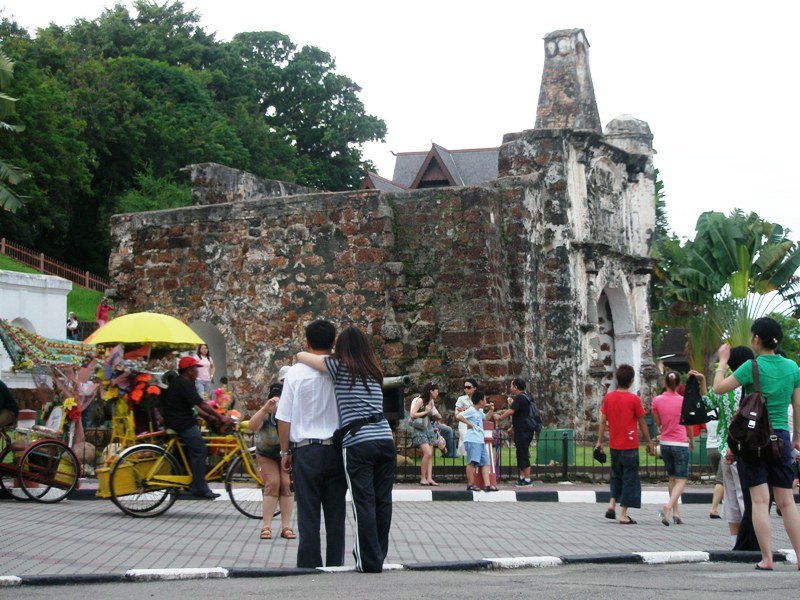
- A’Famosa Fort
- Cheng Ho Cultural Museum
- Baba and Nyonya Peranakan Museum
- Kampung Kling Mosque
- Malacca Straits Mosque
- Jonker Walk Melaka (GoMelaka.my; HalalTrip)
Frequently Asked Questions (FAQ)
What are the museum’s visiting hours?
Daily, 9:00 AM – 5:30 PM (last admission at 5:00 PM).
How much are the tickets?
RM2 for adults, RM1 for children under 12.
Is the museum wheelchair accessible?
Access is limited; contact in advance for assistance.
Are guided tours available?
Yes, by prior arrangement.
Can I take photographs inside the museum?
Yes, but no flash or tripods; request permission when photographing people.
Are prayer facilities available?
Yes, with several mosques nearby.
Are there food options nearby?
Many halal dining choices are available in the vicinity.