Plan and listen to National Textile Museum with Audiala.
Audio guide in your pocket, itinerary in your browser. Built for the way you actually visit.
Introduction
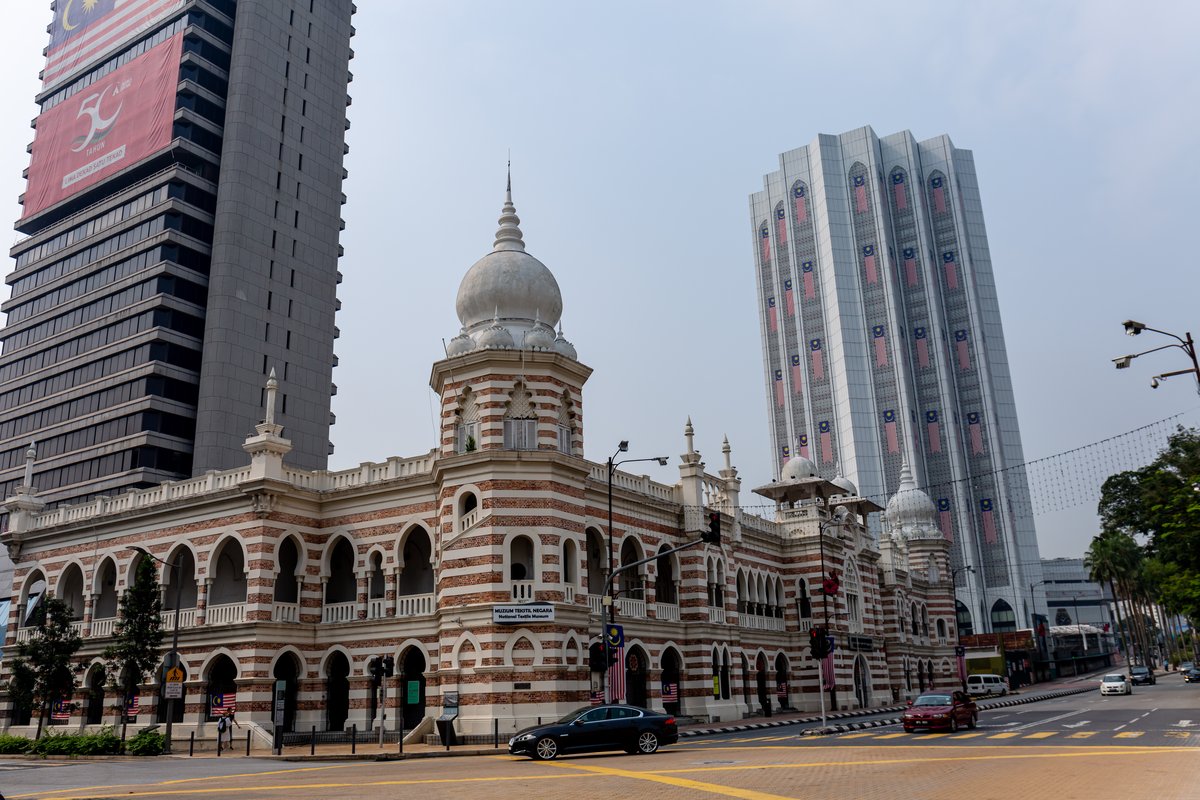
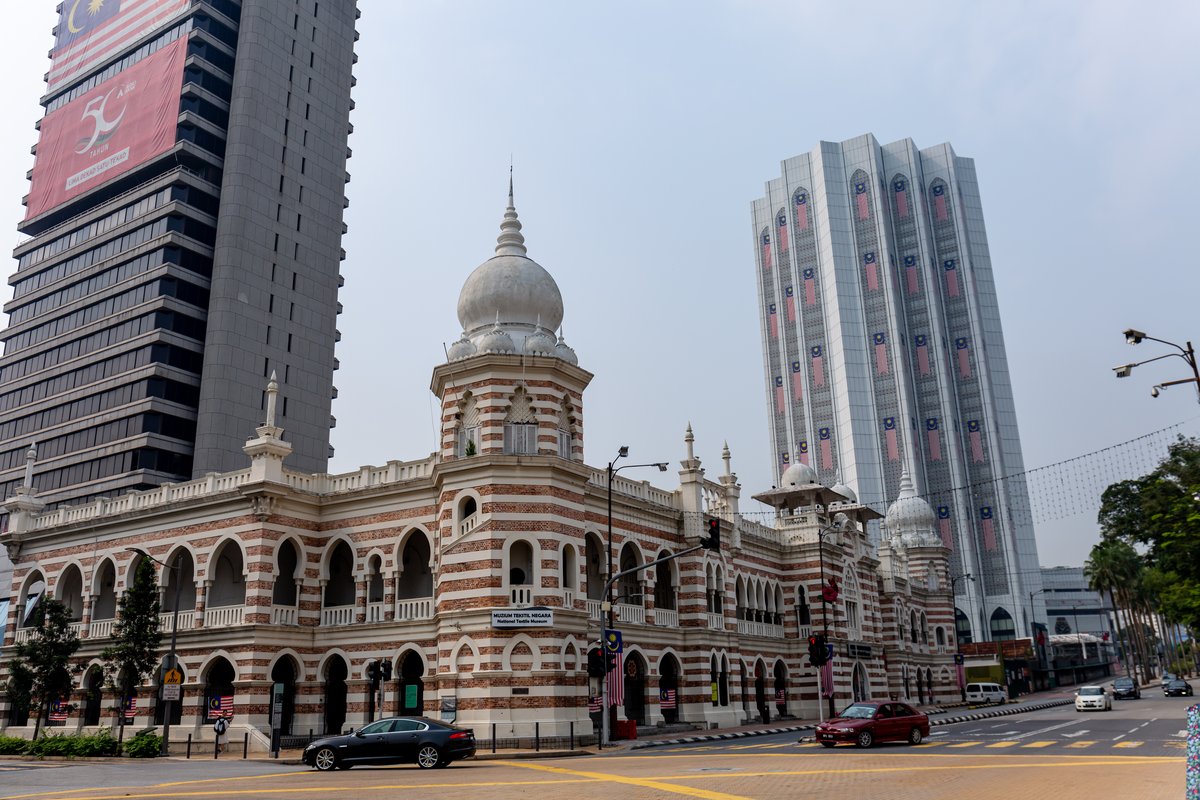
Located in the vibrant heart of Kuala Lumpur, the National Textile Museum (Muzium Tekstil Negara) stands as a testament to Malaysia’s rich textile traditions, colonial history, and architectural grandeur. Housed in an iconic Indo-Saracenic Revival building designed by Arthur Benison Hubback and completed in 1896, the museum preserves and celebrates the evolution of textile arts in Malaysia. Its strategic position next to landmarks like the Sultan Abdul Samad Building and Merdeka Square makes it a cornerstone for cultural explorers, history enthusiasts, and families alike. With accessible facilities, affordable ticketing, and thoughtfully curated galleries, the museum offers an immersive journey through the country’s artistic and cultural heritage (Wesley Hew - History; klia.info; Tangankraf).

Historical Significance and Architectural Heritage
Origins and Evolution
Originally constructed as the headquarters of the Federated Malay States Railway, the building was designed by British architect Arthur Benison Hubback, a key figure in introducing the Indo-Saracenic Revival style to Malaya. Completed in 1896, it later served the Selangor Public Works Department before its transformation into a museum in 2010. The structure was officially recognized as a heritage building in 1983, ensuring its preservation as part of Malaysia’s colonial architectural legacy (Wesley Hew - History).
Architectural Features
The museum showcases the Indo-Saracenic Revival style, blending Indian Muslim, Mughal, Hindu, and Gothic elements. Notable features include:
- Four prominent onion-shaped domes and sixteen mini domes
- Octagonal minarets at each corner, capped with domes
- Chattris (domed kiosks) for decorative symmetry
- Red brick and white plaster bands making up the striking façade
- Ornamental pinnacles, finials, and overhanging eaves that add depth and cultural resonance
These elements symbolize spiritual elevation and cultural synthesis, mirroring the multicultural context of colonial-era Kuala Lumpur (Atlas Obscura).
Galleries and Exhibitions
The National Textile Museum is laid out across two floors, housing four permanent galleries that collectively narrate the story of Malaysia’s textile arts (klia.info; Tangankraf):
1. Pohon Budi (Tree of Life) Gallery
- Explores the early history of textiles in Malaysia
- Features traditional techniques, tools, and raw materials like cotton and pineapple fiber
- Showcases songket, batik, keringkam, and pua kumbu
2. Pelangi (Rainbow) Gallery
- Celebrates Malaysia’s ethnic diversity through costumes and ceremonial attire
- Displays garments from Malay, Chinese, Indian, and indigenous communities
- Highlights include gold thread embroidery, beadwork, and tie-dye batik
3. Teluk Berantai Gallery
- Showcases Malay textile heritage and the iconic Teluk Berantai motif
- Examines the influence of Indian textile patterns and techniques
- Features songket, tenun, tekatan, and historical royal attire
4. Ratna Sari Gallery
- Dedicated to jewelry and personal adornments
- Exhibits crowns, necklaces, brooches, and ceremonial regalia from various Malaysian communities
Notable National Treasures
- Celepa Diraja Terengganu (Royal Terengganu Tobacco Box)
- Gending Melayu (Malay Belt Buckle)
The galleries are supported by interactive displays, video demonstrations, and bilingual signage for an engaging and accessible experience (thesmartlocal.my).
Visitor Information: Hours, Tickets, and Tips
Opening Hours
- Daily: 9:00 AM – 6:00 PM (last entry at 5:30 PM)
- Closed on: First two days of Hari Raya Aidilfitri and the first day of Hari Raya Haji; Friday closure for prayers from 12:15 PM to 2:45 PM (Tangankraf; JomJalan)
Admission Fees
- Malaysian adults: RM2
- Senior citizens/persons with disabilities: RM1
- Malaysian children under 12: Free
- Non-Malaysian adults: RM5
- Non-Malaysian children (6–12): RM2
- Children under 6: Free (thesmartlocal.my)
Tickets are available at the museum entrance.
Facilities and Amenities
- Restrooms and seating/rest areas throughout the museum
- Art Café serving Malaysian delicacies (JomJalan)
- Gift shop with textile-themed souvenirs and books
- Resource centre for in-depth research (myBatik)
- No lockers available; travel light
Accessibility and Visitor Experience
Physical Accessibility
- Step-free main entrance with a glass lobby
- Elevator access to all floors
- Accessible restrooms (basic compared to newer attractions)
- Benches and seating in galleries
Information Accessibility
- Bilingual signage (Malay and English)
- Clear exhibit descriptions
- Interactive multimedia displays for deeper engagement
Sensory and Group Accessibility
- Soft, even lighting throughout galleries
- Hands-on exhibits and video demonstrations
- Family-friendly environment with free admission for children under 12
COVID-19 Adjustments
- Check the official website for the latest visitor policies and possible schedule changes (myBatik).
Getting There and Nearby Attractions
Location
- Address: JKR 26, Jalan Sultan Hishamuddin, 50050 Kuala Lumpur, Malaysia
- Google Maps: View National Textile Museum
By Public Transport
- LRT/MRT: 10–15 minute walk from Masjid Jamek or Pasar Seni stations (Tangankraf)
- Bus: KL Hop-On Hop-Off and RapidKL buses stop at Dataran Merdeka
- Taxi/Grab: Widely available, recommended due to limited parking
By Car
- Parking is limited; public transport is recommended (Malaysia Traveller)
Nearby Attractions
- Dataran Merdeka (Merdeka Square)
- Sultan Abdul Samad Building
- Central Market (Pasar Seni)
- Kuala Lumpur City Gallery
- Masjid Jamek
FAQs
Q: What are the National Textile Museum’s visiting hours?
A: 9:00 AM to 6:00 PM daily, last entry at 5:30 PM. Closed on key religious holidays.
Q: How much are tickets?
A: RM2 for Malaysians, RM5 for foreigners; discounts for seniors, children, and persons with disabilities.
Q: Is the museum wheelchair accessible?
A: Yes, with step-free entry, elevators, and accessible restrooms.
Q: Are guided tours available?
A: Yes, free tours are offered; email in advance to book.
Q: Can I take photos inside?
A: Non-flash photography is permitted in most areas; check for restrictions.
Q: What are some must-see nearby historical sites?
A: Dataran Merdeka, Sultan Abdul Samad Building, Central Market, and Kuala Lumpur City Gallery.
Listen to the full story in the app
The whole National Textile Museum,
told well.
Audio guides for 1,100+ cities across 96 countries. History, stories, and local insight — offline ready.
Verified, and shown.
Researched and written by the Audiala editorial team from historical records, architectural archives, and local expertise.
Researched from Wikidata, Wikipedia & official sources · fact-checked · How we make our guides →