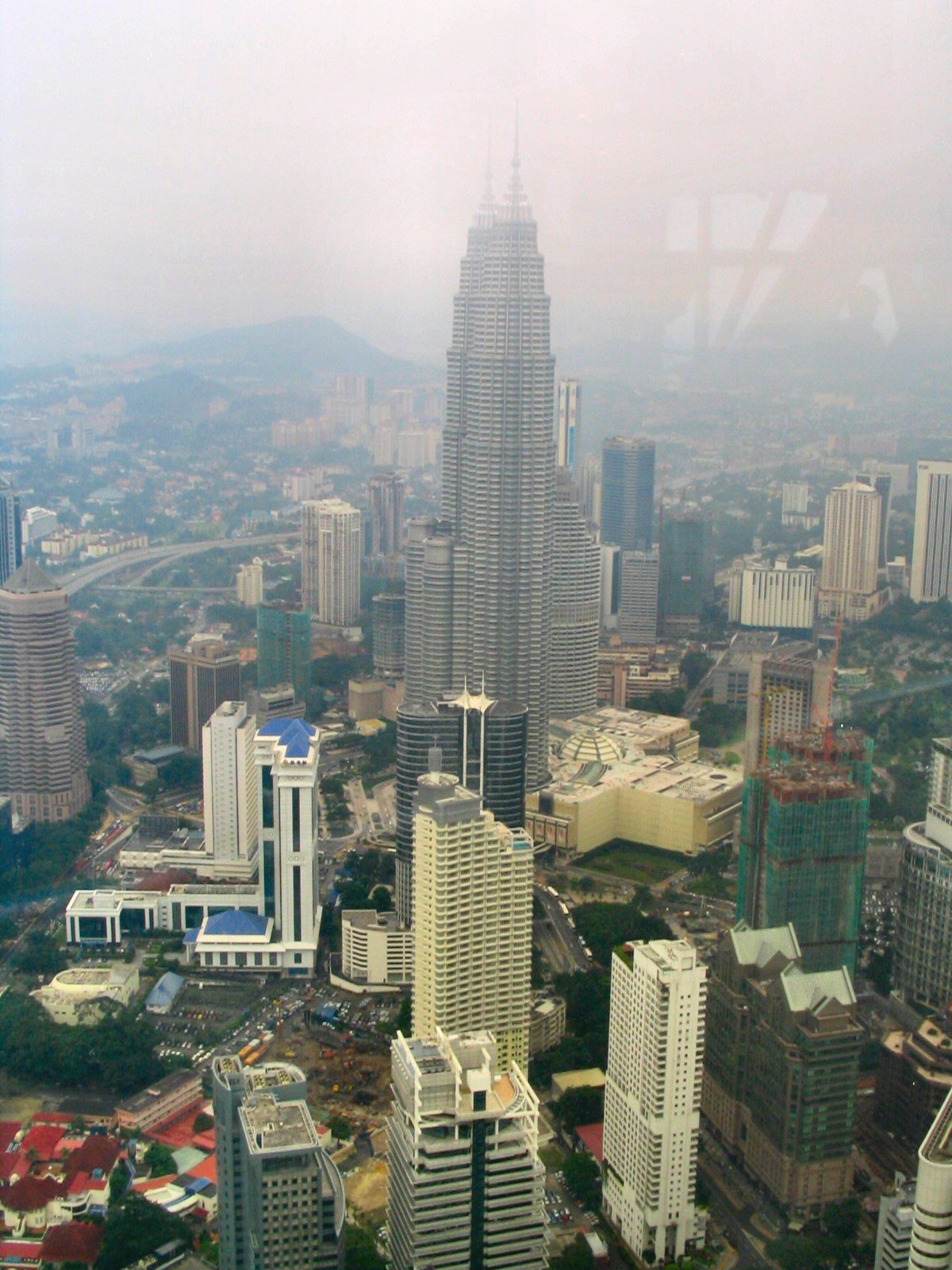
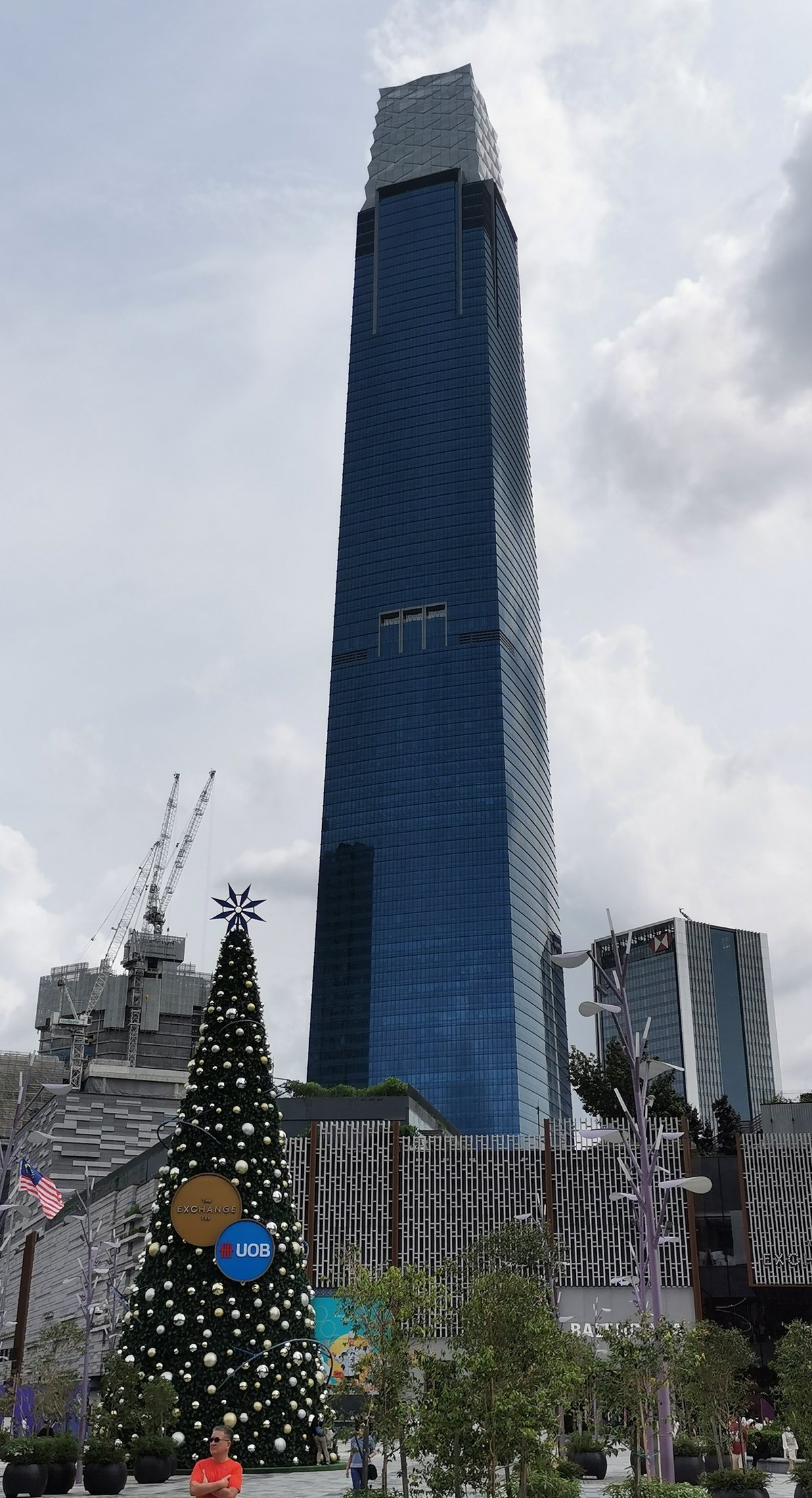
History & Architectural Significance
Development Background
Maxis Tower was completed in 1998 as part of KLCC’s ambitious urban redevelopment, designed to complement the Petronas Twin Towers and establish KLCC as a premier business district. Developed by KLCC Property Holdings Bhd and designed by Roche-Dinkeloo, the tower’s completion marked a milestone in Malaysia’s modernization (IEN Consultants; Wikipedia).
Architectural Features
- Design & Materials
The tower features a modernist design, characterized by a glass and aluminum façade that visually harmonizes with the Petronas Twin Towers. Its curtain wall system enhances energy efficiency and responds to Malaysia’s tropical climate (Skyscraper Center). - Structural Engineering
Overseen by Thornton Tomasetti, the structure utilizes reinforced concrete for stability and fire resistance, with an all-concrete core and perimeter columns for wind and seismic protection. - Urban Integration
Situated at KLCC’s northwest corner, Maxis Tower directly connects to Suria KLCC mall and KLCC Park, blending seamlessly into the pedestrian-friendly urban landscape (Wikipedia). - Usage
Maxis Tower houses the headquarters of Maxis Communications and other major companies, offering open-plan office layouts with advanced telecommunications systems.
Sustainability Achievements
Though built before many green certifications existed, Maxis Tower has since achieved LEED v4.1 O+M GOLD certification, marking it as the tallest building worldwide to do so (IEN Consultants). Key highlights include:
- 81% waste management score
- 88% for transportation alternatives
- 51% energy efficiency
- 60% water efficiency
These achievements set a benchmark for sustainable office towers in Southeast Asia.
Visitor Information
Visiting Hours & Tickets
- Public Access
Maxis Tower is primarily an office building and does not have observation decks or public tours. Lobby access is typically available during standard business hours (Mon–Fri, 8:00 AM–6:00 PM). - Tickets
No tickets are required for the lobby or external areas. Access to office floors is restricted to employees and authorized visitors.
Accessibility
- Facilities
The KLCC area—including Maxis Tower’s public spaces and Suria KLCC—is wheelchair accessible, with ramps, elevators, and accessible restrooms available (IEN Consultants). - Guided Tours
No official tours are provided inside Maxis Tower, but city walking tours of KLCC often include its exterior and architectural context.
Getting There
- Public Transport
The KLCC LRT station is the nearest transit point, directly linked to Suria KLCC via covered walkways. Other nearby options include MRT, monorail, and free Go KL City Bus (irumah.co). - Ride-hailing
Services like Grab are widely used and convenient. - Parking
Limited parking is available; public transport is recommended.
Exploring KLCC: Nearby Attractions
While Maxis Tower itself is not open to public tours, the surrounding KLCC area offers numerous attractions:
- Petronas Twin Towers
Malaysia’s most famous landmark with a Skybridge and observation deck (advance booking required) (Trip.com). - Suria KLCC
A premier shopping mall with dining, retail, and entertainment. - KLCC Park
A 50-acre urban park with lakes, walking trails, and nightly Lake Symphony fountain shows. - Aquaria KLCC
A popular oceanarium with a 90-meter underwater tunnel. - Petronas Gallery
Contemporary art exhibitions just minutes from Maxis Tower. - Bukit Bintang & Central Market
Vibrant districts for nightlife, shopping, and cultural experiences. - Saloma Link
An illuminated pedestrian bridge, great for night photography.
For details on access and ticketing for these attractions, see Trip.com’s Kuala Lumpur Guide.
Practical Travel Tips
- Best Time to Visit
Early mornings or late afternoons are best for cooler weather and optimal photography. - Attire
Dress modestly and professionally if entering any office lobbies. - Weather
Kuala Lumpur is hot and humid year-round; bring water and rain gear. - Transportation
Use public transport for convenience, and consider the Touch ‘n Go card for fare payments. - Safety
The KLCC area is generally safe, but standard urban precautions apply. - Mosquito Protection
Wear repellent in green spaces like KLCC Park due to dengue risk. - Language
English is widely spoken; learning basic Malay greetings is appreciated.
Frequently Asked Questions (FAQ)
Q: Can I enter or tour Maxis Tower?
A: Public access is limited to the lobby during business hours. There are no observation decks or official tours.
Q: Are tickets required to visit Maxis Tower or KLCC?
A: No tickets are needed for Maxis Tower. Tickets are required for nearby attractions like the Petronas Twin Towers.
Q: Is Maxis Tower accessible for people with disabilities?
A: Yes, public areas and nearby facilities are wheelchair accessible.
Q: How do I get there using public transport?
A: Take the LRT to KLCC station and follow signs through Suria KLCC mall.
Q: Where are the best photography spots?
A: KLCC Park, northwest fountains, and rooftop venues such as SkyBar and Heli Lounge.
Q: What other historical sites are nearby?
A: Visit Sultan Abdul Samad Building, Merdeka Square, Central Market, and Kampung Baru—all easily accessible by public transport.