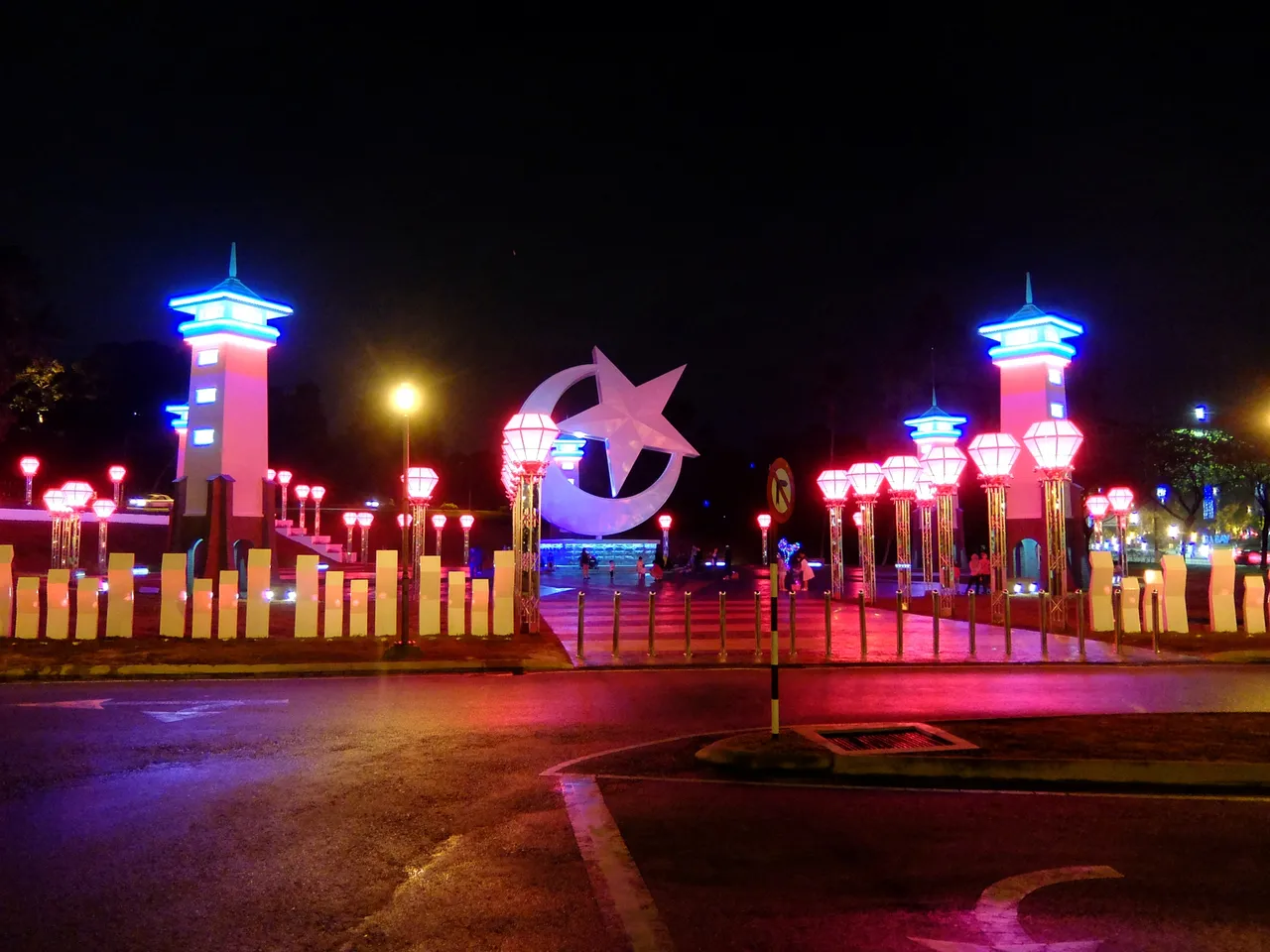
Place
Malaysia Updated Apr 2026
The dish that defines Johor Bahru is served over spaghetti. Laksa Johor — thick coconut-fish gravy fragrant with lemongrass, galangal, and Vietnamese mint — has been poured over Italian pasta since the colonial era, when wheat flour was easier to source than fresh rice noodles, and the habit became heritage. Malaysia's southernmost major city works like that: the foreign becomes native so completely that distinguishing the two stops feeling useful.
 Photo: Alix Lee / Pexels
Built from cited sources · see the method · How we make our guides →
Johor Bahru sits at the southern tip of peninsular Malaysia, separated from Singapore by the Johor Strait and connected by the Causeway, which handles roughly 350,000 crossings daily. Singaporeans arrive for kopitiam breakfasts at RM8, craft cocktails at 40% of Singapore prices, and hawker meals that cost less than a Singapore bus fare. The city has stopped being self-conscious about this comparison and, in most ways, won.
The Johor Bahru Old Chinese Temple on Jalan Trus, founded in 1875, unites seven Chinese dialect groups — Teochew, Hokkien, Cantonese, Hakka, Foochow, Henghua, Hainanese — under a single roof, which is unusual anywhere. Every March, the Chingay Parade pours into city streets: deity palanquins, lion dancers, stilt-walkers, and brass bands drawing 500,000 spectators across four nights. The tradition is 150 years old and still filing for UNESCO recognition.
The Sultan Abu Bakar State Mosque marries Mughal arches to a Victorian plan on a hilltop above the harbour. Across town, 300,000 pieces of coloured glass sheathe the Arulmigu Sri Rajakaliamman Temple — the first Hindu temple of its kind in the world. Hiap Joo Bakery on Jalan Tan Hiok Nee has been baking banana cake in a wood-fired oven since 1919; the Sultan of Johor is a customer, and there is a queue most mornings before 9am.
Not every monument, just the ones we'd walk you past ourselves.
Where to wander, by quarter — each with its own rhythm.
Before you go
Five centuries of empire, exile, and calculated reinvention
Around 1402, a Srivijayan exile named Parameswara founded the Malacca Sultanate at a river mouth on the Malay Peninsula's western coast. Within decades, it controlled the narrow strait through which half the world's spice trade moved. This is where Johor Bahru's story begins — not in Johor at all, but 300 kilometers north, in an empire that Johor's founders would spend centuries trying to rebuild.
On 25 July 1511, a Portuguese fleet of 18 ships under Alfonso de Albuquerque bombarded Malacca into submission after weeks of fighting. Sultan Mahmud Shah fled to Sumatra and died in exile around 1528. His son Alauddin Riayat Shah II refused to accept the loss — and went south to build a rival kingdom from scratch.
Sultan Alauddin Riayat Shah II established the Johor Sultanate in 1528, with his first capital near present-day Kota Tinggi, roughly 50 kilometers northeast of modern Johor Bahru. The new state explicitly claimed successorship to Malacca's empire — which meant inheriting Malacca's enemies too. From its first year, Johor was fighting for survival against Portuguese warships from the west and Acehnese fleets from across the strait.
The Acehnese Sultan Ala'uddin al-Kahar destroyed the Johor capital at Johor Lama in 1564, killing Sultan Alauddin the same year. The royal court became nomadic — moving between river mouths and defensible hilltops as Portuguese and Acehnese forces alternated in burning whatever the Johoreans managed to build. The Portuguese sacked the rebuilt capital again in 1587. Four destructions in 75 years taught the sultanate to build lightly and move fast.
In May and September 1606, Dutch Admiral Cornelis Matelief de Jonge signed two alliance treaties with Raja Bongsu of Johor — one of the first formal diplomatic agreements between a European power and a Malay sultanate. Both sides were calculating that mutual hatred of the Portuguese made better politics than abstract friendship. The partnership paid off 35 years later.
On 14 January 1641, Dutch forces fighting alongside Johor captured Portuguese Malacca after a months-long siege, ending 130 years of occupation of the city Johor's dynasty considered its spiritual inheritance. The victory removed the sultanate's most dangerous and persistent threat. For the next 35 years, under Sultan Abdul Jalil Shah III, Johor exercised genuine control over the Strait of Malacca — the closest thing to a golden age the early sultanate achieved.
Sultan Mahmud Shah II was assassinated on 3 September 1699 by a nobleman whose pregnant wife the sultan had ordered executed for eating royal jackfruit without permission. The killing mattered less for its violence than for what followed: Mahmud died without heirs, extinguishing the 171-year-old Malacca bloodline and triggering a legitimacy crisis that cracked the kingdom open for Bugis adventurers and, eventually, European strategists.
On 6 February 1819, Stamford Raffles signed a treaty with Temenggong Abdul Rahman of Johor and a hastily installed sultan to found a British trading post on Singapore island. Raffles had exploited a dynastic succession dispute — importing the exiled claimant Sultan Hussein from Riau for one afternoon's paperwork. The deal paid Temenggong Abdul Rahman 3,000 Spanish dollars annually and permanently embedded British authority into Johor's political reality.
Abu Bakar was born on 3 February 1833 into the Temenggong family's expanding court near Singapore, the son and heir of Temenggong Daeng Ibrahim. He grew up watching his father open Johor's interior to waves of Chinese and Javanese agricultural workers — black pepper, gambier, coconuts — while managing a careful dance with British advisers. Abu Bakar absorbed that model of calculated autonomy and pushed it further than any Malay ruler of his generation.
On 10 March 1855, Sultan Ali Iskandar Shah — the nominal Johor sultan, long since reduced to a figurehead — signed a treaty ceding governance of the state to Temenggong Daeng Ibrahim. Ibrahim moved his capital to Tanjung Puteri, a minor Malay fishing settlement on the strait's southern shore, naming it Iskandar Puteri. The fishing families who had lived there for generations barely rated a mention in the official record.
After inheriting power in 1862, Abu Bakar renamed Iskandar Puteri to Johor Bahru — 'New Johor' — and built the Istana Besar on the waterfront the same year. The palace announced his intentions: an Anglo-Malay dome, European interiors furnished from London showrooms, a hilltop position visible from Singapore across the water. This was not a feudal chieftain's compound. It was a statement.
On 13 February 1886, Abu Bakar formally proclaimed himself Sultan of Johor — an upgrade from the Maharaja title he had adopted in 1872. The British recognized the new title, partly because Abu Bakar had spent decades making himself diplomatically inconvenient to object to: he had dined with Queen Victoria, corresponded with Kaiser Wilhelm II, and was already drafting a state constitution with his own attorney general.
On 14 April 1895, Sultan Abu Bakar promulgated the Johor State Constitution — one of the first written constitutional documents in the Malay world, drafted by attorney general Abdul Rahman Andak. It gave Johor a rule-of-law framework designed specifically to delay direct British colonization. Abu Bakar died six weeks later, on 4 June, at Bailey's Hotel in London, aged 62 — still traveling, as he had spent much of his reign.
Dato' Onn Jaafar was born on 12 February 1895 in Johor Bahru, the son of a senior Johor court official. He grew up inside the state's colonial-era administration, learning to work between Malay aristocratic tradition and British bureaucratic pragmatism. In 1946, he organized the congress that founded UMNO in this city — the party that drove independence from Britain and governed Malaysia for over six decades.
Robert Kuok was born on 6 October 1923 in Johor Bahru, the third son of a Fujian-descended merchant family. He attended English College Johor Bahru, then Raffles Institution in Singapore, where a classmate named Lee Kuan Yew sat nearby. By the 1970s, Kuok controlled roughly 5 percent of global sugar production; he later built the Shangri-La hotel chain across Asia. At 102 in 2026, he remains the most consequential businessman this city has ever produced.
The 1.056-kilometer Johor-Singapore Causeway opened to passenger traffic on 1 October 1923, built from 1.5 million cubic yards of granite quarried from Pulau Ubin and Bukit Timah at a cost of 17 million Straits dollars. The grand inauguration ceremony, attended by over 300 guests including the Sultan and the British Governor, followed on 28 June 1924. Before the Causeway, crossing the strait meant a boat. After it, two economies began fusing in ways nobody fully planned.
Construction began in 1936 on what would become Johor Bahru's defining silhouette: Bangunan Sultan Ibrahim, designed by British firm Palmer and Turner in Saracenic style — colonial modernism fused with Malay architectural overtones. Completed in 1940, it was the tallest building in Malaya. Within two years, General Yamashita was using it as his command post, watching from its hilltop windows as his troops prepared to cross the strait below.
Japanese forces captured Johor Bahru on 31 January 1942 after a six-week campaign that outmaneuvered British, Indian, and Australian defenders at every turn. As Commonwealth troops retreated across the Causeway, British sappers blew a 70-foot gap in it to slow the Japanese crossing. It didn't work. Yamashita set up headquarters in Bangunan Sultan Ibrahim and Istana Bukit Serene — both with direct sight lines across the strait — and watched Singapore surrender on 15 February 1942 in the largest British military capitulation in history.
On 10 May 1946, the Third Malay Congress convened in Johor Bahru and founded the United Malays National Organisation — UMNO — with Onn Jaafar as its first president. The trigger was British plans for a Malayan Union that would strip Malay rulers of sovereignty and hand citizenship to non-Malays without conditions. UMNO killed the Malayan Union within two years and dominated Malaysian politics for seven decades. The party that built the nation was born in this city.
The Federation of Malaya achieved independence from Britain on 31 August 1957, ending more than four decades of British protectorate rule over Johor. Sultan Ibrahim, who had reigned through colonialism, Japanese occupation, and a communist insurgency fought in Johor's rubber plantations and jungle, died two years later in 1959. Independence made Johor Bahru the capital of a Malaysian state rather than a supervised territory — though the practical difference took years to settle into daily life.
Singapore separated from Malaysia on 9 August 1965, converting the Causeway from an internal road into an international border crossing overnight. What had been one political unit became two countries with sharply different wages, currencies, and development trajectories. The separation paradoxically deepened Johor Bahru's economic ties to Singapore — cheaper land and labor on one side of the strait, capital and port infrastructure on the other — a structural imbalance that has defined the city ever since.
Ronny Chieng was born in Johor Bahru on 21 November 1985 and spent his early childhood crossing the Causeway daily to attend primary school in Woodlands, Singapore. He left for Australia to study law, pivoted to stand-up, and eventually became a senior correspondent on The Daily Show and played Eddie Cheng in Crazy Rich Asians (2018). His stand-up returns repeatedly to the border-crossing childhood — using the Causeway as a metaphor for existing between worlds and belonging fully to neither.
Johor Bahru was officially granted city status on 1 January 1994, creating the Johor Bahru City Council by merging the original municipality with four surrounding housing areas into a 186-square-kilometer administrative boundary. The designation recognized a population that had grown from roughly 47,000 in 1950 to well over half a million. The city's physical expansion kept outrunning its official borders for years afterward.
Malaysia launched the Iskandar Malaysia Special Economic Zone in 2006, covering 221,634 hectares of southern Johor — roughly the area of greater London — with Johor Bahru at its center. The SEZ attracted manufacturing, logistics, and technology investment, transforming rubber plantation and mangrove swamp into the country's largest development zone by investment value. LEGOLAND Malaysia opened inside it in 2012; the region's largest mall, Mid Valley Southkey, followed in 2019.
In January 2025, Malaysia and Singapore formally established the Johor-Singapore Special Economic Zone covering 3,505 square kilometers, offering a 5 percent corporate tax rate and 15 percent personal income tax for qualifying knowledge workers. The RTS Link — a 4-kilometer rail crossing of the strait targeting 10,000 passengers per hour — was under construction as of April 2026, with a January 2027 opening date. The settlement that Temenggong Ibrahim founded in a fishing village in 1855 is now being engineered, by two governments, as half of a binational metropolitan economy.
Sultan, Founder of Johor Bahru · 1833–1895
Founded and named the city in 1866
He didn't just build a capital — he named it. In 1866, Abu Bakar moved the state's seat of power to Tanjung Puteri and renamed it Johor Bahru, meaning 'New Johor.' He then drafted the first written constitution of any Malay state, was received by Queen Victoria and Kaiser Wilhelm II, and built the hilltop mosque and Grand Palace that still define the waterfront skyline today.
Nationalist Leader, Founder of UMNO · 1895–1962
Born and died in Johor Bahru
Born in Johor Bahru in 1895, he convened the congress that founded UMNO in 1946 — the party that governed Malaysia from independence until 2018. The son of Johor's Chief Minister grew up inside the royal household and never left the city that produced him; he is buried here, and the street bearing his name runs past the High Court building he would have known well.
3rd Prime Minister of Malaysia · 1922–1990
Born in Johor Bahru, educated at English College JB
Son of Onn Jaafar, Hussein was born in Johor Bahru, educated at English College JB, and represented the Johor Bahru Timor constituency before becoming Malaysia's third Prime Minister in 1976. He governed with a quiet authority that earned him the name Bapa Perpaduan — Father of Unity — and launched the national unit trust scheme that still benefits millions of Malaysians today.
Business Magnate, 'Sugar King of Asia' · born 1923
Born and raised in Johor Bahru
Born in Johor Bahru in 1923, Kuok built a commodity empire controlling roughly 5% of global sugar production by the 1970s, then launched the Shangri-La hotel chain. He crossed the Causeway to Raffles Institution in Singapore, where Lee Kuan Yew was a classmate, before eventually relocating to Hong Kong — but JB is where he started with nothing, and he is still alive at 102.
Central Banker, First Female BNM Governor · born 1947
Born in Johor Bahru
Born in Johor Bahru in 1947, she became Bank Negara Malaysia's first female governor in 2000 and the central banker who steadied the ringgit through the 1997 Asian financial crisis using capital controls that economists initially criticized and later studied as a model. Euromoney named her Asia's best central bank governor in 2003.
Comedian, Actor · born 1985
Born in Johor Bahru
Born in Johor Bahru, Chieng crossed the Causeway daily to primary school in Singapore's Woodlands as a child, then emigrated to Australia for university before landing on The Daily Show and the set of Crazy Rich Asians. His Netflix special Asian Comedian Destroys America! made him the most internationally visible Malaysian entertainer of his generation — an arc that started in a border city most Western audiences couldn't place on a map.
Where locals actually book dinner — not the tourist menus.
Johor's laksa is unlike anything served under that name elsewhere in Malaysia: thick spaghetti-style noodles — actual spaghetti, sometimes — in a rich coconut milk and fish gravy, topped with shredded mackerel, bean sprouts, and kerisik (toasted coconut paste). Locals eat it with a fork and spoon rather than chopsticks, a legacy of colonial-era contact, and the flavour is simultaneously heavier and more fragrant than Penang or Sarawak laksa. One bowl makes a clear argument.
Since 1919, the same wood-fired brick oven on Jalan Tan Hiok Nee has produced Hiap Joo's banana cake — dense, slightly charred at the edges, nothing like the supermarket loaves the name might suggest. The bakery opens when it opens and sells out when it sells out. Arrive before noon.
Spiced fish cake steamed or grilled inside a banana leaf, deeply associated with Johor and particularly the nearby town of Muar. The Johor version runs heavier on turmeric and galangal than Singapore's otak-otak, and the texture is firmer. Best eaten directly from a hawker stall while the banana leaf is still smoking.
Named for the town of Muar 90 minutes northwest of JB but widely available across Johor: egg noodles in a thick, sweet-savoury prawn gravy, finished with hard-boiled egg and sometimes beef. The sauce is denser than most Malaysian noodle broths and carries a faint sweetness from prawn paste that distinguishes it clearly from anything similar. Order a second bowl before finishing the first.
JB's Chinese-run kopitiams serve coffee that predates the global specialty wave by decades: Robusta beans roasted with sugar and butter, brewed through a cloth sock filter, poured over condensed milk. Order kopi (hot, condensed milk), kopi-O (black with sugar), or kopi-C (evaporated milk and sugar) — each is a distinct drink, not a variation. Kluang Rail Coffee, at an active train station 90 minutes north, is a local pilgrimage site; in JB itself, any heritage shophouse kopitiam on Jalan Tan Hiok Nee will do.
At Medan Selera Meldrum Walk and hawker spots across the city, lok lok stalls offer skewered ingredients — tofu, fish balls, prawn, mushroom, offal — cooked in a communal bubbling broth at your table. Slow, social, and cheap: budget RM15–25 for a full spread. The house-blended peanut and chilli dipping sauces do most of the heavy lifting.
At JB's late-night flea market on Jalan Segget (Tuesday through Sunday, 6pm–2am), food stalls run the full length of the vintage goods. Ramly burgers — egg fried directly onto the patty, wrapped in foil — cost from RM5. Takoyaki sells for RM5 for four pieces. Cash only; bring small notes.
Malaysia's unofficial national dish appears at JB breakfast stalls in its plainest and most correct form: rice steamed in coconut milk, served with fried anchovies, roasted peanuts, hard-boiled egg, cucumber, and sambal made fresh that morning. The sambal at a good hawker stall carries real heat and no industrial sweetness. Budget RM3–6, and eat it before 10am.
Small things that change how the city treats you.
The city, as it actually looks.
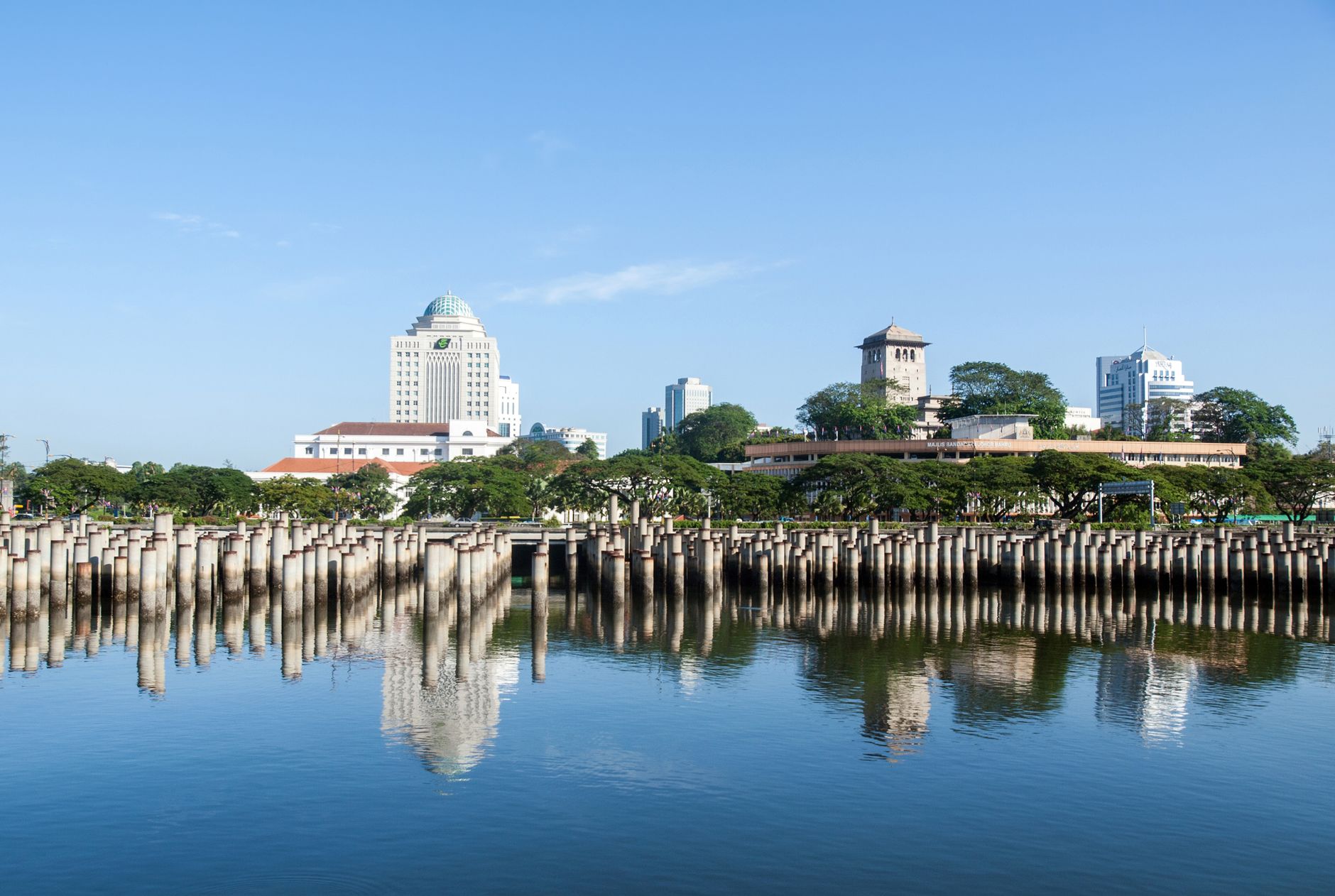

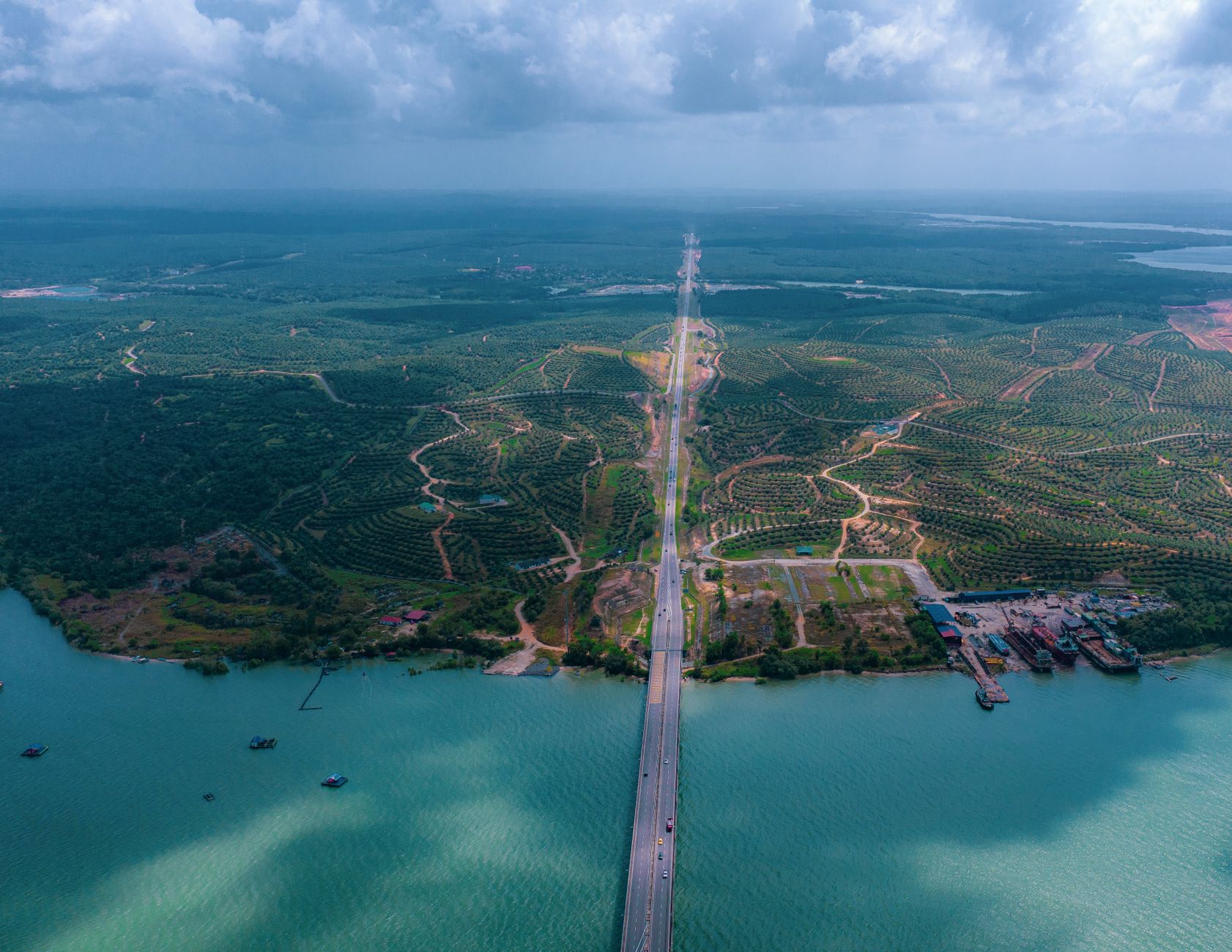


Yes, and specifically because it's not Singapore. Food costs a fraction of the price, the colonial and Sultanate architecture tells a different story, and the Chingay street festival in March draws 500,000 people to a city most Western travelers have never heard of. A day trip works but two or three nights lets you eat properly.
Two full days covers the main landmarks — Sultan Abu Bakar Mosque, Jalan Tan Hiok Nee, and at least one hawker centre. Three days gives you time for LEGOLAND or the Glass Temple, plus a proper night at Pasar Karat. If you're here for Chingay in March, add a fourth.
Take the MRT to Woodlands and then the Causeway Link bus (around RM3.50 one-way), or hire a Grab across the bridge. The crossing takes 20 minutes off-peak and over two hours on Sunday evenings — time it accordingly. A second crossing, the Malaysia-Singapore Second Link, is faster if you're heading to Iskandar Puteri or LEGOLAND.
JB is generally safe, including for solo travelers and families. Standard precautions apply: keep your phone out of sight on busy streets, use Grab rather than unmarked taxis, and don't leave bags unattended at hawker centres. The city has improved substantially over the past decade.
Laksa Johor — served over spaghetti rather than rice noodles — is the city's signature dish, though it's traditionally a home food and almost impossible to find in restaurants. In practice, the most celebrated stops are Hiap Joo Bakery (wood-fired banana cake since 1919), the Hainanese Chicken Chop at Restoran Hua Mui (est. 1946), and charcoal Char Kway Teow at Hoong Kong Boy Restaurant.
A few shops near the Causeway accept SGD but at an unfavorable rate. Exchange to Malaysian Ringgit before crossing — ATMs at the JB checkpoint give decent rates. At hawker centres and Pasar Karat, only MYR or Malaysian QR codes like DuitNow are accepted.
March is the month to target: the Chingay festival's night parade draws 500,000 people for one of Southeast Asia's great street processions. Outside festival season, November through February is driest. July and August bring heavier rain but fewer crowds.
Quite a lot. Sultan Abu Bakar Mosque and the Istana Besar anchor a strong Sultanate history. Jalan Tan Hiok Nee's pre-war shophouses hold Hiap Joo Bakery, street murals, and the JB Chinese Heritage Museum. Evenings belong to Pasar Karat night market and the craft cocktail bars of Mount Austin, where drinks cost 40-60% of Singapore prices.
Saved and recently read places — kept on this device only.
Photos may have been resized or cropped.