
What Sam Poh Tong Is
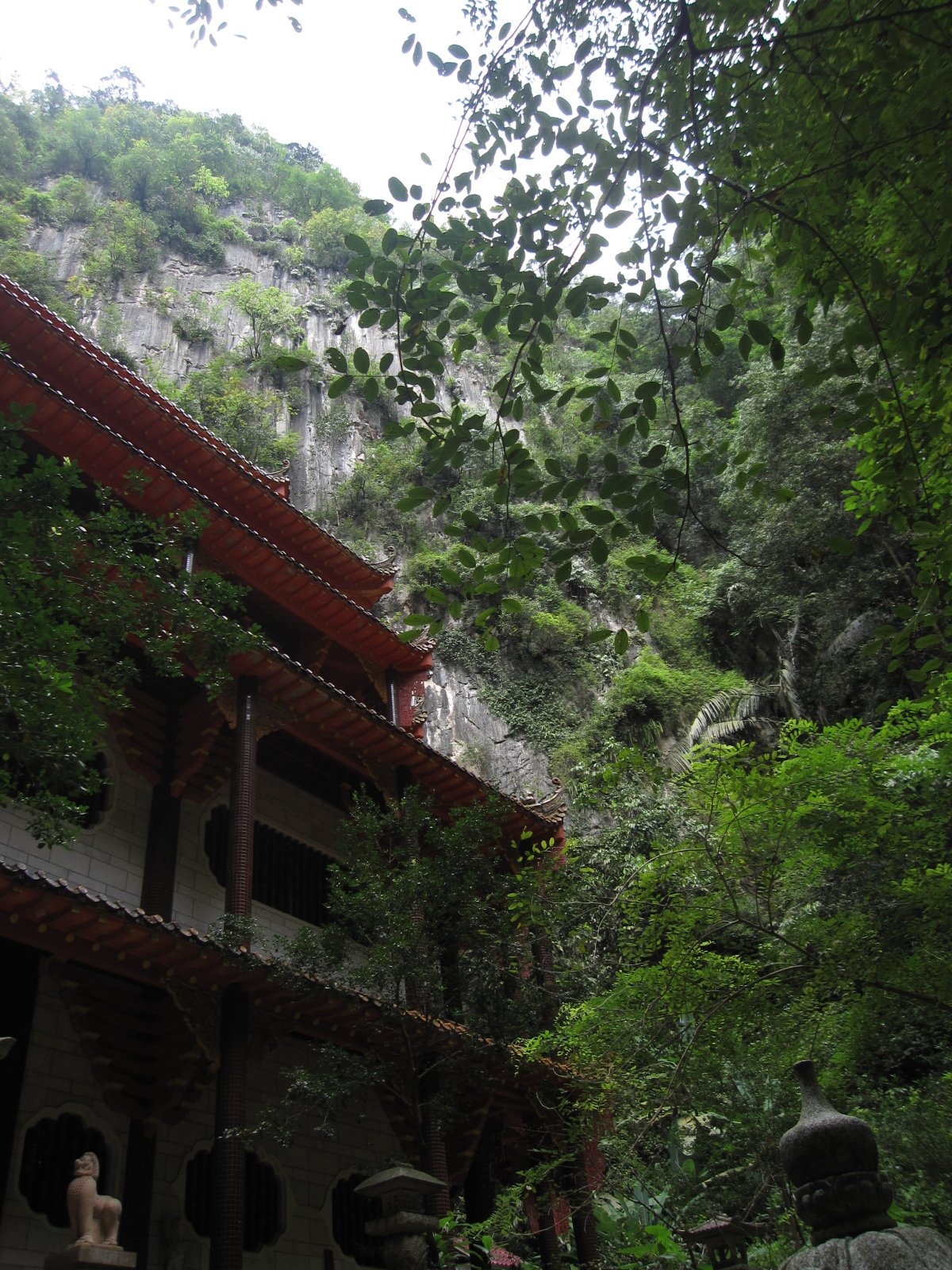
Sam Poh Tong, also known as the Cave of Three Treasures, is a Chinese Buddhist temple nestled within the limestone hills of Gunung Rapat in Ulu Kinta, approximately 5 kilometers south of Ipoh, in the state of Perak, Malaysia. Discovered in 1890 by a Chinese monk, it has become one of Malaysia’s significant Buddhist temples (Perak Tourism).
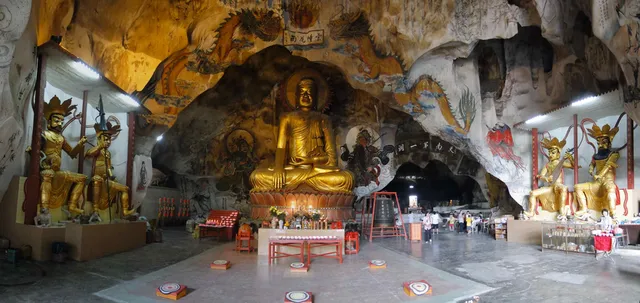
The temple combines natural limestone formations with man-made structures in traditional Chinese architectural styles and modern influences. Its grounds include prayer halls, meditation caves, historical artifacts and a tortoise pond. The temple is dedicated to the Bodhisattva Kuan Yin, the Goddess of Mercy, and serves as a place of worship, meditation and community gatherings (Malaysia Traveller).
History and Community
Origins and Development
According to local lore, the Chinese monk who discovered the cave in 1890 made it his home and a place of meditation, laying the foundation for the temple (Perak Tourism).
In the 1950s, the local Chinese community took an active role in transforming the cave into a temple complex. Prayer halls, meditation areas, statues and carvings were added, with architecture blending traditional Chinese and modern styles, ornate decorations and vibrant colors (Malaysia Traveller).
Religious and Cultural Role
The temple is particularly busy during major Buddhist festivals such as Vesak Day, when devotees from Malaysia and beyond come to offer prayers and participate in religious activities (Ipoh City).
Sam Poh Tong also serves as a cultural and social hub. Community activities include cultural performances, educational workshops and charity drives. The temple supports the local community through initiatives such as free medical clinics and educational scholarships (Time Out Kuala Lumpur).
Preservation
Caretakers and volunteers maintain the temple’s structures and artifacts. Conservation projects have also aimed to protect the limestone cave environment from environmental degradation and human impact (The Star).
What to See
Main Prayer Hall
The main prayer hall features intricate carvings and statues of Buddhist deities. Its centerpiece is a large statue of Kuan Yin, surrounded by smaller statues of other Bodhisattvas.
Pagoda and Grounds
The temple’s seven-tiered pagoda offers panoramic views of the surrounding area and is a popular place for photographs. Natural limestone formations and lush gardens provide further photographic settings.
Tortoise Pond
The temple grounds include a large pond filled with tortoises, symbols of longevity and good fortune in Chinese culture. Visitors often feed them as a form of merit-making (Lonely Planet).
Historical Artifacts
The temple has bells and drums used during religious ceremonies, believed to date back to its early days. Stone inscriptions throughout the grounds detail the temple’s history and the contributions of notable figures to its development. The temple library contains a collection of ancient Buddhist scriptures and texts, some of them rare and valuable (Visit Southeast Asia).
Practical Visiting Information
Opening Hours and Admission
Sam Poh Tong is open daily from 9:00 AM to 6:00 PM. There is no entrance fee, but donations are encouraged to help maintain the temple.
Getting There and Accessibility
The temple is accessible by car, with ample parking available. Buses and taxis from Ipoh city center are public transportation options.
Events and Guided Tours
The temple hosts religious festivals, cultural performances and meditation retreats throughout the year. Guided tours are available for visitors seeking more information about the temple’s history and significance. It is recommended to book a tour in advance.
Tips
Consider arriving early in the morning to avoid the crowds. Wear comfortable walking shoes, as the temple grounds are extensive. Photography is allowed throughout the temple grounds.
Nearby Places
Nearby attractions include Kek Lok Tong Cave Temple and Perak Cave Temple, both a short driving distance away.
FAQ
What are the visiting hours for Sam Poh Tong?
The temple is open daily from 9:00 AM to 6:00 PM.
Is there an entrance fee?
No. There is no entrance fee, but donations are encouraged.
Can I take photographs inside the temple?
Yes. Photography is allowed throughout the temple grounds.
Are guided tours available?
Yes. Guided tours are available, and it is recommended to book in advance.
What are some nearby attractions?
Nearby attractions include Kek Lok Tong Cave Temple and Perak Cave Temple.