
Forest in the City
Lilongwe Wildlife Centre is a working sanctuary threaded with miombo trails and rope bridges that hang above crocodile-haunted pools. Monkeys swing through camp while you walk 4 km of riverine forest without leaving city limits.
Lilongwe smells like woodsmoke at 6 PM, the exact moment every charcoal grill on Malangalanga Road flares to life and the city’s generator-powered calm gives way to something that feels like village life wearing a capital city’s clothes. This is Malawi’s seat of government, yes—but it’s also where monkeys crash through the canopy of the wildlife center while cabinet ministers eat goat kebabs twenty meters away.
Researched from Wikidata, Wikipedia & official sources · fact-checked · How we make our guides →
LLilongwe smells like woodsmoke at 6 PM, the exact moment every charcoal grill on Malangalanga Road flares to life and the city’s generator-powered calm gives way to something that feels like village life wearing a capital city’s clothes. This is Malawi’s seat of government, yes—but it’s also where monkeys crash through the canopy of the wildlife center while cabinet ministers eat goat kebabs twenty meters away.
The city never quite decided whether it wanted to be a planned capital or an oversized trading post. Capital Hill’s wide boulevards and 1970s parliament blocks sit eight kilometers from Old Town’s chaotic market lanes, and the distance feels like a time slip rather than a taxi ride. In between: miombo woodland thick enough that hornbills outnumber traffic lights, and embassies whose razor-wire fences look embarrassed beside flame trees dropping scarlet petals on the sidewalk.
Locals call the place “the village in a city” and they’re not being modest. You can stand in the National Museum’s colonial gallery at noon and by 12:30 be eating nsima scooped with your right hand from a shared aluminum pot while the woman who served it explains—between mouthfuls—why using your left hand would insult her ancestors. That’s the rhythm here: policy papers at 9 AM, power cuts at 4 PM, thumb-piano buskers by candlelight at 9 PM.
What makes this place worth slowing down for.
Lilongwe Wildlife Centre is a working sanctuary threaded with miombo trails and rope bridges that hang above crocodile-haunted pools. Monkeys swing through camp while you walk 4 km of riverine forest without leaving city limits.
Parliament Building rises in raw 1970s concrete on Capital Hill—no gates, just a lawn and guards who will let you photograph the façade if you ask. The shift from colonial Zomba to here in 1975 explains the wide, half-empty boulevards.
Kaliso Art Gallery fits into a converted house off Chilambula Road and rotates canvases by artists like Alice Péretié every six weeks. Open late on First Fridays, wine is served on the veranda while the owner explains why Malawian paint still uses local pigment.
Where to wander, by quarter — each with its own rhythm.
The commercial heartbeat smells of drying kapenta and diesel minibuses. Narrow lanes overflow with second-hand shoe stalls, tailors working Singer treadles under canvas awnings, and the Mchesi Market where you’ll find chitenge fabric brighter than the equatorial sun. At dusk the grills appear—40-plus charcoal braziers turning Malangalanga Road into a tunnel of smoke and sizzling goat.
Wide, jacaranda-lined avenues built for motorcades serve embassies, NGOs, and the glass-walled Parliament Building you can tour if you email ahead. Here the restaurants have generators and wine lists, the supermarkets stock Italian espresso, and the sidewalks are swept by security guards who still greet you with “Moni” even as they scan your bag.
A residential-market hybrid that wakes at 5 AM with women stirring vats of nsima beside piles of fresh pumpkin leaves. By 7 AM minibus drivers are drinking sweet milky tea from tin cups; by 7 PM the power cuts drive neighbors into the street to share battery-powered torches and the last warm Carlsberg.
The city’s 24-hour transit stomach beats hardest here around the bus station. Drivers refuel on cassava chips wrapped in newspaper while mechanics weld mufflers by flashlight. At 2 AM you can still get grilled chicken feet for the equivalent of fifty cents and directions to a party that won’t start until the generator kicks in.
Where city officially ends and protected miombo begins. Monkeys cross Kaunda Road like commuters; the air smells wetter, cooler. The center’s café serves cappuccinos while hornbills argue in the canopy overhead—five minutes from Capital Hill, fifty years from anywhere.
A city younger than most of its residents, built where the Lilongwe River bends
Batwa hunters press red-ochre palms against granite shelters along the Lilongwe escarpment. The pigment survives 5,000 rainy seasons, marking this ridge as sacred ground long before anyone dreamed of cities.
Chewa chiefs unite under the lion-claw banner at Kapirintiwa. The Lilongwe River becomes a trade artery for iron hoes, salt, and the copper crosses that still turn up in village fields.
Union Jack replaces red-clay shrines as Fort Lister rises above the slave routes. The crack of Martini-Henry rifles echoes where drums once called rain.
In a thatched hut near Kasungu, a boy is born who will rename himself 'Kamuzu'—the little medicine man—and move the nation's heart to this central plateau. He won't see Lilongwe for another 60 years.
Under the shade of a baobab, Chief Njewa hands over a riverside village to become British headquarters. Four brick buildings and a cattle kraal mark the birth certificate of a city.
The air turns sweet with cured leaf as farmers crowd the new tin-roofed market. By 1925, Lilongwe sells more tobacco than any town between Salisbury and Nairobi.
In a village near the Zomba plateau, a girl is born who'll become Malawi's—and Lilongwe's—first female president. Her foundation's headquarters here will train thousands of women entrepreneurs.
At midnight on July 6, the Union Jack drops and the new Malawi flag rises over Zomba's State House. Dr. Banda already has plans for a different capital—one closer to his people.
Government trucks haul filing cabinets 300 kilometers north. Overnight, a quiet market town becomes the seat of Africa's youngest capital city, with Parliament buildings rising where maize once grew.
The burnt wreckage of a Mercedes on the Mchinji road carries the era's last outspoken critics. Their memorial pillar still draws quiet mourners who remember when fear walked the corridors of Capital Hill.
While the capital sleeps under blackout orders, a farmer's son is born 60 kilometers north. Twenty years later, he'll wire a windmill from bicycle parts and put Lilongwe on the TED stage.
Voters queue before dawn, some in traditional chitenje wraps, others in donated NGO T-shirts. By sunset, the one-party state collapses and democracy moves into the old dictator's palace.
Where the army once shot stray dogs, rescued baboons now swing through miombo canopy. Monkeys cross wooden bridges above diplomats' SUVs in Africa's only urban wildlife sanctuary.
When the president collapses at State House, Lilongwe holds its breath for 48 hours of constitutional crisis. Joyce Banda's midnight oath on the palace veranda writes a new chapter for women in African leadership.
January rains tear through mud-brick homes in Kawale 1, leaving 200 families homeless. The river reminds everyone that even capital cities answer to older powers.
In a repurposed tobacco warehouse, Kambalu mounts canvases that stitch traditional Chewa patterns to global pop culture. Lilongwe's first contemporary art space draws diplomats and market women in equal measure.
While southern Malawi drowns, Lilongwe becomes a city of refugees. School classrooms become shelters, and the parliament car park fills with aid trucks bound for the disaster zone.
As climate change tightens its grip, lawmakers argue over concrete embankments versus wetland restoration. The Lilongwe River, once named for its gentle bends, now threatens the city built in its embrace.
The people who shaped the city — and were shaped by it.
He scavenged Lilongwe junkyards for bicycle spokes and PVC pipe, then wired his family’s house with electricity while classmates still studied by paraffin lamp. Today he’d recognize the same open-air markets but marvel at the 4G signal running on solar towers he helped inspire.
From Kamuzu Palace he watched baobabs give way to ministries, betting that a dusty central trading post could hold a nation together. Drive the palm-lined Capital Hill today and you’re still on his chessboard.
She turned the capital’s conference rooms into emergency shelters for girls fleeing early marriage, then hosted African Union leaders over nsima and pumpkin-leaf stew. Her portrait still hangs in the immigration hall, smiling like she knows the next bold idea is brewing in a roadside maize stall.
Paint splatters cover the former print-works floor where he stages electric-blue portraits of Malawian migrants. Drop in and he’ll hand you a brush, insisting Lilongwe’s story isn’t finished until travelers add their own stroke.
Where locals actually book dinner — not the tourist menus.
Tilapia hauled from Lake Malawi is butterflied and charcoal-grilled at Mama’s Floating Restaurant on the Lilongwe River. Squeeze the provided lime over the skin and eat with nsima that soaks up the smoky fish oils.
A woven tray arrives piled with pumpkin leaves, ground-nut relish, and slow-cooked goat—best eaten with fingers while drummers rehearse for the evening dance slot. Reserve before 3 pm; they butcher only what the village supplies that day.
These Malawian doughnuts are fried at dawn in blackened drums, puffed and crusted with sugar. Three cost 100 MWK and disappear still hotter than the sun.
Run by an Italian-Malawian couple, the café blends local orange pumpkins with a whisper of nutmeg; served in a calabash bowl with home-made ciabatta. Show up early—it sells out by 1 pm when embassy staff swarm in.
Small things that change how the city treats you.
ATMs have daily limits and sometimes run dry. Bring USD or EUR to change at banks. Street food, matolas, and even some guesthouses only take kwacha.
Load-shedding hits 4-8 PM. Restaurants switch to generators or candles—embrace it. Eat slowly and you'll make friends in the dark.
Fixed airport taxi is ~$30 but your hotel can send a driver for $20. SMS +265 99 520 6600 for Central Bridge Taxi—pre-book to skip the arrival scrum.
Tear a golf-ball piece with your right hand only. Roll it, scoop relish, eat in one bite. Left hand? Culturally off-limits.
May-October brings 75 °F days, dusty skies, perfect hiking. November starts the rains; trails and markets turn to ankle-deep mud.
Old Town and Mchesi markets are brilliant but crowded. Keep your phone in a zipped front pocket and carry small kwacha notes.
The city, as it actually looks.

An expansive aerial perspective of Lilongwe, Malawi, highlighting the city's unique blend of administrative architecture and verdant green spaces.
Kelly on Pexels
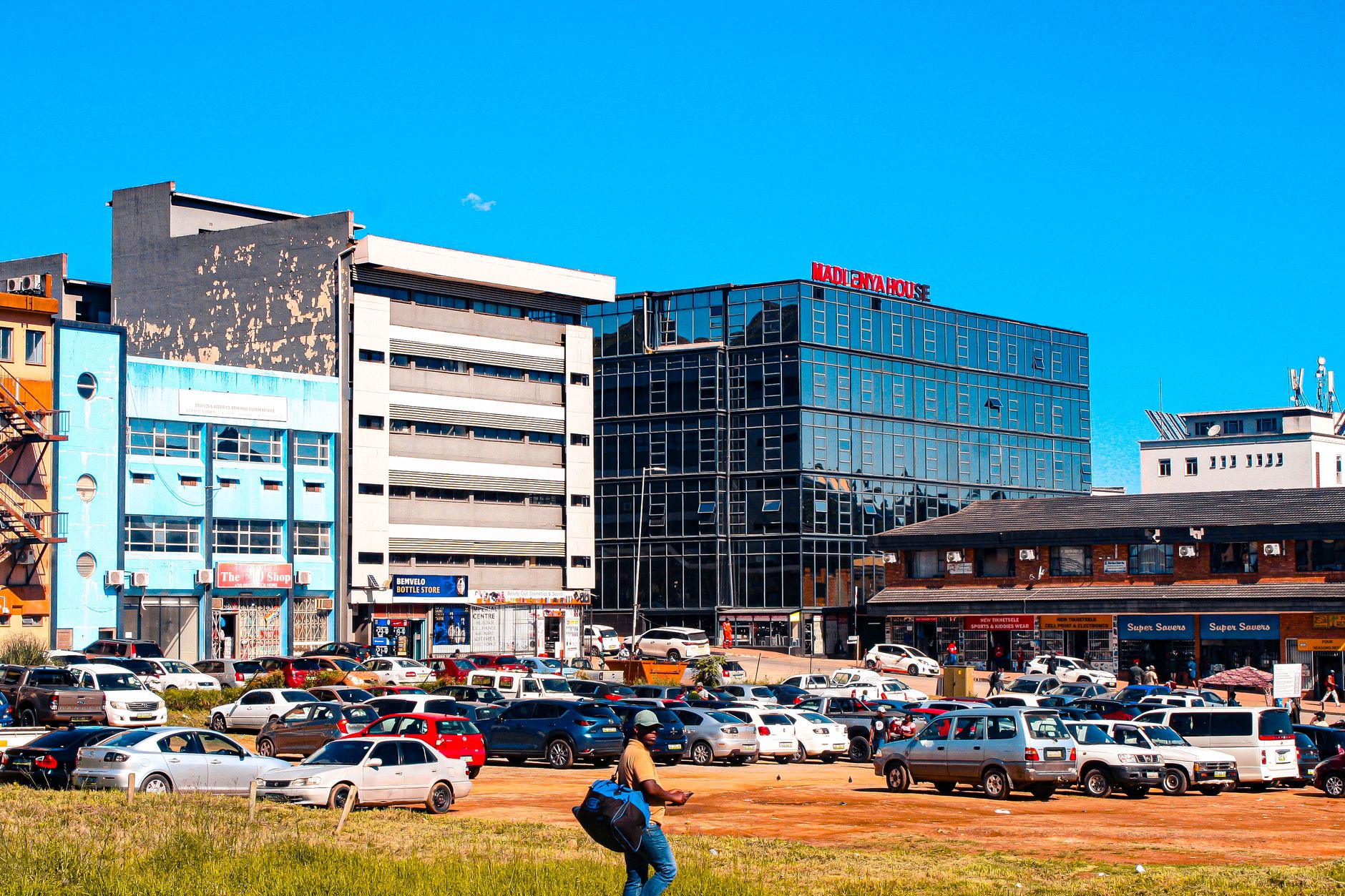
A vibrant view of the city center in Lilongwe, Malawi, showcasing a mix of modern architecture, bustling parking areas, and daily urban life.
Khaya Motsa on Pexels

An aerial perspective of Lilongwe, Malawi, capturing the transition between dense residential neighborhoods and active agricultural farmland.
SINAL Multimédia on Pexels

A vibrant view of downtown Lilongwe, Malawi, showcasing the modern architecture of Madlenya House alongside local businesses and a busy parking area.
Khaya Motsa on Pexels
Yes—if you treat it as a cultural gateway rather than a safari hub. You can breakfast on charcoal-grilled chambo, walk rescued baboons at the Wildlife Centre, and be at Chongoni’s 3,000-year-old rock art by lunch.
Two full days hits the sweet spot. Day one: markets, museum, Wildlife Centre. Day two: Nkhoma Mountain sunrise hike, Kumbali Cultural Village dinner. Add a third day only if you’re using it as a base for Dedza Pottery or Lake Malawi side-trips.
No—there’s no public bus or shuttle. Your choices are an airport taxi (~$30) or a pre-arranged hotel transfer (~$20). Matolas don’t run that route.
Generally yes, but after dark stick to lit streets or hotel taxis. Locals warn against walking alone through the bus depots (Area 3/Old Town) at night. The ‘Warm Heart’ reputation is real—people will escort you if asked.
Budget $35-50: dorm bed $12, street meals $2-4, shared minibus $1. Mid-range $70-100: private room $45, restaurant dinner $12, day-tour driver $25. Upscale means $150+ for boutique lodges and imported wine.
Yes—Lilongwe sits at 1,050 m but is still in a malaria zone. Take your meds and pack repellent. Evening outdoor dining under candlelight is lovely, but so are mosquitoes.
Ready to book?
Kamuzu International Airport (LLW) sits 23 km north-east of town; the only arrivals hall is the size of a suburban supermarket. No shuttle exists—pre-book a taxi for $30 or haggle on the curb; the ride takes 35 min on the M1.
There is no metro, tram, or city bus card. Flag down a matola minibus (10–20 MWK in-town) or negotiate a taxi—Central Bridge Taxi and Anake Tours keep WhatsApp numbers. Cycling lanes do not exist; rent a mountain bike from Kumbali for village tracks only.
Dry season May–October: 24 °C days, 10 °C nights, almost zero rain—ideal for Nkhoma Mountain hikes. Wet season November–April peaks in January with 200 mm of rain; trails turn to ochre soup and many lodges cut rates by 30 %.
English is official but Chichewa runs the markets—start with “Moni” and you’ll get a lower tomato price. Cash rules: withdraw Kwacha (MWK) at NBS or Standard ATMs before Saturday afternoon when machines empty; cards work only in hotels and Shoprite.
0 places, one continuous walking route. Free with your first city.