Introduction
A Malawi travel guide starts with a surprise: this landlocked country has 584 km of freshwater shoreline, granite peaks, and some of Africa's calmest roads into the wild.
Malawi works because its contrasts sit close together. You can wake to fishing canoes on Lake Malawi, eat grilled chambo for lunch, and end the day on a cool plateau where the air smells of pine and rain. The country is long and narrow, so routes link easily: Lilongwe handles the practical arrival, Blantyre moves at commercial speed, and Zomba still carries the mood of an old capital with a mountain above it. Lake beaches, tea country, safari rivers, and highland hikes are not separate trips here. They fit inside one map.
History gives the landscape weight. In Dedza, the Chongoni rock art sites preserve red-ochre paintings tied to Batwa and later Chewa ritual life; farther south, Mulanje rises 3,002 metres above the plain, less a backdrop than a fact that reshapes weather, roads, and belief. The lake towns tell a different story. Mangochi and Monkey Bay open onto the southern shore and Lake Malawi National Park, while Nkhata Bay and Karonga pull you north toward deeper water, old trade routes, and quieter beaches. Malawi does not overwhelm by scale. It wins by attention, detail, and the rare feeling that a journey can stay gentle without turning bland.
That makes Malawi unusually good for travelers who want substance without noise. You can hike around Livingstonia, look for cool air and forest edges near Mzuzu, browse pottery and mountain views in Dedza, or follow the green folds of tea country through Thyolo. Distances are real, but the country rarely feels hostile to movement if you plan around the dry season. And because the welcome here is built on greeting before transaction, even simple errands tend to feel more human than hurried. Few countries give you beach, wildlife, mountain, and living ritual culture with so little performance.
A History Told Through Its Eras
Red Ochre on Granite, and the First Keepers of the Land
Before Kingdoms, c. 6000 BCE-1200 CE
Morning light reaches the granite hills of Chongoni slowly. The rock stays cool, the red pigment glows, and in the shelters above present-day Dedza you can still read a conversation that began long before any court chronicler arrived with ink and ambition.
What the eye first takes for pattern is, in fact, power. Records and archaeological work connect the earliest paintings to Batwa hunter-gatherers, then to Chewa communities who later used the same sacred places for chinamwali initiation. Ce que l'on ignore souvent, c'est que conquest here was not only a matter of spears. Oral tradition insists the Batwa, pushed aside in politics, remained indispensable in ritual: the people who blessed land, rain, and legitimacy.
That changes the whole picture. A people can lose territory and still keep the key to the invisible kingdom. In rural Malawi, the old idea that the first occupants were the true spiritual owners of the ground survived for centuries, a form of authority too subtle for a colonial map and far harder to erase.
Then look south-east, toward Mulanje. Mount Mulanje rises to 3,002 metres like a citadel dropped from another climate, cedar forests tucked into folds of granite, streams flashing in the cold air. For Lomwe communities it was never just topography. It was inhabited presence. Local guides are said to have refused early surveyors a full accounting of the mountain, not from ignorance but from principle: some borders are sacred before they are measurable.
The unnamed Batwa ritual specialists of Chongoni never ruled a court, yet chiefs needed their blessing before seed touched the soil.
UNESCO listed Chongoni not for a single masterpiece, but because the same rock shelters preserve the handover from foraging life to farming life, painted layer over painted layer.
When the Lake Had Its Own Fire Kingdom
The Maravi Age, c. 1200-1700
At dawn on Lake Malawi, heat rises off the water in wavering bands, and one understands why the old word malaŵi is often linked to flames. Out of that lakeshore world, between the late medieval centuries and the 17th century, emerged the Maravi Confederacy: not a neat kingdom with marble etiquette, but a network of chieftaincies held together by tribute, kinship, and the authority of the Kalonga.
Its strength lay in flexibility. The Portuguese, nosing inland from Tete in the 16th century, hoped for a ruler they could flatter, bribe, or outmaneuver. Instead they met layered authority. One of the great names is Undi, a regional chief powerful enough to close roads without announcing war. That is real statecraft. Caravans simply failed to arrive.
But the deepest institution may not have been political at all. It was Nyau, the initiation society whose masked Gule Wamkulu dances turned funerals, harvests, and public ritual into theatre charged with ancestral force. Women were formally excluded from its secrets. Local memory, with delicious dryness, says they knew perfectly well what was happening and chose to let the men keep their drama.
Then came the missionaries, centuries later, eager to classify the masks as diabolical. The answer from Malawi was elegant. Dances shifted to night, names borrowed from Christian calendars, forms adapted without surrender. The old order did not vanish. It changed costume, which is sometimes the cleverer victory.
Undi appears in Portuguese records as a distant power, but behind that title stands a ruler who understood that controlling roads could matter more than winning battles.
Gule Wamkulu survived missionary bans by slipping behind Christian feast days, a masquerade wearing another masquerade.
Lake Shores of Trade, Terror, and Unfinished Empires
The Age of Caravans and Raids, 1700-1891
Imagine the western shore of the lake in the mid-19th century: dhows on inland water, porters bent under ivory, gunfire where fishing villages once heard only paddles. After the Maravi order weakened, two hard new forces pressed into the vacuum. Yao traders tied the lake to the Indian Ocean world. Ngoni war-bands, forged in the violence of the mfecane, came with discipline, cattle, and the habit of conquest.
The most chilling figure of the lakeshore was Jumbe of Nkhotakota. From a boma on the western shore, near what travelers now reach through central Malawi, he built a commercial system that was polished, multilingual, Islamic, and inseparable from the sale of human beings. Mosque, warehouse, armed dhow, slave caravan: the architecture of profit was complete.
Ce que l'on ignore souvent, c'est that this was not some chaotic frontier. It was organized. Tens of thousands were moved through the region over time, and the traffic reshaped whole districts, emptying villages and hardening identities. When David Livingstone and later Scottish missionaries denounced the trade, they were horrified, certainly, but they were also entering a world whose commercial intelligence they had badly underestimated.
The Ngoni story is no less dramatic. Zwangendaba led his followers across roughly 2,000 kilometres from the south and died around 1848 having built one of the most formidable military migrations in 19th-century Africa. His successors left northern Malawi marked by raid and reinvention. Even later centers such as Karonga and Livingstonia grew in the long shadow of that violence, as missions, stations, and rival powers tried to impose a different order.
Jumbe of Nkhotakota was no romantic lakeside notable; he was an efficient broker who turned Lake Malawi into part of a slave-trading machine.
The lake carried armed dhows under Jumbe's command, a navy on freshwater used to raid communities that had once trusted the shore.
From Mission Bells to Banda's State House
Protectorate, Federation, Republic, 1891-present
The colonial chapter begins not in abstraction but in rooms: a mission classroom in Livingstonia, a government office in Zomba, a planter's veranda in the Shire Highlands above Blantyre. In 1891 Britain declared the British Central Africa Protectorate, later Nyasaland, and the country was drawn into the familiar imperial arrangement of taxes, transport schemes, missionary education, and labor for other people's profit.
Yet Malawi's modern political life was made as much by readers and teachers as by governors. Mission stations produced clerks, pastors, critics, and nationalists. The name John Chilembwe still carries force because in 1915 he made rebellion moral before he made it military. His rising failed within days. Its echo did not.
Then the 20th century tightened and broke open again. Nyasaland was folded into the Federation of Rhodesia and Nyasaland in 1953, a scheme many Africans read correctly as minority rule by another name. Hastings Kamuzu Banda returned, austere and theatrical, and independence came in 1964. Two years later, Malawi became a republic. One can almost hear the brass band.
But independence did not bring simple freedom. Banda built a state that mixed developmental ambition, personal cult, censorship, and fear. Portraits watched walls. Hemlines and opinions both attracted attention. The great turn came only in the early 1990s, when churches, unions, students, and ordinary voters forced multiparty politics into being. Since then the national story has kept moving between hope and disappointment, with Lilongwe as capital, Blantyre as commercial pulse, Zomba as former seat of power, and the lake always reminding politicians that the country is older than their slogans.
John Chilembwe was a pastor before he was a rebel, which is precisely why his revolt still unsettles power: he framed resistance as an ethical duty.
Under Hastings Banda, women could be stopped over skirt length and men over hair length, as if the state had appointed itself tailor as well as ruler.
The Cultural Soul
A Greeting Is a Small Door
In Malawi, speech does not begin with the point. It begins with the person. A market stall in Lilongwe, a minibus stop in Blantyre, a bakery queue in Zomba: first the greeting, then the business, and only then the world may proceed without embarrassment.
Chichewa makes this visible with a tenderness that English often mislays. Mwadzuka bwanji asks whether you rose well. Mwaswera bwanji asks how the day has carried you. Zikomo is thanks, yes, but also a soft cloth laid over the friction of life. Pepani performs three jobs before breakfast: apology, excuse me, sympathy.
Foreigners usually fail through haste, not bad grammar. They arrive with the naked question in their mouths. It feels indecent. In Malawi, language dresses the encounter first, and only afterward allows the transaction to step into daylight.
A country is a table set for strangers. Malawi knows this, and says so every morning.
The Ceremony of Regard
Malawian politeness has structure, which is to say it has beauty. You do not seize a conversation by the collar. You approach. You greet. You ask after the body, the home, the journey, the people attached to the person before you, because no one here pretends to be a loose object floating through history.
This can confuse travelers trained by airports and apps. Efficiency is their deity. Malawi smiles at that god and carries on with older rites. In Mzuzu, in Mangochi, in Nkhata Bay, the extra minute spent on greeting is not delay. It is proof that the exchange deserves to exist.
Even titles perform a kind of social architecture. Abambo and amayi do more than mark age or courtesy. They place each person inside a field of relation, and relation is the true public square here.
The lesson is simple and difficult. Slow down before you speak. Respect enters the room on foot.
The Hand Learns Before the Mouth
Malawi eats with intelligence in the fingertips. Nsima looks plain to the eye of the impatient visitor, which is exactly why it is such a severe teacher. A hot piece is pinched off with the right hand, rolled, pressed with the thumb into a small hollow, then sent into ndiwo with purpose. The body must participate. No knife can rescue you from this lesson.
At the lake the grammar changes but the ritual remains. Chambo arrives in Monkey Bay or Nkhata Bay whole, the bones still arguing for themselves, and the eater must negotiate with patience. Usipa and utaka ask for another kind of faith: tiny fish, dried or stewed, nothing hidden, nothing disguised, flavor concentrated into a form that rewards attention rather than appetite alone.
Food here has mass, heat, repetition. Kondowole in the north near Mzuzu can silence hunger for hours. Thobwa enters the body like a second meal disguised as a drink. Even kachumbari, bright with tomato and onion, does not flirt; it cuts.
This is not decorative cuisine. It is intimate cuisine. Malawi feeds you by making you use your hands and therefore admit that eating is not an idea.
Words That Refuse to Kneel
Malawian literature does not waste time trying to look noble. It has known prisons, censorship, exile, schoolrooms, church pulpits, and the long walk between village and city. Jack Mapanje writes with the dangerous courtesy of a man who understands that irony can survive where open speech gets arrested.
Legson Kayira carries rural ambition without perfume. David Rubadiri gives weather intellectual voltage. Frank Chipasula writes from pressure and distance. Stanley Onjezani Kenani can place comedy and injury in the same paragraph and make them share a chair.
Then comes Upile Chisala, and the air changes. Zomba remains somewhere in the bloodstream, but the page now knows diaspora, digital intimacy, gender, self-invention. The country has not abandoned its old questions. It has merely found new rooms in which to ask them.
A nation reveals itself by what its writers cannot forgive. Malawi remembers humiliation in detail, and still leaves room for grace.
When the Drum Puts on a Mask
Malawi's music is not merely heard. It arrives costumed. The great emblem is Gule Wamkulu, the masked dance of the Chewa world, in which drums do not accompany the ritual but summon it into flesh. A mask enters, and suddenly the village is negotiating with ancestors, animals, satire, fear, and memory at once.
Colonial missionaries heard diabolism. That is what frightened people often call other people's sophistication. The dances survived by moving at night, by changing names, by borrowing what could be borrowed and keeping what could not be surrendered. Ritual can be cunning. It has to be.
Listen in Dedza or in villages beyond Lilongwe and you hear the drum as argument, not ornament. It tells the body when to move, but also tells the community who is being mocked, who is being praised, who has forgotten the old codes and deserves to be reminded in public.
Modern Malawi has gospel choirs, township pop, studio tracks on minibuses, wedding speakers pushed to brave limits. Still, the drum remains the elder. It knew the news before the radio.
The Gods Keep Multiple Addresses
Religion in Malawi is a serious matter and a porous one. Christianity is widespread. Islam has deep roots around the lake, especially through Yao history and the old trade routes. Yet older cosmologies did not pack their bags and leave when the missionaries arrived or when the first mosque called people to prayer.
Chongoni, near Dedza, says this better than any sermon. Red ochre signs remain on stone where Batwa ritual practice and later Chewa initiation met, layer over layer, as if belief itself preferred palimpsest to replacement. Sacred places here have tenure.
Mount Mulanje rises above the southern country with the force of a verdict. For local traditions it is not just a massif measured at 3,002 meters. It is inhabited presence. Colonial mapmakers wanted perimeter lines; local knowledge understood that some places are not improved by being fully possessed on paper.
Malawi does not always separate the documented from the felt in the way Europeans demand. Sensible of it. The dead, the saints, the spirits, the elders, the rain, the mountain: each keeps an office, and people know when to knock.
What Makes Malawi Unmissable
Lake Without Coast
Lake Malawi gives the country its defining trick: sandy beaches, clear water, snorkeling, and boat trips in a landlocked nation. Monkey Bay, Mangochi, and Nkhata Bay are where that fact stops sounding improbable and starts feeling obvious.
Granite and Plateau
Mulanje Massif, Zomba Plateau, and the northern highlands turn Malawi into a strong walking country. You get cooler air, long views, cedar forest remnants, and trails that feel earned rather than packaged.
River Safari Country
The Shire corridor and Liwonde area bring hippos, crocodiles, birdlife, and classic river landscapes into the mix. Wildlife here works especially well for travelers who want safari without building the whole trip around it.
Rock Art and Ritual
Chongoni's painted shelters record one of Central Africa's most layered cultural stories, from Batwa hunter-gatherers to Chewa initiation traditions. This is not museum history sealed behind glass; it is belief written onto stone.
Fish, Nsima, Tea
Malawi's food is direct and specific: grilled chambo from the lake, nsima eaten by hand, usipa in relish, and tea from the Thyolo highlands. The pleasure is in texture, smoke, salt, and the fact that very little is disguised.
Easy Multi-Stop Trips
Lilongwe, Blantyre, Zomba, Mzuzu, and the lake towns connect into an itinerary that can stay ambitious without becoming exhausting. Malawi is one of the few countries where beach time, mountains, and culture sit within realistic reach of each other.
Cities
Cities in Malawi
Lilongwe
"The capital sprawls across two distinct halves — a sleepy Old Town of market stalls and mosques, and a planned New Town of roundabouts and embassies — and the gap between them tells you everything about post-independence"
Blantyre
"Malawi's commercial engine was named by a Scottish missionary after David Livingstone's birthplace, and the Victorian-era St Michael and All Angels Church, built by hand without an architect in 1891, still stands in the "
Zomba
"The former colonial capital sits at the foot of its own plateau, where trout streams cut through pine forest at 1,800 metres and the air is cold enough at night to need a second blanket in a country most people imagine a"
Mzuzu
"The north's only real city is a gateway most travelers drive through without stopping, which means they miss the Mzuzu Coffee cooperative's roastery, where beans grown on the Viphya Plateau are processed 200 metres from "
Mangochi
"Positioned at the point where Lake Malawi drains into the Shire River, this low-key town has been a crossroads for Arab slave traders, British gunboats, and lake fishermen for 150 years, and the rusted cannon near the la"
Monkey Bay
"The southern anchor of Lake Malawi's tourist strip is less a town than a collection of guesthouses around a deep natural harbour, where local fishermen haul chambo at dawn within swimming distance of backpackers who have"
Karonga
"Up near the Tanzanian border, Karonga's museum holds the bones of Malawisaurus dixeyi, a titanosaur that walked this rift valley 100 million years ago, making it the most undervisited dinosaur site in southern Africa."
Nkhata Bay
"The steep hillsides drop directly into the lake here, giving the bay a Mediterranean verticality that feels wrong for central Africa, and the Ilala ferry — the lake's working passenger boat — docks here on a schedule tha"
Dedza
"Sitting on the Mozambique border at 1,600 metres, Dedza is cold, pottery-obsessed, and surrounded by the granite hills of Chongoni, where 127 rock-art sites painted in red ochre by Batwa hunter-gatherers 8,000 years ago "
Thyolo
"The tea estates around Thyolo have been producing leaves since the 1890s, and walking the rows of low-clipped bushes in the early morning fog, with Mulanje Massif filling the southern horizon, is one of the few agricultu"
Livingstonia
"A Scottish mission town perched on the Rift Valley escarpment at 900 metres, reached by a dirt road with 20 hairpin bends, where the stone clock tower of the 1894 church still chimes over a view that stretches 60 kilomet"
Mulanje
"The town itself is unremarkable, but it sits at the base of the Mulanje Massif — a 3,002-metre block of Precambrian rock that the Lomwe people consider a dwelling of gods — and the cedar forest on its upper slopes is fou"
Regions
Lilongwe
Central Plateau and Capital Corridor
This is Malawi's administrative spine, but it is not just ministries and roundabouts. Lilongwe gives you the country's practical center of gravity, while Dedza pulls you uphill into cooler air, Chongoni rock art, and a landscape where history sits on exposed granite rather than behind museum glass.
Blantyre
Shire Highlands and Tea Country
Southern highland Malawi feels worked, planted, and lived in at close range. Blantyre is the commercial engine, Thyolo spreads into tea estates and old colonial roads, and Mulanje rises nearby like an argument against flat maps.
Zomba
Plateau South and River Gateways
Zomba has the old-capital poise that modern administrative cities rarely manage. The plateau above town cools the air by several degrees, and the wider region gives you a natural bridge between inland highlands and the southern lake route toward Mangochi and Monkey Bay.
Mzuzu
Northern Lakeshore and Highland Towns
The north trades polish for space. Mzuzu is the transport hinge, Nkhata Bay opens onto one of the lake's most relaxed shorelines, and the climb to Livingstonia shifts the whole country beneath you in a series of bends that feel longer than they are.
Karonga
Far North Rift
Karonga sits in Malawi's far north where the lake, the border, and the Rift Valley all start pressing against one another. It is less visited than the southern shore and all the better for it: longer distances, fewer frills, stronger geology, and a real sense that you have reached the country's edge rather than its brochure center.
Suggested Itineraries
3 days
3 Days: Capital to Plateau
This is the short Malawi route that still changes altitude, mood, and pace. Start in Lilongwe for the practical entry point, cut through Dedza for the highland edge and Chongoni country, then finish in Zomba where the air cools and the plateau does the talking.
Best for: first-timers with limited time, culture-focused travelers, road-trippers who want one compact cross-section of central and southern Malawi
7 days
7 Days: Tea Slopes and Granite Walls
Southern Malawi works well when you keep the radius tight and stop pretending the country is small in driving terms. Use Blantyre as the transport base, spend time in Thyolo's tea country, and give Mulanje enough days for hikes, weather shifts, and at least one afternoon when the mountain vanishes into cloud.
Best for: hikers, landscape lovers, repeat visitors who want the south rather than the lake circuit
10 days
10 Days: North Shore and Escarpment
Northern Malawi is slower, cooler, and less polished in the best possible way. Travel from Nkhata Bay up to Mzuzu, climb toward Livingstonia for the escarpment views, then continue to Karonga where the lake widens and the country begins to feel almost frontier.
Best for: return travelers, overlanders, readers who prefer big landscapes and long road days to resort logic
14 days
14 Days: Southern Lake Without Rushing It
Two weeks is enough time to treat Lake Malawi as a place, not a backdrop. Split your days between Zomba, Mangochi, and Monkey Bay so you get plateau air, market-town life, and the lake's southern shore without repacking every morning. It is a better trip than trying to sprint the full length of the country.
Best for: couples, slow travelers, swimmers, anyone who wants lake days with some inland contrast
Notable Figures
John Chilembwe
1871-1915 · Pastor and anti-colonial leaderHe preached in a white robe and read the politics of humiliation with unnerving clarity. When he rose against colonial rule in 1915, the revolt was crushed almost at once, yet Malawi never forgot the sight of a pastor telling empire that God was not on its payroll.
Hastings Kamuzu Banda
1898?-1997 · Nationalist leader and first presidentBanda returned from decades abroad like a man stepping onto a stage he already considered his. He delivered independence, then wrapped the republic in discipline, ceremony, fear, and his own image until private life itself began to feel supervised.
David Livingstone
1813-1873 · Missionary and explorerHe arrived with maps, scripture, and the Victorian conviction that exposure could redeem suffering. His reports on slave trading around the lake helped fix this region in the British imagination, though the empire that followed brought its own hard bargains.
Zwangendaba kaHlatshwayo
c. 1780-c. 1848 · Ngoni military leaderHe crossed southern Africa with astonishing endurance, carrying people, cattle, and military order over a distance that would exhaust most states. By the time he died, northern Malawi had been redrawn by his movement, and whole communities were living with the aftershocks.
Jumbe of Nkhotakota
19th century · Slave and ivory traderJumbe should not be softened into picturesque legend. From Nkhotakota he ran a commercial network of dhows, caravans, and armed force that tied the lake to the Indian Ocean slave trade with terrible efficiency.
Mbelwa I
c. 1820-1907 · Ngoni chiefMbelwa inherited a war-made world and then had to bargain with missionaries and colonial officials who arrived carrying paper instead of assegais. His story is the awkward pivot from conquest to negotiation, when prestige had to survive contact with bureaucracy.
Jack Mapanje
1944-2024 · Poet and dissident writerMapanje wrote with the dangerous elegance of a man who understood how power hears metaphor. His imprisonment in the 1980s turned him into more than a poet: he became proof that language in Malawi could still bite the hand that tried to silence it.
William Kamkwamba
born 1987 · Inventor and authorAs a teenager in a famine-struck village, he built a windmill from scrap and refused the role of passive victim that outsiders often assign to African rural life. Malawi saw in him not a miracle child, but something more interesting: the stubborn intelligence of ordinary households under pressure.
Photo Gallery
Explore Malawi in Pictures
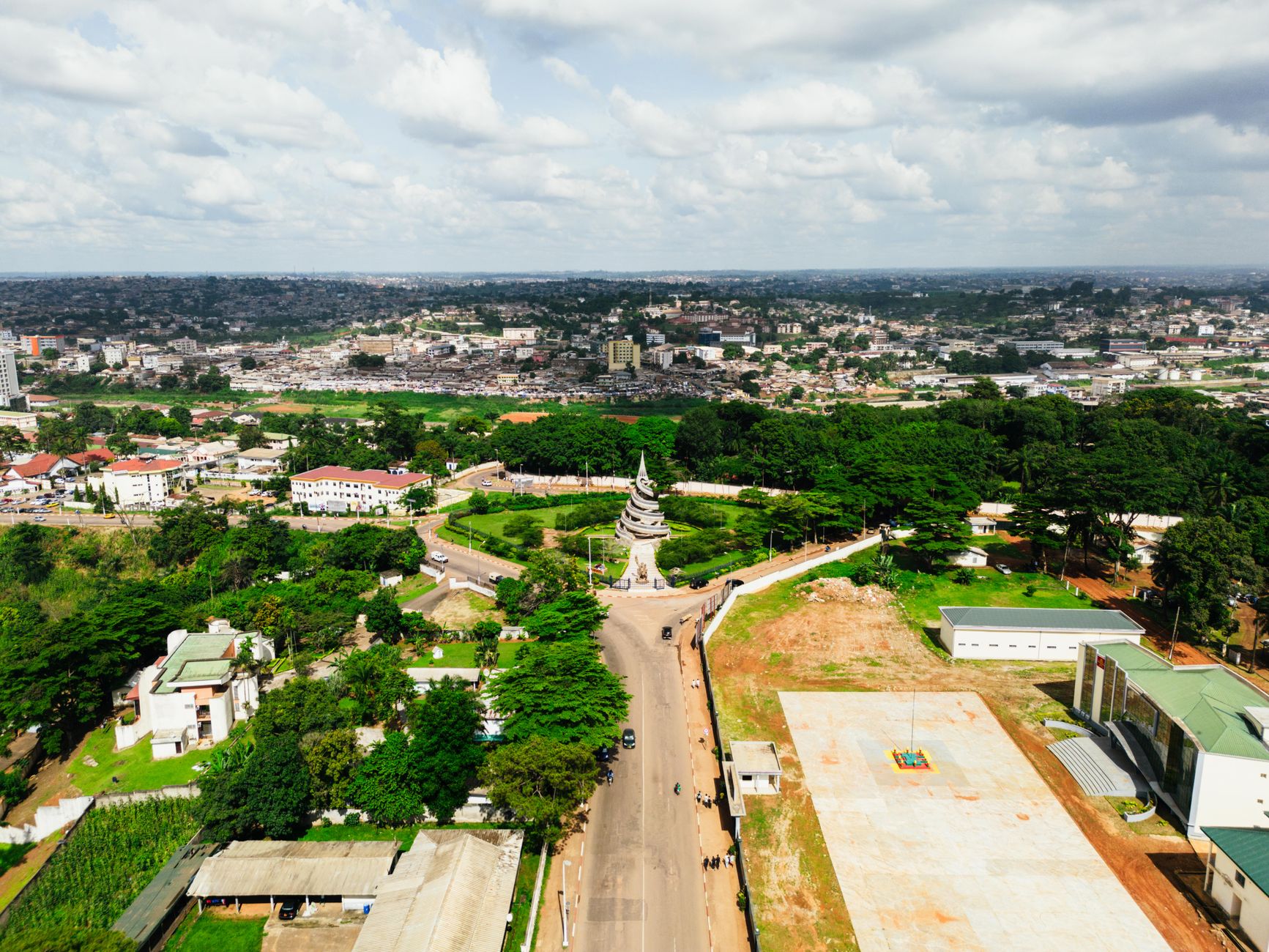
A stunning aerial shot of the Reunification Monument in Yaoundé, Cameroon showcasing urban beauty.
Photo by Kelly on Pexels · Pexels License
Close-up view of Nile crocodiles sunbathing, showcasing their detailed scales and textures.
Photo by Ravi Rajapaksha on Pexels · Pexels License
Aerial view of the Monument of Reunification in Yaoundé, Cameroon. Iconic city landmark.
Photo by Kelly on Pexels · Pexels License
A close-up of a green praying mantis resting on leaves in Mzuzu, capturing wildlife in Malawi.
Photo by Ravi Rajapaksha on Pexels · Pexels License
Old brick house with wooden roof and aged wall in bright daylight.
Photo by Wanderley Matheus on Pexels · Pexels License
Urban modernist architecture featuring pillars and steps in Mérida, Venezuela.
Photo by Arturo Añez. on Pexels · Pexels License
Practical Information
Visa
Visa rules changed in early 2026, so check your nationality on Malawi's official eVisa portal before you book flights. UK, Canadian, Australian, and many EU travelers now need a visa; some nationalities can get one on arrival again, but Malawi still recommends applying in advance. Passport validity should be at least 6 months, and you need a yellow fever certificate if you arrive from or transit more than 12 hours in a risk country.
Currency
Malawi uses the Malawian kwacha, written as MWK or MK, and cash still runs the country outside better hotels and established lodges. Bring clean U.S. dollars as backup for exchange, visa fees, and the days when ATMs in Lilongwe or Blantyre simply run dry. A realistic 2026 budget starts around US$22-30 a day for basic travel, with mid-range trips closer to US$50-70.
Getting There
Most travelers fly into Kamuzu International Airport in Lilongwe or Chileka International Airport in Blantyre. From Europe or North America, the usual pattern is one stop via Addis Ababa, Nairobi, or Johannesburg rather than any heroic direct routing. Malawi has no useful international passenger rail link, so flying is the practical entry point.
Getting Around
For city-to-city travel, buses now make more sense than rumor suggests, and EasyBus sells tickets on routes linking places such as Lilongwe, Blantyre, Zomba, Mangochi, Mzuzu, Karonga, and Mulanje. Minibuses are cheaper but crowded, slow to fill, and rough with luggage. Self-drive or private transfers save serious time once you leave the main paved corridors, especially around Mulanje, Monkey Bay, and Livingstonia.
Climate
The dry season from May to October is the easiest window for most trips: clearer roads, better wildlife viewing, and more comfortable hiking weather on the Zomba Plateau, Nyika, and Mount Mulanje. October and November are the hottest months, especially along the lake. The rains usually run from November to April or early May, when floods, washouts, and cyclone spillover can hit the south.
Connectivity
Mobile data is useful in cities and lake hubs, but coverage thins fast on long road legs and in mountain country. WhatsApp does a lot of the real work here, from guesthouse bookings to driver updates. Do not assume hotel Wi-Fi in Nkhata Bay, Karonga, or Monkey Bay will carry a full workday without protest.
Safety
Malawi is usually manageable for independent travelers, but road risk is the thing that bites hardest: potholes, livestock, pedestrians, unlit vehicles, and fuel shortages are all normal. Avoid night driving altogether. In towns, keep cash split up, use hotel safes when they exist, and take the usual care with phones and bags in busy markets and transport hubs.
Taste the Country
restaurantNsima and ndiwo
Right hand. Pinch, roll, press, dip, eat. Lunch or supper. Family, colleagues, guests.
restaurantChambo by the lake
Whole fish, grill or fry, bone and finger work. Noon or evening. Tables in Mangochi, Monkey Bay, Nkhata Bay.
restaurantUsipa with tomato and onion
Small fish, pan, sauce, nsima. Weekday meal. Home kitchens, roadside plates, market lunches.
restaurantKondowole
Cassava paste, pull, dip, swallow. Heavy meal. North country, long afternoons, hunger without negotiation.
restaurantThobwa
Cup, bottle, calabash. Drink, pause, talk. Weddings, visits, heat, roadside stops.
restaurantMandasi and tea
Fried dough, morning tea, fingers. Dawn appetite. Bus stations, school runs, street corners in Blantyre and Lilongwe.
restaurantKachumbari with fish
Tomato, onion, acid, crunch. Spoon or fingers. Lake meals, grilled chambo, hot noon.
Tips for Visitors
Carry cash
Outside solid hotels and a few tour operators, cards are unreliable and ATMs can empty out without warning. Keep enough kwacha for transport, meals, and fuel-day surprises.
Bring dollars
Clean U.S. dollar notes are the best backup currency for exchange and the least annoying emergency plan. Torn, old, or marked bills can be refused.
Book buses early
If you know your date, book intercity buses before travel day, especially on the Lilongwe, Blantyre, Mzuzu, and Zomba corridors. It saves hours of terminal drift and usually gets you a better seat.
Treat rail as bonus
Passenger trains still exist, but they are not the backbone of a Malawi itinerary. Use them only if the timetable happens to fit your route in the south and you can absorb delays.
Tip lightly
Restaurants do not demand American-style tipping. Five to ten percent for good service is enough, and small cash tips for drivers, porters, and lodge staff go further than theatrical generosity.
Skip night drives
This is the simplest risk-reduction move in the country. Roads can be narrow, poorly lit, and full of hazards that appear too late to matter.
Use WhatsApp
Guesthouses, drivers, and boat operators often confirm plans on WhatsApp faster than by email. Buy local data early and keep screenshots of bookings in case signal drops.
Greet first
A quick greeting before any request matters more than travelers expect. In shops, lodges, and markets, that small pause changes the whole interaction.
Explore Malawi with a personal guide in your pocket
Your Personal Curator, in Your Pocket.
Audio guides for 1,100+ cities across 96 countries. History, stories, and local insight — offline ready.
Audiala App
Available on iOS & Android
Join 50k+ Curators
Frequently Asked
Do I need a visa for Malawi in 2026? add
Usually yes, but the exact rule now depends on your passport and Malawi changed the system again in early 2026. Check your nationality on the official eVisa portal before booking flights, because U.S. guidance still conflicts with Malawi's own immigration pages.
Is Malawi expensive for tourists? add
No, Malawi is still one of the more affordable countries in the region if you travel simply. Budget travelers can manage on about US$22-30 a day, while a comfortable mid-range trip usually lands closer to US$50-70 before high-end safari or lodge costs.
What is the best time to visit Malawi? add
May to October is the safest answer for most trips. Roads are drier, wildlife viewing is better, and hiking around Mulanje, Zomba, and the northern highlands is much easier than in the rainy season.
Can I use credit cards in Malawi? add
Sometimes, but do not build your trip around that assumption. Better hotels in Lilongwe, Blantyre, and some lake lodges accept cards, yet much of the country still runs on cash and ATMs can run out.
Is Malawi safe for self-drive travel? add
Yes in daylight, with planning, and no if your plan involves night driving. The real issues are road conditions, fuel shortages, potholes, livestock, and unpredictable traffic rather than dramatic crime.
How do tourists get around Malawi? add
Most travelers mix buses, private transfers, and self-drive depending on the route. Domestic flights help for remote lodge circuits, but for common routes between Lilongwe, Blantyre, Zomba, Mangochi, Mzuzu, and Karonga, the road network does most of the work.
Do I need a yellow fever certificate for Malawi? add
Only if you arrive from, or transit more than 12 hours in, a yellow-fever-risk country. If that applies, airlines may check before boarding as well as immigration on arrival.
Is Lake Malawi good for a beach holiday? add
Yes, if you want freshwater beaches, clear water, and a slower rhythm than an Indian Ocean resort strip. Mangochi, Monkey Bay, and the southern lake have the easiest beach-and-boat setup, while Nkhata Bay feels more independent and less staged.
Do I need a 4x4 in Malawi? add
Not for the main paved routes between major towns, but it helps once you add mountain roads, remote lodges, or rainy-season travel. A standard vehicle is fine for straightforward dry-season runs if you keep to major roads and avoid driving after dark.
Sources
- verified Malawi eVisa — Official visa categories, fees, processing times, and current entry rules.
- verified UK Foreign Travel Advice: Malawi — Official UK guidance on visas, passport validity, health rules, and safety conditions.
- verified Government of Canada Travel Advice and Advisories: Malawi — Official Canadian advice on visa requirements, cash access, transport, and health precautions.
- verified Malawi Airlines — Domestic route information for the main internal air links.
- verified EasyBus Malawi — Live intercity bus booking platform covering major routes used by travelers.
Last reviewed: