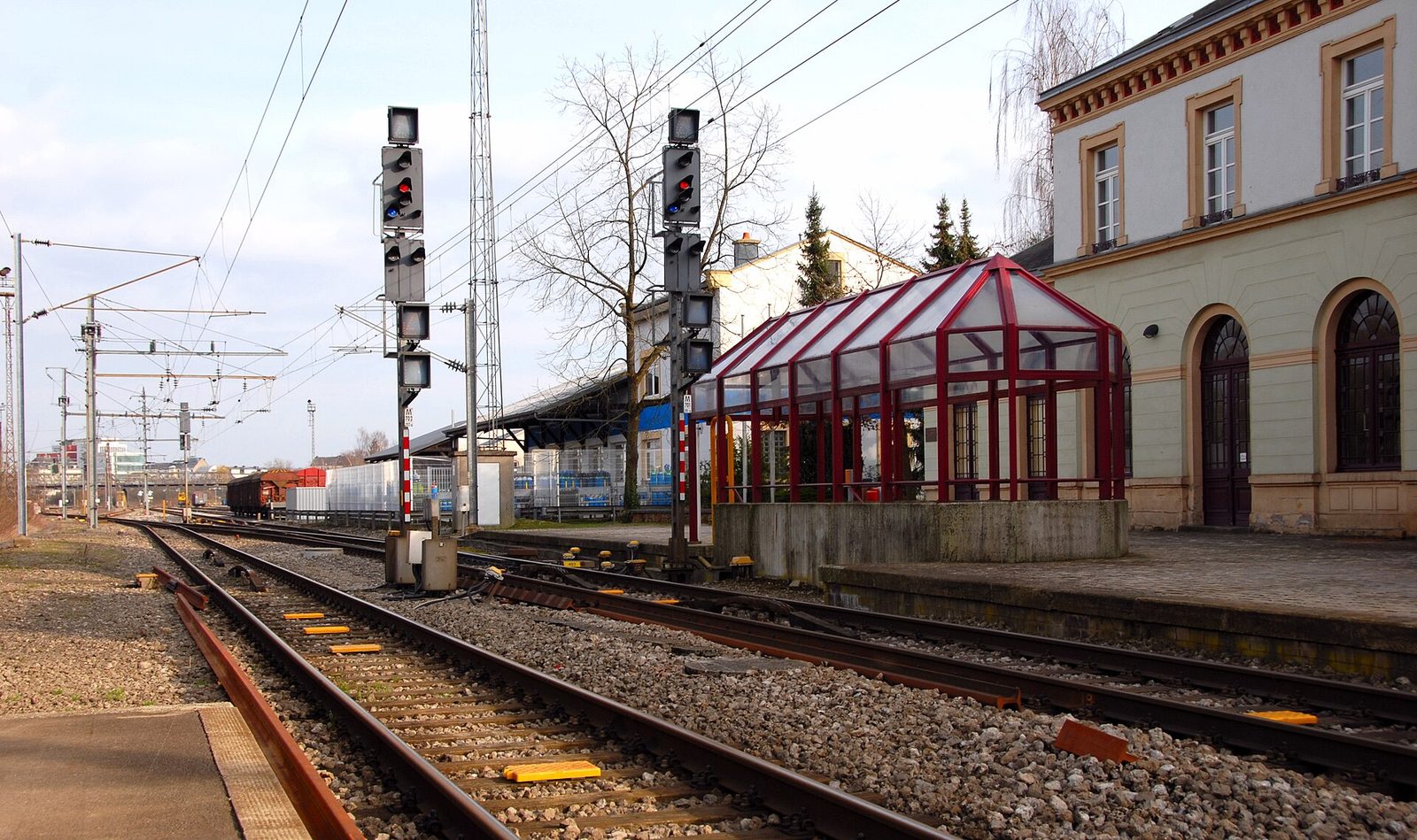
Historical Development of Route d’Esch
Origins and Early Growth
Route d’Esch was constructed in the 19th century, catalyzed by the discovery of “minette” iron ore in 1838 and the rapid industrialization of southern Luxembourg. The road served as a critical link between Luxembourg City and Esch-sur-Alzette, enabling the transport of materials and workers and fostering the rise of new neighborhoods during late 19th-century urban expansion (luxembourg.public.lu).
20th Century Urbanization
In the early 20th century, Route d’Esch became an urban hub, shaped by visionary planning and the influx of diverse communities attracted by industrial jobs. Its architecture reflects this era, blending Germanic and Latin design influences in residential and commercial buildings.
Post-Industrial Transformation
The decline of heavy industry in the late 20th century prompted a wave of urban regeneration. Route d’Esch evolved into a corridor of modern business and residential development, notably in the Hollerich and Gasperich districts, and now anchors major projects like the Cloche d’Or business district (gouvernement.lu).
Cultural and Social Significance
Multicultural Corridor
Route d’Esch’s identity has been shaped by successive generations of workers from across Europe, making it one of Luxembourg’s most diverse thoroughfares. Today, this diversity is experienced in its shops, restaurants, and community events (luxembourg.public.lu).
Architectural Heritage
The corridor showcases an eclectic mix of architecture, from ornate early 20th-century townhouses to modernist commercial blocks and innovative mixed-use developments, offering a visual journey through Luxembourg’s urban history.
Economic and Professional Hub
Route d’Esch is a center for commerce and professional services, especially near the Cloche d’Or development. The area at 7-11 Route d’Esch is notable for hosting a range of offices and service providers (addresshistory.org).
Visiting Route d’Esch: Practical Information
Visiting Hours and Accessibility
- Route d’Esch is a public street, open 24/7. No tickets or passes are required.
- Shops and businesses Most open 9:00 AM – 6:00 PM (Monday–Saturday); some open weekends.
- Accessibility Wide pavements and accessible tram/bus stops make the area suitable for visitors with disabilities.
Tickets and Passes
- Public transport All trams, buses, and trains in Luxembourg are free for residents and visitors (xplrverse.com).
Getting There
- Tram and bus Route d’Esch is served by frequent (3–8 minute intervals) and accessible public transport. Real-time updates are available via the Mobiliteit.lu app (gouvernement.lu).
- Cycling Dedicated cycle lanes and the Vëloexpresswee PC104 cycle route connect Luxembourg City with Esch-sur-Alzette (luxtoday.lu).
Key Attractions
- Cloche d’Or Major business and shopping district with 130+ shops, cafes, and green spaces (clochedor.lu).
- Stade de Luxembourg National stadium for football, rugby, and large events (stade.lu).
- Cultural venues Close to venues like Rockhal and Konschthal Esch, accessible by tram (luxembourgexpats.lu).
Visitor Tips
- Best seasons Visit in spring or autumn for pleasant weather.
- Signage Multilingual, with English widely spoken.
- Etiquette Greet staff, use pedestrian crossings, and be mindful of cyclists/trams.
Urban Evolution and Planning
Transformation and Redevelopment
Route d’Esch’s urban fabric has shifted from industrial to mixed-use, with new residential, commercial, and green spaces revitalizing former industrial sites. Notably, the Belval district near Esch-sur-Alzette is a model of industrial heritage converted into a modern urban quarter (luxtimes.lu).
Infrastructure and Green Spaces
City planning along Route d’Esch emphasizes pedestrian-friendly layouts, accessible public transport, and integration of parks and plazas (vdl.lu).
Cultural Events and Attractions
- Galleries and exhibitions Venues like Schlassgoart and Art-Management host regular art shows (art-management.lu).
- Festivals and nightlife Events such as Fête de la Musique and performances at Kulturfabrik enliven the area (outofyourcomfortzone.net).
- Community spaces Parks and plazas host seasonal events for all ages (touristplaces.guide).
Public Spaces, Dining, and Community Life
- Dining A diverse culinary scene, from traditional Luxembourgish food (e.g., “Judd mat Gaardebounen”) to international cuisine (trek.zone).
- Green spaces Parks like Esch-sur-Alzette City Park and Parc Merl offer relaxation and community events.
- Local life The corridor is a hub for daily life, with family-friendly amenities and a strong sense of community.
Mobility and Sustainable Transport
- Free public transport All buses, trams, and trains are free for everyone (visitluxembourg.com).
- Cycling and walking Expanding cycle paths and pedestrian zones.
- Driving Major highways provide car access; monitor local traffic updates (acl.lu).
Social Diversity and Urban Identity
Route d’Esch’s neighborhoods are among the most culturally mixed in Luxembourg, reflecting decades of immigration and community-building. Affordable housing and participatory urban planning foster an inclusive environment (urban-agency.com).
Events, Festivals, and Nightlife
- Year-round events Art exhibitions, concerts, vernissages, and charity group shows (art-management.lu).
- Major festivals Schueberfouer funfair, Winterlights festival, and other citywide celebrations (City of Luxembourg).
- Nightlife Bars, music venues, and late-night eateries provide options for all tastes.
Exploring Route d’Esch: Visitor Guide
Cloche d’Or District & Shopping Center
The southern anchor of Route d’Esch, this district is a hub of shopping, dining, and leisure. The Cloche d’Or Shopping Center is open Monday–Saturday (10:00 AM–8:00 PM), with free admission and excellent public transport links (clochedor.lu).
Stade de Luxembourg
Hosting major sports and cultural events, the stadium is accessible by tram and bus, and tickets for events are available online (stade.lu).
Neighborhoods and Urban Character
Route d’Esch passes through Belair, Hollerich, Gasperich, and Cessange, each with its own blend of historical charm and modern amenities. Public art installations and restored buildings can be found throughout.
Route d’Esch Tramway Extension: Visitor Information
Scope and Timeline
A 4.2 km tramway extension is planned from Place de l’Étoile to Cloche d’Or, forming a second north-south public transport axis. Construction is expected to begin after 2026, with commissioning slated for 2030–2031 (mmtp.gouvernement.lu; virgule.lu).
Key Features
- Stations Place de l’Étoile, Hollerich, and Cloche d’Or.
- Accessibility All stations will be barrier-free and cyclist-friendly.
- Integration The tram will connect to multimodal hubs and urban redevelopment projects, including Nei Hollerich (vdl.lu).
Practical Details
- Free fares No tickets needed for any tram, bus, or train ride.
- Schedules Frequent service (5–10 minutes at peak).
- Construction Temporary detours and signage will ease disruption (en.paperjam.lu).
Frequently Asked Questions (FAQ)
Q: Is Route d’Esch accessible at all times?
A: Yes, as a public street, it is open 24/7. Businesses have their own opening hours.
Q: How do I get to Route d’Esch via public transport?
A: Use Luxembourg’s free buses and trams; real-time info is available via the Mobiliteit.lu app.
Q: Are there guided tours?
A: Yes, through the Luxembourg City tourism website.
Q: Are there entrance fees for attractions?
A: Public areas are free; some exhibitions or events may require tickets.
Visitor Tips
- Leverage free public transport for easy access.
- Check event calendars for festivals and exhibitions.
- Explore the culinary diversity along the corridor.
- Use the city’s cycling infrastructure for eco-friendly travel.
- Plan ahead for accommodation, especially during major events.
Summary and Visitor Recommendations
Route d’Esch stands as a testament to Luxembourg’s transformation from industrial powerhouse to modern, multicultural, and sustainable city. Visitors can enjoy a blend of historical depth, vibrant community life, and innovative urban design, all easily accessible by free public transport. The upcoming tramway extension will further enhance the visitor experience by connecting neighborhoods and attractions with seamless, sustainable mobility (mmtp.gouvernement.lu; gouvernement.lu; stade.lu).
For the most up-to-date travel information, download the Audiala app and consult official Luxembourg tourism and government websites. Route d’Esch is an unmissable destination for anyone seeking to experience the dynamic pulse of Luxembourg City.