Luxembourg City
Luxembourg Updated Apr 2026
The elevator doors open onto a cliff-edge glass box and suddenly you're 71 metres lower, breathing river-cool air while buses and bankers glide overhead on a bridge that looks like stone origami. That's Luxembourg City in one heartbeat: a capital where medieval tunnels run beneath glass-walled EU offices and the national dish is pork collar thick as a dictionary served with wine that costs less than bottled water.
 Photo: Elona Agug / Pexels
- Attractions
- 25
- Audio
- 10 h
- Trip length
- 2–3 days
- Best season
- May–September
Why Luxembourg City
Built from cited sources · see the method · How we make our guides →
This is the only country that managed to turn its entire capital into a fortress, then voted to demolish it. What survives is a double gorge city: the Alzette and Pétruse rivers slice 60-metre ravines between districts, so your afternoon walk involves ramparts, cliffside elevators and staircases steep enough to qualify as cardio. The same parliament that declared free public transport in 2020 still meets in a 19th-century ducal palace you can enter when the Grand Duke isn't home.
Luxembourgish is the language you hear on playgrounds, French appears on menus, German on street signs, and English in every bank lobby. Switching between them mid-sentence is called 'doing the yoyo' and locals don't notice they're doing it. After dark the switch flips to Crémant poured in Grund caverns, techno in a Clausen brewery, and 3 a.m. potato pancakes served by a woman who calls everyone 'dear' in Letzebuergesch.
Understood Fortress
The Bock and Pétrusse casemates hide 23 km of sandstone tunnels that once housed 1,200 soldiers, bakeries, and slaughterhouses. Walk them at dusk when the stone still holds the day’s heat and you’ll hear the Alzette river echoing through cannon ports.Free Elevator to a Valley
The Pfaffenthal Panoramic Lift drops 71 m from the clifftop city to a village-quiet valley in 30 silent seconds. Locals use it as a commute; visitors get a glass-walled birds-eye map of how the city folds into its gorges.Art in a Fort
I. M. Pei’s MUDAM rises from Fort Thüngen’s 1733 walls like a glass citadel. Inside, the collection skips chronology and lets a 1960 Yves Klein share space with a 2026 VR installation mined from satellite debris.Zero-Fare Nation
Since 2020 every bus, tram, and regional train costs nothing. Hop the T1 tram straight from Kirchberg’s EU towers to the medieval Grund in 14 minutes without ever hunting for a ticket machine.
Neighborhoods
Where to wander, by quarter — each with its own rhythm.
Ville Haute
The chessboard core inside the 17th-century Spanish walls. Rue Philippe II smells of roasted coffee and new banknotes; detour one block south and you're on Rue de la Boucherie where butchers worked until 1965 and the stones still keep the smell of smoked pork. At lunch the business crowd queues for €14 bowls of Bouneschlupp at Mousel's Cantine; by 7 p.m. the same tables hold diplomatic passports and bottles of Riesling that cost more than the waiter's weekly rent.Grund
River-level grid of 14th-century cloth-dyers' houses turned into the city's best after-work patio circuit. Follow the smell of hops to the former Rham mill where craft brewers age beer in 300-year-old sandstone caves. On warm evenings the Alzette reflects yellow bar lights and the sound of French rap echoes off cliffs where monks once kept vineyards. Access is either by the 110-step breakneck stair called the Rue Münz or the free Pfaffenthal lift that locals ride like a vertical subway.Clausen
What happens when you turn a 1511 brewery complex into a nightlife mile. Copper kettles still shine inside Rock Box but now they backdrop DJs who start at midnight sharp. The outdoor terraces sit under the floodlit ruins of the Three Acorns fortress, so you're drinking IPA beneath 18th-century loopholes. Weeknights belong to civil servants debating EU regulation over pints; weekends bring Metz kids in white sneakers and the bassline travels up the valley until the 03:15 night bus hauls everyone home.Kirchberg
Farmland 60 years ago, now a plateau of mirrored towers housing the European Court of Justice and I.M. Pei's marble wave that is MUDAM. Walk the public art trail at 17:30 and you'll share Jean Dubuffet sculptures with lawyers on cigarette breaks speaking legalese in four languages. The Philharmonie's 823 columns light up like a pipe organ after sunset; inside, the acoustics are so precise you can hear a violinist turn a page during Mahler. Bring a jacket – altitude plus wind tunnels from office blocks drops the temperature five degrees below the valley.Pfaffenthal
The pocket that time-stamped postcards forgot. Cobbled lanes barely two metres wide, laundry strung between 1690s weavers' houses, and a bakery that sells warm Quetschentaart plum tart at 07:00 sharp. Ride the glass elevator at sunrise: the city above is still asleep, the river below runs silver, and the only sound is a single cyclist rattling across the 1861 Pulvermuhl viaduct. Locals call it the village inside the city; GPS still gets lost here.Gare
Arrive hungry. The station quarter packs Tunisian brik à l'œuf, Nepalese momos and Portuguese bifanas into three blocks south of the rails. Morning smells switch from espresso at Café Paris to cardamom at the Indian snack counter by 10 a.m. After midnight the queue outside the 24-hour Pakistani grill moves faster than the taxi rank. Not pretty – concrete and neon – but the place you learn that Luxembourg issues more passports per capita than anywhere else while everyone waits for the same 02:17 falafel.
Plan your trip
Before you go
- Getting There
- Luxembourg Airport (LUX) is 6 km from centre; bus 16 or 29 run every 10 min and are free. The national carrier Luxair handles most intra-European routes. By rail, the Gare de Luxembourg terminus receives TGV, ICE, and Belgian IC trains. From Brussels: 3 hr; Paris: 2 hr 10 min. Major motorways: A1 from Germany, A3 from France, A6 from Belgium.
- Getting Around
- No metro; one tram line (T1) links Kirchberg to Gare and Cloche d’Or. Buses radiate city-wide—AVL and RGTR fleets, all fares €0 since 2020. Pfaffenthal Panoramic Lift is also free. Vel’OH! e-bikes dock at 72 stations; first 30 min €1, then €0.50 per 15 min. Mobiliteit.lu app shows real-time departures.
- Climate & Best Time
- May–Sep: 18–24 °C, 8–10 hrs sunshine, lowest rainfall in July. Winter 0–5 °C, frequent drizzle, cobbles ice over. Peak tourism: late July–early August when comfort index tops 8/10. Off-peak November–March means cheaper rooms but pack waterproof shoes.
- Language & Currency
- Luxembourgish, French, German are official; English is standard in museums, bars, and bank lobbies. Currency is the euro. Cards accepted almost everywhere, yet keep small coins for Saturday markets or a €2 tip for the server.
- Safety
- Ranked Europe’s safest capital; violent crime is rare. Watch for pickpockets on bus 16 to the airport and around Gare after midnight. Valley trails get slippery—rubber soles recommended when stone is wet.
A Fortress That Became a Capital
From Siegfried’s cliff-top castle to Europe’s banking heart
- c. 60 BCE
Roman Supply Post
Legionaries raise a timber-and-earth relay station on the Alzette–Pétrusse ridge. The road they patch eastward to Trier will still trace the same line 2,000 years later. Nothing grand, just a place to change horses and count barrels of fish sauce.
- 963 CE
Siegfried Buys a Rock
Count Siegfried swaps forest and vineyard near Trier for a windswept promontory called ‘Lucilinburhuc’. The parchment is dry before carpenters start hauling beams up the cliff. In that single transaction, a county—and eventually a country—gets its name.
- 1308
Henry VII Crowned Emperor
A son of Luxembourg’s counts, Henry VII, is elected King of the Romans. Overnight the castle’s great hall becomes an imperial mailing address. Gold leaf replaces whitewash; minstrels learn to sing in Latin. The dynasty will place four emperors on the throne before the line dies out.
- 1443
Burgundians Storm the Walls
Philip the Good’s artillery pounds the sandstone ramparts for 22 days. Handgun smoke drifts across the valley; the garrison finally surrenders at dusk. The duchy passes to Burgundy, and Luxembourg soldiers start wearing the flamboyant colours of Valois fashion.
- 1543
Spanish Bastions Rise
Italian engineers add arrow-headed bastions and a 24-metre-wide ditch. The city now looks like a star carved into the plateau. From the valley floor the walls seem to lean outward, daring attackers to try.
- 1633
Birth of Vauban
Sébastien Le Prestre is born in a small Burgundian village. He will grow up to redesign this very fortress after Louis XIV’s cannons capture it. His angled bastions will make the city a textbook of military geometry.
Show the full timeline (23 moments)
- 1684
Louis XIV Takes the Fortress
After a four-month siege, French flags snap in the wind above the Bock. Vauban arrives with surveyors instead of soldiers. Over the next four years he adds 15 kilometres of underground galleries—casemates that can shelter 1,200 cavalry horses.
- 1713
Austrian Habsburgs Arrive
The Treaty of Utrecht hands Luxembourg to Vienna. Austrian engineers thicken walls, plant chestnut avenues for sentries, and introduce coffeehouses to the upper town. Officers debate Mozart’s latest symphony while patrols stamp their boots against the cold.
- 1795
French Republicans Abolish Titles
Blue-white-red cockades replace imperial eagles. Monks are evicted from Saint-Michel; the abbey becomes a munitions store. Streets lose saints’ names and gain revolutionary dates. The duchy becomes a département: Forêts.
- 1815
Congress Vienna Elevates Duchy
Diplomats in Vienna raise Luxembourg to Grand Duchy but park 3,000 Prussian troops inside the casemates. William I of the Netherlands keeps the crown; Berlin keeps the keys to the gates. The city becomes both capital and bargaining chip.
- 1861
Passerelle Viaduct Opens
A 290-metre yellow-brick viaduct hauls the first trains across the Pétrusse gorge. From below, the 12 arches look like a stone rainbow pinning the two cliffs together. Engineers boast it will outlast Rome’s aqueducts; locals simply call it ‘the new bridge’ and hurry to catch the 8:03.
- 1867
Fortress Demolition Begins
Neutral by treaty, the city must lose its walls. Sappers blast 24 tonnes of powder a week, turning ramparts into rubble slopes. Children collect cannonballs for doorstops. By 1883 the ‘Gibraltar of the North’ is a skyline of stumps.
- 1890
Adolphe Becomes First Grand Duke
When the Dutch crown passes to a woman, Luxembourg law splits the thrones. Duke Adolphe of Nassau rides into a capital finally free of foreign bayonets. New flags, new anthem, old palace: monarchy rebooted as purely Luxembourgeois.
- 1903
Adolphe Bridge Spans Valley
An 84-metre reinforced-arch bridge leaps the Pétrusse in a single stride. Opened on a July afternoon so windy that photographers lose their hats, it becomes the postcard everyone mails home. Overnight the city stops feeling like two towns on opposite cliffs.
- 1914
Kaiser’s Troops March In
Neutrality counts for nothing. German cavalry trot across Adolphe Bridge at dawn, hooves echoing like kettle drums. The government stays, but mailboxes bear German stamps. Soup kitchens open in the Grund; refugees sleep in the casemates that once stored powder.
- 1940
Blitzkrieg at Breakfast
Stukas dive over the cathedral before the baker finishes his first batch. Ten hours later the swastika flaps above the palace. The Grand Ducal family flees to London; resistance graffiti appears by night: ‘Mir wëlle bleiwe wat mir sinn’—we want to remain what we are.
- 1944
Americans Liberate Capital
September sun glints off Sherman tanks as the 5th Armored rolls down Avenue de la Liberté. Citizens toss flowers and hoarded cigarettes. In the casemates, GIs find German field hospitals carved into rock—beds still warm.
- 1952
Europe Moves In
The European Coal and Steel Community sets up its court in the restored Villa Vauban. Bureaucrats in grey suits replace generals in grey coats. The city that once planned wars now referees peace treaties over coffee served in thin porcelain cups.
- 1985
Luxembourg City Goes Culture Mad
The state declares 1985 ‘Kulturhauptstad’ year. Sculptures sprout in every square; jazz drifts from heated tents in January. Locals grumble about ticket prices, then queue anyway. The festival proves the capital can throw a party without foreign royalty.
- 1994
UNESCO Enrolls Old Town
The fortifications, now flower-draped ruins, join the World Heritage list. Bureaucrats promise stricter balcony rules; tour guides buy louder megaphones. Overnight ‘casemates’ becomes the word every visitor mispronounces.
- 2006
MUDAM Opens on Kirchberg
I. M. Pei’s glass and sandstone fortress-of-art welcomes its first crowd. Inside, a corridor of polished steel reflects the Alzette valley like a fun-house mirror. Contemporary art finally has a palace equal to the old masters’ cathedrals.
- 2016
Panoramic Elevator Drops
A free glass elevator descends 71 metres in 25 silent seconds, spitting riders into Pfaffenthal’s vineyards. Cyclists cheer; Instagram servers groan. The medieval valley becomes a 30-second detour instead of a 30-minute detour.
- 2021
Floodwaters Reach Grund Bars
Two months’ rain falls in forty hours. The Alzette swallows kayaks and café terraces; sirens echo off the viaduct arches. By morning the mud smells of diesel and wine. Volunteers form bucket brigades; the city dries out, again.
Who lived here
-
Military Engineer · 1633–1707
Sébastien Le Prestre de Vauban
Redesigned the fortress after 1684
After Louis XIV seized the city, Vauban spent three winters here turning cliffs into star-shaped walls. His earthworks still catch the morning sun; you can walk his patrol paths along the Bock. He’d approve of the free lift—less climbing for soldiers.
-
Science-Fiction Publisher · 1884–1967
Hugo Gernsback
Born here
The boy who left Luxembourg City in 1904 imagined radios in wristwatches before wristwatches existed. Born on Rue Philippe II, he’d probably grin at the tram gliding past his childhood window—silent, electric, almost sci-fi.
-
Founding Myth Figures · c. 963 (legend)
Count Sigefroi & Melusina
Allegedly built the first castle on the Bock
Legend says Sigefroi’s mermaid wife Melusina demanded the rocky promontory; she got it, and the city followed. Today’s bronze statue of her combing her hair beside the Alzette keeps the story alive for every child who asks why the river bends.
Where to Eat
Where locals actually book dinner — not the tourist menus.
Insider tips
Small things that change how the city treats you.
Ride Free
Since March 2020 every bus, tram, and train in the country costs zero. No cards, no taps—just step on. Lines 16 and 29 zip you from the airport to the center in 20 minutes for €0.Down By Elevator
The Pfaffenthal Panoramic Lift is free and drops you from the cliff-top city to the storybook Grund in 30 seconds. Locals use it daily; tourists still queue the stairs.Golden Hour
The Chemin de la Corniche faces west—sunset lights up the stone walls and the roofs of Grund like polished copper. Arrive 45 minutes before dusk and stay until the street-lamps flicker on.Tipping 5-10%
Service is included, but round up or leave 5–10 % cash directly to the server; card terminals rarely pass tips on. A Euro or two to the hotel porter is appreciated.Visit May–Sep
Between May and September daytime highs hover at a comfortable 18–24 °C. Winter cobblestones turn icy and the casemates can feel like a fridge.
Gallery
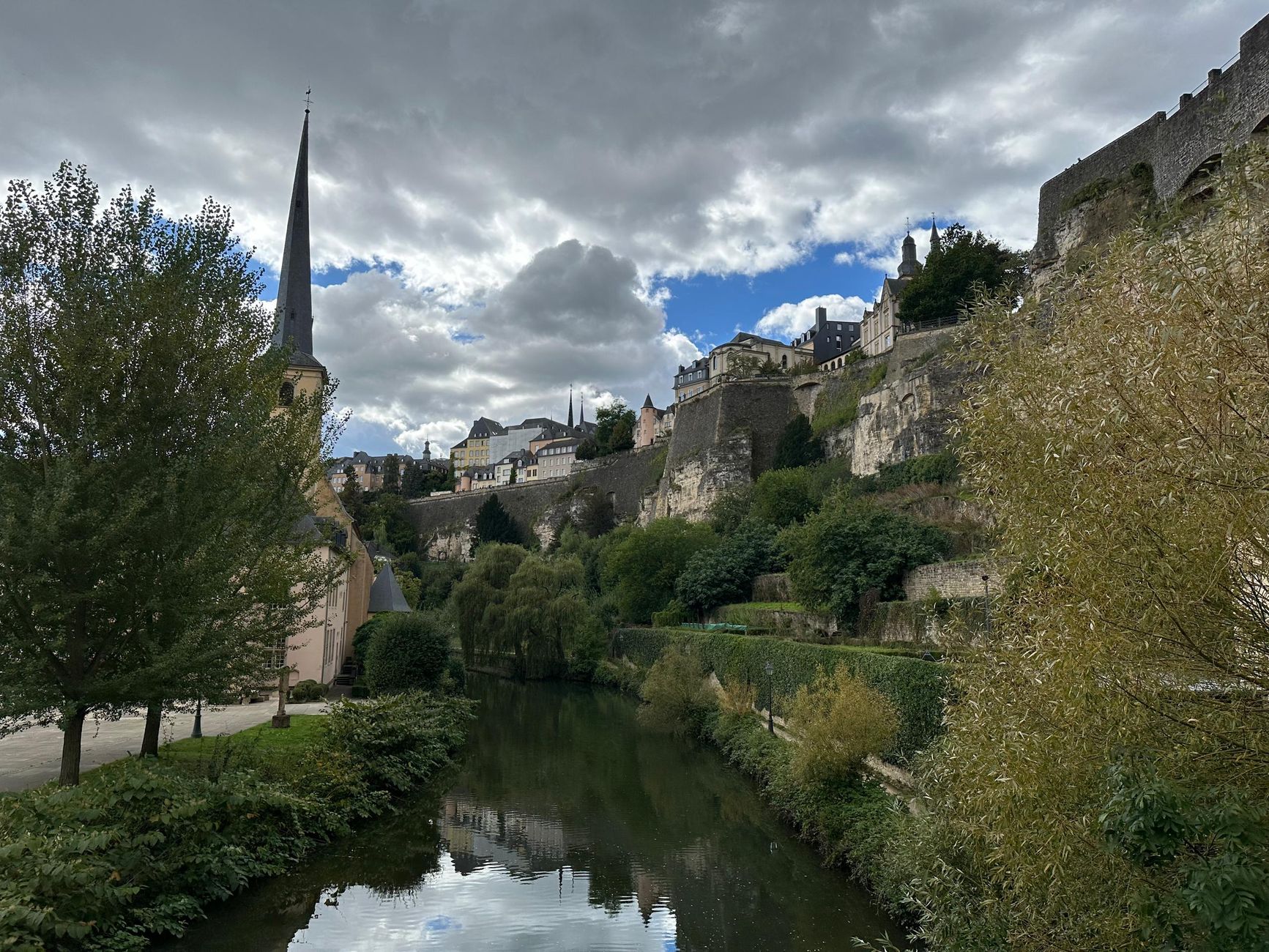
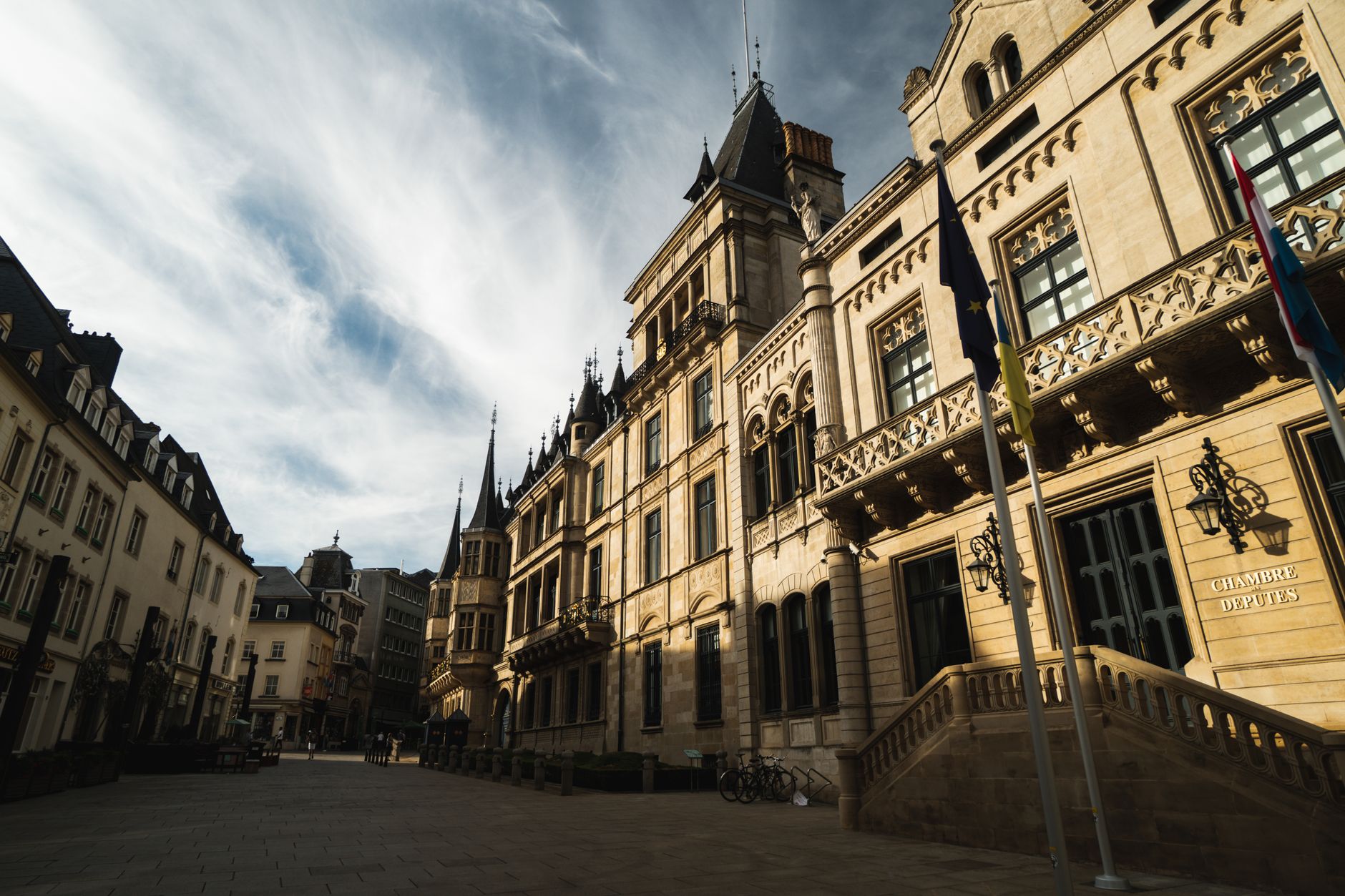
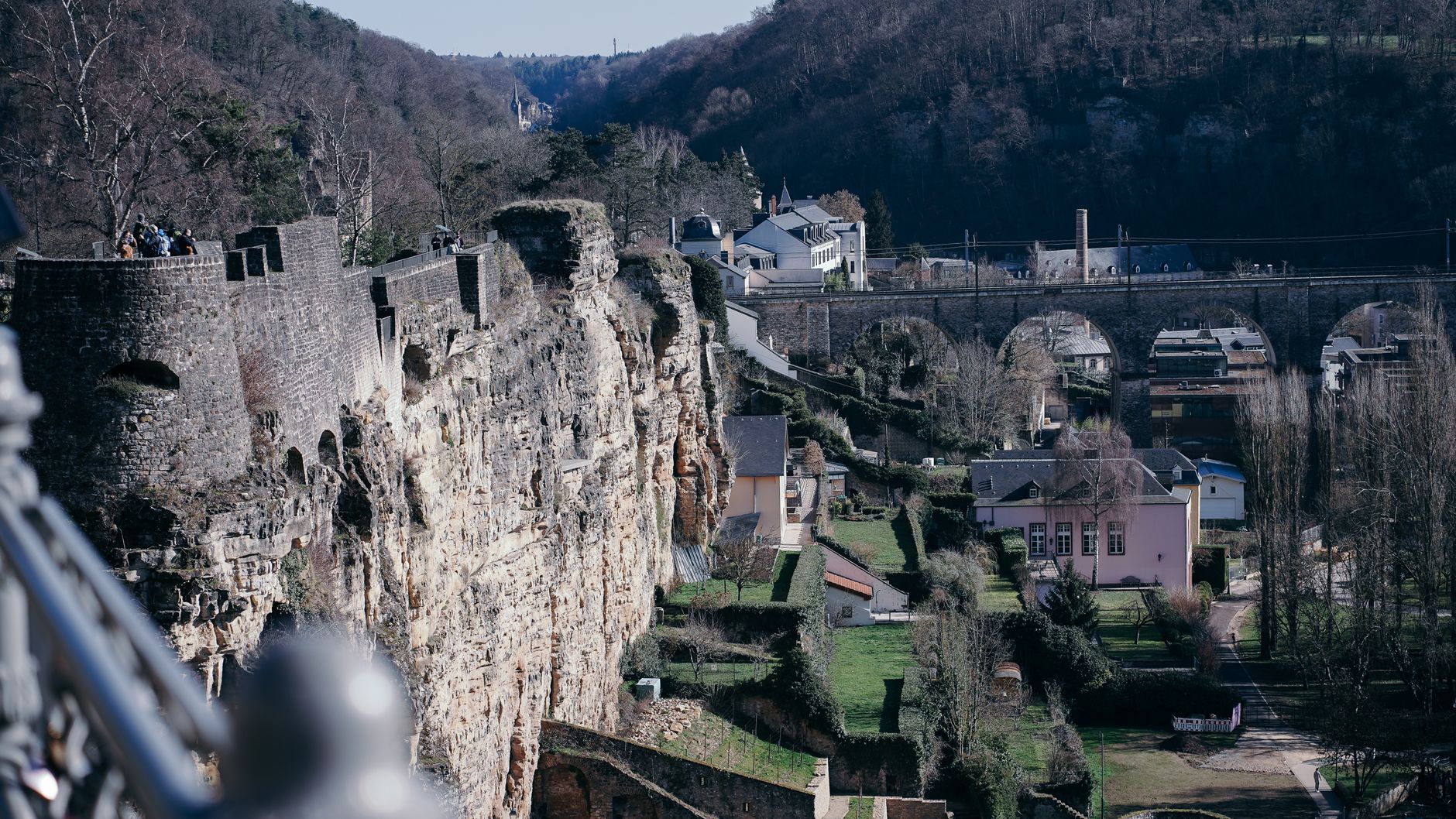
The city, as it actually looks.




Frequently asked
Is Luxembourg City worth visiting?
Absolutely. One day gives you a UNESCO-listed fortress core, a 17th-century balcony walk dubbed "Europe’s most beautiful," and free public transport that actually works. Stay two days if you want the contemporary art at MUDAM and the forest trails without leaving city limits.
How many days do you need in Luxembourg City?
One full day covers the Old Town, casemates, and Grund. Add a second day for the Kirchberg art circuit and a hike in the Alzette valleys. Three days lets you day-trip to Müllerthal’s sandstone cliffs 40 minutes away.
Do I need to buy transport tickets in Luxembourg City?
No. Since March 2020 all buses, trams, and trains are free nationwide—just board. The only fare you’ll pay is €50–100 for a taxi from the airport if you skip the free Line 16 or 29.
Is Luxembourg City safe at night?
Statistically one of Europe’s safest capitals. The biggest risk after dark is slipping on steep, wet cobblestones—wear proper shoes in winter.
Is Luxembourg City expensive?
Hotels and Michelin meals can sting, but transport is free, tap water is safe, and many viewpoints cost nothing. Eat a €12 bowl of Bouneschlupp in Grund and you’ll eat like a local without the tourist markup.
Pick up where you left off
Saved and recently read places — kept on this device only.
Photo credits (10)
- Elona Agug — Pexels License (https://www.pexels.com/license/) — Source: https://www.pexels.com/photo/34339661/
- Mehmet Hardal — Pexels License (https://www.pexels.com/license/) — Source: https://www.pexels.com/photo/27659285/
- Toufic Haddad — Pexels License (https://www.pexels.com/license/) — Source: https://www.pexels.com/photo/29197026/
- Livy Travels — Pexels License (https://www.pexels.com/license/) — Source: https://www.pexels.com/photo/36826012/
- Miles Rothoerl — Pexels License (https://www.pexels.com/license/) — Source: https://www.pexels.com/photo/29853751/
- Gintare K. — Pexels License (https://www.pexels.com/license/) — Source: https://www.pexels.com/photo/14849557/
- Vladislav Anchuk — Pexels License (https://www.pexels.com/license/) — Source: https://www.pexels.com/photo/36674274/
- Toufic Haddad — Pexels License (https://www.pexels.com/license/) — Source: https://www.pexels.com/photo/34127880/
- Ad Thiry — Pexels License (https://www.pexels.com/license/) — Source: https://www.pexels.com/photo/18601606/
- Pierre Blaché — Pexels License (https://www.pexels.com/license/) — Source: https://www.pexels.com/photo/32224979/
Photos may have been resized or cropped.