castle
Fortresses and Castles
From the cliff-cut defenses of Luxembourg City to the hilltop drama of Vianden and the ruins at Beaufort, Luxembourg treats military history as part of the landscape rather than a museum footnote.
Luxembourg is the rare country where medieval fortresses, vineyard villages, and serious modern Europe sit close enough to fit into one well-planned weekend, yet layered enough to reward a longer stay.
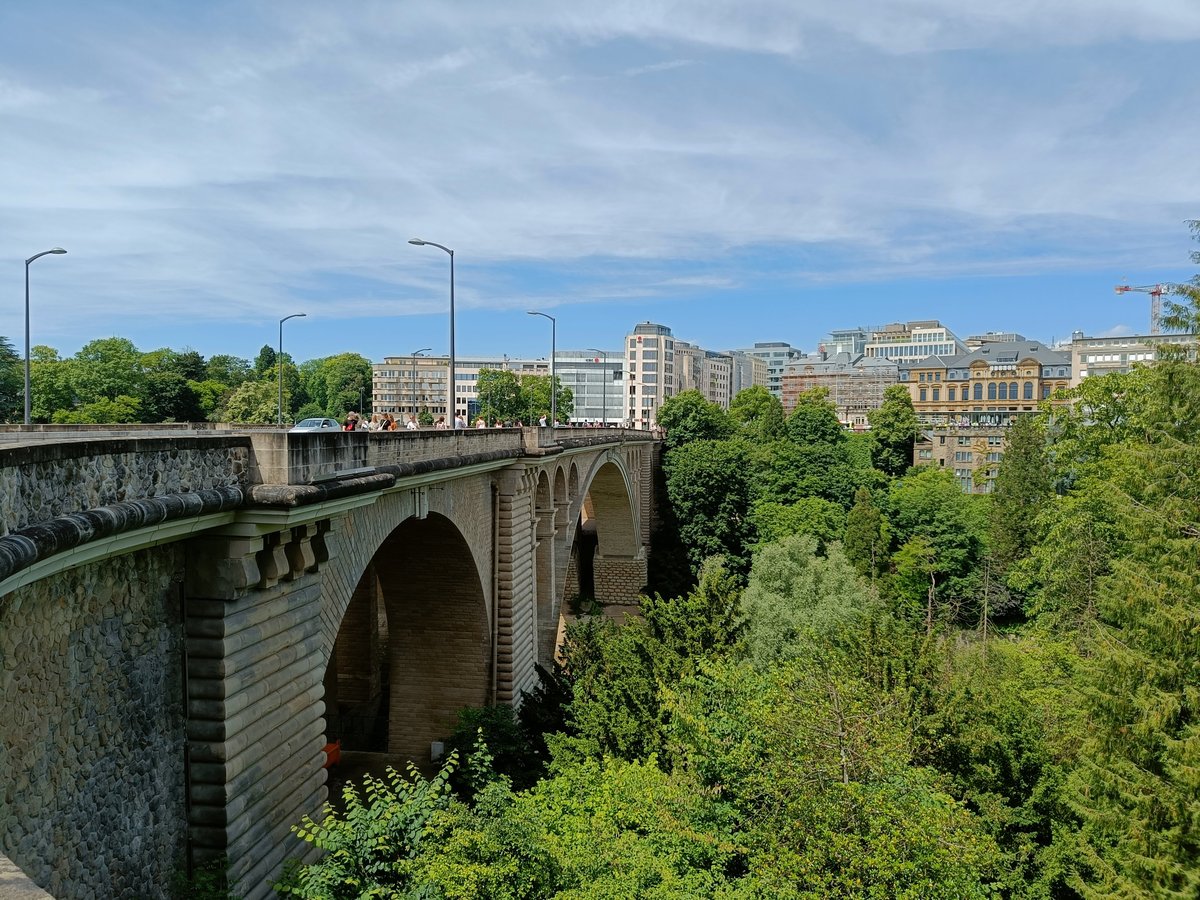 Luxembourg
EntrySchengen 90/180-day rule
LThis Luxembourg travel guide starts with the country’s oddest advantage: you can cross vineyards, fortresses, and forest trails in a single day from Luxembourg City.
Luxembourg works best when you stop expecting a miniature version of its neighbors. The country packs Roman roads, Habsburg scars, steel-era reinventions, and vineyard slopes into 2,586 square kilometers, then makes the whole thing easy to move through with free public transport. Start in Luxembourg City, where the Bock Casemates and the old fortifications explain why this place mattered to emperors and generals for centuries. Then the scale shifts fast: Vianden rises above the Our River like a storybook that kept its nerve, while Echternach folds abbey history, pilgrimage, and quiet streets into one compact stop.
The pleasure here is range without logistical pain. You can hike the sandstone gorges around Mullerthal in the morning, drink Moselle white wine in Remich by late afternoon, and still make dinner back in the capital. Esch-sur-Alzette tells the other half of the national story, where blast furnaces and university buildings now share the same skyline. Clervaux, Larochette, Beaufort, and Wiltz add castles, Ardennes valleys, and the sort of small-town atmosphere that never needs to announce itself. Luxembourg feels composed rather than flashy. That restraint is part of the point.
Founding and Abbeys, 963-1247
Morning mist hangs over the Alzette, and on 7 April 963 Count Siegfried acquires a rocky promontory called Lucilinburhuc from the Abbey of Saint-Maximin in Trier. The deed is dry, almost clerical. Its consequences were anything but. From that outcrop above the river grew the fortress that would become Luxembourg City, a place so well chosen that stronger neighbors spent the next thousand years trying to own it.
Ce que l'on ignore souvent, c'est that Luxembourg's story does not begin with a court glittering under chandeliers, but with monks, charters, and roads. Roman routes had already stitched this territory to Trier and Metz. Then came Saint Willibrord, who founded the abbey at Echternach in 698, giving the region a spiritual center long before it had a political one. In Echternach, relics, manuscripts, and pilgrims did as much nation-building as soldiers.
The first Counts of Luxembourg understood marriage better than trumpet blasts. They married upward, traded carefully, and turned a small county into a house that mattered in the Empire. One generation built walls; the next built cousins. That is how modest territories survive.
By the early 13th century, the county had become a serious dynastic player, and in 1244 Countess Ermesinde granted a charter of freedoms to Luxembourg City. That date matters. A fortress had learned to become a town. Merchants, craftsmen, and clergy now shared the stage with lords, and the habits of urban life began to take root in stone streets that still twist through Luxembourg City today.
Countess Ermesinde was no decorative widow; she governed, bargained, and left Luxembourg City more self-confident than she found it.
The founding moment survives not as a legend but as a legal transaction: a property deal between Siegfried and an abbey, the sort of paperwork from which kingdoms sometimes emerge.
The Luxembourg Dynasty, 1247-1443
Picture a sealed letter on a trestle table, wax still warm, carrying news that would have seemed absurd a century earlier: the House of Luxembourg now sits among Europe's ruling dynasties. Between 1308 and 1437, members of this family produced Holy Roman Emperors and kings of Bohemia and Hungary. A little county on the edge of bigger realms suddenly had imperial blood in its veins.
Henry VII opened the door in 1308 when he was elected King of the Romans. His son John of Bohemia, the famous John the Blind, gave the dynasty its most theatrical legend. Blind by the end of his life, he rode into the Battle of Crecy in 1346 with his horse tied to those of his companions, asking to be led into combat. It was brave. It was reckless. It was also exactly the kind of story a dynasty keeps because Europe remembers gestures.
Then came Charles IV, John's son, perhaps the most intelligent Luxembourger ever to wear a crown. He made Prague shine, issued the Golden Bull of 1356, and understood that law can outlast cavalry. Ce que l'on ignore souvent, c'est that while the dynasty projected grandeur abroad, the county itself remained small, practical, and exposed. Imperial prestige did not spare Luxembourg from the arithmetic of geography.
In 1443, Duchess Elisabeth of Gorlitz lost Luxembourg to Philip the Good of Burgundy. One can almost hear the latch fall. The age of homegrown imperial glory ended, and the territory passed into the hands of larger powers. That loss shaped the country's temperament for centuries: proud memory, limited room for error, and a talent for survival without illusions.
John the Blind became a chivalric legend, but behind the pose was a ruler whose debts, wars, and absences remind you how expensive glory can be.
The dynasty's most brilliant ruler, Charles IV, made Prague his showpiece, not Luxembourg; the family that carried the country's name built its grandest stage elsewhere.
Fortress of Europe, 1443-1815
Stand on the Bock in wet weather and the stone tells the story before any archive does. Sheer drops, narrow approaches, river bends, tunnels cut into rock: Luxembourg was born to be fortified. After the Burgundians came the Habsburgs, then Spaniards, Austrians, French occupations, and long years in which engineers mattered almost as much as princes.
The most famous name is Vauban, who entered after Louis XIV's troops took the city in 1684. He looked at the site and understood at once that cannon alone would not do. One line attributed to his correspondence says everything: this was a place to conquer by digging. The casemates expanded into a military underworld of galleries, gun positions, storerooms, and escape routes, much of which still haunts Luxembourg City with that peculiar mix of geometry and dread.
But forts are not only made of stone. They are made of bakers, washerwomen, gunners, priests, children, and exhausted horses. During siege years, ordinary people paid the price for grand strategy. Taxes rose. Food shortened. Uniforms changed above them while hardship remained stubbornly the same. Never flatter the regime, indeed; dynastic ambition has always billed its subjects.
The territory was split after the Belgian Revolution of 1830, though the roots of that fracture lay earlier in the confusion of overlords and loyalties. Before that political amputation became final, Luxembourg had already spent centuries learning a grim lesson: when great powers admire your position on the map, they rarely mean you well. And yet the rock endured, waiting for a new shape after the old fortress age had spent itself.
Vauban never ruled Luxembourg, yet he altered how generations would live, fight, and even hide beneath Luxembourg City's streets.
The casemates were once so extensive that they housed not just artillery positions but ovens and whole defensive systems underground, a city folded inside the city.
Grand Duchy, Occupation, and European Reinvention, 1815-2026
In 1867 the great demolition began. Imagine the racket: blasting powder, stone carts, dust in the air, and masons undoing defenses that had made Luxembourg one of the strongest fortresses in Europe. The London Treaty confirmed the country's neutrality and ordered the dismantling of much of the fortress. A military machine was being taken apart, and a national future, still fragile, had to be imagined in its place.
The 19th century brought another transformation from below. In the south, around what would become Esch-sur-Alzette and the Minett, iron ore changed the country's social chemistry. Steelworks, furnaces, worker housing, and railway lines gave Luxembourg a new class structure and a different tempo. This was not the courtly Luxembourg of genealogies. This was shift whistles, soot, and wages.
Then the 20th century arrived with its violences. Germany occupied Luxembourg in both world wars, but the Second World War cut deepest. Grand Duchess Charlotte became the voice of national endurance from exile, speaking by radio to a country under Nazi rule. Ce que l'on ignore souvent, c'est how personal the pressure was: forced Germanization reached names, language, schooling, and daily habits, as if identity itself could be edited by decree. It could not.
After 1945, Luxembourg made a decision that would have astonished the old fortress builders. Instead of surviving by walls, it would survive by institutions and alliances. It became a founding member of what grew into the European Union, hosted courts and officials in Luxembourg City, kept its monarchy, and reinvented wealth through steel first, then finance, funds, and cross-border labor. Vianden preserved a romantic castle; Echternach kept faith with pilgrimage; Luxembourg City turned bastions into viewpoints and ministries. A fortress had become a broker. The next chapter, one suspects, will be written in several languages at once.
Grand Duchess Charlotte mattered because she gave wartime resistance a human voice: calm, unmistakable, and impossible to confiscate.
Luxembourg made all standard public transport free in 2020, a modern policy with an old national logic behind it: keep a small country connected, practical, and quietly distinctive.
In Luxembourg, language is not identity performed on a stage. It is cutlery. People pick up the right piece without looking down.
A tram in Luxembourg City gives the lesson better than any ministry document: two students gossip in Luxembourgish, a man asks for a ticket in French, a phone call begins in English and ends in German, and nobody treats this as talent because talent would imply effort, whereas this country prefers the elegance of reflex.
Say "Moien" and the air shifts by one degree. Tiny difference. Then continue in French if that is what you have, or in English if that is what the day allows, but do not make a theater of your linguistic anxiety, because Luxembourgers code-switch the way other people button a coat against wind.
The miracle is not that four languages coexist. The miracle is that they do so without vanity. A small nation has learned that speech can be both shield and embrace, and that a word like "Äddi" carries, in two syllables, an entire family history of borders, bargains, and quiet affection.
Luxembourgish cuisine begins where hunger stops pretending to be abstract. It wants pork collar, broad beans, potatoes, bacon cracklings, river fish, pastry, mustard, apples, and a white wine sharp enough to keep sentiment in line.
Judd mat Gaardebounen tells the truth at once: smoke, salt, softness, beans with a little resistance, the sort of plate that makes conversation more honest because nobody can maintain a false personality while cutting through that much history. A country is a table set for strangers.
At the Schueberfouer in Luxembourg City, the hand reaches for gromperekichelcher before the mind has assembled a principle. Potato, onion, parsley, hot fat, paper napkin already losing the fight. Add apple sauce if you like contradiction, because this nation certainly does.
Then the Moselle corrects the heaviness with wit. In Remich, a glass of Auxerrois or Riesling can make even Rieslingspaschtéit seem less like a pie and more like an argument won by pastry. Borderland cooking always knows this secret: richness is tolerable when acidity keeps watch.
Luxembourg does not seduce by exuberance. It seduces by correctness.
People shake hands on first meeting. Voices stay low on trains. Punctuality is treated less as virtue than as basic hygiene, and the charm of the place lies partly in this refusal to confuse warmth with noise.
A newcomer can misread the manners. Because service is smooth and multilingual, one imagines immediate closeness; instead, one finds a more exact form of civility, where trust arrives slowly, on careful feet, and may take months to decide whether it intends to sit down.
This reserve has its own tenderness. Once admitted, you notice the cheek kisses among friends, the private jokes dropped into Luxembourgish, the way a meal lengthens by twenty minutes because nobody wants to be the first to stand. The country is formal only until it chooses not to be. After that, it can be almost indecently loyal.
Luxembourg City is built like a thought that distrusted the world. Rock first, then walls, then casemates dug into the cliff as if paranoia had hired an engineer.
Stand near the Corniche and the city reveals its favorite trick: grace produced by military anxiety. Below you lie the Pétrusse and Alzette valleys; above you, church towers and civic stone; under your feet, galleries cut for survival, because this place spent centuries learning that beauty is safer when hidden inside fortification.
Vianden offers the northern variation on the same obsession. Its castle does not perch above the Our River so much as supervise it, with the calm arrogance of masonry convinced that weather, dynasties, and tourists are passing inconveniences. Clervaux, too, understands elevation. Luxembourg likes to place its most serious buildings where one must look up.
And yet Esch-sur-Alzette complicates the story with steel, rail lines, furnaces, and Belval's recycled industrial skeletons. Here the nation confesses that fortresses were only one chapter. The newer religion was iron, then finance, then glass. The old rock remains underneath, patient as ever.
Luxembourgish literature has the temperament of someone underestimated too often. It does not waste time begging to be noticed.
Michel Rodange's "Renert" still prowls in the national imagination because the fox understands what empires never do: survival belongs to the sly. In a country repeatedly squeezed by larger neighbors, wit became not decoration but method, and one feels this in the prose traditions as clearly as in the political history.
The trilingual condition produces a rare species of writer. One language for intimacy, another for administration, another for newspapers, a fourth for the office corridor near Kirchberg in Luxembourg City. Every sentence knows that translation is not an afterthought but a habitat.
That is why books matter here in a strangely physical way. A poem or novel is never just a text. It is proof that a language used at the family table can also carry irony, sorrow, lust, and theology without asking permission from larger nations.
Catholicism in Luxembourg does not always announce itself through fervor. Sometimes it appears as scheduling.
The Oktav in Luxembourg City makes the point with admirable frankness: pilgrimage to the Virgin, then Mäertchen stalls, candles and frying oil, prayer and appetite refusing to occupy separate departments. Religion here has long understood what stricter minds never grasped, that devotion enters the body through the knees and the stomach alike.
Echternach carries the older, stranger vibration. Saint Willibrord's shadow still hangs over the town, and even for those untouched by doctrine, the basilica air has that cold-stone authority that persuades the skin before it persuades the intellect. Incense helps. So does the memory of the dancing procession, that peculiar mixture of discipline and trance which Europe, at its best, produces without embarrassment.
Elsewhere the faith survives in bells, roadside chapels, cemetery lanterns, and the annual confidence with which feast days return. Luxembourg is modern enough to secularize and stubborn enough to keep the rituals. One can doubt heaven and still respect a calendar that knows exactly when to serve Bretzel.
From the cliff-cut defenses of Luxembourg City to the hilltop drama of Vianden and the ruins at Beaufort, Luxembourg treats military history as part of the landscape rather than a museum footnote.
Mullerthal’s sandstone passages, forest paths, and stream valleys give you some of the country’s best walking without long transfers or alpine-level effort. It feels remote. It rarely is.
The southeastern border around Remich runs on Riesling, Pinot Gris, Auxerrois, and Crémant de Luxembourg. Come in September or October and the vine-covered slopes make the country’s softest argument for itself.
This is a country shaped by abbeys, sieges, dynasties, and borders that kept moving. Echternach, Clervaux, and Luxembourg City show how much political history can fit into a very small map.
Luxembourg made second-class public transport free nationwide in 2020, which changes how you travel here. Day trips become easy, spontaneous, and far cheaper than travelers often expect in such a wealthy country.
Luxembourgish cooking is blunt in the best way: smoked pork, broad beans, potato fritters, dumplings, river fish, and white wine. In Diekirch or a brasserie in the capital, the menu tells you exactly where you are.
12 cities — start with the ones we'd send you to first.
A capital built on a 70-metre sandstone gorge, where the UNESCO-listed Bock casemates tunnel beneath baroque spires and the Grund quarter hums with wine bars at the canyon floor.
A medieval town so implausibly photogenic that Victor Hugo sketched it obsessively during his exile, its 11th-century castle mirrored in the Our River below.
Luxembourg's oldest town, founded around Saint Willibrord's 698 AD abbey, still hosts Europe's only dancing procession — a whip-cracking, shuffling pilgrimage that UNESCO lists as intangible heritage.
The country's gritty, creative second city, where decommissioned steel blast furnaces on the Belval site now frame a university campus and a serious contemporary arts scene.
A small Ardennes town whose Benedictine abbey shelters Edward Steichen's original 1955 'Family of Man' photography exhibition — 503 prints still hanging exactly as he installed them.
A thermal spa town near the French border where Romans first tapped the sulphur springs, and where Luxembourg's only casino sits beside a thermal park that locals treat as a second living room.
The unofficial capital of the Moselle wine route, a riverside town of Riesling and Pinot Gris cellars where harvest barges still tie up in October.
A market town whose National Military History Museum holds one of Europe's most visceral Battle of the Bulge collections, including a frozen diorama of GIs in the Ardennes winter of 1944–45.
Two ruined castle towers erupt from a forested ridge directly above the village rooftops, giving a skyline that looks borrowed from a Brothers Grimm woodcut.
This is the Luxembourg most people think they know, then don't. Luxembourg City swings between fortress drama, EU bureaucracy, and neighborhoods where French lunch menus, Luxembourgish chatter, and office English coexist without making a performance of it; the surprise is how quickly the city drops into valleys, parks, and old stone.
Northern Luxembourg trades polish for terrain. Vianden, Diekirch, and Clervaux sit in a landscape of steep river bends, wooded ridges, and war memory, where castles feel earned by the geography and even the air seems 2 degrees cooler than the south.
Eastern Luxembourg is built around sandstone, streams, and the sort of paths that make you look down as often as up. Echternach gives the region its historical spine, while Mullerthal, Beaufort, and Larochette turn the trip into a sequence of rocks, ruins, and damp green shade.
The south tells a different Luxembourg story, one written in ore, blast furnaces, migration, and reinvention. Esch-sur-Alzette and nearby Belval show what happens when an industrial landscape stops apologizing for itself and turns factories into cultural infrastructure instead.
The Moselle edge feels softer, sunnier, and a little more indulgent than the rest of the country. Remich brings promenade and wine, Mondorf-les-Bains brings spa culture, and the villages along the river show why Luxembourg's white wines deserve more respect than they usually get abroad.
Western and northwestern Luxembourg reward travelers who stop trying to collect highlights and start paying attention to pace. Clervaux and Wiltz are good anchors for abbeys, reservoirs, forest walks, and the kind of evenings where dinner arrives early and the town is almost silent by ten.
From abbey foundations and imperial crowns to occupation, steel, and European reinvention
Saint Willibrord founds the abbey at Echternach, giving the region a religious and intellectual center. Long before Luxembourg becomes a state, Echternach anchors memory, pilgrimage, and manuscript culture.
Willibrord dies at Echternach, and his tomb becomes a lasting focus of devotion. The town's identity remains bound to his presence centuries later.
On 7 April 963, Count Siegfried acquires the rocky site that becomes the nucleus of Luxembourg. A legal deed, not a coronation, marks the country's foundational moment.
With the extinction of the first comital line, succession passes through marriage and inheritance. Luxembourg learns early that dynastic continuity can depend as much on family strategy as on warfare.
Ermesinde, future countess and one of Luxembourg's most capable rulers, is born into a contested inheritance. Her life will help stabilize the county and strengthen its institutions.
Countess Ermesinde grants liberties to Luxembourg City. A fortress begins to function more fully as an urban community of merchants, craftsmen, and governed citizens.
A member of the House of Luxembourg rises to the German kingship, beginning the dynasty's imperial ascent. The county's name now travels through Europe's highest political circles.
John of Bohemia, count of Luxembourg and already blind, dies at the Battle of Crecy. His last charge becomes one of medieval Europe's great chivalric legends.
Emperor Charles IV elevates Luxembourg from county to duchy. The change confirms the dynasty's prestige, even if the territory itself remains small and vulnerable.
Charles IV issues the Golden Bull, the constitutional framework of the Holy Roman Empire. Luxembourg's ruling house reaches the height of its political sophistication.
Burgundy takes control of Luxembourg, ending the period of native dynastic rule. From here on, the territory will be governed for long stretches by larger powers.
Early modern wars push Luxembourg deeper into its role as a strategic garrison town. Fortifications expand, and daily life becomes inseparable from military geography.
French forces take the city after siege warfare that proves how valuable the site remains. Vauban soon reshapes the defenses, making the fortress even more formidable.
Under French direction, underground galleries and defensive systems are expanded on the Bock. Luxembourg becomes a military machine carved into stone.
After Napoleon's fall, Luxembourg becomes a Grand Duchy in personal union with the Dutch crown and a member of the German Confederation. A new constitutional identity begins, still under heavy foreign influence.
The Treaty of London fixes the division with Belgium, and Luxembourg loses a large western portion of its territory. The country becomes smaller, more coherent, and more sharply aware of its fragility.
A new London Treaty guarantees Luxembourg's neutrality and orders much of the fortress demolished. Stone by stone, the old military identity is taken apart.
With the end of personal union with the Netherlands, Luxembourg passes to the Nassau-Weilburg dynasty. The Grand Duchy now has its own ruling house on its own terms.
His death clears the way for a female succession under Grand Duchess Marie-Adelaide, a sensitive matter in a conservative Catholic country. Dynastic continuity remains intensely political.
Neutrality proves fragile when German troops enter the country at the start of the war. Luxembourg keeps its institutions, but the lesson is harsh: treaties do not stop armies.
The Second World War brings annexation, forced Germanization, conscription, and repression. National identity is attacked in daily life, not just on maps.
After exile and wartime broadcasts, Charlotte returns as the human face of continuity. The monarchy emerges from war with renewed emotional authority.
The country joins the project that will grow into the European Union. After centuries of surviving between powers, Luxembourg begins shaping institutions with them.
UNESCO recognizes the old city and fortifications for their historical importance. The bastions once built for war are now read as heritage, memory, and urban drama.
Grand Duke Henri succeeds Jean and inherits a monarchy that is constitutional, modern, and still symbolically central. In Luxembourg, royal continuity remains part of political calm.
Luxembourg makes standard public transport free nationwide. It is a practical reform, but also a statement about how a small, wealthy state chooses to organize daily life.
A constitutional revision explicitly recognizes Luxembourgish, confirming the language's public standing. In a trilingual country, language remains both intimacy and statecraft.
Founding and Abbeys
Countess Ermesinde was no decorative widow; she governed, bargained, and left Luxembourg City more self-confident than she found it.
Morning mist hangs over the Alzette, and on 7 April 963 Count Siegfried acquires a rocky promontory called Lucilinburhuc from the Abbey of Saint-Maximin in Trier. The deed is dry, almost clerical. Its consequences were anything but. From that outcrop above the river grew the fortress that would become Luxembourg City, a place so well chosen that stronger neighbors spent the next thousand years trying to own it.
Ce que l'on ignore souvent, c'est that Luxembourg's story does not begin with a court glittering under chandeliers, but with monks, charters, and roads. Roman routes had already stitched this territory to Trier and Metz. Then came Saint Willibrord, who founded the abbey at Echternach in 698, giving the region a spiritual center long before it had a political one. In Echternach, relics, manuscripts, and pilgrims did as much nation-building as soldiers.
The first Counts of Luxembourg understood marriage better than trumpet blasts. They married upward, traded carefully, and turned a small county into a house that mattered in the Empire. One generation built walls; the next built cousins. That is how modest territories survive.
By the early 13th century, the county had become a serious dynastic player, and in 1244 Countess Ermesinde granted a charter of freedoms to Luxembourg City. That date matters. A fortress had learned to become a town. Merchants, craftsmen, and clergy now shared the stage with lords, and the habits of urban life began to take root in stone streets that still twist through Luxembourg City today.
The founding moment survives not as a legend but as a legal transaction: a property deal between Siegfried and an abbey, the sort of paperwork from which kingdoms sometimes emerge.
The Luxembourg Dynasty
John the Blind became a chivalric legend, but behind the pose was a ruler whose debts, wars, and absences remind you how expensive glory can be.
Picture a sealed letter on a trestle table, wax still warm, carrying news that would have seemed absurd a century earlier: the House of Luxembourg now sits among Europe's ruling dynasties. Between 1308 and 1437, members of this family produced Holy Roman Emperors and kings of Bohemia and Hungary. A little county on the edge of bigger realms suddenly had imperial blood in its veins.
Henry VII opened the door in 1308 when he was elected King of the Romans. His son John of Bohemia, the famous John the Blind, gave the dynasty its most theatrical legend. Blind by the end of his life, he rode into the Battle of Crecy in 1346 with his horse tied to those of his companions, asking to be led into combat. It was brave. It was reckless. It was also exactly the kind of story a dynasty keeps because Europe remembers gestures.
Then came Charles IV, John's son, perhaps the most intelligent Luxembourger ever to wear a crown. He made Prague shine, issued the Golden Bull of 1356, and understood that law can outlast cavalry. Ce que l'on ignore souvent, c'est that while the dynasty projected grandeur abroad, the county itself remained small, practical, and exposed. Imperial prestige did not spare Luxembourg from the arithmetic of geography.
In 1443, Duchess Elisabeth of Gorlitz lost Luxembourg to Philip the Good of Burgundy. One can almost hear the latch fall. The age of homegrown imperial glory ended, and the territory passed into the hands of larger powers. That loss shaped the country's temperament for centuries: proud memory, limited room for error, and a talent for survival without illusions.
The dynasty's most brilliant ruler, Charles IV, made Prague his showpiece, not Luxembourg; the family that carried the country's name built its grandest stage elsewhere.
Fortress of Europe
Vauban never ruled Luxembourg, yet he altered how generations would live, fight, and even hide beneath Luxembourg City's streets.
Stand on the Bock in wet weather and the stone tells the story before any archive does. Sheer drops, narrow approaches, river bends, tunnels cut into rock: Luxembourg was born to be fortified. After the Burgundians came the Habsburgs, then Spaniards, Austrians, French occupations, and long years in which engineers mattered almost as much as princes.
The most famous name is Vauban, who entered after Louis XIV's troops took the city in 1684. He looked at the site and understood at once that cannon alone would not do. One line attributed to his correspondence says everything: this was a place to conquer by digging. The casemates expanded into a military underworld of galleries, gun positions, storerooms, and escape routes, much of which still haunts Luxembourg City with that peculiar mix of geometry and dread.
But forts are not only made of stone. They are made of bakers, washerwomen, gunners, priests, children, and exhausted horses. During siege years, ordinary people paid the price for grand strategy. Taxes rose. Food shortened. Uniforms changed above them while hardship remained stubbornly the same. Never flatter the regime, indeed; dynastic ambition has always billed its subjects.
The territory was split after the Belgian Revolution of 1830, though the roots of that fracture lay earlier in the confusion of overlords and loyalties. Before that political amputation became final, Luxembourg had already spent centuries learning a grim lesson: when great powers admire your position on the map, they rarely mean you well. And yet the rock endured, waiting for a new shape after the old fortress age had spent itself.
The casemates were once so extensive that they housed not just artillery positions but ovens and whole defensive systems underground, a city folded inside the city.
Grand Duchy, Occupation, and European Reinvention
Grand Duchess Charlotte mattered because she gave wartime resistance a human voice: calm, unmistakable, and impossible to confiscate.
In 1867 the great demolition began. Imagine the racket: blasting powder, stone carts, dust in the air, and masons undoing defenses that had made Luxembourg one of the strongest fortresses in Europe. The London Treaty confirmed the country's neutrality and ordered the dismantling of much of the fortress. A military machine was being taken apart, and a national future, still fragile, had to be imagined in its place.
The 19th century brought another transformation from below. In the south, around what would become Esch-sur-Alzette and the Minett, iron ore changed the country's social chemistry. Steelworks, furnaces, worker housing, and railway lines gave Luxembourg a new class structure and a different tempo. This was not the courtly Luxembourg of genealogies. This was shift whistles, soot, and wages.
Then the 20th century arrived with its violences. Germany occupied Luxembourg in both world wars, but the Second World War cut deepest. Grand Duchess Charlotte became the voice of national endurance from exile, speaking by radio to a country under Nazi rule. Ce que l'on ignore souvent, c'est how personal the pressure was: forced Germanization reached names, language, schooling, and daily habits, as if identity itself could be edited by decree. It could not.
After 1945, Luxembourg made a decision that would have astonished the old fortress builders. Instead of surviving by walls, it would survive by institutions and alliances. It became a founding member of what grew into the European Union, hosted courts and officials in Luxembourg City, kept its monarchy, and reinvented wealth through steel first, then finance, funds, and cross-border labor. Vianden preserved a romantic castle; Echternach kept faith with pilgrimage; Luxembourg City turned bastions into viewpoints and ministries. A fortress had become a broker. The next chapter, one suspects, will be written in several languages at once.
Luxembourg made all standard public transport free in 2020, a modern policy with an old national logic behind it: keep a small country connected, practical, and quietly distinctive.
In Luxembourg, language is not identity performed on a stage. It is cutlery. People pick up the right piece without looking down.
A tram in Luxembourg City gives the lesson better than any ministry document: two students gossip in Luxembourgish, a man asks for a ticket in French, a phone call begins in English and ends in German, and nobody treats this as talent because talent would imply effort, whereas this country prefers the elegance of reflex.
Say "Moien" and the air shifts by one degree. Tiny difference. Then continue in French if that is what you have, or in English if that is what the day allows, but do not make a theater of your linguistic anxiety, because Luxembourgers code-switch the way other people button a coat against wind.
The miracle is not that four languages coexist. The miracle is that they do so without vanity. A small nation has learned that speech can be both shield and embrace, and that a word like "Äddi" carries, in two syllables, an entire family history of borders, bargains, and quiet affection.
Luxembourgish cuisine begins where hunger stops pretending to be abstract. It wants pork collar, broad beans, potatoes, bacon cracklings, river fish, pastry, mustard, apples, and a white wine sharp enough to keep sentiment in line.
Judd mat Gaardebounen tells the truth at once: smoke, salt, softness, beans with a little resistance, the sort of plate that makes conversation more honest because nobody can maintain a false personality while cutting through that much history. A country is a table set for strangers.
At the Schueberfouer in Luxembourg City, the hand reaches for gromperekichelcher before the mind has assembled a principle. Potato, onion, parsley, hot fat, paper napkin already losing the fight. Add apple sauce if you like contradiction, because this nation certainly does.
Then the Moselle corrects the heaviness with wit. In Remich, a glass of Auxerrois or Riesling can make even Rieslingspaschtéit seem less like a pie and more like an argument won by pastry. Borderland cooking always knows this secret: richness is tolerable when acidity keeps watch.
Luxembourg does not seduce by exuberance. It seduces by correctness.
People shake hands on first meeting. Voices stay low on trains. Punctuality is treated less as virtue than as basic hygiene, and the charm of the place lies partly in this refusal to confuse warmth with noise.
A newcomer can misread the manners. Because service is smooth and multilingual, one imagines immediate closeness; instead, one finds a more exact form of civility, where trust arrives slowly, on careful feet, and may take months to decide whether it intends to sit down.
This reserve has its own tenderness. Once admitted, you notice the cheek kisses among friends, the private jokes dropped into Luxembourgish, the way a meal lengthens by twenty minutes because nobody wants to be the first to stand. The country is formal only until it chooses not to be. After that, it can be almost indecently loyal.
Luxembourg City is built like a thought that distrusted the world. Rock first, then walls, then casemates dug into the cliff as if paranoia had hired an engineer.
Stand near the Corniche and the city reveals its favorite trick: grace produced by military anxiety. Below you lie the Pétrusse and Alzette valleys; above you, church towers and civic stone; under your feet, galleries cut for survival, because this place spent centuries learning that beauty is safer when hidden inside fortification.
Vianden offers the northern variation on the same obsession. Its castle does not perch above the Our River so much as supervise it, with the calm arrogance of masonry convinced that weather, dynasties, and tourists are passing inconveniences. Clervaux, too, understands elevation. Luxembourg likes to place its most serious buildings where one must look up.
And yet Esch-sur-Alzette complicates the story with steel, rail lines, furnaces, and Belval's recycled industrial skeletons. Here the nation confesses that fortresses were only one chapter. The newer religion was iron, then finance, then glass. The old rock remains underneath, patient as ever.
Luxembourgish literature has the temperament of someone underestimated too often. It does not waste time begging to be noticed.
Michel Rodange's "Renert" still prowls in the national imagination because the fox understands what empires never do: survival belongs to the sly. In a country repeatedly squeezed by larger neighbors, wit became not decoration but method, and one feels this in the prose traditions as clearly as in the political history.
The trilingual condition produces a rare species of writer. One language for intimacy, another for administration, another for newspapers, a fourth for the office corridor near Kirchberg in Luxembourg City. Every sentence knows that translation is not an afterthought but a habitat.
That is why books matter here in a strangely physical way. A poem or novel is never just a text. It is proof that a language used at the family table can also carry irony, sorrow, lust, and theology without asking permission from larger nations.
Catholicism in Luxembourg does not always announce itself through fervor. Sometimes it appears as scheduling.
The Oktav in Luxembourg City makes the point with admirable frankness: pilgrimage to the Virgin, then Mäertchen stalls, candles and frying oil, prayer and appetite refusing to occupy separate departments. Religion here has long understood what stricter minds never grasped, that devotion enters the body through the knees and the stomach alike.
Echternach carries the older, stranger vibration. Saint Willibrord's shadow still hangs over the town, and even for those untouched by doctrine, the basilica air has that cold-stone authority that persuades the skin before it persuades the intellect. Incense helps. So does the memory of the dancing procession, that peculiar mixture of discipline and trance which Europe, at its best, produces without embarrassment.
Elsewhere the faith survives in bells, roadside chapels, cemetery lanterns, and the annual confidence with which feast days return. Luxembourg is modern enough to secularize and stubborn enough to keep the rituals. One can doubt heaven and still respect a calendar that knows exactly when to serve Bretzel.
He did not found Luxembourg with a battle cry but with a deed signed on 7 April 963. That is very Luxembourg: legal precision first, then history catches up. From his purchase of a rocky fort came the line that gave the country its name.
Willibrord made Echternach a spiritual capital long before Luxembourg became a state. His cult still lingers in the town's famous dancing procession, where devotion and local identity have been stepping in rhythm for centuries.
Ermesinde governed with the kind of firmness that chroniclers too often reserve for men. Her charter of 1244 helped Luxembourg City become more than a fortress, and her reign gave the territory administrative confidence at exactly the right moment.
He is remembered for Crecy, where the blind king rode into battle tied to his companions. The gesture is pure legend, but the man behind it was also a restless dynast whose absences and ambitions bound Luxembourg to a much larger political world.
Charles IV gave Europe the Golden Bull and gave Prague its imperial glow, yet his family name still points back to Luxembourg. He shows the dynasty at its cleverest: less theatrical than his father, far more durable.
Legend makes her Siegfried's mysterious bride, half woman and half serpent, vanishing when her secret is betrayed. It is a courtly fairy tale, yes, but also political theater: dynasties like to pretend the land itself chose them.
He saw in Luxembourg not romance but hard military genius in stone and cliff. The casemates and earthworks he shaped helped turn the city into the fortress every power coveted and every garrison feared.
When Luxembourg was under Nazi occupation, Charlotte's BBC broadcasts reached listeners who needed more than orders; they needed reassurance that the country still existed. Her voice made the monarchy feel less ceremonial and more like shelter.
Hugo came to Vianden and saw poetry in its ruin before restoration made it photogenic. His stays helped fix the town in the romantic imagination, and one can still feel that 19th-century taste for noble decay above the Our valley.
This is the cleanest first taste of Luxembourg: one urban day in Luxembourg City, one slow reset in Mondorf-les-Bains, and one river-and-wine finish in Remich. Distances are short, transport is easy, and the route makes sense for a long weekend without turning the trip into a checklist.
Start in Vianden for the castle and river setting, continue to Diekirch for wartime history and small-town pace, then finish in Clervaux where abbey calm and northern landscapes take over. This route stays in the Éislek and Ardennes world, so it feels coherent rather than rushed.
This eastern route works best if you like walking, rock formations, and villages that look as if they were designed by someone suspicious of straight lines. Echternach gives you the abbey and old streets, Mullerthal brings the signature trails, and Beaufort and Larochette add ruined walls, woods, and enough stone to keep the theme honest.
Begin in Esch-sur-Alzette for Luxembourg's steel-to-culture reinvention, pause in Luxembourg City for museums and logistics, then move north to Wiltz for forests, festival country, and a looser rhythm. It is a two-week route for travelers who want contrast rather than postcard consistency.
Smoked pork collar, broad beans, boiled potatoes. Sunday lunch, family table, knife and fork, mustard nearby, white wine if the company deserves it.
Potato fritters eaten burning hot from paper, fingers salted and slightly greasy. Best at the Schueberfouer in Luxembourg City, Christmas markets, or any hour that needs rescuing.
Green bean soup with potatoes, leeks, cream, smoked bacon. Cold day, deep bowl, thick bread, little conversation until the spoon has done its work.
Tiny fried river fish, whole, crisp, with lemon and a glass from the vineyards above Remich. Shared on a terrace when the river light turns metallic.
Flour dumplings with bacon cracklings and butter. Winter meal, grandmother mood, steam rising from the plate, appetite treated as a serious matter.
Meat pastry with jelly, sliced cool or at room temperature, almost always with wine because the name has already made the decision. Picnic, buffet, late lunch, no ceremony needed.
Cooked cheese spread, warm if possible, with mustard or raw onion. Brasserie counter, quick lunch, beer close at hand, elegance postponed.
Luxembourg is in the Schengen Area. EU citizens can enter with a national ID card or passport, while US, Canadian, UK, and Australian travelers can usually stay up to 90 days in any rolling 180-day period without a visa. ETIAS is not live yet as of April 2026, even if older travel pages still suggest an earlier launch.
Luxembourg uses the euro. Cards are accepted almost everywhere, from cafés in Luxembourg City to wineries around Remich, but carrying a little cash still helps at markets, village bakeries, and smaller seasonal stalls. Tipping is modest: round up, or leave 5 to 10 percent for genuinely good service.
Most travelers arrive through Luxembourg Airport at Findel, 6 km from central Luxembourg City. The airport has direct links across Europe, and the city also sits on international rail lines from France, Belgium, Germany, and Switzerland, which makes train arrival unusually painless for such a small country.
Public transport is Luxembourg's party trick: second-class trains, buses, and trams are free nationwide. That makes day trips from Luxembourg City to Vianden, Echternach, Esch-sur-Alzette, or Clervaux easy on the budget, though a car still helps if you want early trail starts in Mullerthal or slower wine-village stops along the Moselle.
Expect a temperate, changeable climate rather than dramatic seasons. May to June and September are the sweet spots for hiking around Mullerthal, castle days in Vianden, and vineyard stops near Remich; July and August are warmer, while the northern Oesling around Clervaux and Wiltz runs cooler and snowier in winter.
4G coverage is strong across the country and 5G is established in the main urban areas. Wi-Fi is routine in hotels, cafés, and stations, and EU roaming rules apply for EU travelers, so crossing in from Belgium, France, or Germany rarely causes billing drama.
Luxembourg is one of the easier countries in Europe for low-stress travel. Violent crime is rare, but the usual station-area pickpocketing rules still apply in Luxembourg City, and hikers should pack for wet trails, early darkness, and patchy weather in the forests around Beaufort, Larochette, and Mullerthal.
Transport is free, but accommodation is not. Book Luxembourg City early if you are traveling on weekdays, when business demand pushes rates up faster than most first-time visitors expect.
Second-class public transport is free across the country, so price your days around that before you rent a car. Save the car for trail-heavy stretches around Mullerthal, Beaufort, or scattered Moselle wineries.
Sunday can feel half-closed outside the capital. Museums, village shops, and smaller restaurants in places like Wiltz or Larochette may keep shorter hours, so do the timetable check the night before, not on the platform.
Good tables fill quickly in Luxembourg City and on summer weekends in Remich. Reserve if you want a specific restaurant, especially during wine season, Christmas markets, or large event weeks in Esch-sur-Alzette.
A simple "Moien" lands well, even if you switch to French or English right after. Luxembourg runs on code-switching, but what people notice first is whether you entered the exchange politely.
Mullerthal trails are beautiful and often slick after rain. Proper shoes matter more than athletic ambition, because wet sandstone and polished roots have a way of correcting overconfidence.
Taxis exist, but they are expensive and not always plentiful once you leave Luxembourg City. If you are planning winery lunches, late dinners, or trailheads far from stations, sort the return before you set out.
Explore Luxembourg with a personal guide in your pocket
Audio guides for 1,100+ cities across 96 countries. History, stories, and local insight — offline ready.

No, US citizens do not need a tourist visa for stays of up to 90 days in any rolling 180-day period in the Schengen Area. Your passport should still be valid for at least three months beyond your intended Schengen departure, and border officers may ask for proof of onward travel or funds.
Yes, second-class trains, buses, and trams are free nationwide. That covers most trips travelers actually make, including airport links into Luxembourg City and regional journeys to places like Vianden, Echternach, and Esch-sur-Alzette.
Three days is enough for Luxembourg City plus one or two side trips, but a week gives the country room to breathe. If you want castles in Vianden, hiking in Mullerthal, and time on the Moselle around Remich, seven to ten days feels far better.
Yes, especially for hotels and restaurant meals. The free transport system softens the blow, but Luxembourg still prices closer to prosperous western Europe than to bargain Central Europe, so budget around 90 to 140 euros a day for a careful trip and more if you want comfort.
Yes, and for many routes it is the smartest choice. Luxembourg City, Esch-sur-Alzette, Clervaux, Diekirch, Echternach, Mondorf-les-Bains, and Remich all work well by public transport, though a car helps for scattered trailheads and slower rural stops.
May, June, and September are the safest bets. You get milder weather, greener landscapes, and fewer crowds than high summer, while October is especially good if you care about autumn color and Moselle wine harvest season.
Yes, especially in Luxembourg City and in places used to international business or tourism. French is often the default service language, Luxembourgish is the language of local ease, and English usually works perfectly well if you ask clearly and politely.
Luxembourg City is worth at least two nights. The old fortress setting, deep valleys, and compact museum-and-café rhythm make it more interesting than its finance reputation suggests, and it works as the easiest base for first-time trips.
Not much, but not none. Cards cover most hotels, restaurants, and museums, though a little cash is useful for market stalls, small bakeries, and occasional rural purchases where contactless service still feels one step behind the capital.
Last reviewed