Origins and Construction
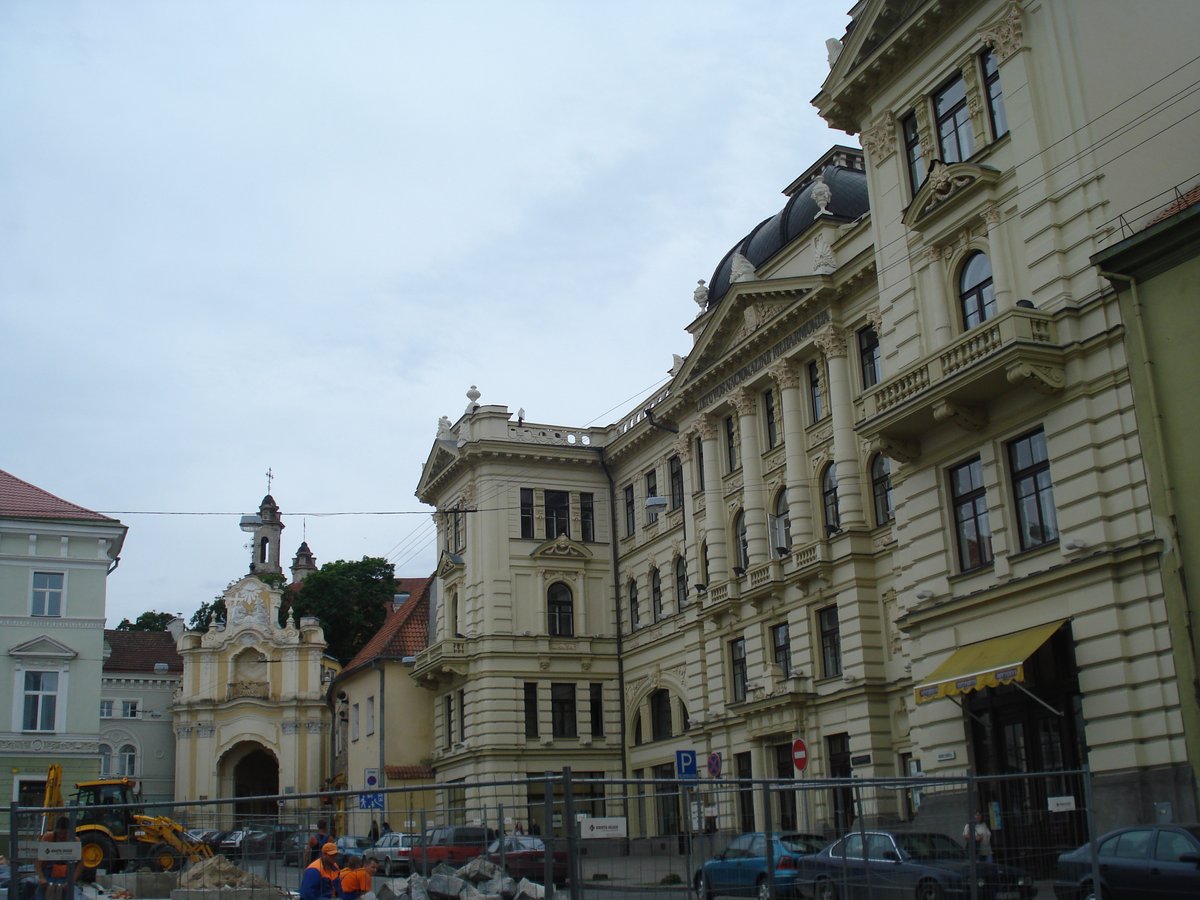
The Pohulanka Theater was constructed between 1912 and 1914 through the efforts and financial support of Vilnius’s Polish community, particularly under the patronage of Hipolit Korwin-Milewski. Designed by Aleksander Parczewski and Wacław Michniewicz, the theater was placed on Wielka Pohulanka (now J. Basanavičiaus Street), an area that had transformed from gardens into a vibrant urban district (madeinvilnius.lt). The name “Pohulanka” is believed to reflect the area’s association with leisure and social gatherings (lt.wikipedia.org).
Architectural Significance
The theater’s architecture is an elegant blend of neoclassical and modernist influences, featuring a dignified façade with columns and decorative details. The auditorium was designed for optimal acoustics and sightlines, establishing the venue as an ideal setting for drama and music. Over the decades, renovations have introduced modern amenities while preserving the building’s historical character (archdaily.com).
Cultural and Political Role
Initially a center for Polish-language performances, the Pohulanka Theater quickly became a gathering place for Vilnius’s diverse population of Poles, Lithuanians, Jews, and Russians. It hosted celebrated artists and was the venue for the historic 1917 Vilnius Conference, where the Lithuanian Council was established—a key event in Lithuania’s independence movement (media.efhr.eu; madeinvilnius.lt).
During the interwar period, the theater flourished as a Polish cultural hub, hosting the renowned Reduta group and many prominent artists. Subsequent decades saw the venue adapt to periods of war, Soviet occupation, and Lithuania’s renewed independence, evolving into the Lithuanian Russian Drama Theatre and continuing to host performances in multiple languages (vsteatras.lt).
Visitor Information
Location and Accessibility
- Address J. Basanavičiaus g. 13, Vilnius, Lithuania
- Access Centrally located, easily reachable by public transport, taxi, or on foot from Old Town. Bus and trolleybus stops are nearby (Europa Adventure).
- Accessibility The theater is partially wheelchair accessible. Contact the venue in advance for specific needs.
Visiting Hours
- Box Office Generally open Tuesday–Sunday, 12:00 PM to 7:00 PM on performance days.
- Performances Typically start between 6:30 PM and 7:30 PM. Check the official website or Vilnius events calendar for up-to-date schedules.
Tickets
- Purchase Online at rusudrama.lt or at the box office.
- Prices Usually range from €10 to €30, with discounts for students and seniors.
- Languages Performances are primarily in Russian or Lithuanian; Polish shows are held during special events. Some major productions provide English-language summaries or surtitles—verify when booking.
Theatrical and Cultural Experience
Programming
The theater offers a diverse repertoire including Russian and Lithuanian classics, contemporary drama, and Polish-language productions during festivals. It is also a key venue during citywide events such as the Vilnius International Sirenos Theatre Festival (lithuania.travel).
Architecture and Atmosphere
Visitors are greeted by a grand horseshoe-shaped auditorium with ornate details and historic photographs. The ambiance reflects the building’s layered history and its ongoing role as a multicultural cultural center.
Special Events and Tours
Guided tours are offered during major anniversaries and city events such as Museum Night. These tours delve into the theater’s history, architecture, and the stories of its most famous performers (lithuania.travel).
Practical Tips
- Booking Reserve tickets in advance for popular shows and events.
- Dress Code Smart-casual attire is recommended.
- Photography Allowed in public areas and the foyer but prohibited during performances.
- Facilities Restrooms, cloakroom, and a café are available.
- Safety Vilnius is generally safe; use standard precautions at night (Travel Like a Boss).
- Language While many young Lithuanians speak English, learning basic Lithuanian or Russian phrases is helpful. Tourist centers can assist with directions and recommendations.
Nearby Attractions
Enhance your visit by exploring nearby Vilnius landmarks:
- Vilnius Cathedral and Bell Tower
- Gediminas Castle Tower
- Museum of Occupations and Freedom Fights
- Užupis Art District
- Numerous cafés and restaurants (Road is Calling)
Frequently Asked Questions (FAQ)
What are the Pohulanka Theater’s opening hours?
Box office: 12:00 PM–7:00 PM on performance days; performance times vary. Check official website for up-to-date schedules.
How do I buy tickets?
Tickets are available online (rusudrama.lt) or at the box office.
Are performances available in English?
Some major productions offer English surtitles—verify language accessibility when booking.
Is the theater accessible?
Partially; inquire in advance for specific accessibility needs.
Are guided tours available?
Occasionally, especially during citywide events and anniversaries.
Can I take photos inside?
Yes, but only in public areas and the foyer; not during performances.
Seasonal Highlights
- Vilnius International Sirenos Theatre Festival (Sept–Oct) Contemporary theater at Pohulanka and other venues.
- Museum Night (May) Special evening tours and events.
- Kaziukas Fair (March) Citywide celebration with crafts and culture.
Related Reads
- Top Historical Sites to Visit in Vilnius
- A Guide to Vilnius Old Town Walking Tours
- Exploring Lithuanian Theaters: A Cultural Journey
Visuals
Map: