Introduction
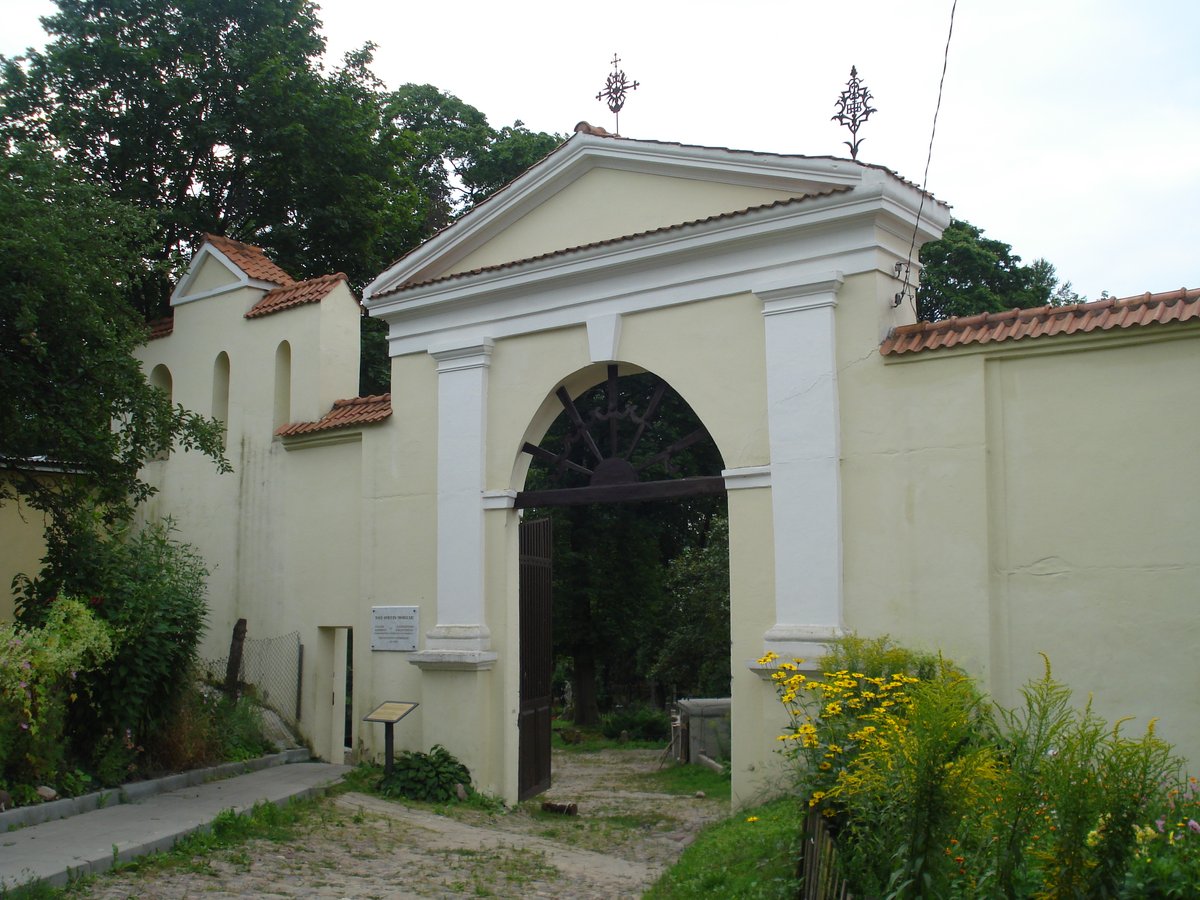
Euphrosyne Cemetery in Vilnius, Lithuania, stands as a testament to the city’s rich Orthodox Christian heritage and multicultural history. Established in the early 19th century and named after Saint Euphrosyne of Polotsk, this burial ground reflects the diverse religious and social fabric of Lithuania’s capital during a time of significant transformation under the Russian Empire. Today, the cemetery is not only a final resting place for Orthodox Christians—including Russians, Belarusians, Lithuanians, and Old Believers—but also an open-air museum of funerary art and cultural memory.
This guide provides detailed information on Euphrosyne Cemetery’s history, cultural significance, visiting hours, accessibility, and practical tips, helping travelers plan a meaningful visit to one of Vilnius’s most evocative historical sites (Academia.edu, Made in Vilnius, Vilnius in Love).
Origins and Establishment
Founded in the early 19th century, Euphrosyne Cemetery (Šv. Eufrosinijos stačiatikių kapinės) emerged as one of Vilnius’s principal Orthodox burial grounds during a period of rapid urbanization and shifting political control. Following the partitions of the Polish-Lithuanian Commonwealth, Vilnius became an important administrative center in the Russian Empire. In line with contemporary health reforms, cemeteries were relocated outside the city walls, and Euphrosyne was created to serve the Orthodox Christian community, including Russians, Belarusians, and Lithuanian converts (Academia.edu).
Architectural and Artistic Features
Euphrosyne Cemetery is distinguished by its rich funerary art and unique monument styles:
- Tombstones: Early 19th-century gravestones range from simple granite boulders to ornate cast iron monuments, often featuring Orthodox iconography, Cyrillic inscriptions, and symbolic motifs such as crosses, angels, and floral patterns.
- Materials: The use of granite, marble, and cast iron showcases the craftsmanship and religious symbolism prevalent in the cemetery.
- Multilingual Inscriptions: Gravestones bear inscriptions in multiple languages—Lithuanian, Russian, Polish, and sometimes Belarusian—reflecting Vilnius’s multicultural history (Made in Vilnius).
- Unique Monuments: The cemetery features rare Romantic-era mourning sculptures and even gravestones inscribed in the Glagolitic alphabet, a unique find in Lithuania (Lituanistika).
The tranquil, tree-lined paths and artistic diversity make the cemetery a compelling site for those interested in art history and religious heritage.
Notable Burials
Euphrosyne Cemetery is the final resting place of several notable individuals, highlighting its role in Vilnius’s intellectual and religious life:
- Pavel Vasilievich Kukolnik (1795–1884): A prominent academic, historian, and literary figure who served as a university professor and director of the numismatic cabinet (Biographs.org).
- Tikhon Zaitsev: Merchant and patron who funded the construction of the Church of the Blessed Euphrosyne.
- Juozapas Horbacevičius (1848–1795): Renowned Vilnius sculptor.
- Jakovs Golovackis (1827–1888): Ukrainian Unitarian priest, Slavist, and folklorist.
- Ivanas Trutnevs (1912–?): Head of the Vilnius School of Drawing.
These graves, marked by distinctive monuments, reflect the cemetery’s artistic and historical value (Made in Vilnius).
Religious and Cultural Context
Vilnius is known for its religious diversity, with Catholic, Orthodox, Jewish, Protestant, and Old Believer communities. The Orthodox presence grew during Russian imperial rule, with Euphrosyne Cemetery becoming a vital symbol of Orthodox identity in a predominantly Catholic region.
Commemorative practices, such as the Lithuanian Day of the Dead (Vėlinės), see families visiting, lighting candles, and maintaining graves—traditions shared across confessions. The cemetery also serves as a focal point for Orthodox memorial days like Radonitsa (Vilnius in Love).
Visiting Information
Visiting Hours
Euphrosyne Cemetery is typically open daily from 8:00 AM to 6:00 PM. Hours may vary seasonally; check with the Vilnius Tourist Information Centre for current schedules.
Entry Fee
Admission is free. Donations for maintenance and preservation are welcome.
Accessibility
- Paths: Mostly natural, with some uneven terrain; not fully wheelchair accessible.
- Mobility: Main areas can be accessed by visitors with limited mobility, but assistance may be needed.
Getting There
- Location: Liepkalnis district, southeast of Vilnius center.
- Transport: Accessible by public buses and trolleybuses; limited street parking available.
Guided Tours
No regular guided tours are offered on-site, but private guided visits can be arranged through local organizations such as Vilnius with Locals). Self-guided exploration is supported by informational plaques in Lithuanian and Russian.
Nearby Attractions
- Rasos Cemetery: Known for its Polish and Lithuanian burials.
- Bernardinų Cemetery: Renowned for its Catholic heritage.
- Vilnius Old Town: UNESCO-listed, rich in historical architecture.
Preservation and Heritage Status
Euphrosyne Cemetery is protected as a cultural heritage site. Local authorities, historians, and community organizations actively support its preservation through restoration projects and digital initiatives, such as the Vilnius City Cemetery Register), which provides digital maps, photographs, and genealogical resources.
Visitor Etiquette
- Maintain a quiet demeanor; avoid loud conversations or music.
- Refrain from walking directly over graves and do not touch or disturb monuments.
- Dress modestly, especially when entering the church or visiting during religious ceremonies.
- Photography is generally allowed but avoid photographing mourners or ceremonies without permission.
Practical Tips
- Best time to visit: Spring and autumn offer pleasant weather and beautiful scenery; visit early morning or late afternoon for optimal lighting.
- Facilities: No restrooms or refreshment facilities on-site; plan accordingly.
- Safety: The area is safe during daylight hours; avoid visiting after dark.
- Language: Onsite information is primarily in Lithuanian and Russian; English-language resources are limited, so translation apps may be helpful.
Frequently Asked Questions
What are the Euphrosyne Cemetery visiting hours?
Open daily from 8:00 AM to 6:00 PM (may vary seasonally).
Is there an entrance fee?
No, admission is free of charge.
Are guided tours available?
Private guided tours can be arranged; otherwise, the cemetery is self-guided.
Is the cemetery wheelchair accessible?
Not fully; paths may be uneven and narrow.
How can I get there by public transport?
Several city bus routes stop near the cemetery in the Liepkalnis district.
Listen to the full story in the app
Your Personal Curator, in Your Pocket.
Audio guides for 1,100+ cities across 96 countries. History, stories, and local insight — offline ready.
Audiala App
Available on iOS & Android
Join 50k+ Curators
Sources
- verified
- verified
- verified
- verified
Last reviewed: