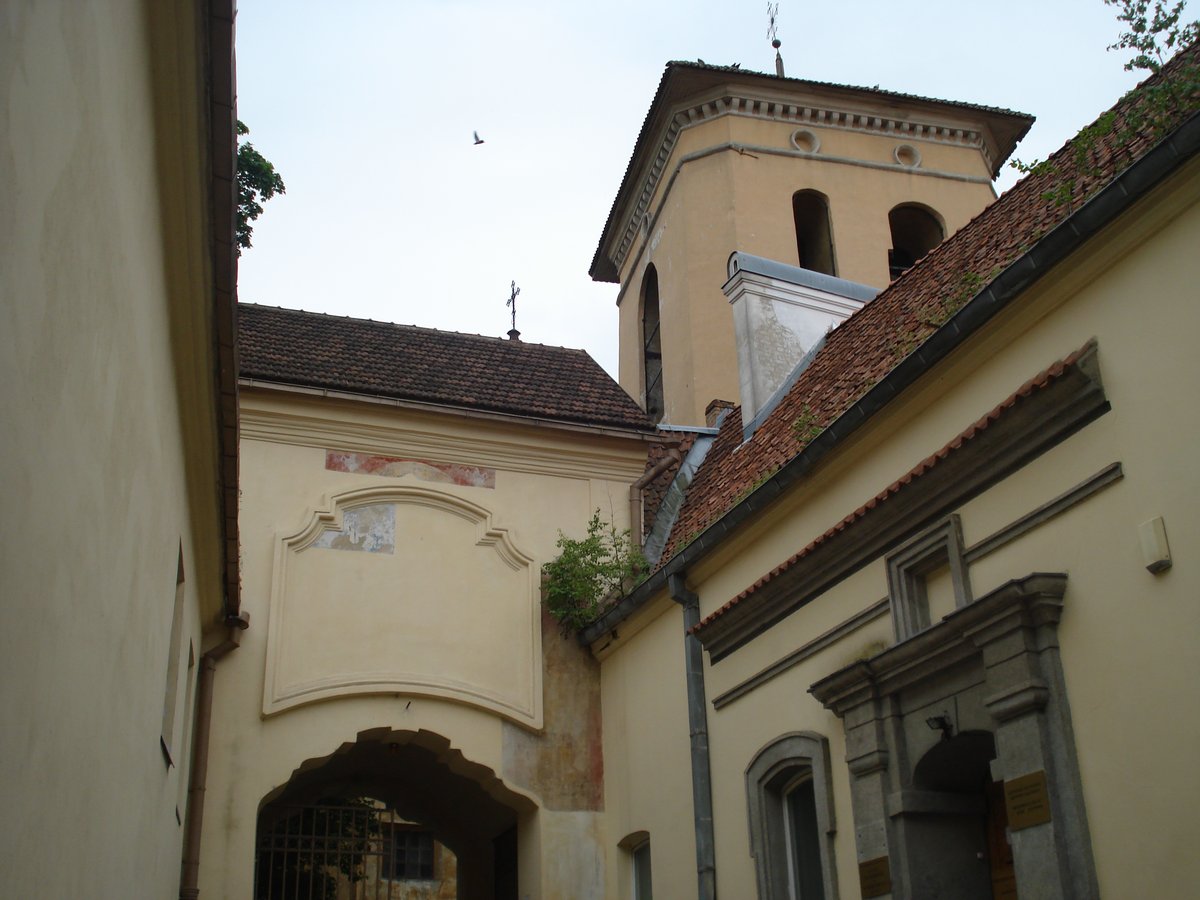
Plan and listen to Church And Monastery Of The Holy Trinity, Vilnius with Audiala.
Audio guide in your pocket, itinerary in your browser. Built for the way you actually visit.
Introduction
The Church and Monastery of the Holy Trinity in Vilnius stands as one of Lithuania's most significant religious and historical landmarks. Rooted in the 14th century, this architectural ensemble offers visitors a deep dive into the intertwined narratives of faith, culture, and artistry that have shaped Vilnius over the centuries. As both a spiritual center and a cultural monument, the Holy Trinity complex invites exploration—whether for historical insight, architectural appreciation, or spiritual reflection.

Origins and Foundation
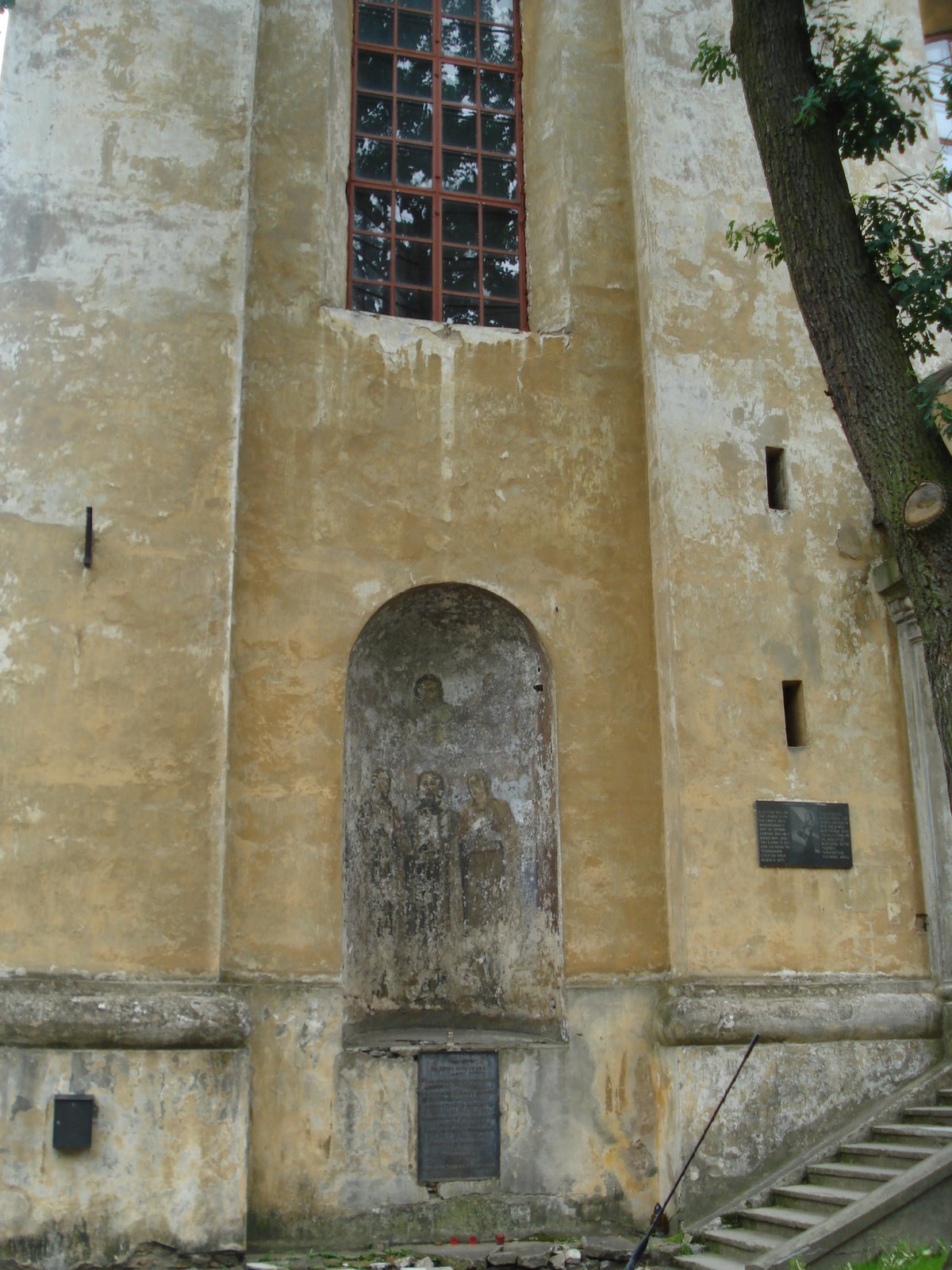
The Church and Monastery of the Holy Trinity are steeped in centuries of religious and cultural history. Tradition holds that the original church was established by Grand Princess Uliana of Tver, wife of Grand Duke Algirdas, on the site where Orthodox martyrs Anthony, John, and Eustathius were executed in 1347 (Go Vilnius; Uniate Heritage). In 1514, after the Battle of Orsha, Grand Hetman Konstanty Ostrogski commissioned a new brick church in the Gothic style, further establishing the site as a key religious center (Uniate Heritage).
Architectural Evolution
Over the centuries, the Holy Trinity complex evolved to reflect the dynamic interplay of Eastern and Western Christian traditions. The Renaissance-influenced stone church gave way to Baroque and Rococo enhancements in the 17th and 18th centuries, notably under architect Johann Christoph Glaubitz, who designed the iconic three-story Basilian Gate in 1761 (Evendo; mak-sav.com). The ensemble’s design—featuring a square plan, semicircular apses, and fortified towers—exemplifies a unique synthesis of Byzantine, Gothic, Baroque, and Rococo styles (inyourpocket.com).
Religious and Cultural Significance
The site became a stronghold of the Uniate (Greek Catholic) tradition following the Union of Brest in 1596. The Basilian Order played a pivotal role in religious education and the preservation of Ruthenian liturgical and cultural practices. The monastery also became a focal point for religious brotherhoods engaged in charitable and educational work (Uniate Heritage). Throughout history, the complex has reflected Vilnius’s multicultural character, serving Lithuanian, Polish, Belarusian, and Ukrainian communities (mak-sav.com).
Notable Historical Events
- Martyrdom of Anthony, John, and Eustathius (1347): Foundation legend of the ensemble.
- Construction after the Battle of Orsha (1514): Gothic brick church commissioned by Ostrogski.
- Baroque transformation and the Basilian Gate (18th century): Major architectural renewal.
- Russian Imperial suppression (19th century): Conversion to Orthodox use, addition of a central dome, and use as a prison.
- Adam Mickiewicz’s Imprisonment (1823): The poet and nationalist was held in the monastery’s cells (mak-sav.com).
- Soviet closure and post-1991 restoration: The complex was repurposed and neglected during the Soviet era, then returned to the Basilian Order after Lithuanian independence.
Architectural and Artistic Features
Exterior and Layout
The main church features Gothic brickwork complemented by Baroque and Rococo elements. Four corner towers and a belfry lend a fortress-like character. The entrance is graced by the 18th-century Rococo Basilian Gate, a pastel-hued masterpiece adorned with sculptural detail (Evendo; inyourpocket.com).
Interior Highlights
Inside, visitors encounter a harmonious blend of Baroque and Neo-Byzantine décor—vaulted ceilings supported by four massive pillars, ornate side altars, and a restored iconostasis, emphasizing the church’s Eastern liturgical heritage (Uniate Heritage). The crypt beneath the altar houses tombs of Basilian monks and notable local figures (wikipedia).
Notable Chapels and Features
- Chapel of the Annunciation: Regular Byzantine Rite worship; houses Italian-crafted tombstones.
- Chapel of St. Luke: Features a unique Renaissance tombstone with Cyrillic inscription.
- Chapel of the Exaltation of the Holy Cross: Contains significant Baroque tombs.
- Konrad’s Cell: The prison cell where Adam Mickiewicz was detained, now a site of literary pilgrimage.
Restoration Efforts
After periods of fire, war, and neglect, recent decades have seen extensive restoration—of facades, crypts, the belfry, and interior artworks—ensuring the ensemble’s preservation (madeinvilnius.lt).
Visitor Information
Visiting Hours
- General Opening: Daily, 10:00 AM – 6:00 PM.
- Last Entry: Typically 30 minutes before closing.
- Note: Hours may vary on religious holidays or during special events; always check current details before visiting.
Ticket Information
- Admission: Free, with donations encouraged to support restoration.
- Guided Tours and Special Exhibitions: May require a ticket; available on-site or via local tourism websites.
Accessibility
- Ramps and Entrances: The main areas are accessible for visitors with mobility needs.
- Historic Areas: Some sections, such as the crypt and upper towers, may have limited accessibility.
Guided Tours and Travel Tips
- Guided Tours: Available in several languages; booking in advance is recommended, especially in peak season.
- Best Times to Visit: Weekday mornings or late afternoons for quieter experiences and optimal lighting for photography.
- Photography: Allowed, but avoid flash and tripods inside the church.
How to Get There
- Location: Aušros Vartų Street, Vilnius Old Town, near the Gates of Dawn.
- Transport: Easily accessible by public transport, taxi, or on foot from central Vilnius. Parking is limited nearby.
Nearby Attractions
- Gates of Dawn
- St. Teresa’s Church
- Vilnius Cathedral
- Užupis district
- Vilnius University
Frequently Asked Questions (FAQ)
Q: What are the visiting hours of the Holy Trinity Church in Vilnius?
A: Typically open daily from 10:00 AM to 6:00 PM. Confirm current hours before your visit.
Q: Is there an admission fee?
A: Entrance is free; donations are appreciated. Guided tours and exhibitions may require a ticket.
Q: Are guided tours available?
A: Yes, in several languages; advance booking is recommended.
Q: Is the church accessible for people with disabilities?
A: Most main areas are accessible, but some historic sections may not be.
Q: Can I attend religious services?
A: Yes, regular Byzantine Rite services are open to visitors.
Q: Can I take photographs inside?
A: Photography is allowed, but please be discreet and respect any restrictions during services.
Summary and Travel Tips
The Church and Monastery of the Holy Trinity in Vilnius exemplify the city’s rich religious and multicultural heritage. Its evolution from a 14th-century martyrdom site to a Baroque and Rococo masterpiece, through periods of suppression and revival, mirrors Lithuania’s broader historical journey (Go Vilnius; True Lithuania; mak-sav.com). Free access, guided tours, and proximity to other major Vilnius attractions make it ideal for cultural and spiritual exploration (Evendo; Uniate Heritage). For the richest experience, check current hours and events, consider a guided tour, and download the Audiala app for audio guides and updates.
Listen to the full story in the app
The whole Church And Monastery Of The Holy Trinity, Vilnius,
told well.
Listen to sourced travel stories with local history and practical context — ready offline.
Verified, and shown.
Researched and written by the Audiala editorial team from historical records, architectural archives, and local expertise.
Built from cited sources · see the method · How we make our guides →