Plan and listen to Astronomical Observatory Of Vilnius University with Audiala
Audio guide in your pocket, itinerary in your browser. Built for the way you actually visit.
Introduction
The Vilnius University Astronomical Observatory, founded in 1753, is one of the oldest astronomical institutions in Eastern Europe and a cornerstone of Lithuania’s scientific, educational, and cultural heritage. Located in the heart of Vilnius Old Town, this observatory not only showcases centuries of astronomical research but also stands as a marvel of Baroque and Classical architecture. Today, it continues to inspire visitors with a blend of historic heritage, ongoing scientific work, interactive exhibits, and educational programs (Vilnius University Observatory).
This guide provides a comprehensive overview for visitors, covering the observatory’s history, architectural highlights, scientific contributions, visiting hours, ticket information, accessibility, and practical tips. Whether you are an astronomy enthusiast, a history lover, or a traveler exploring Vilnius, the observatory offers a unique experience that bridges past and present.
The Origins and Historical Development
Foundation and Early Years
Established atop Vilnius University’s main building in 1753 by Jesuit astronomer Thomas Zebrowski, the observatory was equipped with advanced telescopes imported from Western Europe. Its creation marked a defining moment for science in the Grand Duchy of Lithuania, supporting the Enlightenment’s spirit of inquiry and research (Vilnius University Observatory).
Growth and Scientific Achievements
Under director Marcin Poczobutt-Odlanicki (1764–1807), the observatory expanded its facilities and gained international recognition. Key scientific achievements included systematic celestial observations, star cataloging, and the establishment of vital geographical coordinate systems necessary for navigation and cartography (Lithuanian Science and Technology). The observatory’s timekeeping services were essential for Vilnius society.
20th Century and Modernization
The observatory pioneered the Vilnius photometric system in the 1960s—a seven-color method for stellar classification that remains influential worldwide. Throughout history, the institution maintained collaborations with leading European astronomers, contributing to both Lithuanian and international astronomy (Vilnius Photometric System).
Expansion to Molėtai
As urban light pollution increased in Vilnius, major observational activities were relocated to the Molėtai Astronomical Observatory, established in 1969 about 70 km north of Vilnius. Molėtai houses the largest scientific telescope in Northern Europe and offers exceptional conditions for public stargazing (Molėtai Astronomical Observatory).
Architectural and Cultural Heritage
The observatory is a protected cultural monument, celebrated for its Baroque and Classical architecture. Features include domed towers, zodiacal motifs, intricate masonry, and a sundial on the southern wall. The library preserves rare manuscripts and historical instruments, providing visitors with tangible links to Lithuania’s scientific legacy (Vilnius University Campus).
Ongoing restoration and preservation efforts ensure that the observatory remains both a historical site and a hub for modern educational activities.
Visiting the Vilnius University Astronomical Observatory
Location and Setting
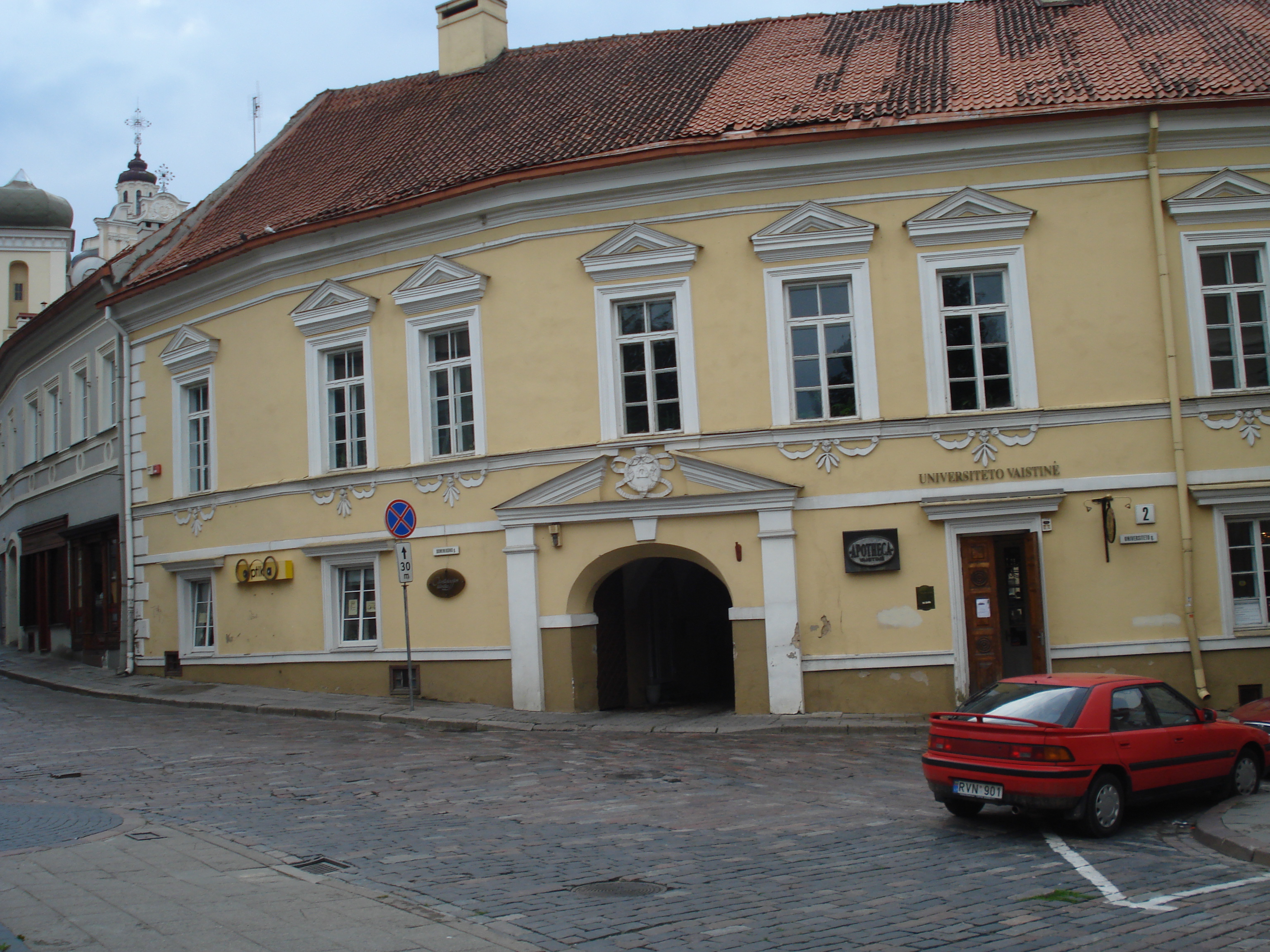
The observatory’s original site is located on Universiteto Street within Vilnius Old Town, integrated into the university complex. The "Observatory of Ideas," a modern science communication and education space, is found at M. K. Čiurlionio g. 29 and is part of the Vilnius University Museum (VU Museum).
Visiting Hours and Ticket Information
- Vilnius University Observatory (Observatory of Ideas):
- Open Tuesday–Saturday, 10:00 AM–5:00 PM.
- Closed Sundays and Mondays.
- General admission and guided tours are free, but advance booking is required for tours (VU Museum).
- Molėtai Astronomical Observatory:
- Open Wednesday–Sunday, 9:00 AM–6:00 PM.
- Stargazing events start after sunset.
- Tickets: Adults €7, discounts for students/seniors, group rates available (Molėtai Astronomical Observatory).
Booking:
- Book tours and events online via the official Vilnius University Museum website or at the entrance.
Accessibility
- Vilnius Observatory: Wheelchair accessible to most areas; some historic parts (e.g., towers) may have limited access.
- Molėtai Observatory: Accessible paths and facilities; contact staff in advance for specific needs.
Tour Options and Special Events
- Guided Tours:
- Available in Lithuanian and English.
- Include historical overviews, demonstrations of scientific instruments, and panoramic views from the tower.
- Advance booking recommended, especially for English tours and groups.
- Workshops, Lectures, Festivals:
- Regular public events, including open days, art–science exhibitions, and astronomy lectures.
- Event calendars are posted on the museum website and Vilnius events portal.
Night Sky Observations
- Vilnius: Occasional stargazing events using portable telescopes, announced on the museum’s website (VU Observatory).
- Molėtai: Regular night sky observation programs using modern telescopes, ideal for astronomy enthusiasts and families (Molėtai Observatory).
Exhibits and Visitor Amenities
- Historical Instruments:
- 18th–19th-century telescopes, photoheliographs, manuscripts, and rare photographs.
- Facilities:
- Accessible restrooms, cloakrooms, and a museum shop with astronomy-themed gifts.
- Nearby Dining:
- Cafes and restaurants within the Vilnius University campus and Old Town.
Practical Visitor Tips
- Booking: Reserve tours and special events, particularly during peak tourist seasons (spring and autumn).
- Photography: Permitted in most areas; flash and tripods may be restricted—ask your guide.
- Languages: Staff speak Lithuanian and English; knowing basic Lithuanian enhances the experience.
- Getting There:
- Vilnius Observatory is within walking distance of major Old Town attractions.
- Molėtai Observatory is best reached by car or regional bus.
Integration with Vilnius University and Nearby Attractions
The observatory is part of the UNESCO-listed Vilnius University complex, which includes the Grand Courtyard, St. John’s Church, and the university library. Other nearby attractions are Vilnius Cathedral and Gediminas Tower (TURA; My Global Viewpoint).
Impact, Research, and Public Engagement
Academic and Scientific Significance
The observatory continues its academic mission as part of the Institute of Theoretical Physics and Astronomy (ITPA) at Vilnius University (ITPA History). It supports undergraduate and graduate education, hands-on research, and international collaborations.
Science Communication and Community Events
Both Vilnius and Molėtai sites offer public tours, workshops, and stargazing events to promote science education. Special programs for schools and families introduce astronomy basics and foster curiosity (Guide in Vilnius: Hiking Tour).
Cultural Heritage
The observatory is a recurring theme in Lithuanian literature, art, and public celebrations, symbolizing the nation’s commitment to science and education (Vilnius University Courtyards).
Frequently Asked Questions (FAQ)
Q: What are the main visiting hours?
A: Vilnius Observatory: Tuesday–Saturday, 10:00 AM–5:00 PM; Molėtai Observatory: Wednesday–Sunday, 9:00 AM–6:00 PM.
Q: Do I need tickets?
A: Admission to Vilnius Observatory is free, but book guided tours in advance. Molėtai Observatory tickets start at €7.
Q: Is it accessible for people with disabilities?
A: Yes, most areas are accessible. Some historic parts have limited access.
Q: Are guided tours available in English?
A: Yes, but advance booking is recommended.
Q: Can I take photos?
A: Yes, but flash and tripods may be restricted during tours.
Q: Are stargazing programs available?
A: Yes, check the museum or observatory website for scheduled events.
Contact Information
- Observatory of Ideas (Vilnius University Museum):
- Address: M. K. Čiurlionio g. 29, Vilnius
- Phone: +370 667 76979
- Official website
- Molėtai Astronomical Observatory:
Final Tips and Summary
The Vilnius University Astronomical Observatory offers a unique blend of historic and modern science, making it a must-see destination for anyone visiting Vilnius. Its central location, free admission, and rich programming ensure an accessible and memorable experience for all ages. Pair your visit with other university and Old Town landmarks for a full day of exploration.
For the latest updates, event schedules, or to book a guided tour, visit the official observatory website and museum portal. Download the Audiala app for in-depth audio guides and practical visitor resources.
Plan your visit today to experience the enduring legacy of Lithuania’s astronomical heritage—a place where science, history, and culture meet under the stars (Vilnius University Observatory).
Listen to the full story in the app
Researched and written by the Audiala editorial team from historical records, architectural archives, and local expertise.
Last reviewed