
Place
Lithuania Updated Apr 2026
Church bells, trolleybuses, and the smell of yeast from old bakeries meet at the confluence of two rivers in Kaunas, Lithuania. The surprise is how quickly the city changes character: one block gives you Gothic brick and worn cobbles, the next an interwar facade with curved balconies and a cinema sign that still looks pleased with itself. Kaunas doesn't perform its history in one tidy style. It layers it.
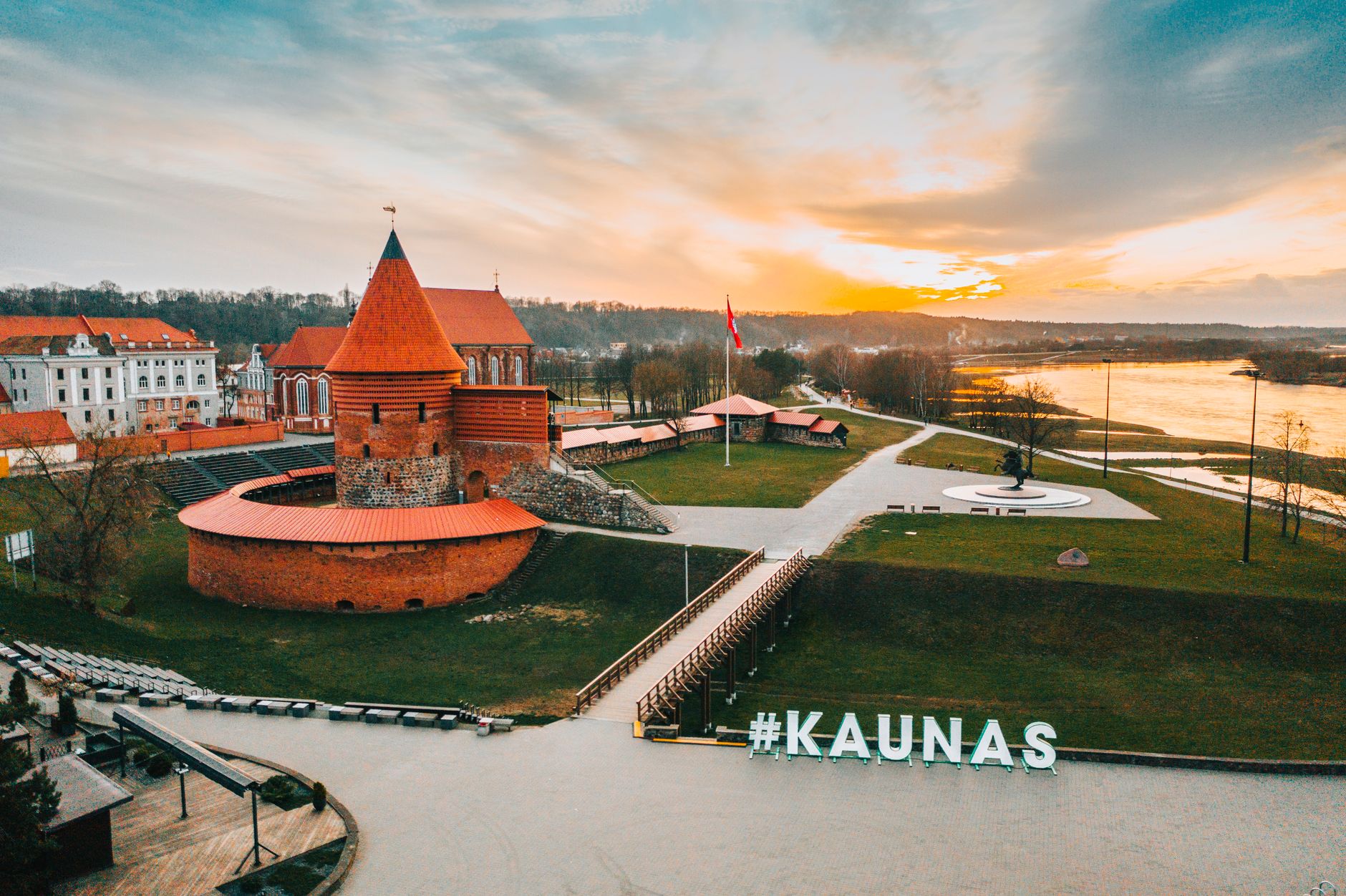 Photo: Erika Žigutytė / Pexels
Built from cited sources · see the method · How we make our guides →
Old Town explains the medieval city, but it doesn't explain Kaunas. For that, you need to walk east along Vilniaus Street and onto Laisvės alėja, the long pedestrian spine where office workers, students, pensioners, and coffee drinkers all seem to keep the same unhurried rhythm. By the time you reach St. Michael the Archangel Church at the far end, the city has shifted from Hanseatic trading town to imperial outpost to provisional capital, all without raising its voice.
The interwar years still shape the city's self-image. Between 1919 and 1939, when Kaunas served as Lithuania's provisional capital, it built itself with unusual speed and optimism; UNESCO recognized that layer in 2023 as “Modernist Kaunas: Architecture of Optimism, 1919–1939.” Go inside when you can. A restored Art Deco apartment, the Romuva cinema, or the former Central Post Office tells you more than another street of façades.
Then the mood darkens, as it should. Kaunas is a fortress city, and that means ringed forts, wartime scars, the Sugihara House Museum, and the Ninth Fort, where the scale of murder is impossible to soften with nice prose. That tension is the point: Kaunas is not pretty in one simple way, but alive because ambition, loss, faith, and daily life still occupy the same streets.
Not every monument, just the ones we'd walk you past ourselves.

Where to wander, by quarter — each with its own rhythm.
Before you go
From a Baltic stronghold at the Nemunas-Neris confluence to a UNESCO-listed modernist city
Most scholars date Kaunas's first permanent stronghold to the 10th or 11th century, when Baltic communities fortified the confluence of the Nemunas and Neris. The site made hard practical sense: river trade, high ground, and a clear view of anyone arriving with grain, furs, or bad intentions. Kaunas begins here, in wet soil, timber walls, and the sound of water meeting water.
Teutonic chronicles mention Kaunas for the first time in 1361, which tells you less about a birth than about a frontier finally important enough to alarm its enemies. By then the settlement already mattered. A place does not appear in crusader reports unless someone wants it badly.
In 1362 the Teutonic Order besieged and destroyed the first castle of Kaunas. This was no border skirmish but a loud statement in timber smoke and collapsing ramparts: the confluence had become one of the pressure points between pagan Lithuania and the crusading state. The city learned early that stone would be safer than wood.
After Lithuania's conversion to Christianity, Kaunas was drawn into the Roman Catholic world in 1387. Parish structures, churches, and ecclesiastical administration followed. The city's rhythm changed with them: bells marking hours, not just river traffic and market noise.
Vytautas the Great granted Kaunas Magdeburg rights in 1408, turning a battered frontier post into a self-governing town with legal muscle. Markets, courts, guild life, and municipal authority gained formal shape. You can still feel that decision in the geometry of the Old Town.
The Lithuanian-Polish victory at the Battle of Grunwald in 1410 did not happen in Kaunas, but it changed the city's future as surely as any event on its own streets. Teutonic pressure eased. Trade could breathe again.
A Town Hall stood on the market square by 1542, anchoring civic life in brick and ceremony. Merchants argued prices nearby, carts rattled over cobbles, and city government performed itself in public view. Kaunas was no longer just defensible. It had civic swagger.
The mid-17th century wars reached Kaunas with ruinous force, as the Swedish invasion and wider conflict battered the Grand Duchy. Trade routes frayed, buildings burned, and the city's confidence took a long hit. Prosperity can vanish faster than masonry cools.
During the Great Northern War, plague tore through Kaunas in 1709 and 1710. Streets that had echoed with carts and church traffic fell quiet, and households vanished behind shuttered windows. Cities remember epidemics in absences as much as in monuments.
The Third Partition of the Polish-Lithuanian Commonwealth placed Kaunas under Russian rule in 1795. One political world ended. Another arrived with imperial bureaucracy, military planning, and a colder idea of order.
Napoleon's campaign swept through Kaunas in 1812, and the city briefly became a corridor for one of Europe's grandest military disasters. Troops, horses, wagons, mud. Then retreat, hunger, and wreckage.
The arrival of the St. Petersburg-Warsaw Railway in 1862 pulled Kaunas into the modern age with iron certainty. Distances shrank. Factories, warehouses, and military logistics followed the tracks.
After the 1863 uprising, the Russian Empire tightened control and enforced the Lithuanian press ban from 1864. Kaunas became one of the places where banned books moved hand to hand in secret, wrapped under coats and hidden in carts. Language here was not an ornament. It was resistance.
The Church of St. Michael the Archangel, known as the Sobor, was completed in 1895 in heavy Neo-Byzantine form. Its pale mass on what is now Laisvės alėja announced imperial power in brick and dome. The building still carries that tension: beauty with an agenda.
Emmanuel Levinas was born in Kaunas in 1906, in a city layered with Lithuanian, Jewish, Polish, and Russian worlds. That early multilingual environment mattered. His later philosophy of responsibility did not grow from abstraction alone; it began in a place where identity was never simple.
Lithuania declared independence on 16 February 1918, and Kaunas soon became central to the new state's survival. Vilnius was contested, institutions were fragile, and the country needed a functioning heart. Kaunas stepped into that role almost by necessity, which is often how capitals are made.
After Poland seized Vilnius in 1920, Kaunas became Lithuania's provisional capital. The label sounded temporary; the transformation was anything but. Ministries, diplomats, professors, bankers, and architects flooded in, and the city began rebuilding itself at speed.
The University of Lithuania opened in 1922, later becoming Vytautas Magnus University. Lecture halls filled with a generation trying to invent a modern state in its own language. Ideas moved fast here, from law and biology to literature and architecture.
When Jonas Vileišis became mayor in 1922, Kaunas gained one of the few civic leaders willing to think at city scale. Streets were improved, utilities expanded, and chaotic growth was pushed toward planning. He helped turn a stopgap capital into a convincing one.
The military coup of 1926 brought Antanas Smetona to power and ended Lithuania's brief democratic experiment. Kaunas remained the capital, but the mood changed from improvisational openness to managed authority. Public buildings kept rising. So did political control.
George Maciunas, later the driving force behind Fluxus, was born in Kaunas in 1931. His life would scatter across war and exile, yet the city claims him for good reason. A place rebuilt through bold design tends to produce people who distrust stale forms.
By the mid-1930s Kaunas had become a laboratory of interwar modernism, with banks, apartment houses, schools, and ministries rising in clean lines across Naujamiestis and Žaliakalnis. Roughly 6,000 buildings went up during the capital years. The city looked forward on purpose.
The Soviet occupation of 1940 shattered the interwar republic and ended Kaunas's capital era. Officials were arrested, property was seized, and fear entered daily life with bureaucratic precision. One regime replaced another. None asked permission.
Under Nazi occupation, the Ninth Fort was turned into a site of mass murder, and tens of thousands of Jews from Kaunas and beyond were killed there. The city lost one of its deepest intellectual and commercial communities in pits, gunfire, and ash. Any honest history of Kaunas has to stop here and look directly.
The Red Army retook Kaunas in 1944 after heavy fighting and bombardment. Liberation, in Soviet vocabulary, meant another occupation. The city emerged damaged in brick and bone.
The Kaunas Hydroelectric Power Plant began operation in 1959, remaking the river and creating the Kaunas Reservoir. Engineers celebrated electrification; villages disappeared under water. Progress always sends someone the bill.
On 14 May 1972, 19-year-old Romas Kalanta self-immolated near the Musical Theatre in protest against Soviet rule. His funeral sparked street demonstrations and mass arrests. Kaunas, usually cast as practical and reserved, suddenly burned in public grief and fury.
The Lithuanian reform movement Sąjūdis found strong support in Kaunas from 1988 onward. Meetings, rallies, songs, and arguments spread through halls and squares that had seen obedience for too long. The city was rehearsing freedom before it legally arrived.
On 11 March 1990 Lithuania restored its independence, and Kaunas answered with mass civic energy rather than caution. Volunteers organized, institutions adjusted, and the old provisional capital regained political weight. History does circle back, though never neatly.
Žalgirio Arena opened in 2011 on Nemunas Island, a sleek modern landmark in a city that takes basketball nearly as seriously as statehood. Concert lights and game noise now fill ground once defined by industrial edges and river wind. Cities reveal themselves by what they build for joy.
Kaunas served as a European Capital of Culture in 2022, using that platform to stage the city as more than Lithuania's second city. The smart angle was not nostalgia. It was showing how medieval streets, Jewish memory, Soviet scars, and interwar modernism all share the same map.
UNESCO inscribed 'Modernist Kaunas: Architecture of Optimism, 1919-1939' on the World Heritage List in 2023. The phrase matters because it catches the city's rare feat: a temporary capital building itself with permanent conviction. Walk the center in late afternoon light and you can see that optimism still holding its line.
Philosopher · 1906–1995
Born here
Levinas was born in Kaunas before his ideas on ethics changed 20th-century philosophy far beyond Lithuania. He would recognize the city’s layered identities at once: Jewish memory, Soviet rupture, and a present that asks what responsibility to the past should look like in brick and concrete.
Political activist and writer · 1869–1940
Born here
Goldman began life in Kaunas long before she became one of the fiercest anarchist voices in the Atlantic world. Walk the ordered facades of central Kaunas and you can almost hear her laughing at tidy authority, even while admiring the stubbornness that kept this city intact.
Artist and founder of Fluxus · 1931–1978
Born here
Maciunas was born in Kaunas, then spent his career attacking the idea that art had to behave itself. The city suits him more than you might expect: those disciplined interwar facades hide a playful streak, and the Devils' Museum nearby proves Kaunas has always liked its culture a little off-center.
Basketball player · born 1964
Born here
Sabonis turned Kaunas into shorthand for Lithuanian basketball ambition. He grew up in a city where the sport is treated less like entertainment than civic language, and he would still find that pulse in the arenas, schoolyards, and bar conversations that drift toward rebounds and screens.
President of Lithuania · born 1926
Born here
Adamkus was born in Kaunas and later returned to help steer independent Lithuania as president. His story mirrors the city’s 20th century: exile, return, and the stubborn belief that public life can be rebuilt after history does its worst.
Politician and public intellectual · born 1932
Born here
Landsbergis, born in Kaunas, became one of the key voices of Lithuanian independence. In today’s city of restored facades and open public squares, he would see more than renovation; he would see the physical proof that sovereignty is something people keep making, day after day.
Where locals actually book dinner — not the tourist menus.
These potato dumplings, usually filled with pork and topped with sour cream and bacon, are dense enough to end your afternoon ambitions. Try them when the weather turns cold; they make more sense with a dark beer and a walk still ahead of you.
Cold beet soup arrives shockingly pink, usually with cucumber, dill, egg, and a side of hot potatoes. In summer it tastes like a Baltic answer to heat: earthy, sharp, and cleaner than the color suggests.
The Karaim pastry better known from Trakai shows up in Kaunas too, filled with meat or savory vegetables inside a burnished crust. It is a useful lunch when you want something warm and portable rather than another cafe pastry.
Lithuanian potato pancakes come crisp at the edges and soft in the middle, often with mushroom sauce or sour cream. Good versions smell of browned butter and grated potato, not fryer oil.
Around Pazaislis and the Kaunas Lagoon area, smoked fish is one of the more satisfying local detours, especially when eaten near the water instead of under restaurant spotlights. The flavor is simple: salt, smoke, clean flesh, cold air if the season is right.
Kaunas still makes sense from a cafe table, especially along its 1.7 km pedestrian spine. Skip the places trading only on location and look for menus that lean Lithuanian or modern Baltic rather than generic pizza-and-sushi compromise.
Inside the Pazaislis monastery ensemble, Monte Pacis is the rare 'special occasion' restaurant that earns the trip because the setting does half the work before the first plate lands. Go for dinner if you want Baroque walls, candlelight, and a version of Lithuanian ingredients that has clearly been argued over in the kitchen.
For something less staged, look for dark rye bread, smoked meats, local cheeses, and pickled things that smell faintly of dill and cellars. Kaunas food is often strongest when it stops trying to impress and just tastes of grain, smoke, beet, mushroom, and pork.
Small things that change how the city treats you.
The city, as it actually looks.
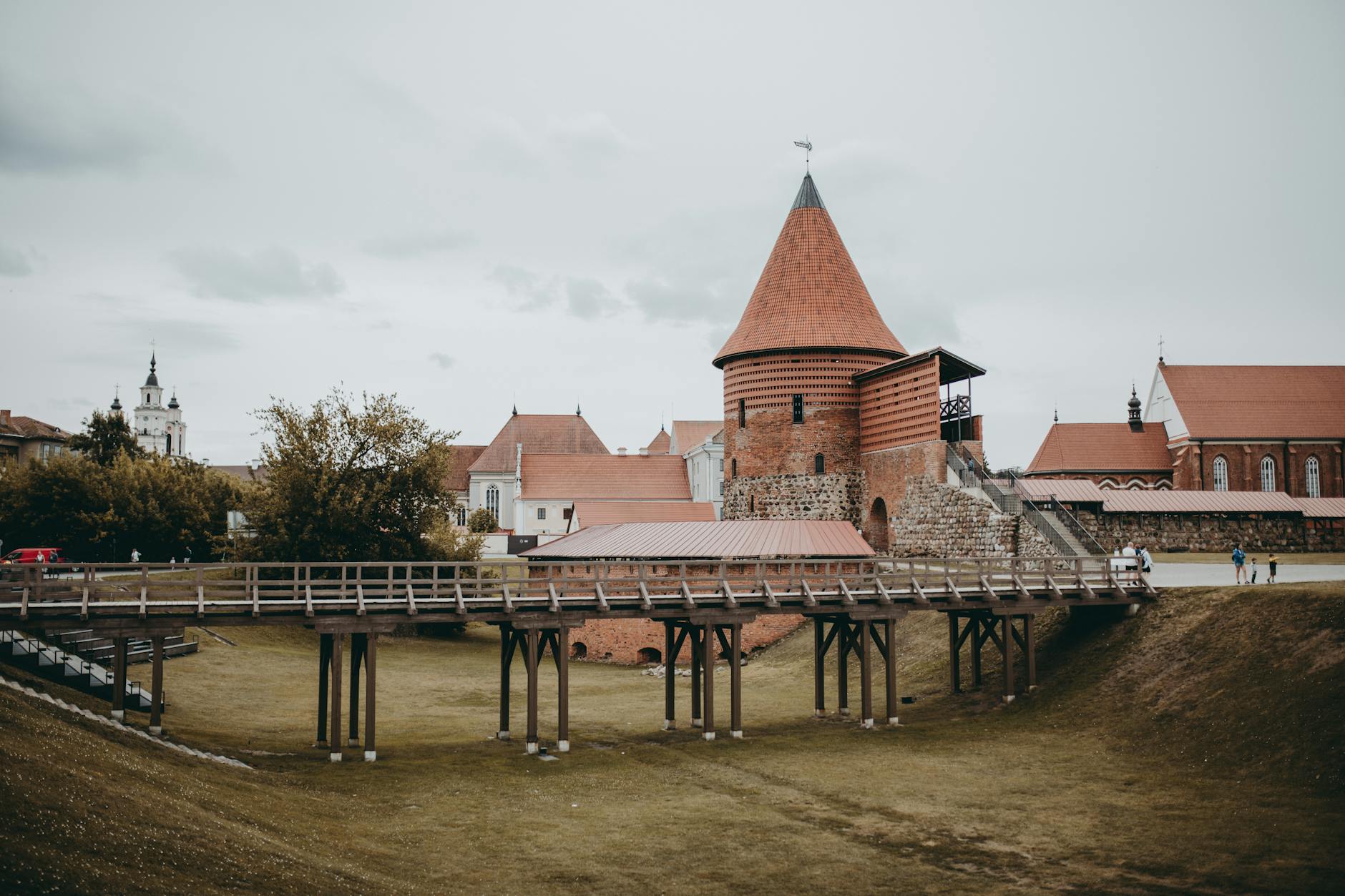
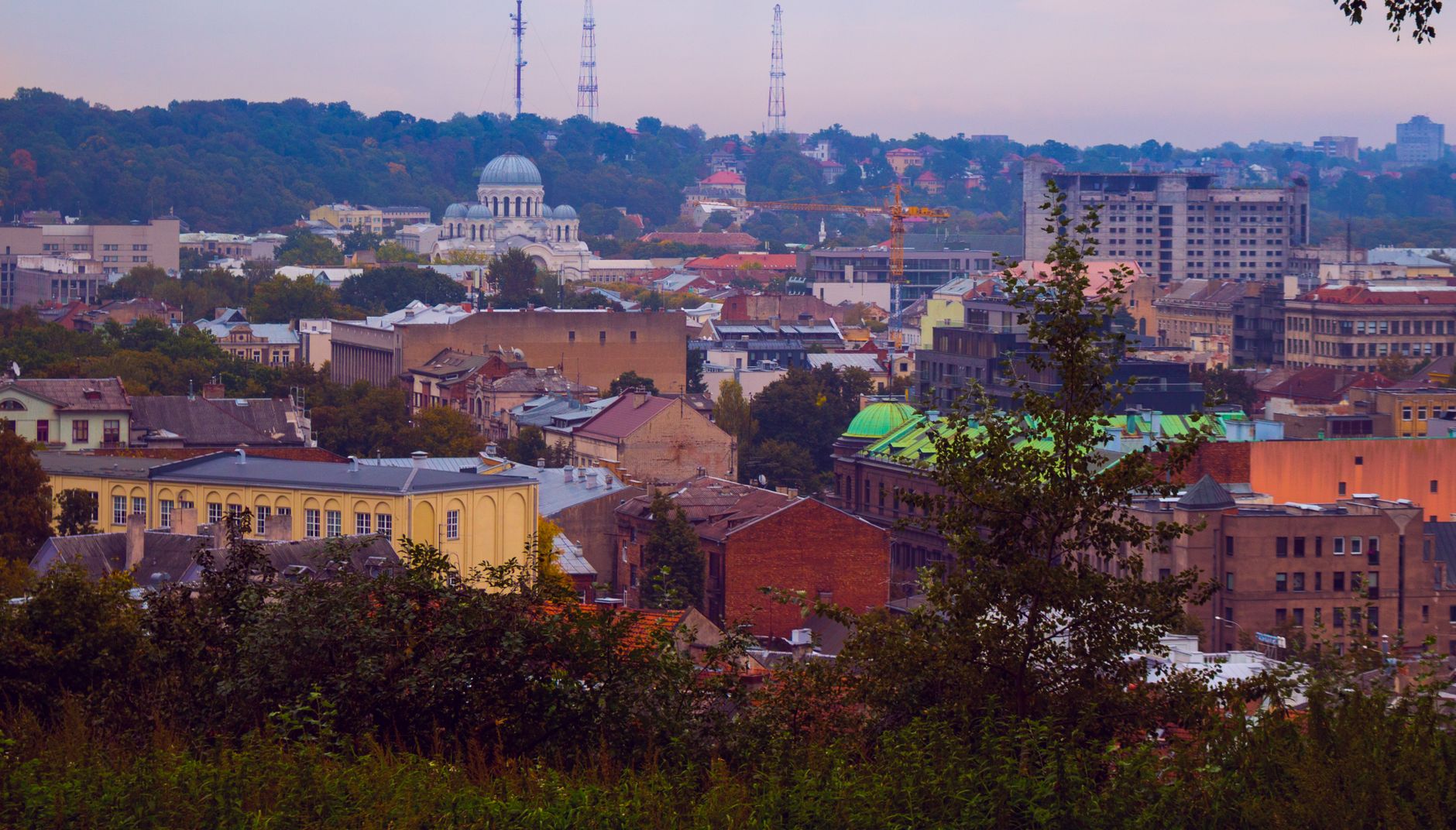

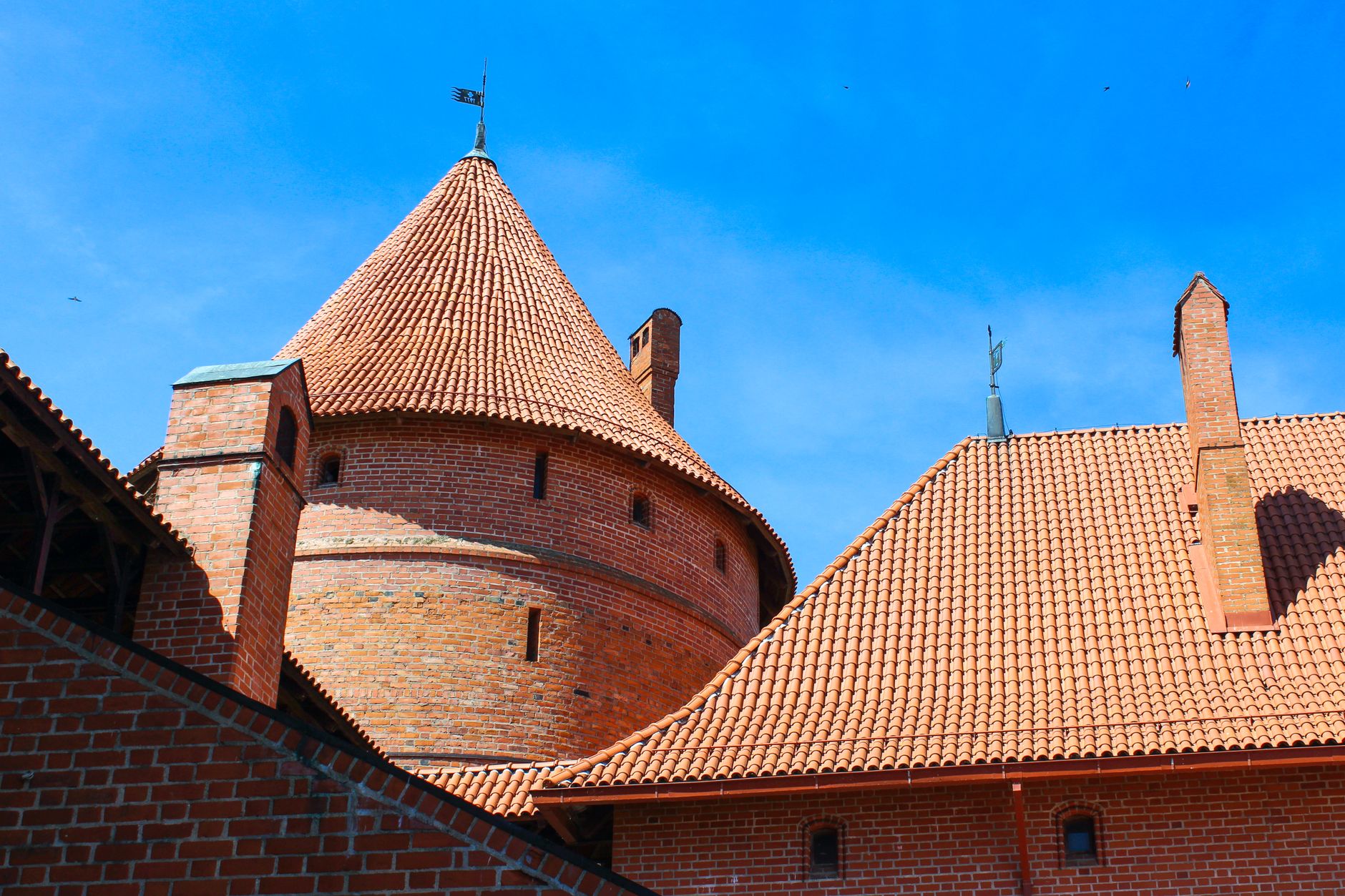

Yes. Kaunas gives you two cities at once: a medieval Old Town at the Nemunas-Neris confluence and a UNESCO-listed interwar modernist district built between 1919 and 1939. Few Baltic cities shift so sharply from cobbles and Gothic brick to clean modernist lines within one walk.
Two to three days is the sweet spot. That gives you time for Old Town, Laisvės alėja, the modernist New Town, and at least one museum or a trip out to Pažaislis Monastery without rushing.
Take bus 29G/29. It links the airport with central Kaunas, the bus station, and the railway station, and a driver-sold ticket costs €1.
No. Kaunas runs on buses and green trolleybuses, and the visitor core is compact enough that you will often walk between Old Town, Laisvės alėja, and the modernist center.
Yes, generally. Normal precautions are enough, but crowded buses, station areas, and dark park edges late at night deserve more attention than the postcard streets around Town Hall.
No, not by northern European standards. Airport bus tickets cost €1 from the driver, regular e-tickets cost €0.70, and much of the city’s appeal comes from walking its streets rather than buying expensive attraction bundles.
Late spring to early autumn works best, especially May, early June, and September. July is the warmest month on the 1991-2020 climate normals, but it is also the wettest.
Yes. Central Kaunas is easy on foot, public transport starts around 4:30 a.m. and runs until about 10:30 p.m., and route planning is simple with Trafi or the official stops.lt schedules.
Saved and recently read places — kept on this device only.
Photos may have been resized or cropped.
