Place
Vaduz
Liechtenstein Updated Apr 2026
The first surprise is the silence. Step off the bus in Vaduz, Liechtenstein and the Alps press in so close that church bells echo off limestone walls like a private concert. Cars vanish after two blocks; the only traffic is a stream of pedestrians carrying wine glasses toward a medieval castle that still houses a living prince.
 Photo: Benni Fish / Pexels
- Attractions
- 9
- Trip length
- 1 day
- Best season
- late June – early September
Why Vaduz
Built from cited sources · see the method · How we make our guides →
This is Europe's pocket-sized capital, stretched along the Rhine like a postcard someone forgot to flip over. Forty-seven thousand residents total in the entire country, yet the Kunstmuseum stands as a black basalt cube that would feel at home in Berlin. Walk the sculpture promenade at dusk and Botero's bronze woman reclines in permanent amusement while the castle above flickers with the prince's actual dinner candles.
What makes Vaduz extraordinary isn't scale but proportion. Every street ends in vineyard terraces producing wine the prince himself drinks. The national museum fits inside a 1438 townhouse where the audio guide still apologizes for the uneven floors. You can cross the country by bus in 27 minutes, but most visitors stay longer for the simple reason that somewhere this small reveals its secrets slowly, generously, and always over another glass of local zweigelt.
A Castle You Can't Enter
Vaduz Castle has been the princely residence since 1712, but its gates stay locked tight—except on August 15 when the gardens open and fireworks spill over the vineyards. The 120-meter climb up the footpath gives views that most visitors admit beat the castle itself.An Open-Air Sculpture Gallery
The car-free Städtle doubles as an accidental museum: 29 works by 18 artists installed since the 1980s, from Botero’s bronze Reclining Woman to a squashed rhinoceros. You can walk the whole exhibition in under an hour without ever buying a ticket.Medieval Ruins Locals Won’t Tell You About
Ruine Schalun, a 12th-century fort pinned to a cliff between Vaduz and Schaan, is what the guidebooks leave out. The ridge is exposed and the ascent is steep, but you’ll likely have the Rhine valley views to yourself.
Places to Visit
Not every monument, just the ones we'd walk you past ourselves.
Neighborhoods
Where to wander, by quarter — each with its own rhythm.
Städtle
The car-free heart where every cobblestone has a sculpture growing out of it. Botero's reclining woman shares a bench with office workers eating lunch, while the Rathausplatz erupts in Thursday wine tastings that spill into the medieval lanes. The entire district runs 400 meters end-to-end, yet contains three Michelin-noted restaurants and a stamp shop that will cancel your passport with genuine Liechtenstein franking.Ebenholz
Residential terraces climb 120 meters from the Rhine to the castle gate, each house clinging to vineyards that produce the prince's personal label. The Red House at 1338 marks the district's medieval core, its wine-red facade glowing against the limestone castle walls above. Locals walk these steep paths daily; visitors discover that the best castle views aren't from the top, but from halfway up where the prince's vineyards meet the forest.Zollstrasse Quarter
Where Vaduz goes to pretend it's Brooklyn. The Giessen Coffeehouse serves single-origin beans to remote workers who've discovered that 'country' means fiber-optic internet plus mountain views. Thursday nights see acoustic sets in converted warehouses while the scent of cardamom rolls drifts across to the Rhine's milky waters.Government District
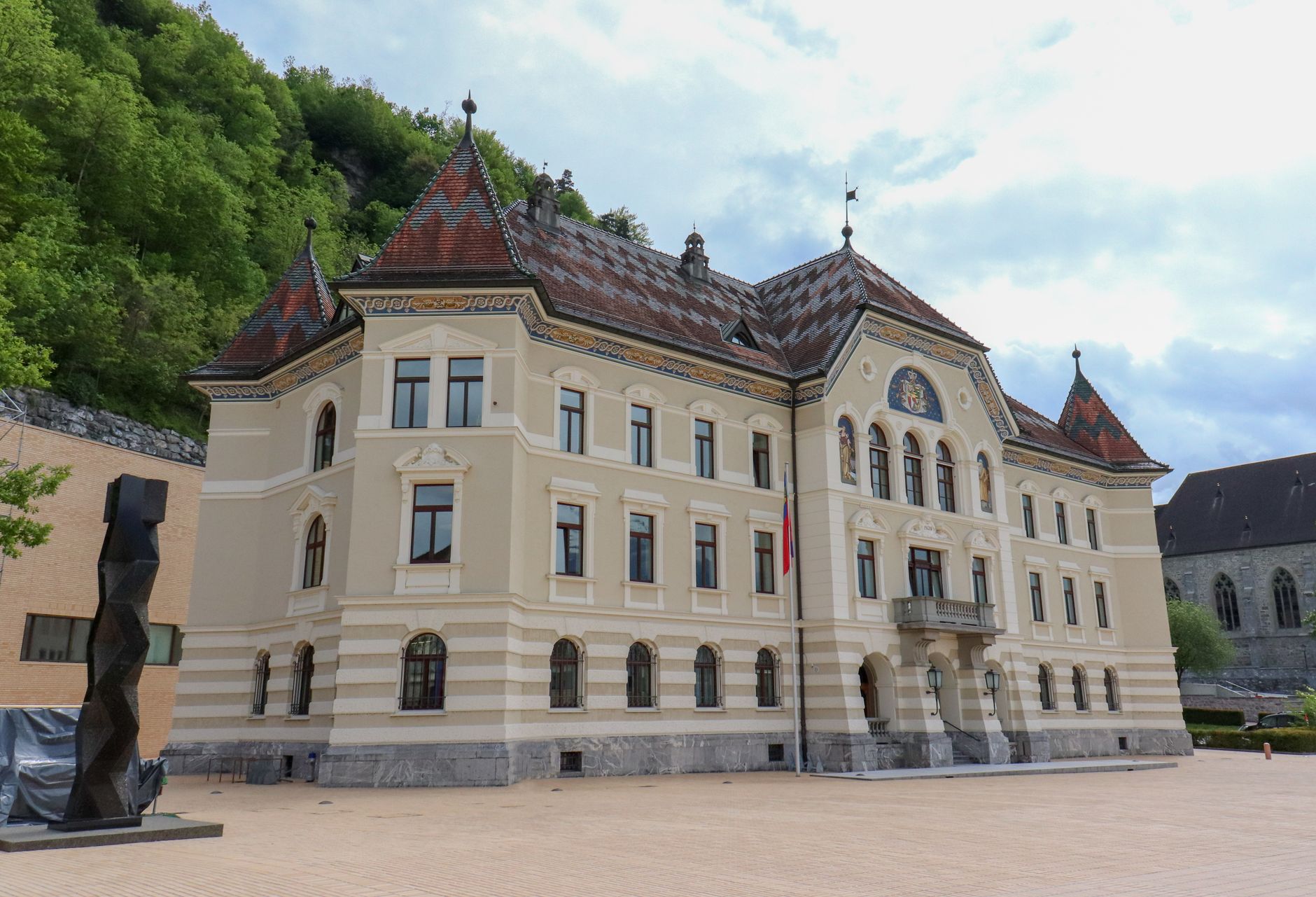
Modern glass parliament building faces its 1905 predecessor across Peter-Kaiser-Platz, the coats of arms on the old building's facade including one that technically depicts a bear wearing a crown. When parliament isn't in session, guards offer tours that end with a constitutional lesson over coffee in the members' canteen.
Plan your trip
Before you go
- Getting There
- Fly into Zurich (ZRH) and ride SBB to Buchs SG or Sargans; LIEmobil buses run every 20 minutes onward to Vaduz. From Germany or Austria, take the A13/A14 to Feldkirch and cross the border—no customs stop between Switzerland and Liechtenstein.
- Getting Around
- Liechtenstein has no metro; the LIEmobil bus network covers all 11 municipalities with flat-rate day tickets. The 2026 ALL INCLUSIVE Adventure Pass gives unlimited rides plus 20 % off museums for CHF 29. The city itself is car-free—Städtle is five minutes end-to-end on foot.
- Climate & Best Time
- Summer (Jun–Aug) peaks at 24 °C with July rains of 140 mm; winter (Dec–Feb) hovers around 2 °C and snow in January. Go late June to early September for hiking the Fürstensteig or vineyard walks; December is crisp and quiet if you like empty castle viewpoints.
- Language & Currency
- German is official, but English is everywhere in signs, timetables, and menus. The currency is Swiss franc (CHF); euros may be accepted, but change is returned in CHF.
From Mountain Keep to Micro-State Capital
Nine centuries squeezed between the Rhine and a vineyard slope
- 12th c.
Castle Keeps Appear
A 12 × 13-metre keep rises on the crag: walls three-and-a-half metres thick, commanding the pass road. From here you can see anyone approaching with hostile intent—or a wine barrel—long before they reach the toll gate below.
- 15 BCE
Romans Plant the First Vines
Legionaries drive the Splügen road along the right bank and notice the south-facing terrace. They plant Rhaetian vines, kick-starting a wine tradition that will outlast every empire that follows. You can still taste the descendant grapes in the glass you’ll be handed at the castle gate.
- c. 1150
Vaduz Gets a Name
Monks at the Abbey of Einsiedeln jot ‘Faduzes’ in a rent roll. The village is little more than a river ferry, a chapel and a cluster of storehouses built above the flood line. The name sticks, even if no one yet imagines it will ever need a passport.
- 1338
Red House Burns Red
A patrician paints his new gabled mansion ox-blood red, the most expensive pigment in the valley. The colour hasn’t faded; the house still glares down the slope like a stop sign against the vines.
- 1499
Swiss Torches the Keep
Swabian War spills over the ridge. Swiss Confederates storm the castle, torch the roof and melt back into the fog. Smoke drifts across the Rhine for days; the prince in Vienna doesn’t even notice.
- 1712
Hans-Adam Buys a County
Prince Johann Adam Andreas counts out 290,000 guilders for the ruined castle and its vineyards. He’s shopping for an Imperial vote, not a home. The deal gives the family what they need: a seat at the Holy Roman table and a postage-stamp principality nobody else wanted.
Show the full timeline (18 moments)
- 23 Jan 1719
A Country is Invented
Emperor Charles VI signs the parchment that stitches Vaduz and Schellenberg together. Overnight the valley becomes a sovereign state named after the family who bought it. The new principality covers 160 km²—smaller than most Austrian hunting parks.
- 1839
Josef Rheinberger Born in the Red House Lane
A baker’s son arrives screaming on a frosty March morning. By age seven he’s improvising fugues on the cathedral organ; by twenty-five he’s Munich’s court composer and Europe’s most sought-after organ teacher. Vaduz keeps the porch light on for him anyway.
- 1848
Revolution Cancels the District Office
European barricades echo up the Rhine. The prince’s district governor packs his seal and departs; local notaries take over the ledgers. For the first time, Vaduz answers to itself—sort of.
- 1866
Army Disbands, Neutrality Begins
The German Confederation collapses; Liechtenstein’s 80-man militia walks home and never reforms. The country forgets how to wage war. Farmers turn back to their vines; the castle armoury becomes a wine cellar within a decade.
- 1873
St. Florin’s Spires Pierce the Skyline
Neo-Gothic limestone rises where the old chapel stood. The nave is long enough for 300 souls—three times the village population. Inside, morning sun turns the stained glass into moving postcards of alpine saints.
- 1938
Franz Josef II Moves In
The first reigning prince to actually live in the castle drives up the switchback in a black Mercedes. Vienna feels too risky after the Anschluss; the Rhine looks safer. He stays for 51 years and turns the fortress into a home, complete with central heating and a bomb-proof art vault.
- 1945
Hans-Adam II Born in Exile
While the castle shelters the family art from Allied bombs, the heir is born in a Zurich clinic. He will inherit a country that doesn’t yet know it will need him to reinvent its economy twice.
- 15 Aug 1984
Women Vote, Fireworks Follow
Men grudgingly hand over the ballot box. On the same National Day, the castle gates swing open for the first public reception. Thousands climb the torch-lit path to toast the princess—and the new voters—while the prince’s pyrotechnics bounce off the Alpine walls.
- 2000
Black Cube Opens on the Städtle
A basalt monolith lands between the cafés: the Kunstmuseum. Inside, fluorescent tubes illuminate Warhols and the family’s old masters under the same roof. Contemporary art has officially moved into a village that once measured prestige in hectares of grapes.
- 2003
Prince Wins the Veto Referendum
Voters approve a constitution that lets the prince kill any law he dislikes. International headlines scream ‘democracy in retreat’; locals shrug. They prefer stable taxes and low unemployment to abstract ideals.
- 2008
Parliament Moves into Glass
The Landtag abandons its 1905 coat-of-arms façade for a transparent cube. Sessions now happen behind metre-thick glass—symbolic, perhaps, of a country still figuring out how visible it wants to be.
- 2022
Rainer Hasler Voted Century’s Best
Posthumous polls crown the Vaduz-born defender who once marked Pelé. The train station mural still shows his 1982 bicycle-kick clearance. Kids kick balls against it, pretending to be him, while bankers stride past to the LGT tower.
Who lived here
-
Composer & Organist · 1839–1901
Josef Gabriel Rheinberger
Born here
His organ sonatas echo through European cathedrals, but they began in the house on Aeulestrasse where his father kept the church choir. Today the modest plaque is easy to miss—exactly how Vaduz likes its genius hidden in plain sight.
-
Reigning Prince · 1906–1989
Prince Franz Josef II
Moved court here 1938
He fled Nazi-threatened Vienna and made Vaduz Castle a real home for the first time since 1712, turning a sleepy wine village into a sovereign capital. Walk the Städtle at dusk and you’re still treading the perimeter he patrolled with his corgis.
-
Footballer · 1958–2014
Rainer Hasler
Born here
The only Liechtensteiner voted ‘Player of the Century’ learned headers on the sloped pitch beside the Rhine, then carried the national jersey to the 1982 World Cup qualifiers. FC Vaduz still rings the bell at 19 minutes to honor his shirt number.
-
Archbishop · born 1948
Wolfgang Haas
Born here
Created the world’s smallest archdiocese headquartered in Vaduz, giving the cathedral on the hill a status its neo-Gothic spire always pretended to have. He still preaches in the same Alemannic dialect you’ll hear in Saturday market gossip.
Where to Eat
Where locals actually book dinner — not the tourist menus.
-
Prince’s Vineyard Wines
The slopes above Vaduz produce small-batch Zweigelt and Blauburgunder bottled for the royal table. Ask for the prince’s label at restaurants around Rathausplatz—most carry it even if it’s not printed on the menu.
-
Käsknöpfle
Liechtenstein’s answer to mac and cheese: tiny spaetzle folded with melted alpine cheese and topped with crispy onions. Locals eat it with applesauce on the side.
-
Rheintaler Ribelmais
A coarse cornmeal mash cooked in milk until it forms a crust, served sweet with cinnamon sugar or savory with bacon. Look for it at mountain huts in Triesenberg, 20 minutes uphill by bus.
-
Gaflei Stuba Alpine Cheese
This 1 483 m restaurant above Triesenberg ages its own wheels in the high-altitude cellar. Order the tasting board—the rind tastes like the meadow it came from.
Insider tips
Small things that change how the city treats you.
Carry Swiss Francs
Euros are accepted but change is always returned in CHF, often at a poor rate. Withdraw small notes at the SBB ATM inside Buchs SG station before boarding the LIEmobil bus.Castle Trail Shoes
The 20-minute climb to Vaduz Castle is a calf-burner on smooth cobble worn slick by centuries of vineyard carts. Trainers with grip save dignity and ankles.August 15 Only
The castle gardens open once a year on National Day. Arrive before 17:00, bring a picnic rug, and stay for the prince’s 22:00 fireworks reflected off the Rhine.Adventure Pass Hack
The ALL INCLUSIVE pass pays for itself after two bus rides plus museum entry. Buy it at the Liechtenstein Center and flash the QR code—drivers don’t sell it.Morning Light Shot
Stand on the wooden Alte Rheinbrücke at sunrise; the cathedral spire and castle silhouette stack perfectly with the river mist. Tripod allowed, no pedestrians before 07:00.Sunday Silence
Liechtenstein observes Swiss quiet laws—shops shut, buses run hourly. Plan groceries on Saturday or you’ll breakfast on vending-machine chocolate.
Gallery
The city, as it actually looks.



Frequently asked
Is Vaduz worth visiting?
Yes, if you like micro-states with open-air sculpture galleries and a prince who still lives overhead. You can walk every highlight in two hours, but the layers—Roman road, Swabian-war scorch marks, 2008 tax-scandal headlines—reward slower looking.
How many days in Vaduz do you actually need?
One full day covers the museums, cathedral, bridge to Switzerland and a vineyard hike. Stay the night only if you want the August 15 castle fireworks or plan day-trips into the alpine villages of Triesenberg and Balzers.
Can you go inside Vaduz Castle?
No, the princely family still lives there. The only exception is 15 August when the gardens open for National Day; bring ID, bags are scanned, photography allowed but no drones.
What’s the cheapest way from Zurich Airport to Vaduz?
Take the SBB train to Buchs SG (52 min with supersaver ticket), then LIEmobil bus 12 to Vaduz Post (14 min). Whole journey costs ~24 CHF if booked early—half the price of a private transfer.
Do they speak English in Vaduz?
Yes, every museum, café and bus driver flips to English without prompting. Still, a greeting ‘Grüezi’ earns warmer service in the family-run wine taverns behind the Kunstmuseum.
Is Vaduz safe at night?
Extremely; crime statistics are negligible. The only hazard is the unlit castle path—carry a phone torch and watch for vineyard sprinklers that slick the stones after 22:00.
All Places to Visit.
1 place to discover
Pick up where you left off
Saved and recently read places — kept on this device only.
Photo credits (7)
- Benni Fish — Pexels License (https://www.pexels.com/license/) — Source: https://www.pexels.com/photo/13895514/
- Abhishek Navlakha — Pexels License (https://www.pexels.com/license/) — Source: https://www.pexels.com/photo/30951478/
- Rodrigo Curi — Pexels License (https://www.pexels.com/license/) — Source: https://www.pexels.com/photo/5742914/
- Louis — Pexels License (https://www.pexels.com/license/) — Source: https://www.pexels.com/photo/34017515/
- Jean-Paul Wettstein — Pexels License (https://www.pexels.com/license/) — Source: https://www.pexels.com/photo/36385924/
- Sergio Zhukov — Pexels License (https://www.pexels.com/license/) — Source: https://www.pexels.com/photo/28305332/
- Rodrigo Curi — Pexels License (https://www.pexels.com/license/) — Source: https://www.pexels.com/photo/5742910/
Photos may have been resized or cropped.