Introduction
Liechtenstein travel guide starts with a surprise: this 160 km² country packs vineyards, a prince's castle, wetlands, and ski slopes into one short bus ride.
Liechtenstein works best when you stop treating it as a checklist country. In Vaduz, the capital, you can stand beneath the castle hill, walk to the Kunstmuseum, then finish with Pinot Noir from the Princely Winery before dinner. Schaan feels less ceremonial and more lived-in, with shops, cafés, and the rhythm of the country's largest municipality. Nothing sprawls here. The whole place runs on compression: parliament and pasture, gallery walls and Alpine weather, all within a valley narrower than many European suburbs.
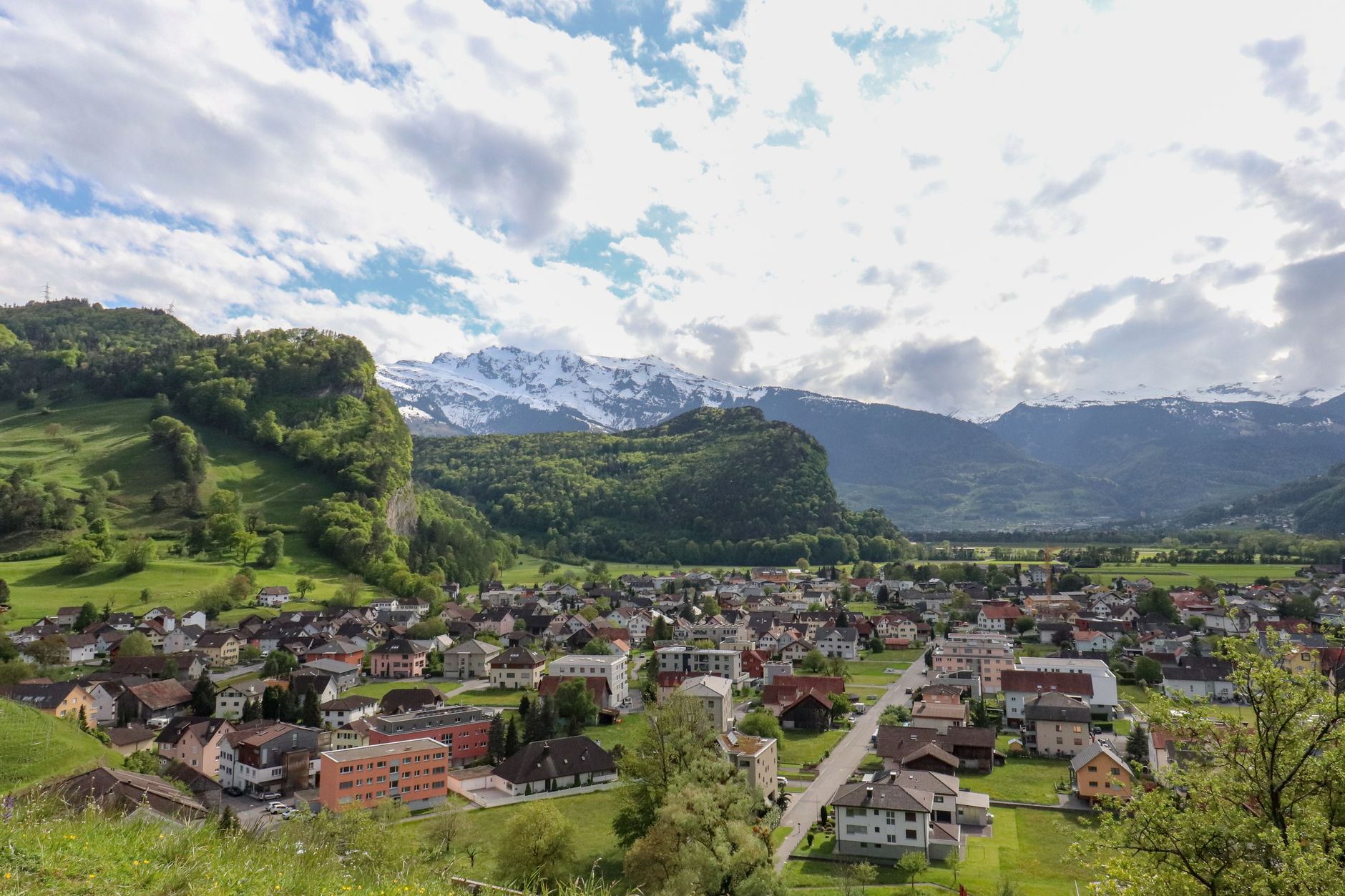
Then the ground tilts upward. Triesenberg still carries its Walser inheritance in speech and building style, while Malbun turns the country's eastern rise into a clean, family-sized mountain escape with hiking in summer and 23 km of pistes in winter. Balzers adds another layer with Gutenberg Castle, a hilltop fortress that looks staged for a film until you notice the working village below it. Up north, Ruggell and Eschen open onto the flatter Rhine Valley, where wetland paths and cycle routes show a calmer, less photographed Liechtenstein.
What makes the country memorable is range, not scale. You can move from the Ruggeller Riet wetlands at 430 meters to viewpoints beneath Grauspitz, the 2,599-meter high point, in the same day if you plan well. Steg offers the quieter mountain mood that Malbun sometimes lacks, and Triesen gives you vineyard edges and a clearer sense of how close the alpine wall sits to daily life. For travelers crossing between Switzerland and Austria, Liechtenstein is an easy add-on. For curious readers, it is much more than that.
A History Told Through Its Eras
Before the Prince, a Road, a Fort, and the Rhine
Roman Roads and Alpine Converts, 1st century BCE-1000
A Roman soldier on watch at Schaan would have known exactly what mattered here: the road, the river, the pass. The Via Claudia Augusta stitched Italy to the north, and this narrow strip of valley, between the Rhine and the rising wall of mountain, became a place of movement long before it became a state. Ce que l'on ignore souvent, c'est que the future Liechtenstein first entered written history not through a throne room, but through logistics.
Rome left more than a line on a map. Archaeologists found the remains of a small military installation near Schaan, and Roman milestones turned up in the ground like stubborn witnesses. You can still stand in Vaduz, look toward the valley floor, and understand why empire cared: whoever watched this corridor watched trade, troops, and news.
Then Rome loosened its grip, and new peoples came through the same landscape with different gods, different speech, different loyalties. Alemannic settlement in the 5th and 6th centuries did not politely layer itself over the old world; it replaced much of it. Latin retreated. Local speech shifted toward the Alemannic forms whose descendants still shape everyday voices in places like Triesenberg and Eschen.
Christianity arrived slowly, not as a trumpet blast but as habit, persuasion, and monastery networks tied to St. Gallen. A valley that had once answered to imperial officers began answering to parish bells. That change mattered. It prepared the land for the medieval order to come, where jurisdiction, faith, and property would cling to one another so tightly that a castle or a church could decide the fate of an entire village.
The unnamed Roman commander at Schaan never founded a country, yet his little fort fixed this valley in the great traffic of empire.
Roman milestones found near Schaan survived because they were reused in later building work, the afterlife of empire tucked into ordinary stone.
Vaduz and Schellenberg: Two Small Lordships with Large Quarrels
Counties, Castles, and Debt, 1000-1699
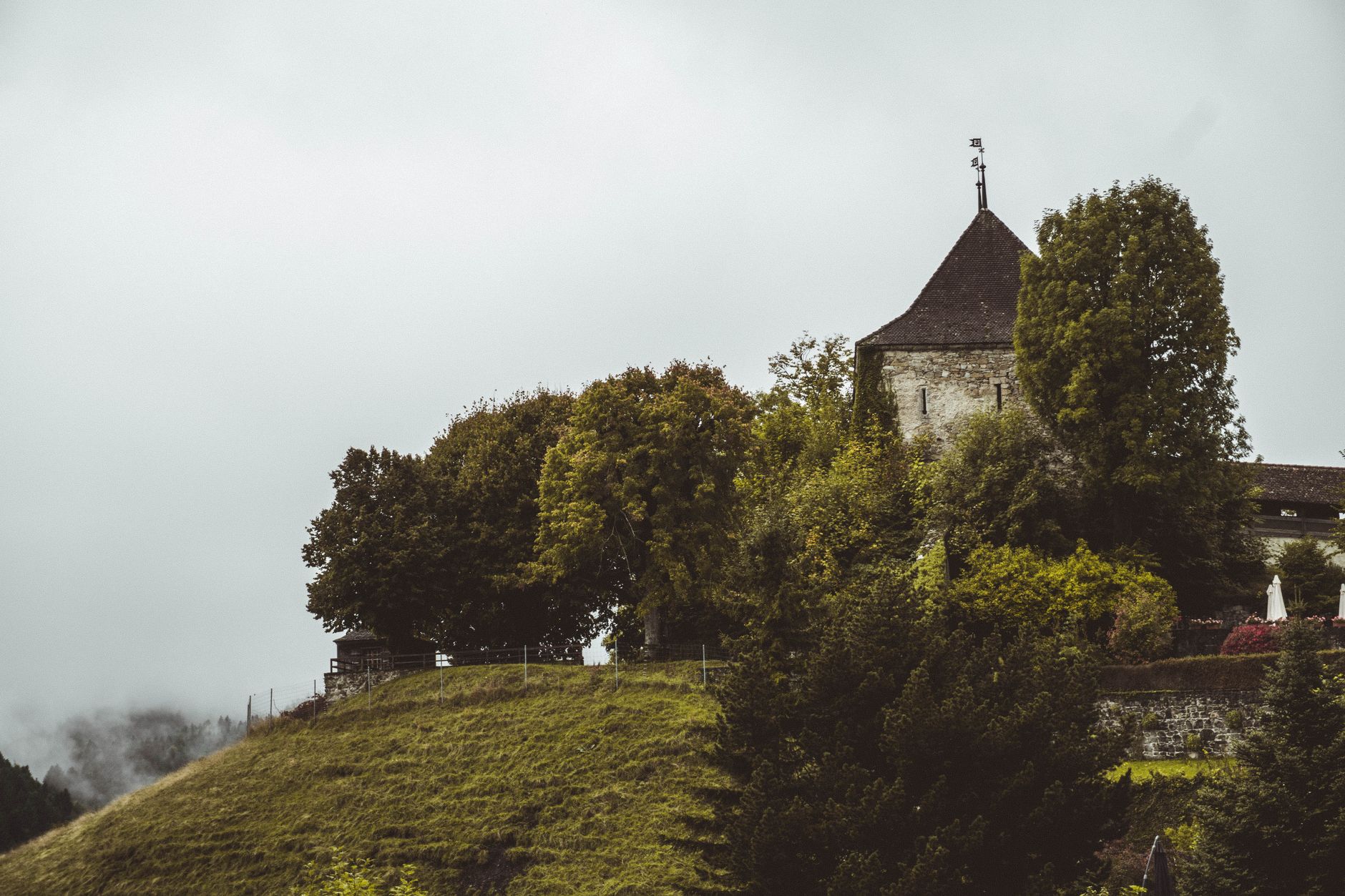
Begin with a tower at Balzers, not a constitution. Gutenberg Castle rises above the village like a reminder that medieval power was first of all visible power: stone on a hill, walls over fields, a lord who could see who came up the road. Liechtenstein did not yet exist. What existed were the County of Vaduz in the south and the Lordship of Schellenberg in the north, two territories small enough to cross in a day and troublesome enough to occupy dynasties for centuries.
The families who held them, among them the Werdenbergs, the Montforts, and later the Brandis, were forever selling, marrying, mortgaging, and disputing. One can almost hear the rustle of charters, the slap of seals in wax, the exhausted notaries trying to impose order on aristocratic vanity. Land changed hands not because some grand nation was being born, but because noble houses ran short of money, ran out of heirs, or ran into one another.
Vaduz Castle, above Vaduz, grew out of this world of private fortresses and public insecurity. It was a working stronghold before it became a symbol on postcards. Local legend even gives it a ghost, the Graue Frau, said to appear before a death in the princely family. Records cannot confirm the apparition, of course. But the persistence of the tale tells you something plain: these castles were never just residences. They were theatres of fear, lineage, and memory.
In 1499 the Swabian War swept through the region and left damage in the Rhine valley. Villages were exposed; grand strategy always lands hardest on the people who own the least. By the time the Brandis family bought Vaduz in 1416 and later generations struggled to keep control, the shape of the future principality was becoming clearer, though no one would have called it that yet. The key fact was this: these little lordships were politically inconvenient, legally useful, and available for purchase. That last detail would change everything.
Ludwig von Brandis looks less like a conquering hero than a sharp buyer who understood that a well-placed valley could be worth more than a battlefield victory.
A local saga around Gutenberg Castle tells of a knight who bargained with the devil to win a tournament, then found his horse refusing every church courtyard afterward.
A Country Bought for a Seat at Court
The Invention of a Principality, 1699-1806
Few origin stories in Europe are quite so frank. In 1699 Prince Johann Adam Andreas of Liechtenstein bought the Lordship of Schellenberg. In 1712 he bought the County of Vaduz. Not for romance. Not for Alpine air. Not even, if we are honest, for the people who lived there. He bought them because the Liechtenstein family, magnificent in Vienna and powerful in Habsburg service, lacked one specific political privilege: land held directly from the emperor, which would secure a seat in the Imperial Diet.
Ce que l'on ignore souvent, c'est que the family gave its name to the country before it gave the country its presence. Johann Adam Andreas never visited the territory he completed buying. One is tempted to smile, but the calculation was brilliant. In 1719 Emperor Charles VI united Vaduz and Schellenberg and raised them into the Principality of Liechtenstein. A state entered the world because a dynasty needed the right legal paperwork.
Imagine the contrast. In Vienna, chandeliers, ambassadors, painted ceilings, and a family whose palaces announced old power. In the Rhine valley, farmsteads, vineyards, rough weather, and subjects who rarely saw the face of the prince who ruled them. The early principality was governed at a distance through administrators. Taxation was real. Presence was not.
And yet that cool, almost cynical birth became the source of survival. Because Liechtenstein existed in law, it could persist in politics. When the Holy Roman Empire approached its end, this tiny principality, assembled for reasons of status, was ready to become something more serious: a sovereign state in a Europe being reordered by Napoleon.
Johann Adam Andreas of Liechtenstein was a collector, builder, and political tactician who acquired a country the way another man might acquire a painting, except that the purchase endured.
The Principality of Liechtenstein was named in 1719 after a dynasty that still largely preferred Vienna salons to Vaduz mud.
From Napoleon's Upheaval to a Prince Who Finally Came
Sovereignty by Necessity, 1806-1918
When Napoleon dissolved the Holy Roman Empire in 1806, many old arrangements vanished in smoke. Liechtenstein, improbably, survived the fire. By joining the Confederation of the Rhine, it gained a fuller form of sovereignty than its founders had originally imagined. One of history's little ironies: a territory bought for rank became a real state because Europe was collapsing around it.
The 19th century was not all romance and uniform buttons. The principality remained poor, rural, and politically modest. Fields mattered more than ceremony. So did emigration. But institutions slowly took shape. A constitution arrived in 1818, then another in 1862, and in 1868 the tiny army was abolished after the Austro-Prussian War. The story goes that Liechtenstein sent 80 men and returned with 81 because an Austrian liaison joined them on the way back. The tale is beloved. Historians debate the detail. The country's affection for it is itself revealing.
Then came a moment of extraordinary symbolism. In 1842 Prince Aloys II became the first reigning prince to visit the country that bore his family's name. More than a century after the principality's creation, the ruler finally appeared in person. One imagines the villages watching carefully, measuring not only the carriage and the protocol, but the simple fact of physical arrival. A distant landlord had become, at last, a visible sovereign.
By the late 19th century Vaduz, Schaan, and Balzers were still small places, but they now belonged to a polity with its own habits, parliament, and growing sense of itself. This was no longer merely a legal convenience for a noble house. The bond between dynasty and land, once chilly and abstract, had begun to thicken. That mattered when the First World War shattered the old Habsburg world on which Liechtenstein had long depended.
Prince Aloys II changed the emotional history of Liechtenstein simply by turning up, a gesture absurdly late and politically vital.
Liechtenstein's army was dissolved in 1868, and the cheerful legend that 80 soldiers came home as 81 has become part of the country's national folklore.
A Very Small Monarchy Learns to Stand Alone
Neutrality, Reinvention, and the Alpine State of Today, 1918-present
After 1918 Liechtenstein had to reinvent itself fast. The Austro-Hungarian world that had framed its old loyalties was gone, currencies failed, and economic assumptions collapsed with them. The answer was practical rather than theatrical: turn west. Customs and monetary ties with Switzerland anchored the country to a more stable neighbour, and the Swiss franc became everyday reality. For a small state, sentiment is never enough. Accounts must balance.
The darkest chapter came with the 20th century's moral wreckage. The princely family lost extensive estates in Czechoslovakia after the Second World War, and the broader history of Liechtenstein's financial structures, wartime positioning, and postwar reckonings has required uncomfortable scrutiny. This is where a serious history must resist fairy-tale temptation. A castle over Vaduz is picturesque. The century beneath it was not.
And yet postwar Liechtenstein built something rare: a durable combination of monarchy, direct democracy, industry, and finance in just 160 square kilometres. Vaduz became the political face, Schaan the economic engine, and places like Triesenberg and Malbun kept the mountain identity from dissolving into balance sheets. In 1984 women finally gained the right to vote at national level, shockingly late by European standards. The country modernised, but on its own timetable, sometimes admirably, sometimes stubbornly.
Now the scene that defines Liechtenstein is almost absurd in its compression. A princely castle still crowns Vaduz. Contemporary art hangs in precise museum light below. Buses run on Swiss time. Vineyards climb the slopes. Parliament meets within sight of mountains that still dictate weather and scale. The state that began as a dynastic legal manoeuvre has become something more interesting: a monarchy small enough for every decision to feel personal, and resilient enough to carry its contradictions into the present.
Franz Josef II, who settled permanently in Vaduz in 1938, transformed the princely family from absentee owners into resident sovereigns at last.
Women in Liechtenstein won national voting rights only in 1984, after a referendum in a country where modernity has often arrived by negotiation rather than proclamation.
The Cultural Soul
A Country Spoken in Several Mouths
Liechtenstein writes in German and lives in dialect. The road signs, the museum labels in Vaduz, the official notices from the state: all precise, all legible, all obedient. Then someone opens their mouth in Schaan or Triesenberg and the country tilts. Sound becomes terrain.
A small state should, in theory, speak with one voice. Liechtenstein refuses. Oberland says one form of "we," Unterland says another, Triesenberg keeps a Walser speech that climbed high and stayed there, like a stubborn goat with grammar. The difference is not decorative. It tells you who belongs where, who grew up under which slope, who learned distance from snow.
The greeting to learn is "Hoi." One syllable. No wasted silk. Say it in a bakery, on a bus, at a counter in Vaduz, and you feel the social machinery click into place. Not intimacy. That would be too easy. Recognition, rather.
A country is a table set for strangers. Here, language chooses the cutlery with exquisite care.
Cheese, Corn, and the Discipline of Pleasure
Liechtenstein cuisine begins with peasant arithmetic: milk, flour, cornmeal, onion, plum, weather. Then something indecent happens. Thrift turns sensual. A plate of Käsknöpfle arrives in Vaduz or Balzers, steaming under browned onions, with apple sauce waiting at the edge like a polite scandal, and you understand that sweetness beside cheese is not a compromise but a doctrine.
Ribel tells the older story. Cornmeal, milk, patience, a pan, then heat until the mass breaks into crumbs. Poor food, certainly. But poor food that survived long enough to become a national memory is never poor anymore. In Liechtenstein, even hunger seems to have kept good manners.
The table has mountain logic. Barley soup for cold days. Plum dumplings when fruit and starch decide to console each other. Funkaküachle near the spring bonfire, where pastry meets smoke and the whole village stands outside to watch winter burn. Food here is rarely theatrical. It is more serious than that.
And wine. This is the delicious surprise. On 160 square kilometers of land, vineyards still hold their line above Vaduz and along the Rhine corridor, and the Princely Winery behaves not like a souvenir but like a fact. Pinot Noir in a microstate: the sentence sounds improbable, which is one reason to trust it.
Correctness with a Pulse
Liechtenstein politeness is not chatter. It is calibration. You greet people. You do not perform yourself at them. On a bus from Buchs into Vaduz, or in a village inn in Triesen, the atmosphere can feel reserved to anyone raised on louder forms of friendliness. This is a misunderstanding. Reserve is not coldness. It is respect wearing a wool coat.
The first rule is simple: acknowledge the room. "Hoi" if the setting permits. Standard German if clarity matters. English only after necessity announces itself. In a country of about 41,000 people, social life does not dissolve into anonymity; it thickens. Faces recur. Reputation travels faster than a train, which is useful, because there is no domestic train to compete with it.
Formality here has an odd tenderness. People often seem to prefer getting things right over getting them fast: the proper greeting, the proper distance, the proper sequence. One senses Swiss influence, Austrian neighborliness, and something else besides, something more local and more watchful. Small states cannot afford the luxury of sloppiness.
Do not mistake quiet for passivity. Liechtenstein knows exactly who it is. That is why it has no need to announce itself every five minutes.
Bonfire, Bell, and the Mountain Afterlife
Catholicism in Liechtenstein feels less like a doctrine than like an architecture of time. Church towers punctuate the valley. Feast days still shape calendars. Cemeteries sit with the composure of old family albums. Even for people who no longer believe with full obedience, the ritual grammar remains in the body: when to gather, when to light candles, when to lower the voice.
Then comes Funkensonntag, which is much harder to fit into neat theology. On the first Sunday after Ash Wednesday, villages build towering bonfires and set them alight to drive out winter. The custom is Catholic by date and older by instinct. Fire has always understood what official religion sometimes forgets: human beings need spectacle if they are to take the seasons seriously.
In Triesenberg and the upland villages, the Alpine setting gives belief another register. Snow, fog, bells, steep roads, houses gripping the slope with suspicious determination: all this encourages metaphysics. One does not have to be pious to feel that the mountain has opinions.
The result is a country where religion has not vanished into abstraction. It lingers in processions, in names, in Sunday rhythms, in the way a village square empties or fills. Faith may weaken. Ritual rarely does.
A Clean Wall for Dangerous Ideas
The great joke of Vaduz is that a capital so small can house art so self-possessed. You arrive expecting postage stamps and princely memorabilia. You find, instead, serious contemporary work presented with the calm of a place that does not need to flatter anybody. The Kunstmuseum Liechtenstein sits there like a dark, exact sentence.
This matters. In a country often reduced to banking clichés and miniature-state curiosity, contemporary art performs a useful act of resistance. It refuses quaintness. It says: we are not a snow globe with a throne. We are capable of abstraction, experiment, severity. That is a finer form of patriotism than flag-waving.
Yet the princely collections remain nearby, and the tension is excellent. Old masters, dynastic display, modern installations, clean-lined galleries, mountain light. Few places let Rubens and conceptual restraint breathe in the same political climate without either side looking embarrassed. Vaduz manages it.
Art in Liechtenstein benefits from scale. Nothing is too far from anything else. You can stand before a work that dismantles certainty, step outside, look up at the castle above Vaduz, and understand that power and perception have always shared a wall.
Castles Above Bus Stops
Liechtenstein architecture has a wicked sense of proportion. A castle looms above Vaduz. Another rises in Balzers, where Gutenberg Castle stands on its hill with the old arrogance of stone that expects to be obeyed. Below them lie bus routes, apartment blocks, parish churches, municipal tidiness, and the daily precision of a rich modern state. Feudal verticality. Civic punctuality.
This compression is the country's architectural secret. In larger nations, periods separate themselves into districts, centuries, and explanatory brochures. Here, they stand almost shoulder to shoulder. A medieval fortress, a contemporary museum facade, vineyard terraces, Walser houses in Triesenberg, practical buildings in Schaan: the whole thing reads like a manuscript written in several inks and never recopied.
The mountain villages add another lesson. Houses in Triesenberg and near Malbun do not flirt with the slope; they negotiate with it. Roofs answer snow. Wood answers cold. Placement answers gravity. Alpine architecture, when honest, is never picturesque first. It is survival with style arriving later.
And yet style does arrive. Not as ornament, mostly. As discipline. Liechtenstein builds the way it speaks: compactly, exactly, with no appetite for wasted gestures.
What Makes Liechtenstein Unmissable
Castle Country, Compressed
Vaduz Castle crowns the capital, while Gutenberg Castle rises above Balzers on a separate hill. Few countries let you read so much of their political and medieval story in one afternoon.
Trails Across a Nation
More than 400 km of marked hiking routes thread through a country just 24.6 km long. The 75 km Liechtenstein Trail crosses all 11 municipalities, which is less a walk than a lesson in how varied this landscape is.
Malbun's Alpine Ease
Malbun skips the big-resort noise and keeps the mountain experience manageable. In winter, its 23 km of pistes suit families and casual skiers; in summer, the same slopes turn into high-meadow walks.
Vineyards Below Peaks
Liechtenstein grows wine in a setting that feels almost improbable: vines on the Rhine Valley floor, mountains pressing close behind. Vaduz and Triesen are the places to notice how seriously this tiny country takes Pinot Noir and Chardonnay.
Microstate, Serious Culture
For a country of about 41,000 people, Liechtenstein punches well above its size in museums and contemporary art. Vaduz combines princely symbolism, stamp lore, and sharp modern collections without making you cross a vast city to see them.
Wetlands to Summits
The north holds the Ruggeller Riet, a peatland reserve known for birdlife and Siberian iris blooms, while the east climbs toward Grauspitz at 2,599 meters. That wetland-to-peak contrast is the country's real signature.
Cities
Cities in Liechtenstein
Vaduz
"The capital with no train station: a Rhine-side town of 5,000 where the reigning prince's medieval castle sits directly above a world-class contemporary art museum."
Schaan
"Liechtenstein's most populous municipality hides Roman castellum foundations beneath its streets and runs the country's most serious industrial economy behind a quiet residential facade."
Triesenberg
"Perched on a terrace above the Rhine Valley, this village speaks a Highest Alemannic dialect distinct from every other municipality and looks down on Vaduz like a skeptical older relative."
Malbun
"At 1,600 metres, Liechtenstein's only ski resort fits 23 kilometres of piste into a bowl so compact that a determined skier can lap the whole mountain before lunch."
Balzers
"The southernmost municipality anchors itself around Gutenberg Castle, the oldest fortification in the country, rising from a volcanic basalt plug above the Rhine flood plain."
Triesen
"Quiet on the surface, Triesen conceals the Mariahilf Chapel, a pilgrimage site with a Black Madonna that has drawn the faithful through the Rhine Valley since the 17th century."
Eschen
"Set in the Unterland flatlands, Eschen pairs a Neolithic burial mound on its outskirts with one of the country's most active local carnival traditions, including the full Guggamusik circuit."
Mauren
"A low-lying northern village where the Liechtenstein Trail passes through cornfields and the municipal boundary is close enough to Switzerland that the border is a matter of a farm track."
Ruggell
"Home to the Ruggeller Riet, a 90-hectare peatland at the country's lowest point — 430 metres — where Siberian iris blooms in May in a landscape that feels nothing like Alpine Liechtenstein."
Planken
"The smallest municipality by population clings to a south-facing slope above Schaan with fewer than 500 residents, unobstructed views across the Rhine to the Swiss Alps, and no through traffic."
Steg
"Below Malbun in the Malbun Valley, Steg is the trailhead for the Valüna alpine circuit and the point where the country's road network simply ends and the mountains take over."
Gamprin
"A twin municipality with Bendern, it holds the Liechtenstein Trail's northern Rhine-side stretch and a Romanesque church at Bendern that predates the principality itself by several centuries."
Regions
Vaduz
Central Rhine Valley
Vaduz is where statehood turns visible: parliament, museums, vineyards, and the castle looking down from its wooded shelf above town. This central stretch also includes Triesen and Schaan, so you can move from contemporary art to local bus routines and wine slopes in minutes rather than hours.
Eschen
Northern Lowlands
The north feels flatter, quieter, and more agricultural, with villages that keep their own rhythm despite the country's tiny size. Eschen, Mauren, Gamprin, and Ruggell make sense together: Roman traces, local churches, floodplain landscapes, and the sense that Liechtenstein's daily life happens well away from souvenir photos.
Triesenberg
Walser Heights
Triesenberg sits above the valley with a different accent, a different settlement pattern, and a view that explains why people stay longer than planned. This is Walser country, where wooden farmhouses, steep lanes, and mountain weather give Liechtenstein a sharper alpine edge than the valley below.
Balzers
Southern Castles and Vineyards
Balzers and Triesen hold the southern end of the country, where castle masonry, vineyard terraces, and the valley floor sit unusually close together. Gutenberg Castle gives the region its headline image, but the stronger impression is how inhabited the landscape still feels: not a stage set, a working edge of the Rhine corridor.
Schaan
Schaan and the Interior Slopes
Schaan is the largest municipality, but it does not behave like a grand city; it feels more like Liechtenstein's practical center, where shops, buses, offices, and everyday life intersect. Add nearby Planken and you get the contrast that defines the interior slopes: one place busy and grounded, the other lifted above the valley with a quieter, more residential mood.
Suggested Itineraries
3 days
3 Days: Capital, Mountains, Castle Walls
This is the tight first-timer route: art and statehood in Vaduz, Walser mountain culture above the valley, then a southern finish under the walls of Balzers. It keeps transfers short and gives you the three faces of Liechtenstein that matter most on a short stay: princely, alpine, and stubbornly local.
Best for: first-timers, museum visitors, short breaks
7 days
7 Days: North Villages and Rhine Wetlands
Start in the busy everyday belt around Schaan, then move north into smaller municipalities where Liechtenstein feels less like a capital district and more like a chain of self-contained villages. This route works well if you like easy bus travel, wetland walks, local food, and a country that reveals itself by degrees rather than with one grand sight.
Best for: slow travelers, walkers, repeat visitors
10 days
10 Days: Valley South to Alpine Quiet
This route takes the long way through the southern half of the country, linking vineyards, village centers, and higher ground without repeating the obvious capitals. It suits travelers who want hikes, local history, and enough time to feel how quickly Liechtenstein shifts from commuter valley to mountain pasture.
Best for: hikers, road-trippers, travelers mixing culture with outdoors
14 days
14 Days: Full-Country Liechtenstein Trail by Stages
This is the full-country version, built around the logic of moving municipality by municipality rather than bouncing back to one base every night. It covers almost the whole state from the north down through the center and up into the mountains, and it makes most sense for walkers, e-bikers, or anyone who wants to understand how small distances still produce distinct local identities.
Best for: trail walkers, e-bike travelers, microstate completists
Notable Figures
Johann Adam Andreas I of Liechtenstein
1657-1712 · Prince and dynastic strategistHe is the man who purchased the future country in two expensive transactions, one in 1699 and the other in 1712, to secure imperial standing for his house. The delicious irony is that he never visited the land that would bear his name, which makes Liechtenstein feel at first like a legal masterpiece and only later like a homeland.
Emperor Charles VI
1685-1740 · Holy Roman EmperorWithout Charles VI, the purchase would have remained a clever property deal. His decree of 23 January 1719 turned two Alpine lordships into a principality, giving the Liechtenstein name a state to inhabit.
Prince Aloys II
1796-1858 · Reigning Prince of LiechtensteinAloys II did something his predecessors had conspicuously failed to do: he came in person. That visit mattered more than ceremony suggests, because it ended the old embarrassment of a dynasty ruling a country it scarcely bothered to see.
Franz Josef II
1906-1989 · Reigning Prince of LiechtensteinFranz Josef II brought the dynasty home for good when he settled in Vaduz in 1938. Under him, the monarchy stopped being an absentee institution and became a daily presence in the country, which changed the emotional balance between castle and citizen.
Georg Malin
1926-2021 · Sculptor, historian, and politicianMalin helped Liechtenstein tell its own story in stone, bronze, and scholarship. In a country often reduced to banking jokes from abroad, he insisted on depth: archaeology, memory, landscape, and the long patience of local culture.
Emma Eigenmann
1930-2021 · Politician and women's rights advocateLiechtenstein's late adoption of women's voting rights did not happen by magic in 1984; it happened because women such as Emma Eigenmann kept pushing in a political culture that asked them to wait. Her place in the story is not decorative. She helped force the country to admit that modern citizenship could not remain male.
Louis II, Prince of Liechtenstein
1418-1493 · Nobleman and founder of the later princely line's prestigeHe belongs to the earlier, grander history of the house itself, long before the family acquired Vaduz or Schellenberg. His importance for Liechtenstein lies in dynastic continuity: the country took the name of a family already old, ambitious, and very conscious of rank.
Prince Hans-Adam II
born 1945 · Reigning Prince of LiechtensteinHans-Adam II presided over Liechtenstein as it became globally known far beyond its size, balancing monarchy, finance, and a distinct political identity. He is central to the modern paradox of the country: intensely traditional in symbols, sharply contemporary in statecraft.
Photo Gallery
Explore Liechtenstein in Pictures
Charming village scene in Balzers, Liechtenstein, featuring traditional houses and stunning snow-capped Alps.
Photo by 0xd1ma on Pexels · Pexels License
Explore the historic gothic architecture of a medieval castle in Maria Enzersdorf.
Photo by Capture Blinks on Pexels · Pexels License
Charming landscape featuring Vaduz Castle, lush green fields, and a bright blue sky.
Photo by Benni Fish on Pexels · Pexels License
Picturesque Liechtenstein village with snowcapped mountains and lush hills.
Photo by Rodrigo Curi on Pexels · Pexels License
A woman walks her dog near a stone church in Interlaken with autumn scenery.
Photo by Abhishek Navlakha on Pexels · Pexels License
Beautiful view of a medieval castle surrounded by lush green trees in Gruyères, Switzerland.
Photo by Louis on Pexels · Pexels License
Stunning sunset view of Liechtenstein Castle in Austria, framed by trees and a vibrant sky.
Photo by Michael Pointner on Pexels · Pexels License
Idyllic mountain valley with alpine huts and a winding path under a clear blue sky.
Photo by Lorenza Magnaghi on Pexels · Pexels License
Charming alpine village nestled by a serene river and lush green hills under a bright sky.
Photo by Freek Wolsink on Pexels · Pexels License
Practical Information
Visa
Liechtenstein is in Schengen, so travelers from the EU, US, UK, Canada, and Australia can usually enter visa-free for up to 90 days in any 180-day period. In practice you arrive through Switzerland or Austria, and anyone who needs a Schengen visa applies through a Swiss embassy rather than a Liechtenstein one.
Currency
Prices are in Swiss francs, not euros, and costs track Switzerland more than Austria. Cards work almost everywhere in Vaduz and Schaan, but carry some CHF for buses, small cafes, and mountain stops around Triesenberg, Steg, and Malbun.
Getting There
Liechtenstein has no airport and almost no one arrives directly. The usual route is Zurich Airport to Buchs SG or Sargans by train, then a LIEmobil bus to Vaduz; from Innsbruck or Feldkirch, Austria works well for the northern and eastern side of the country.
Getting Around
LIEmobil buses are the backbone of transport, with a strong corridor through Vaduz, Schaan, Triesen, and Balzers and thinner service in the mountains. An all-zones day ticket costs CHF 12 and is often the best value if you are stitching together valley stops with Triesenberg or Malbun on the same day.
Climate
The Rhine Valley stays milder and drier than the high country, while Malbun and Steg run cooler, wetter, and much snowier. May to June and September are the sweet spots for hiking and walking towns; January to March is the practical window for skiing.
Connectivity
Hotels, cafes, and central areas in Vaduz usually have solid Wi-Fi, and mobile coverage is good across the valley. Liechtenstein uses Swiss-style networks and plugs, so a Swiss SIM or eSIM is the cleanest setup if you want data from the moment you land.
Safety
Liechtenstein is one of the safest countries in Europe, with little violent crime and very low day-to-day risk for travelers. The real variables are weather, mountain conditions, and winter roads above Triesenberg, so travel insurance and a quick check of local forecasts matter more than personal security concerns.
Taste the Country
restaurantKäsknöpfle with apple sauce
Fork, bowl, company. Cheese, onions, apple sauce, silence, then talk.
restaurantRibel at breakfast
Cornmeal, butter, milk coffee. Spoon, saucer, morning, family table.
restaurantGerstensuppe
Barley soup, smoked pork, leeks, pot. Winter evening, inn, slow eating.
restaurantFunkaküachle on Funkensonntag
Pastry, sugar, smoke, bonfire. Cold hands, village crowd, standing dinner.
restaurantZwätschgaknedl
Plum dumplings, breadcrumbs, butter. Autumn lunch, grandparents, second helping.
restaurantPinot Noir in Vaduz
Glass, vineyard, dusk. Sip after museum hours, not before.
restaurantHafalääb in Balzers
Dough, poaching water, butter, compote. Curiosity first, appetite after.
Tips for Visitors
Budget By Valley
Sleep in Schaan or near the Vaduz corridor if you want the lowest room rates with easy bus access. Mountain stays in Malbun and Steg are worth the splurge in winter or for early trail starts, but they make less sense for a museum-heavy trip.
Use Border Rail
Do not look for a useful domestic train network inside Liechtenstein. Book trains to Buchs SG, Sargans, or Feldkirch, then switch to LIEmobil buses for the last stretch.
Check Mountain Timetables
Bus frequency drops once you leave the main valley axis, especially toward Steg and Malbun. Late-afternoon returns can be thin outside peak season, so plan the last bus before you commit to a long hike or a slow lunch.
Carry Francs
Swiss francs save friction. Some visitor-facing businesses may take euros, but rates are poor and change usually comes back in CHF.
Reserve Dinner Early
Good hotel restaurants and mountain dining rooms fill quickly on weekends, ski days, and summer hiking Saturdays. Book ahead if you want a specific table in Vaduz, Triesenberg, or Malbun rather than whatever is left at 8 pm.
Keep Etiquette Simple
A direct greeting goes a long way. Start with a polite hello or 'Hoi', keep your tone measured, and do not assume instant first-name familiarity just because the country is small.
Pack For Layers
Weather changes fast once you climb above the valley floor. Even in July, Malbun and Steg can feel markedly colder than Vaduz, and afternoon rain hits harder when the bus home is an hour away.
Explore Liechtenstein with a personal guide in your pocket
Your Personal Curator, in Your Pocket.
Audio guides for 1,100+ cities across 96 countries. History, stories, and local insight — offline ready.
Audiala App
Available on iOS & Android
Join 50k+ Curators
Frequently Asked
Do you need a passport to enter Liechtenstein? add
Yes, non-EU travelers should carry a passport, even though you will usually enter through Switzerland without a formal border stop. EU and EEA travelers can use a national ID card, but airlines and rail operators may still check documents before you reach Liechtenstein.
Is Liechtenstein expensive for tourists? add
Yes, prices are high and broadly in line with Switzerland. Budget travelers can keep costs down with buses, supermarket meals, and a base in Schaan or Vaduz, but restaurant dinners and mountain hotels add up quickly.
Can you visit Liechtenstein as a day trip from Zurich? add
Yes, and many people do. Zurich to Vaduz takes about 1 hour 15 minutes to 1 hour 40 minutes depending on the train connection to Buchs SG or Sargans and the onward bus.
Is there a train station in Liechtenstein? add
For practical travel, no. The country is functionally bus-based, and most visitors arrive by train to Buchs SG, Sargans, or Feldkirch before switching to LIEmobil.
What is the best base in Liechtenstein without a car? add
Vaduz is the easiest all-round base without a car. Schaan is often slightly more practical for bus connections and everyday services, while Malbun only works as a base if your trip is mostly hiking or skiing.
When is the best time to visit Liechtenstein? add
May to June and September are the best overall months for most travelers. You get milder weather, clearer hiking conditions, and fewer crowds than the peak summer stretch, while January to March is the better call if Malbun is the point.
How many days do you need in Liechtenstein? add
Two to three days is enough for Vaduz, one mountain day, and one southern or northern village circuit. Stay a week if you want to hike properly, visit places like Triesenberg, Eschen, and Ruggell, and avoid turning the country into a checklist.
Can you use euros in Liechtenstein? add
Sometimes, but you should not rely on it. Swiss francs are the standard, and paying in euros usually means a weak exchange rate and change returned in CHF.
Is Malbun worth visiting in summer? add
Yes, not just in ski season. Malbun works well in summer for family walks, cooler air, and access to high-country trails, and summer overnight stays have been rising rather than fading into second place.
Sources
- verified Liechtenstein Marketing — Official tourism portal used for trail networks, Malbun information, seasonal positioning, and visitor planning.
- verified Office of Statistics, Principality of Liechtenstein — Population figures and official statistical context, including the 2024 resident population definition.
- verified LIEmobil — National bus operator for fares, ticketing, route coverage, and cross-border connections from Buchs, Sargans, and Feldkirch.
- verified Government of the Principality of Liechtenstein — Official government source for country facts, administrative structure, and public-service information relevant to travelers.
- verified Switzerland Travel Centre / SBB — Rail planning source for the standard train approaches into Liechtenstein via Swiss border stations.
Last reviewed: