Destinations

Lebanon

"Lebanon is the rare country where the main attraction is compression: Phoenician ports, Roman temples, mountain monasteries, vineyards, and the Mediterranean all fit into one hard-charging itinerary."

location_city

Capital

Beirut

translate

Language

Arabic

payments

Currency

Lebanese pound (LBP), though USD is widely used

calendar_month

Best season

Spring and autumn (April-June, September-October)

schedule

Trip length

7-10 days

badge

EntryVisa on arrival for many nationalities; Lebanon is outside Schengen

Introduction

This Lebanon travel guide starts with the country's oddest luxury: breakfast in Beirut, Roman stones in Baalbek, and cedar-shadowed valleys before dinner.

Lebanon works because it is so compressed. The Mediterranean sits hard against Mount Lebanon, the Bekaa Valley opens just beyond, and the distances stay short even when the mood changes completely. In Beirut, you get sea air, late-night tables, Ottoman fragments, French-era facades, and traffic with a death wish. Then the road swings north to Byblos and Tripoli, where ports older than most nations still shape the street plan. This is a country where history is not sealed behind museum glass. It sits under apartment blocks, inside churches and mosques, and along corniches where people still come out for the evening breeze.

The great archaeological names are not side notes here. Baalbek still carries the swagger of imperial Rome, with columns 22 meters high and foundation stones so large engineers still argue about them. Tyre and Sidon keep the memory of the Phoenician coast alive, not as myth but as working cities with fish markets, sea walls, soap, stone, and salt in the air. Inland, Zahle turns the Bekaa into a table of vineyards and arak, while Beiteddine and Deir el-Qamar show the mountain aristocracy that once ruled these slopes from palaces, courtyards, and terraces cut into the hills.

The country also rewards people who leave the obvious route. Qadisha Valley drops into one of the Levant's great monastic landscapes, a gorge of caves, convents, and cedar country that feels older than the republic itself. Anfeh gives you salt flats and a thin peninsula out in the sea. Rachaya keeps watch near the Anti-Lebanon heights, all stone houses and political memory. Come for the ruins if you like. You will remember the bread, the arguments, the church bells crossing the call to prayer, and the way Lebanon can change altitude, language, and century in less than an hour.

A History Told Through Its Eras

Purple, Papyrus, and the Princess Who Refused to Stay

Phoenician Harbors and Sea Kings, 3000 BCE-332 BCE

Morning begins at the quay in Byblos: wet ropes, cedar logs, papyrus bundles from Egypt, and a scribe with ink on his fingers trying to make sense of three languages before breakfast. Ce que l'on ignore souvent, c'est que this port did not merely trade goods. It taught the Mediterranean how to keep accounts quickly, and from that merchant impatience came the alphabet that still shapes the page before your eyes.

Tyre, meanwhile, dealt in something more theatrical. Purple dye, wrung from murex snails in workshops kept outside the walls because the smell was abominable, turned cloth into power. A ruler did not need to speak if his hem spoke first.

And then comes one of those family dramas antiquity adored. According to tradition, Princess Elissa of Tyre fled after her brother Pygmalion had her husband murdered for money, loaded ships with loyalists and treasure, and sailed west to found Carthage. Virgil later gave her a grand tragic romance; Lebanon gives her something better, a political mind sharp enough to turn an ox-hide bargain into a kingdom.

The age ends not with a whisper but with Alexander's fury. In 332 BCE Tyre, still offshore and magnificently defiant, refused him, and he answered by building a causeway through the sea itself. When the city fell after seven months, the slaughter was terrible, and the geography of modern Tyre was altered forever by a conqueror's wounded pride.

Elissa, better known to Latin poetry as Dido, was not born a tragic heroine but a Tyrian royal who understood ships, treasure, and timing better than the men pursuing her.

The modern peninsula of Tyre exists largely because Alexander's siege mole trapped sediment and joined the island to the mainland.

When the Empire Built for Jupiter and Studied by the Sea

Rome in the Bekaa, Law in Beirut, 64 BCE-636 CE

Stand in Baalbek on a bright afternoon and the scale feels almost improper. Columns rise 22 meters into the light, larger than imperial vanity should reasonably permit, and yet Rome built them anyway on a site locals already held sacred. The genius of empire is often theft with excellent masonry: the old god stays, but his name is changed to Jupiter.

Ce que l'on ignore souvent, c'est que Beirut shaped Europe as surely as Baalbek astonished it. Between the third and sixth centuries, the city hosted one of the great law schools of the Roman world, where jurists trained minds that would feed the Justinianic legal tradition. In other words, under the sun and salt air of Beirut, arguments were composed that would govern inheritances, contracts, marriages, and property disputes far beyond Lebanon.

This brilliance lived beside fragility. In 551, earthquake and sea wave devastated Beirut, smashing the law school and much of the city with it. A civilization can write exquisite codes, then lose its archives in one afternoon.

Yet Lebanon rarely loses everything. Walk through Beirut today and Roman pavements appear beneath modern streets; drive east to Baalbek and the temple platform still keeps its mystery, because nobody has explained with complete confidence how the enormous trilithon stones were maneuvered into place. The Romans left grandeur. They also left questions.

The jurist Dorotheus, one of the scholars linked to the law school of Beirut, helped shape legal texts that outlived emperors and earthquakes alike.

Emperor Caracalla stopped at Baalbek in 216 CE, sacrificed a hundred oxen for divine favor, and was murdered the next year by his own bodyguard during a roadside stop.

The Mountain Keeps Its Secrets

Mountain Lords, Emirs, and Ottoman Shadows, 636-1918

A rider climbs into Mount Lebanon and the world changes within an hour. The coast Arabizes, armies pass, dynasties rise and fall, but the mountain keeps its folds, monasteries, terraces, and arguments. In places like the Qadisha Valley, communities survived not because history forgot them, but because the terrain made forgetting difficult work.

The Crusaders came and went. Mamluks and then Ottomans followed. But the most revealing Lebanese stories in these centuries belong to local houses learning how to bargain with larger empires, first the Maan emirs, then the Shihabs, playing Istanbul, Damascus, Florence, and Paris with the skill of card players who know the table may overturn at any moment.

Fakhr al-Din II understood spectacle. In the early seventeenth century he invited Tuscan engineers, expanded palaces and gardens, and dreamed, at least briefly, of a semi-independent principality. His ambition delighted admirers, alarmed the Ottomans, and ended as such ambitions often do, with execution in 1635.

A century and a half later, Emir Bashir II gave the story a more intimate stage. In Beiteddine he built a palace that still feels like a political diary in stone, all courtyards, fountains, and ceremonial elegance masking anxiety, debt, and relentless maneuvering. When sectarian violence exploded in 1860, the mountain's delicate social fabric showed its cost, and from that trauma came a new era of foreign supervision, reform, and modern political consciousness.

Fakhr al-Din II was no rustic rebel but a courtly strategist who imported Italian ideas, cultivated image as carefully as alliance, and paid dearly for believing he could charm empire forever.

In Beiteddine, Bashir II filled a palace with refinement while keeping one eye on creditors and another on Istanbul, which is a very Lebanese way to inhabit beauty under pressure.

A Country Written in Ink, Shrapnel, and Perfume

Mandate, Republic, War, and the Art of Starting Again, 1918-present

September 1920: French officials proclaim Greater Lebanon, and a new state is drawn from provinces, ports, mountains, and memories that do not naturally agree. Beirut becomes the stage set and the argument at once, a city of newspapers, schools, bankers, dockworkers, and families who can discuss poetry at lunch and constitutional crisis by dinner.

Independence in 1943 brought ceremony, prison, negotiation, and release. It also brought the old Lebanese habit of compromise that is elegant in salons and exhausting in government. One may admire the finesse and still see the trap.

Then came the long unmaking. From 1975, civil war shredded neighborhoods, loyalties, and certainties; militias carved the map, foreign armies entered, and ordinary people learned the price of crossing a street at the wrong minute. Ce que l'on ignore souvent, c'est that Lebanon's most heroic archive of this period is not only diplomatic. It lives in apartment drawers, letters, photographs, school reports, keys kept for homes no longer standing.

And yet the country persists in the indecent habit of surviving. Downtown Beirut was rebuilt, Fairuz still sounded like dawn itself, and cities such as Tripoli, Sidon, Tyre, and Zahle kept carrying their own local memory even when the capital absorbed the headlines. Modern Lebanon is not a tidy redemption story. It is a republic that has buried too many children, argued through every calamity, and still sets the table as if guests might arrive at any moment.

Fairuz became the voice that could cross front lines, because in Lebanon a song sometimes reaches where a flag cannot.

During the civil war, many families kept house keys in handbags and desk drawers for years, not as symbols but as practical objects for a return they insisted was still possible.

The Cultural Soul

A Sentence Wears Three Perfumes

In Lebanon, language does not sit still long enough to become doctrine. A greeting in Beirut may begin with Arabic, sharpen itself with French, then finish in English as if the speaker had changed gloves between courses. You hear "marhaba," then "merci," then "ok," and none of it feels borrowed. It feels metabolized.

The pleasure lies in the precision of the switch. French enters for shade, irony, social polish. English arrives for business, software, logistics, a joke too dry for ceremony. Arabic carries the blood heat: family, impatience, tenderness, insult, prayer. A country reveals itself in its conjunctions.

Certain words govern more than grammar. "Yalla" can be invitation, command, reproach, affection, fatigue. "Inshallah" may mean hope, resignation, or a refusal wrapped in velvet. "Habibi" is a caress, a sales tactic, a lament, depending on the eyebrow. The vocabulary is small only to the inattentive.

This is why Lebanon can feel so intimate so quickly. You are not merely spoken to. You are measured, placed, and gently drawn into the temperature of the room. In Tripoli, in Sidon, in the cafรฉs of Beirut, conversation behaves like a host who keeps opening doors you had not noticed.

The Table Refuses Modesty

Lebanese food has no interest in minimalist virtues. A table begins with a plate of olives and ends as an archipelago: hummus the color of warm sand, labneh under olive oil, mint in wet bunches, radishes split like little wounds, cucumbers cold from the knife, pickles, fried kibbeh, grilled liver, fish, cherries, arak clouding white in the glass. Hunger becomes topography.

The national genius is not abundance alone. It is contrast. Parsley against bulgur in tabbouleh, where the grain should know its place. Lemon against bread in fattoush. Sweet cheese against syrup in knefeh, especially in Beirut where breakfast sometimes behaves like an act of defiance. The palate is never allowed to sleep.

Then comes the matter of bread, which in Lebanon is utensil, rhythm, and argument. You tear, scoop, fold, wipe, offer. No one explains this because explanation would insult the obvious. Food here is not plated for admiration. It is circulated, corrected, pressed on you again with that grave generosity which means refusal is both possible and absurd.

Zahle turns a lunch into a long theological discussion conducted through mezze and arak. Baalbek gives you sfiha that stains the paper with fat and pomegranate molasses. Sidon hands you sweets with the confidence of a city that knows sugar can carry history. A country is a table set for strangers, but Lebanon improves the formula: strangers sit down, and leave as witnesses.

Books Written With Salt and Exile

Lebanese literature distrusts the single self. That already makes it more honest than most national canons. Writers from this country are rarely content to belong in one language, one city, one memory. Khalil Gibran turned exile into music. Amin Maalouf made mixed inheritance sound less like a wound than a method. Etel Adnan could look at a mountain and make it a moral event.

This is not decorative cosmopolitanism. It comes from a place where departure has been ordinary for generations, and where return is never simple. The voice that writes from Beirut often contains another shore inside it: Paris, Cairo, Montreal, Sรฃo Paulo. Distance does not dilute the country. It distills it.

Read Elias Khoury if you want the city without anesthesia. Read Hoda Barakat if you want to understand how ruin continues indoors long after the facade has been patched. Read Andrรฉe Chedid for the clean line, the sentence that wastes nothing. Lebanese writing knows that memory is unreliable, but it also knows that unreliability has a texture, a smell, a syntax.

Byblos, where the alphabet itself has old roots in trade and scribal need, hangs over this literary life like a superb family ghost. Letters began here as tools for merchants and became instruments of longing, theology, seduction, and testimony. That is Lebanon's little joke with history: bookkeeping invented lyric.

Hospitality With an Interrogation Lamp

Lebanese hospitality is warm, but it is not vague. You will be fed, questioned, advised, and gently overruled, sometimes within the same minute. Someone asks where you are from, whether you have eaten, where you are staying, why on earth you took that road, and whether your mother worries. Curiosity is not considered intrusive when it is carrying a plate.

Respect still has visible grammar. Older people are addressed with care. Titles matter. Families matter. The right form of greeting matters, especially in villages or with the generation that still remembers a sterner world. Yet the overall effect is not stiff. It is exact. Politeness in Lebanon behaves like embroidery: dense, practical, and full of inherited pattern.

One learns quickly that refusal must be handled with skill. If someone offers coffee, fruit, more bread, another spoon of moghrabieh, the first "no" is often treated as hesitation rather than conclusion. This is not aggression. It is a theory of human need. A guest may be shy, hungry, tired, or pretending to be civilized.

The code can feel theatrical in Beirut and almost ceremonial in Deir el-Qamar or Beiteddine, where old forms still cling to speech and gesture with impressive stubbornness. But the theater is sincere. What looks elaborate from outside is merely the daily poetry of a society that prefers excess to indifference.

Stone That Learned to Survive the Sea

Lebanon builds as if every century might interrupt. That tends to sharpen the result. In Baalbek, the Roman columns rise with such serene arrogance that the mind briefly loses scale; the stones do not ask to be admired, they impose a new unit of measurement. Then the coast answers with another temperament entirely: the harbor memory of Byblos, the sea-facing restlessness of Tyre, the masonry of Sidon stained by salt and commerce.

What moves me most is compression. A short drive can take you from apartment blocks in Beirut to Ottoman houses with triple arches, from Mamluk detail in Tripoli to the austere drama of monasteries above the Qadisha Valley. The country does not unfold. It stacks. Architecture here behaves like geology with opinions.

Lebanese houses often understand light better than grand public buildings do. Red tile roofs, central halls, tall windows, colored glass catching the late afternoon and turning dust into ceremony: these domestic forms have tenderness without weakness. They were built for heat, family, display, gossip, and endurance. One sees at once that beauty was expected to do practical work.

And always the mountain corrects human ambition. Palaces like Beiteddine may command the ridge for a while, churches may cling to ledges, towers may watch the coast, but the terrain keeps final authority. This gives Lebanese architecture its special dignity. It is ambitious, yes. It never quite forgets the cliff.

What Makes Lebanon Unmissable

temple_buddhist

Roman scale at Baalbek

Baalbek is not a polite ruin. It is one of the largest temple complexes Rome ever built, and the surviving columns still make most classical sites look cautious.

sailing

Phoenician coast

Byblos, Sidon, and Tyre turn schoolbook history into working waterfronts. Alphabet myths, purple dye, crusader walls, fish markets, and sea light all meet on the same shore.

landscape

Mountains in an hour

Lebanon's geography changes fast. You can leave Beirut's humid coast, climb into pine and cedar country, and reach the Bekaa's dry basin on a drive that feels improbably short.

restaurant

A serious food culture

This is a country of man'oushe at breakfast, mezze that keeps multiplying, coastal sayadieh, Bekaa wine, and arak cut with water until it clouds. Meals here explain the place better than slogans do.

hiking

Qadisha and cedar country

Qadisha Valley pairs cliffside monasteries with some of Lebanon's most powerful mountain scenery. The terrain is steep, the silence is real, and the history runs deeper than the road network.

villa

Palaces and mountain towns

Beiteddine and Deir el-Qamar show another Lebanon: emirate politics, stone courtyards, red-tiled roofs, and summer air that once drew elites uphill from the coast.

Cities

Cities in Lebanon

Beirut

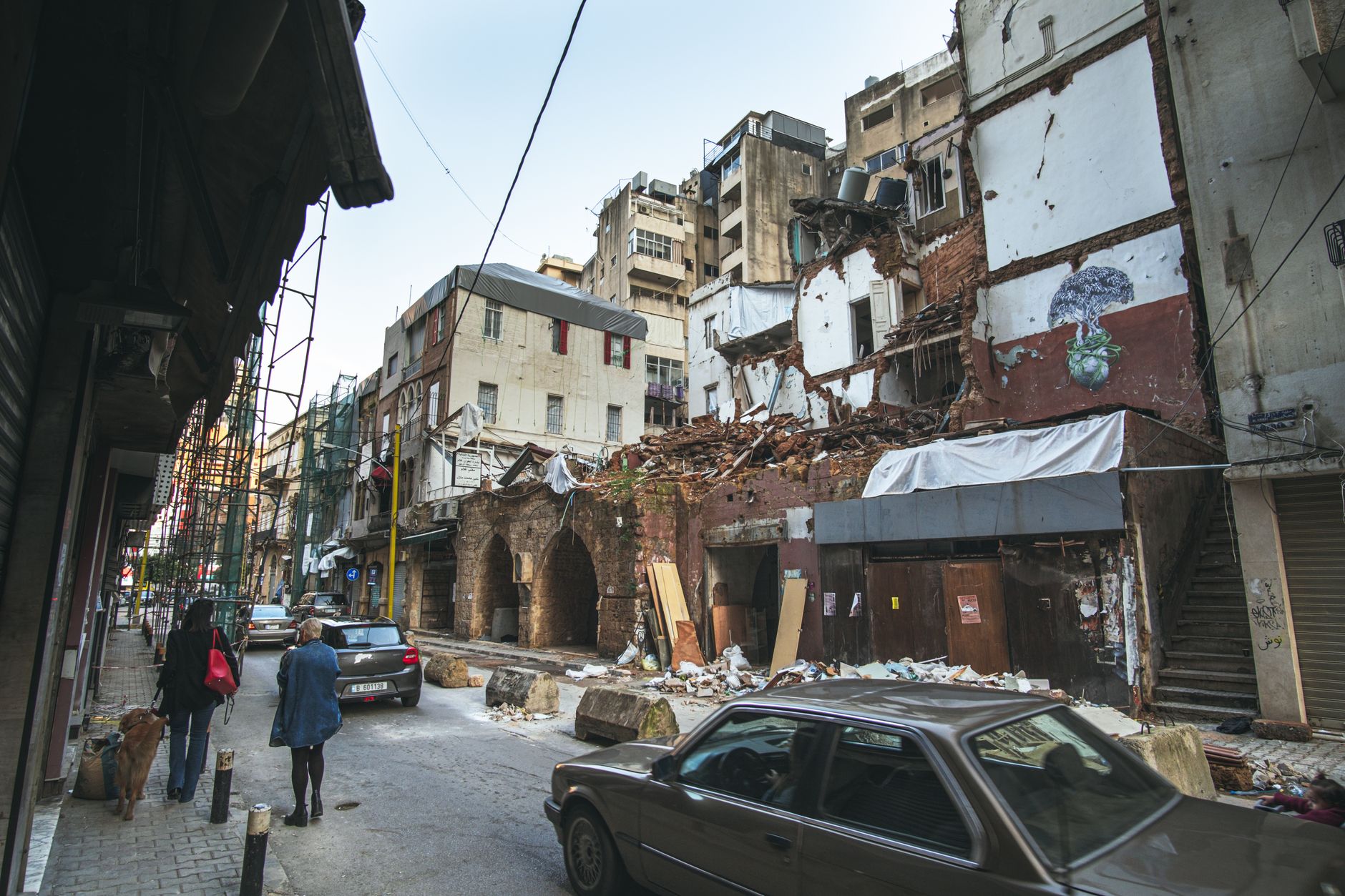
"A city that has been destroyed and rebuilt seven times, where a Roman temple colonnade stands between a bullet-riddled Holiday Inn and a rooftop bar serving natural wine from the Bekaa."

Byblos

"Settled since 5000 BCE, this harbor town gave the world its alphabet and the word 'Bible,' and still has a Crusader castle sitting on top of a Phoenician port."

Baalbek

"Rome's most ambitious temple complex was built not in Italy but in the Lebanese Bekaa, and the unfinished Stone of the Pregnant Woman โ€” 1,000 tonnes, never moved โ€” still lies in its quarry."

Tyre

"Alexander the Great spent seven months building a causeway across open sea to destroy this island city, and the sediment from that causeway is still the ground you walk on today."

Sidon

"A sea castle built by Crusaders on a tiny offshore rock, a covered souk that has been trading since the Bronze Age, and a soap museum in a 17th-century khan โ€” all within ten minutes of each other."

Tripoli

"Lebanon's second city has the finest Mamluk architecture in the country, a soap souk that still smells of laurel oil, and a citadel that the Crusaders called Saint-Gilles after the Count of Toulouse who built it."

Zahle

"The self-styled 'Bride of the Bekaa' sits at the mouth of a gorge where the Berdawni river runs cold enough that restaurants pipe it under the tables to keep the arak chilled."

Deir El-Qamar

"An Ottoman-era village of honey-coloured stone that served as Lebanon's first capital, with a 16th-century mosque converted from a church converted from a mosque, the layers of faith still visible in the stonework."

Beiteddine

"An early 19th-century emir's palace so obsessively detailed โ€” marble fountains, cedar ceilings, Byzantine mosaic floors looted and reinstalled โ€” that its builder spent thirty years and died before he could live in it."

Qadisha Valley

"A gorge so deep and sheer that hermit monks carved their monasteries into the cliff face to be unreachable, and some of those monasteries are still occupied today."

Anfeh

"A small peninsula on the northern coast where salt has been harvested in flat pans since antiquity, the Byzantine church ruins stand at the water's edge, and the octopus is dried on lines outside the fishing houses."

Rachaya

"A remote Bekaa hill town whose Ottoman citadel became the prison where the French Mandate authorities locked up Lebanon's independence leaders in 1943 โ€” the cell where the republic was born is still there, unmarked."

Regions

Beirut

Beirut and the Central Coast

Beirut is the countryโ€™s gateway and its argument with itself: sea air, traffic, generators, late dinners, and entire political histories compressed into a few kilometers. Use it as a base, but not as a substitute for the rest of Lebanon; the central coast works best when Beirut is paired with older ports such as Byblos.

placeBeirut placeByblos

Tripoli

North Coast Ports

North Lebanon feels less polished and more legible. Tripoli gives you Mamluk streets, soap, copper, and one of the countryโ€™s most layered old quarters, while Anfeh strips the coast back to salt, rock, and fishing-town quiet.

placeTripoli placeAnfeh

Qadisha Valley

Sacred North Highlands

The north highlands trade the coastโ€™s density for cliffs, terraces, and old monastic refuge. Qadisha Valley is where Lebanonโ€™s religious history becomes physical: carved paths, caves, cedar country, and villages that seem to cling to the mountain by habit rather than engineering.

placeQadisha Valley

Baalbek

Bekaa and the Eastern Plain

The Bekaa opens out after the coastal squeeze. Baalbek supplies Roman scale that still feels faintly unreasonable, Zahle brings vineyards and long lunch culture, and Rachaya marks the shift toward the eastern heights and borderland geography.

placeBaalbek placeZahle placeRachaya

Deir el-Qamar

Chouf and Palace Country

The Chouf slows the pace without going quiet. Deir el-Qamar and Beiteddine sit close enough for easy pairing, and together they show a Lebanon of stone houses, aristocratic memory, palace courtyards, and mountain light rather than beach clubs or ruins.

placeDeir el-Qamar placeBeiteddine

Tyre

Southern Phoenician Coast

South Lebanon holds some of the countryโ€™s strongest sea-facing history, though it also sits closer to current security risk. Tyre and Sidon are the anchors here: one with major classical remains and long beaches, the other with a working old port, soap heritage, and a more crowded mercantile texture.

placeTyre placeSidon

Suggested Itineraries

3 days

3 Days: Beirut, Sidon, Tyre

This is the shortest route that still shows how Lebanon compresses centuries into one coastline. Start in Beirut for the urban rhythm, then move south through Sidon and Tyre for sea-facing archaeology, old souks, and long, low Mediterranean light.

Beirutโ†’Sidonโ†’Tyre

Best for: first-timers with limited time, archaeology fans, food-focused weekend travelers

7 days

7 Days: Byblos to the North Coast and Qadisha

This week-long route trades traffic-heavy central Lebanon for ports, monasteries, and mountain air. Byblos gives you the Phoenician beginning, Anfeh adds salt flats and a rawer shoreline, Tripoli brings Mamluk density, and Qadisha Valley changes the scale completely.

Byblosโ†’Anfehโ†’Tripoliโ†’Qadisha Valley

Best for: return visitors, history readers, travelers who want coast and mountains in one week

10 days

10 Days: Zahle, Baalbek, and the Eastern Frontier

The east is where Lebanon feels broadest, drier, and less performative. Zahle sets the table, Baalbek supplies the imperial stone, and Rachaya brings mountain air and frontier atmosphere near the Anti-Lebanon range.

Zahleโ†’Baalbekโ†’Rachaya

Best for: slow travelers, wine drinkers, Roman history enthusiasts

14 days

14 Days: Chouf Palaces and the Southern Hills

Two weeks in southern Mount Lebanon suit travelers who prefer depth over mileage. Deir el-Qamar and Beiteddine reward long stays, side roads, unrushed meals, and the kind of architectural attention that gets lost on a faster national circuit.

Deir el-Qamarโ†’Beiteddine

Best for: couples, cultural travelers, readers who like smaller towns more than capitals

Notable Figures

Elissa (Dido)

c. 9th century BCE ยท Tyrian princess and legendary founder of Carthage
Born in Tyre

Legend holds that she fled Tyre after a palace murder and carried enough treasure, loyalty, and nerve to found Carthage. Rome later turned her into tragic literature; Lebanon remembers the sharper truth, that she was a woman who understood how power moves by ship.

Hiram I

c. 980-947 BCE ยท King of Tyre
Ruled from Tyre

Hiram turned Tyre into a maritime power and traded cedar, craftsmen, and diplomacy with the court of Solomon. He belongs to that rare breed of ancient ruler whose political correspondence still feels recognizably modern: practical, transactional, faintly offended.

Jezebel

died c. 843 BCE ยท Phoenician princess and queen of Israel
Born in Sidon

Daughter of the priest-king Ethbaal of Sidon, she carried Phoenician religion and court culture into the kingdom of Israel and never inspired moderation in her enemies. Even her death was staged like a final act, with painted eyes, arranged hair, and insults hurled from a window.

Fakhr al-Din II

1572-1635 ยท Druze emir and state-builder
Ruled much of Mount Lebanon

He tried to turn Mount Lebanon from a mountain refuge into a principality with diplomatic reach, Tuscan alliances, and architectural ambition. His story has everything Stรฉphane Bern would ask for: lineage, exile, Italian polish, and an ending on the executioner's terms.

Bashir II al-Shihabi

1767-1850 ยท Emir of Mount Lebanon
Ruled from Beiteddine

Bashir II made Beiteddine into one of the grand stages of Lebanese political theater, where fountains and courtyards masked calculation of the highest order. He survived by switching alliances until the game collapsed and sent him into exile.

Nasif al-Yaziji

1800-1871 ยท Writer and man of letters
Born in Mount Lebanon

Nasif al-Yaziji helped drive the Arab literary revival from Lebanon, proving that language reform can be as political as any uprising. He wrote with classical discipline and modern urgency, which is a polite way of saying he knew words could rearrange a society.

Khalil Gibran

1883-1931 ยท Writer and artist
Born in Bsharri, linked to the Qadisha Valley

Gibran left the mountains of north Lebanon for Boston and New York, but he never quite stopped writing as a son of that stark landscape. The cedar, the exile, the prophet's tone, the ache for belonging: all of it begins above the Qadisha Valley.

Fairuz

born 1934 ยท Singer
Born in Lebanon and identified with Beirut

Fairuz is not merely a famous singer from Lebanon. She became the country's shared morning ritual, the voice played in kitchens, taxis, and cafรฉs, and during war she offered the rare miracle of a sound almost everyone agreed belonged to them.

Practical Information

passport

Visa

For EU, US, UK, Canadian, and Australian passport holders, a tourist visa on arrival at Beirut is usually available for 1 month and can often be extended to 3 months. Rules can shift with little warning, so recheck airline boarding requirements and Lebanese embassy guidance a few days before departure, and make sure your passport has at least 6 months left.

payments

Currency

Lebanonโ€™s official currency is the Lebanese pound, but much of daily travel still runs on US dollars in cash. Cards work in better hotels and some restaurants, though power cuts and network issues still interrupt payments, so carry small USD notes and expect change in either USD or LBP.

flight

Getting There

For ordinary travelers, Beirut-Rafic Hariri International Airport is the countryโ€™s only practical international gateway. Lebanon has no working passenger rail links from neighboring countries, so every trip starts by air or overland road.

directions_bus

Getting Around

You move around Lebanon by road: buses, minibuses, shared taxis, private drivers, and rental cars. Distances look short on a map but traffic can be punishing, so build slack into any day trip and use the ACTC PT app for bus routes where available.

wb_sunny

Climate

Lebanon changes fast with altitude: humid Mediterranean heat on the coast, cooler air in Mount Lebanon, and a drier continental feel in the Bekaa. April to June and September to October are the easiest months for mixed itineraries because ruins, cities, and mountain roads all sit in a workable temperature range.

wifi

Connectivity

4G coverage is decent in Beirut and along the main corridor of coastal cities, but speed and power reliability are uneven outside major centers. Buy a local SIM on arrival, keep WhatsApp installed, and do not assume hotel Wi-Fi will hold up for video calls or remote work.

health_and_safety

Safety

Lebanon is not a low-risk destination in 2026, and the US, UK, Canada, and Australia all keep severe advisories in force. If you still travel, follow official updates closely, avoid border areas and demonstrations, keep plans flexible, and do not treat road transfers after dark as routine.

Taste the Country

restaurantMan'oushe with za'atar

Breakfast at the bakery counter. Hot flatbread, thyme, sesame, sumac, olive oil. Folded in half, eaten standing, usually before anyone has the patience for full conversation.

restaurantKnefeh in kaak

Morning sugar with no apology. Molten cheese, orange semolina crust, syrup, sesame bread. Best with strong coffee and a willingness to sacrifice your shirt.

restaurantTabbouleh

Lunch or mezze, shared with people who notice proportions. Parsley first, bulgur second, mint, tomato, lemon. Scooped with lettuce leaves or bread, never treated like a grain salad.

restaurantKibbeh nayyeh

A trust exercise at family tables and serious village lunches. Raw meat, fine bulgur, onion, olive oil, mint. Spread on bread with the solemnity usually reserved for contracts.

restaurantSayadieh

Coastal lunch in Tyre or Sidon, often after the fish market. Rice dark with browned onions, cumin, white fish, tarator, lemon. Conversation slows down once it arrives.

restaurantMoghrabieh

Cold-weather comfort, usually at home or in restaurants that cook for memory rather than display. Pearl couscous, chickpeas, onions, chicken, broth, caraway. Served deep and hot, meant for lingering.

restaurantArak with mezze

Late lunch drifting toward evening, especially in Zahle. Water poured into clear liquor until it turns milky, then plate after plate of small dishes. Never rushed, rarely solitary.

Tips for Visitors

euro
Carry small cash

Bring USD in small, clean notes and keep a separate stack of low denominations for taxis, coffee, and tips. Many places can break $50 bills, but your morning manoushe seller should not have to.

train
Forget trains

Lebanon has no functioning passenger rail network, so do not build an itinerary around stations or rail passes. Every transfer is by road, which means time depends more on traffic than distance.

restaurant
Book weekends early

In Beirut and mountain resorts, Friday and Saturday tables can disappear fast, especially in summer and during holiday returns. Reserve restaurants and higher-end stays a few days ahead, not at 7 p.m. from the taxi.

health_and_safety
Watch the advisory

Security conditions can shift quickly and not all regions carry the same level of risk. Check your governmentโ€™s advisory before each intercity move, not just before departure from home.

wifi
Use WhatsApp

Hotels, guesthouses, drivers, and guides often coordinate by WhatsApp rather than email. A local SIM with data will solve more practical problems than a folder full of printed bookings.

payments
Read the bill

Restaurants may add a service charge, often 10 percent, so check before tipping on top. If service is not included, 10 to 15 percent is the normal range in sit-down places.

hotel
Stay central

In Beirut, a cheaper room far from your evening plans can become expensive once taxi time and traffic hit. Pay attention to neighborhood location first, then star rating.
Explore Lebanon with a personal guide in your pocket

Your Personal Curator, in Your Pocket.

Audio guides for 1,100+ cities across 96 countries. History, stories, and local insight โ€” offline ready.

smartphone

Audiala App

Available on iOS & Android

download Download Now

Join 50k+ Curators

Frequently Asked

Do I need a visa for Lebanon as a US or EU traveler? add

Usually yes, but it is commonly issued on arrival at Beirut for short tourist stays. For most US and EU passports the working pattern is 1 month on arrival, often extendable, though airlines may apply stricter document checks than the border officers do.

Is Lebanon safe for tourists right now? add

Lebanon is a high-risk destination in April 2026, and several Western governments keep severe travel advisories in force. Some travelers still go, but you should expect sudden changes, avoid border areas and demonstrations, and make every booking flexible.

Can you use credit cards in Lebanon? add

Sometimes, but cash is still the safer default. Better hotels, chains, and some restaurants take cards, yet outages and terminal failures are common enough that you should carry USD cash every day.

What currency should I bring to Lebanon? add

Bring US dollars in cash, preferably clean small notes. The Lebanese pound is still the official currency, but many tourism-facing prices are quoted in USD and you may receive change in either currency.

Is there public transport in Lebanon for tourists? add

Yes, but it is road-based and uneven rather than rail-based and systematized. Buses and minibuses connect many cities, the ACTC PT app helps in some corridors, and private drivers remain the simplest option for tight itineraries.

How many days do you need in Lebanon? add

Seven days is the minimum for a trip that includes Beirut plus at least two other regions. Three days works for a coast-only sample, while 10 to 14 days gives you room for the Bekaa, the north, and mountain towns without turning the trip into a traffic exercise.

What is the best time to visit Lebanon? add

April to June and September to October are the easiest months for most travelers. You get milder temperatures, easier ruin-hopping, and better odds for combining Beirut, Baalbek, mountain villages, and the coast in one trip.

Can you visit Baalbek on a day trip from Beirut? add

Yes, but it is better as an overnight via Zahle if your schedule allows. The road distance is manageable, yet traffic, security conditions, and the scale of the site all argue against treating it as a quick in-and-out errand.

Sources

Last reviewed: