Vientiane
Laos Updated Apr 2026
The first thing you notice in Vientiane is the hush. Motorbikes idle instead of roar, monks glide past shuttered French villas, and the Mekong swallows the sunset so quietly you can hear ice clink in a beer glass three tables away. Laos’ capital feels like a small town that forgot to grow up—an hour here resets the speed of your pulse.
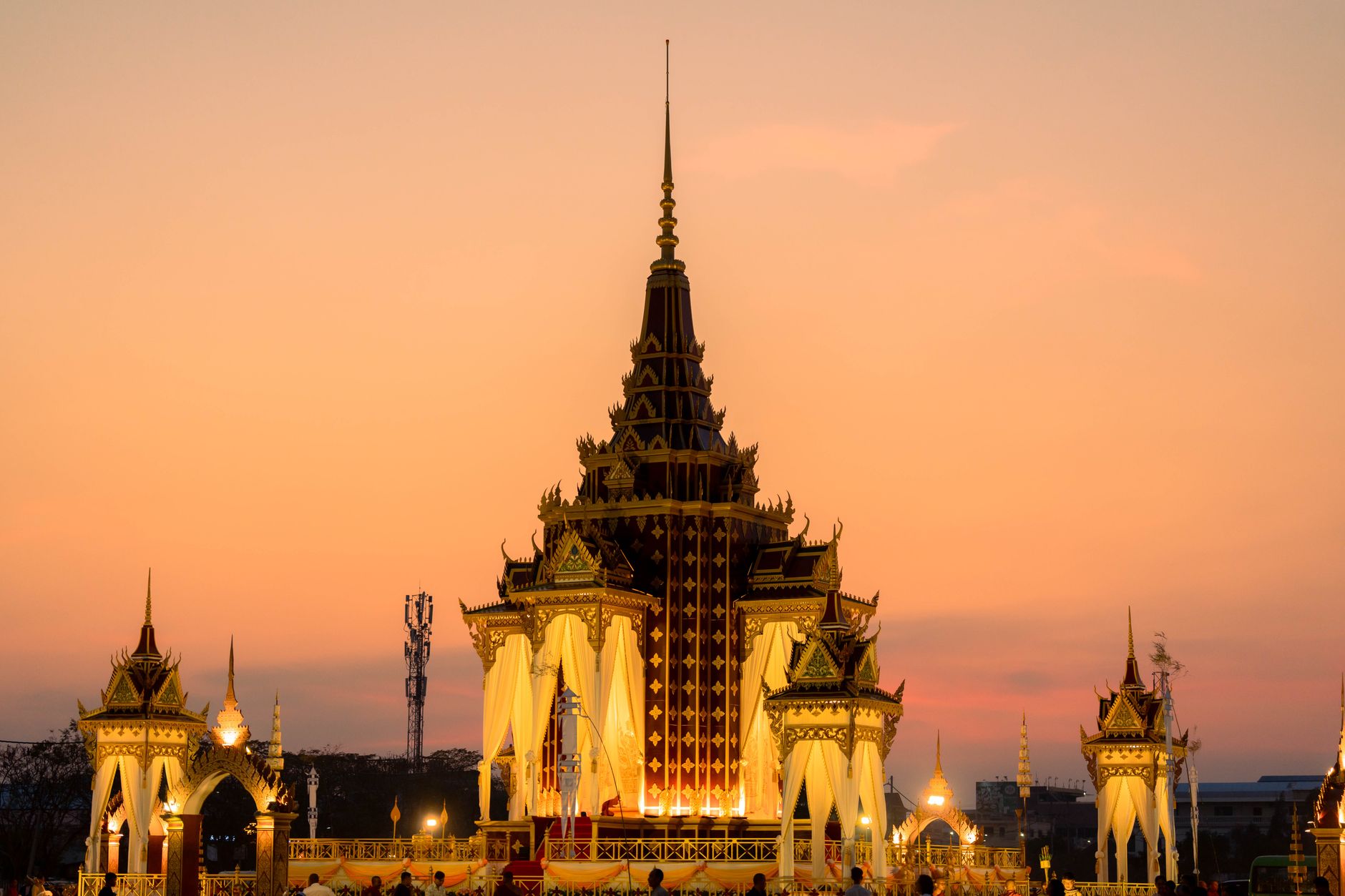 Photo: SARET SAYON / Pexels
- Attractions
- 20
- Trip length
- 3–5 days
- Best season
- November–February
Why Vientiane
Built from cited sources · see the method · How we make our guides →
Colonial mansions sag under monsoon mold next to gold-leaf stupas that catch 4:15 pm light like struck matches. Morning markets smell of lemongrass smoke and river carp grilling on split reeds; by night the same pavement turns into an open-air dining room where sticky rice is scooped by right hands and the national pastime is prolonged, low-volume conversation.
There’s no subway, no skyscraper, no rush-hour horn symphony. Distances are bicycle-short: seven minutes from a 16th-century temple whose bronze Buddha weighs three tons to a concrete riverside bar where the bartender knows your name by the second Beerlao. What Vientiane offers is calibration—three days and you remember how to breathe between bites, how to walk without checking a screen, how to let a city reveal itself one unclenched moment at a time.
Pha That Luang
A 45-meter gold-leaf stupa that quietly claims to enshrine a piece of Buddha's breastbone. Every November it glows under floodlights while 100,000 pilgrims circle its base during the Boun That Luang festival.COPE Visitor Centre
In a quiet garden compound, prosthetic limbs hang like mobiles while survivors' stories play on loop. The free museum explains why Laos is the most bombed country per capita—2 million tons of ordnance still litter the countryside.Buddha Park
Twenty-five minutes east, 200 concrete statues sprout from riverside grass like surreal mushrooms. Climb inside the three-story pumpkin: hell on the ground floor, earth at eye level, heaven through the top hatch.Tha Ngon Floating Rafts
Bamboo platforms drift on the Nam Ngum tributary while families grill pa dek-marinated fish over charcoal braziers. The kitchen boat arrives by longtail—your laap arrives still sizzling.
Neighborhoods
Where to wander, by quarter — each with its own rhythm.
Riverside Promenade
Sunset real estate par excellence. Food carts roll up at 5 pm, mats unroll at 6, and by 7 the Mekong is a moving mirror of orange sky. Grilled tilapia, cold beer, and impromptu guitar circles cost less than a latte elsewhere.Anou / Chao Anou Road
Backpacker spine turned local playground. French-era shophouses host 60-cent khao jee stalls, neon pubs that spill onto the street, and a night market where vendors will chase you down if you forget your change.That Luang Area
Dominated by the 45 m golden stupa that appears on every kip note. The surrounding quarter is residential—monks sweep dawn streets, grandmothers sell sticky rice bundles from baskets, and the November festival turns the whole district into a scented fairground.Lane Xang Avenue
Vientiane’s answer to the Champs-Élysées, minus the traffic. Plane trees shade 1920s administrative facades; Patuxai monument looms at the midpoint; evening aerobics classes occupy the central strip while cyclists coast the flanks.Samsenthai Strip
Gold-plated Cultural Hall anchors a row of indie galleries, silk ateliers, and French-Lao cafés that open at 8 am for espresso and close at 9 pm for rice-wine poetry readings. Weekends bring pop-up vintage markets in abandoned villa gardens.
Plan your trip
Before you go
- Getting There
- Wattay International Airport (VTE) sits 3.km northwest—USD $7 taxi or 15,000 kip shared shuttle to city center. No train service; Highway 13 links to Thailand's Friendship Bridge and Route 1E south to Pakse.
- Getting Around
- No metro, no tram. A new 12.9 km BRT line (electric buses, 40 seats) will trial August 2026 Fa Ngum Park–National University. Until then: 20,000 kip tuk-tuks, $2–$5/day bicycles, or walk—the core temples span 2 km.
- Climate & Best Time
- November–February: 15–28°C, bone-dry days, peak rates. March–May: 25–40°C, dust, cheaper beds. June–October: 24–32°C monsoon deluges at 4 PM sharp. Come late November when the rice paddies glow gold and hotel prices haven't peaked.
- Language & Currency
- Lao; English works in tourist zones, fades two streets from the river. Lao Kip only—ATMs dispense 100,000 kip notes ($4.50). Carry cash: markets won't swipe cards, and tuk-tuk drivers round up to the nearest dollar.
Where the Mekong Learned to Remember
From sandalwood forests to socialist capital in 700 slow-motion years
- c. 46 000 BCE
First Humans Reach the Mekong Cliffs
A woman dies in Tam Pa Ling cave, 140 km north of today's city. Her skull, the oldest modern-human fossil in Southeast Asia, proves people have been walking these limestone ridges since the last Ice Age. The Mekong below already carried monsoon silt past sandbars that would one day bear a capital.
- 1353
Fa Ngum Plants the Lan Xang Flag
A 23-year-old warlord rides down from the north with 10,000 Khmer mercenaries and a sacred gold Buddha. He names the riverside stockade *Vieng Chan*—City of Sandalwood—and makes it the eastern pillar of his new kingdom. The locals swap their Mon-Khmer dialects for Tai cadence overnight.
- c. 1560
Capital Moves Downriver
King Setthathirath orders 3,000 boats loaded with palace timbers, royal libraries, and the Emerald Buddha itself. Luang Prabang is too vulnerable to Burmese raiders; Vientiane sits mid-river, perfect for trade and war. Within a year, new brick walls rise 6 meters high, wide enough for two elephants abreast.
- 1565
Emerald Buddha Finds a Home
Workers lay the first stone of Ho Phra Keo chapel at dawn, aligning the nave with the winter solstice. The jade-green statue sits on a gilded throne for 213 years, absorbing jasmine offerings and candle smoke. Its footprint is still visible in the laterite floor, darker where thousands of foreheads touched stone.
- 1707
Kingdom Fractures Three Ways
Three cousins sign a treaty in the palace courtyard, dividing Lan Xang like a cut mango. Vientiane keeps the middle Mekong, but the gesture seals two centuries of civil war. The city’s monks copy the same Pali canon in three separate monasteries, each claiming the only true version.
- 1767
Birth of the Last King
Anouvong is born in the palace that will be rubble within his lifetime. He grows up speaking both Lao and Thai, wearing court silk woven in Bangkok, plotting independence. At 60 he will lead the most doomed, romantic rebellion in Lao history.
Show the full timeline (21 moments)
- 1779
Siamese Cannons Breach the Wall
Bangkok’s general burns the southern gate with Chinese rockets, then marches 30,000 prisoners back across the Khorat Plateau. Vientiane becomes a tributary province; its bronze temple drums are melted into cannon barrels. For the next 114 years, Lao kings rule only with Siamese governors at their elbow.
- 1818
Wat Sisaket Rises, Survivor-to-Be
King Anouvong personally lays the cornerstone of a library-temple whose 2,000 Buddha images will outlast his dynasty. The murals—indigo night skies, ochre monkeys—dry just nine years before Siamese torches arrive. Every other royal building burns in 1828; only this cloister echoes with unbroken chanting.
- 1827–28
Siege Leaves Only Ashes
For seven months, 50,000 Siamese soldiers encircle the city. When the walls finally fall, they torch every wooden house, uproot fruit trees, and herd 40,000 inhabitants into Isan. The Mekong runs black with soot; the Emerald Buddha is carted to Bangkok where it still sits. Vientiane ceases to exist on maps for a generation.
- 1893
Tricolour Replaces White Elephant
French gunboats sail upriver from Saigon, forcing Siam to cede the east bank. A small wooden customs post becomes the capital of a new protectorate. Within a decade, Boulevard Carnot cuts straight through buffalo pasture, and the first café serves watered-down Bordeaux to homesick colonial clerks.
- 1920
Kaysone Phomvihane Born in a Stilt House
In Savannakhet, 250 km south, a telegraph operator’s son takes his first breath. He will study law in Hanoi, smuggle rifles through Vientiane’s night market, and rename the country after 1975. His austere villa on Sethathirath Road still smells of filter coffee and unfiltered cigarettes.
- September 1945
Lao Issara Seize the Radio Station
A dozen clerks in borrowed uniforms broadcast independence from the post office attic. Their proclamation lasts six months before French paratroopers land at Wattay field. The rebels melt into the jungle, but the tricolor they tore down reappears every year on National Day, hand-sewn by schoolchildren.
- 1960–73
Secret War Reaches the Suburbs
American pilots refuel at Wattay between bombing runs over the Plain of Jars. At night, teenagers race Vespa scooters past CIA safe houses on Samsenthai Road. The city doubles in size as refugees cram into bamboo shanties along the Mekong, listening for the drone of supply planes that never quite land.
- 1968
Patuxai Rises on American Cement
Construction crews pour 3,000 bags of USAID cement intended for an airport runway into a victory arch instead. The result is a love-child of the Arc de Triomphe and a Bangkok temple roof, seven stories of cracked steps and dragon motifs. From the top, you can see the airstrip that paid for it.
- December 1975
Red Flags Replace Royal Garuda
Tanks roll down Setthathirath Road while a crowd of 20,000 sings the Internationale in Lao. The king abdicates in a ceremony lasting nine minutes; his palace becomes a museum of revolution. Street names change overnight—Rue de la Mission becomes Kaysone Phomvihane Avenue, and the city acquires its first loudspeakers.
- 1981
Olympic Dream Born in Refuge
Khan Malaythong learns to walk on the cracked tiles of Wat Si Muang while his parents sell noodle soup outside the temple gate. Nine years later the family flees to California, where the kid who once chased pigeons around That Luang will train to become America’s top badminton doubles player, carrying Vientiane in his accent.
- 1994
Friendship Bridge Ends 150-Year Island
The first Thai-Lao Bridge opens at 6 a.m. with a queue of 300 motorcycles. For the first time since 1828, you can drive from Vientiane to Nong Khai without a boat. The customs booth runs out of entry forms by noon; the river keeps flowing, but the mental moat disappears.
- 1997
ASEAN Welcome, Kip Crash
Laos joins ASEAN; the city hangs banners in pastel ASEAN blue. Three months later the baht collapses and the kip loses half its value overnight. Bureaucrats who celebrated with imported champagne switch back to Beerlao, and the night market sprouts stalls selling family silver.
- c. 2000 BCE
Rice Paddies Replace Forest
Austroasiatic farmers burn the first clearings along the Vientiane plain. Their bronze sickles slice through elephant grass; their words—*nam* for water, *mai* for wood—still echo in modern Lao. The riverbank settlement is small, but the smell of fermenting rice beer drifts across what will become That Luang marsh.
- 2016
Obama’s Shadow Lifts UXO Fear
Barack Obama becomes the first U.S. president to set foot in Laos, pledging $90 million to clear unexploded bombs. At the COPE Centre, a teenager fitted with a 3-D-printed arm asks for a selfie. Outside, workers still dig up cluster bombs from vegetable gardens less than 10 km from the presidential motorcade.
- 2021
Bullet Train Cuts the Night
The China-Laos railway opens, reducing the 15-hour bus ride to Kunming to three. Vientiane station glows like a landed spaceship on the city’s northern paddy fringe. At 160 km/h, passengers glimpse the old French customs house backwards through time, a blur of tin roof and ghosts.
Where to Eat
Where locals actually book dinner — not the tourist menus.
-
Laap
Minced meat (chicken, duck, or river fish) tossed with lime, toasted rice powder, mint, and enough chilies to make your forehead bead. At Ban Anou night market, the vendor adds raw bile for the brave.
-
Tam Mak Hoong
Green papaya salad pounded in a clay mortar—each bite swings from sweet to sour to face-numbing. Stalls near Wat Ong Teu serve it with sticky rice wrapped in banana leaf, 15,000 kip.
-
Khao Piak Sen
Hand-rolled rice noodles swimming in pork-bone broth with crispy garlic, cilantro stems, and a squeeze of bitter lime. Morning stalls on Rue Setthathirath open at 6 AM, gone by 9.
-
Or Lam
Thick buffalo stew with lemongrass, dill, and yard-long beans. At Tha Ngon floating restaurants, the clay pot arrives on a wooden raft—the broth carries hints of river water and charcoal smoke.
-
Ping Kai
Beer-grilled chicken, butterflied and pressed flat over coals until the skin blisters. Vendors outside Patuxai park sell half-birds for 35,000 kip; eat it standing while watching the sun drop behind the arch.
-
Kao Nom Kok
Coconut-rice pancakes pressed in cast-iron molds, crisp edges giving way to custardy centers. The grandmother at Talat Sao morning market drizzles palm sugar syrup from a dented tin—five for 5,000 kip.
Insider tips
Small things that change how the city treats you.
Temple Hours
Most temples open 8am–5pm, but Wat Si Muang stays open sunrise–sunset. That Luang’s interior closes at 4pm sharp—arrive by 3:30pm to get inside the cloisters.Cash Only
Street stalls and tuk-tuks accept only Lao Kip. ATMs can run dry on weekends—withdraw Friday morning and carry small bills.Tuk-Tuk Fix
Agree the fare before you board. A ride from Patuxai to the riverside should cost 20,000–30,000 LAK (~$1–1.50 USD). Walk away if they ask double.Best Weather Window
Late November to mid-February: 15–28 °C, clear skies, and the Boun That Luang festival in November. April tops 40 °C—skip it.UXO Safety
Unexploded bombs are a risk outside the city. At Buddha Park, stay on the paved trails; don’t wander into nearby scrub.
Gallery
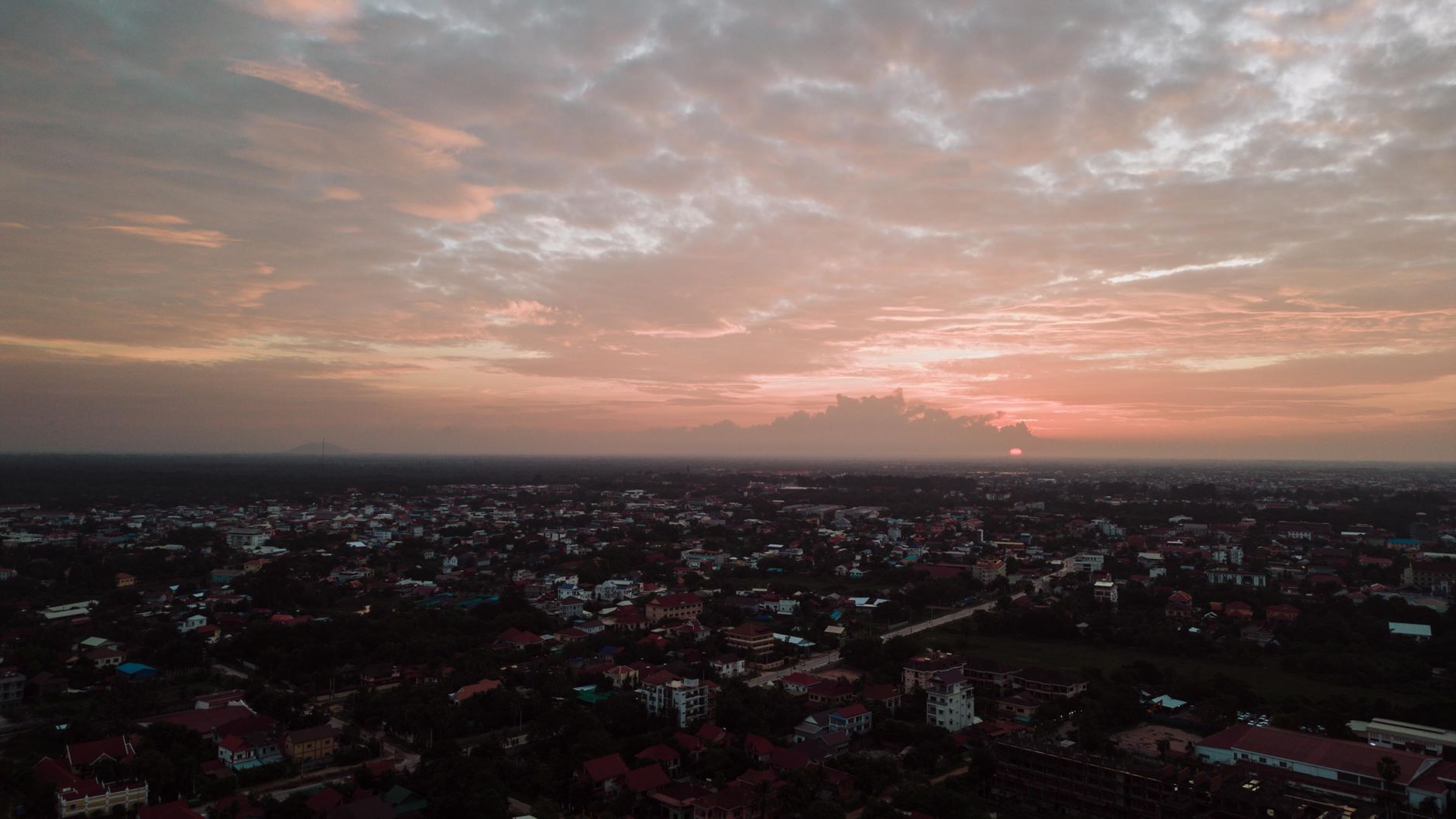
The city, as it actually looks.


Frequently asked
Is Vientiane worth visiting?
Yes, if you want a capital that feels like a quiet riverside town. It delivers golden stupas, French-colonial arcades, and Mekong sunsets without the chaos of Bangkok or Hanoi.
How many days in Vientiane?
Three full days cover the major temples, museums, and a day-trip to Buddha Park. Add two more if you plan a lakeside escape to Nam Ngum.
How do I get from Wattay Airport to the city center?
An official shuttle bus runs every 30 minutes and stops at major hotels—20,000 LAK. A metered taxi costs 60,000–80,000 LAK (agree first) and takes 15 minutes.
Is Vientiane safe for solo travelers?
Yes. Violent crime is rare, but watch for pickpockets at Talat Sao Market and the night bazaar. Use anti-theft bags and avoid displaying valuables on riverside walks.
How much does food cost in Vientiane?
Street meals—laap, grilled chicken, sticky rice—run $1–3. A riverside dinner with Beerlao is $5–8 per person. Upscale restaurants with Mekong views top out around $15.
Pick up where you left off
Saved and recently read places — kept on this device only.
Photo credits (4)
- SARET SAYON — Pexels License (https://www.pexels.com/license/) — Source: https://www.pexels.com/photo/36755184/
- Kelly — Pexels License (https://www.pexels.com/license/) — Source: https://www.pexels.com/photo/19143423/
- billow926 — Pexels License (https://www.pexels.com/license/) — Source: https://www.pexels.com/photo/15764719/
- Do thiew Lao — Pexels License (https://www.pexels.com/license/) — Source: https://www.pexels.com/photo/31418761/
Photos may have been resized or cropped.