Kuwait Towers: Water Tanks Disguised as Art
Three 1979 sea-water reservoirs wrapped in 41,000 enameled disks that shimmer teal at dusk. The main sphere spins you 120 m above the Gulf in 30 min for the price of a coffee.
At 2 a.m. on Gulf Street the air smells of cardamom and sea salt, and the Kuwait Towers are still lit like blue candles against the black water. This is Kuwait City after the malls close, when families unwrap foil parcels of machboos on the corniche and the night feels borrowed from another century.
Researched from Wikidata, Wikipedia & official sources · fact-checked · How we make our guides →
KAt 2 a.m. on Gulf Street the air smells of cardamom and sea salt, and the Kuwait Towers are still lit like blue candles against the black water. This is Kuwait City after the malls close, when families unwrap foil parcels of machboos on the corniche and the night feels borrowed from another century.
The city keeps two time signatures. Office towers hum with traders on Kuwaiti time—work starts late, lunch ends at three. Then Islamic time takes over: the cannon fires at sunset, cafés fill, and the evening stretches past midnight. Between the two beats sits a place that has rebuilt itself four times in living memory yet still remembers the pearl divers.
Concrete flyovers arc over mud-brick palaces; a Portuguese cannon lies beside a Tesla showroom. What saves it from absurdity is the courtesy. A stranger will insist you taste his dates before he learns your name. That small ritual is older than the oil derricks and survives every skyline redesign.
What makes this place worth slowing down for.
Three 1979 sea-water reservoirs wrapped in 41,000 enameled disks that shimmer teal at dusk. The main sphere spins you 120 m above the Gulf in 30 min for the price of a coffee.
Artist Lidia Al Qattan covered every wall, ceiling, and kitchen cabinet in hand-cut mirror mosaics. Entry is by appointment only; you ring her doorbell and she gives the tour herself.
Free tours run Monday–Thursday, exact start 09:00. They lend you an abaya, then walk you under a 220-ton Persian carpet and chandeliers made from 5,000 kg of Swarovski.
Where to wander, by quarter — each with its own rhythm.
The oldest market smells of saffron and grilled fish; alleys roofed in reed mats lead past Ottoman-era doorways where goldsmiths still beat patterns by hand. After 6 p.m. the food court ignites—order machboos from Al Shemam and eat at communal tables washed down with cardamom coffee.
Skyscraper canyon along the coast. Here glass towers catch the dawn over the dhow harbor and the Grand Mosque's blue dome rises above valet-parked Bentleys. Friday mornings the restaurants empty as the call to prayer ricochets off mirrored facades.
Kuwait’s open-air living room: shisha cafés spill onto the Gulf promenade, kids race bikes under fairy lights, and third-wave roasters serve single-origin Yemeni beans at 1 a.m. The dress code drifts toward designer sneakers and discreet abayas.
Low-rise diplomatic quarter hiding Sheikh Abdullah Al-Jabir Palace—coral-stone walls carved with Mughal arches, now closed for restoration. Walk the quiet lanes at dusk; you’ll hear diwaniya debate drifting over garden walls.
The city’s current laboratory. Former warehouses turned into indie galleries, Korean fried-chicken counters, and pop-ups selling camel-leather wallets. On Thursdays the sound of oud rehearsals leaks into alleyways smelling of yeast and sesame.
A trading post that learned to negotiate with empires
Neolithic sailors beach their reed vessels on the northern shore of the bay, carrying Mesopotamian pottery and copper. Archaeologists call the spot Site H3; the sailors simply know it as the place where the tide runs gentle enough to beach a boat without splintering the reeds. Maritime trade is born here before the wheel reaches Egypt.
Sumerian scribes record Failaka Island as 'Agarum,' a customs stop for copper heading upstream to Ur. A small temple to Inanna rises above the salt flats; traders leave lapis lazuli beads as toll. The mainland watering station that will one day be Kuwait City is still an anonymous beach, but its anchorage already smells of bitumen and cedar resin.
Greek officers march off their triremes and rename Failaka ‘Ikaros,’ after an Aegean island they may never see again. They build a square fort of local coral-rag and set up a mint that strikes bronze coins bearing Herakles. On the mainland they found Larissa—probably modern-day Kuwait City—planting olives that shrivel in the brine wind.
A flotilla of forty dhows beaches at the natural harbor. The Utub clan—recently pushed out of central Arabia—pitch goat-hair tents and dig freshwater wells 12 meters back from the tide line. Their sheikh, Sabah I, allocates plots: souq to the east, boatyards to the south, cemetery to the north-west where the wind carries the smell of frankincense, not rot.
The clan council elects Sabah bin Jaber as ruler, formalizing what had been informal leadership. No coronation—just a communal lunch of spiced rice and freshly caught hammour eaten cross-legged on the sand. From this moment Kuwait’s foreign correspondence is signed ‘from the Sheikhdom of Kuwait,’ a phrase Ottoman governors in Basra initially ignore.
Sheikh Mubarak signs the Anglo-Kuwaiti Agreement in a tent cooled by punkah fans. With one stroke of red sealing wax he trades foreign policy for Royal Navy protection. The treaty is back-dated to sunset, so Ottoman mapmakers wake to find Kuwait erased from their blue-and-gold atlases.
Using Indian teak beams and coral-rag plaster, Sheikh Abdullah erects a seaside palace without a traditional courtyard—he wants sea views from every reception room. The hybrid design confuses visiting Bedouin: Persian tiles, British sash windows, and a Kuwaiti wind tower all on one façade. Thirty years later the building becomes the Gulf’s first national museum.
Masons work by lamplight to raise a 6-km wall 4 meters high, punctuated by 24 watchtowers. The gate facing the desert is bricked up each dusk; sentries listen for the hoofbeats of Ikhwan raiders who have already sacked Jahra. Inside the wall, houses press so close that neighbors can pass a lit match from window to window without leaving their seats.
The tanker British Fusilier sails at dawn with 57,000 tons of crude, escorted by a lone dolphin that keeps pace for two miles. In the customs house, clerks still record the export as ‘pearling by-catch’ because no tariff code for oil exists. By nightfall, Kuwait’s municipal budget quadruples; within a year the city hires its first traffic policeman.
British planners lay out a company town 40 km south: cul-de-sacs, front lawns, and a cinema that screens Doris Day films to oil engineers in air-conditioned darkness. Street names—Queen’s Close, Petroleum Avenue—feel improbably green in a landscape where shade is currency. Kuwait City watches and begins demanding its own traffic lights, public libraries, and ice-cream parlors.
The Union Jack is lowered in silence; no band, just the hum of a single generator providing power for the ceremony. Sheikh Abdullah III signs the independence document with the same silver pen used for the 1899 treaty. Iraq’s Qasim broadcasts claims to Kuwait the next morning, but British troops are already landing at the port—this time invited.
Three turquoise needles pierce the skyline, the tallest capped by a sphere that holds both water and diners. The revolving restaurant completes a lazy 360° every half hour—long enough for a cup of cardamom coffee to cool. From 120 meters up, the city looks like a carpet of white cubes stitched together by neon minarets.
Iraqi T-72s grind along the seafront at dawn, crushing streetlights like matchsticks. Radio Kuwait switches from morning Qur’an recitation to a single loop: “We are here, we are still here.” The Emir’s convoy escapes south; those who remain tape Xs on windows and wait for the knock. Within days, the city’s name is erased from postage stamps and replaced with ‘Kuwait Province, Republic of Iraq.’
Coalition tanks roll into the city under a sky blackened by 700 burning oil wells. Retreating Iraqi soldiers have looted the museum, leaving broken display cases that once held 3,000-year-old Dilmun seals. A Kuwaiti flag—hidden inside a freezer for six months—is hoisted above the seafront; its fabric still smells of cardamom and kerosene.
For the first time, female voters outnumber men at the 6th-ring-road polling station. One elderly woman arrives in a gold-trimmed abaya, kisses the ballot before dropping it in. The law granting suffrage passed only after the Emir dissolved parliament twice; activists had threatened to register all newborn girls as voters if refused.
Sheikh Jaber Al-Ahmad Cultural Centre opens with a performance of Verdi’s ‘Nabucco’—the chorus of Hebrew slaves echoing across a city that once hid in basements. LED calligraphy scrolls across the façade in real time, projecting tweets from the audience. The building’s four titanium petals glow so brightly that fishermen 10 km out use them as a beacon.
The world’s longest-serving foreign minister—40 years at the post—passes at 91. Mourners queue eight hours in 45 °C heat to file past the diwan where he once received diplomats barefoot. Even rival foreign ministries lower flags; Qatar, still under blockade, sends a medical plane. The city’s traffic lights blink amber in silent tribute for three days.
The people who shaped the city — and were shaped by it.
Italian-born Lidia began gluing shattered mirrors to her walls in 1966 to keep the heat out; forty years later every corridor sparkles like an indoor disco ball. She still greets visitors herself, insisting you touch the walls so the light follows your hand. If you ask, she’ll say Kuwait City taught her that broken pieces can outshine the original.
He chaired Arab League summits in the same seaside palace he once ran to as a boy during pearl-diving season. Forty years as foreign minister made him the city’s longest-running host, welcoming delegates with loomi tea in the Diwan lobby. Today the avenue bearing his name is the one tourists walk to reach the towers he opened in 1977.
Where locals actually book dinner — not the tourist menus.
Whole chicken buried in basmati rice, dried loomi, and saffron, served on metal trays in the souk’s food alley. A half-chicken plate costs 1.5 KD and comes with tangy daqqus tomato sauce.
Crispy folded crepe stuffed with spiced fish, cilantro, and cumin. Vendors fry it to order outside the fish market; eat it standing up while the sea breeze cools the chili burn.
Cardamom-scented yeast loaf brushed with saffron milk. Bakeries in Hawalli sell it between 6–8 a.m.; the scent drifts half a block and the loaves vanish fast.
Strong black tea simmered with evaporated milk and sugar, poured from a brass kettle into tiny cups. 100 fils at any neighborhood café; locals chug it at red lights.
Waterfront Japanese grill inside the opera house complex. Order the cedar-smoked black cod while the call to prayer drifts across the harbor—Kuwait’s globalization in one bite.
Small things that change how the city treats you.
Kuwaitis dine late; restaurants fill after 9 PM and stay open past midnight. Arrive early and you’ll eat alone.
Souk Al-Mubarakiya vendors only take Kuwaiti dinar. ATMs are inside the gold arcade; withdraw small notes for street food.
The Kuwait Towers observation deck glows amber at sunset and rotates in 30 min; tickets are 2 KD, queues vanish after 6 PM.
A 25 KD three-month KPTC pass pays for itself in ten rides. It won’t cover CityBus express, so check the route logo before boarding.
Refusing tea or dates is rude. Take at least a sip; you can leave the cup half-full—no one minds.
The dense worker district sees petty crime after dark; taxis will avoid it anyway.
The city, as it actually looks.

A serene golden sunset view of the Kuwait City skyline, featuring the iconic Kuwait Towers and local fishermen on a pier.
Mohammad Matalkah on Pexels
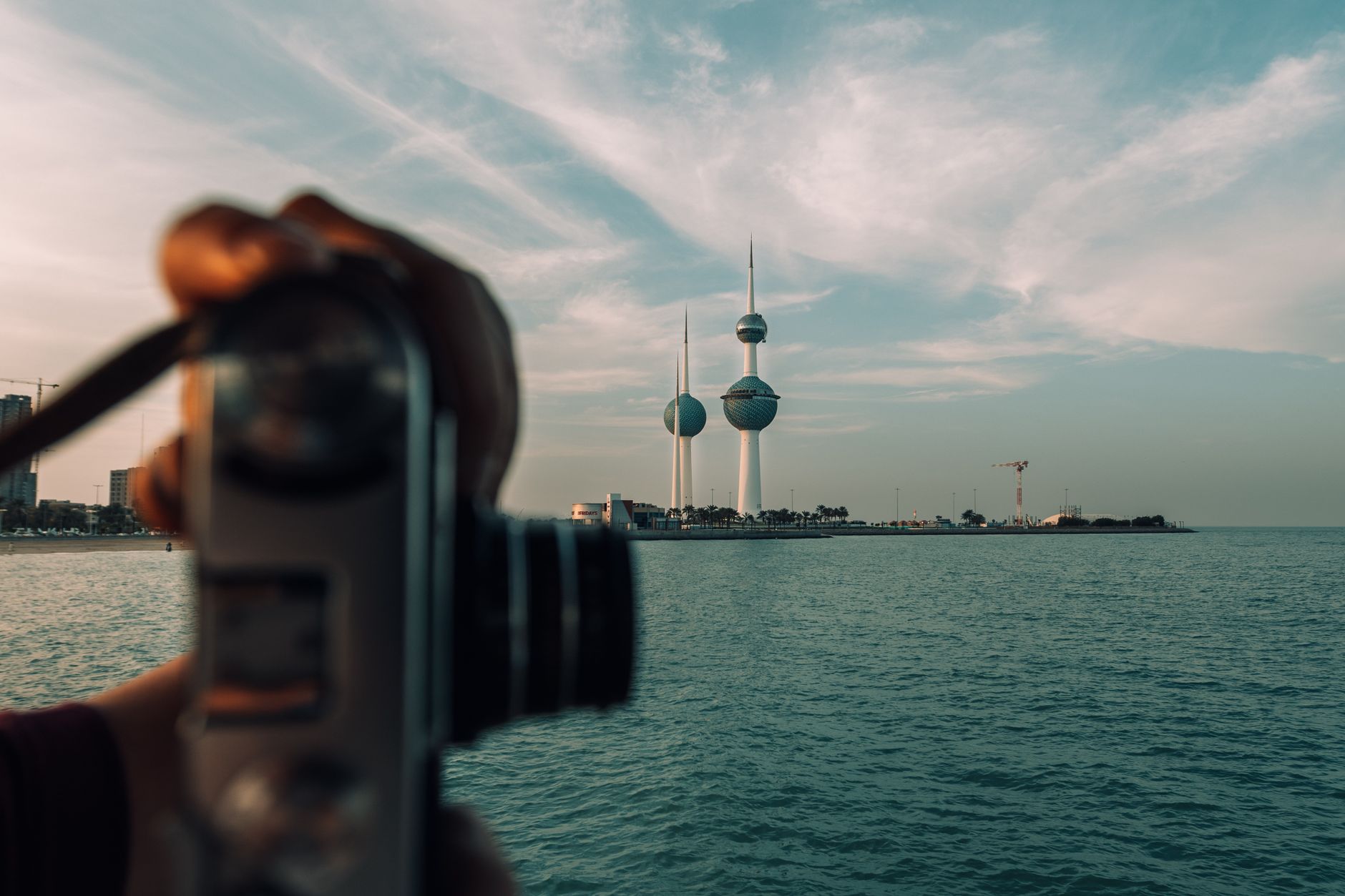
A photographer frames the famous Kuwait Towers, a landmark of Kuwait City, as the sun sets over the Arabian Gulf.
Mo3ath photos on Pexels
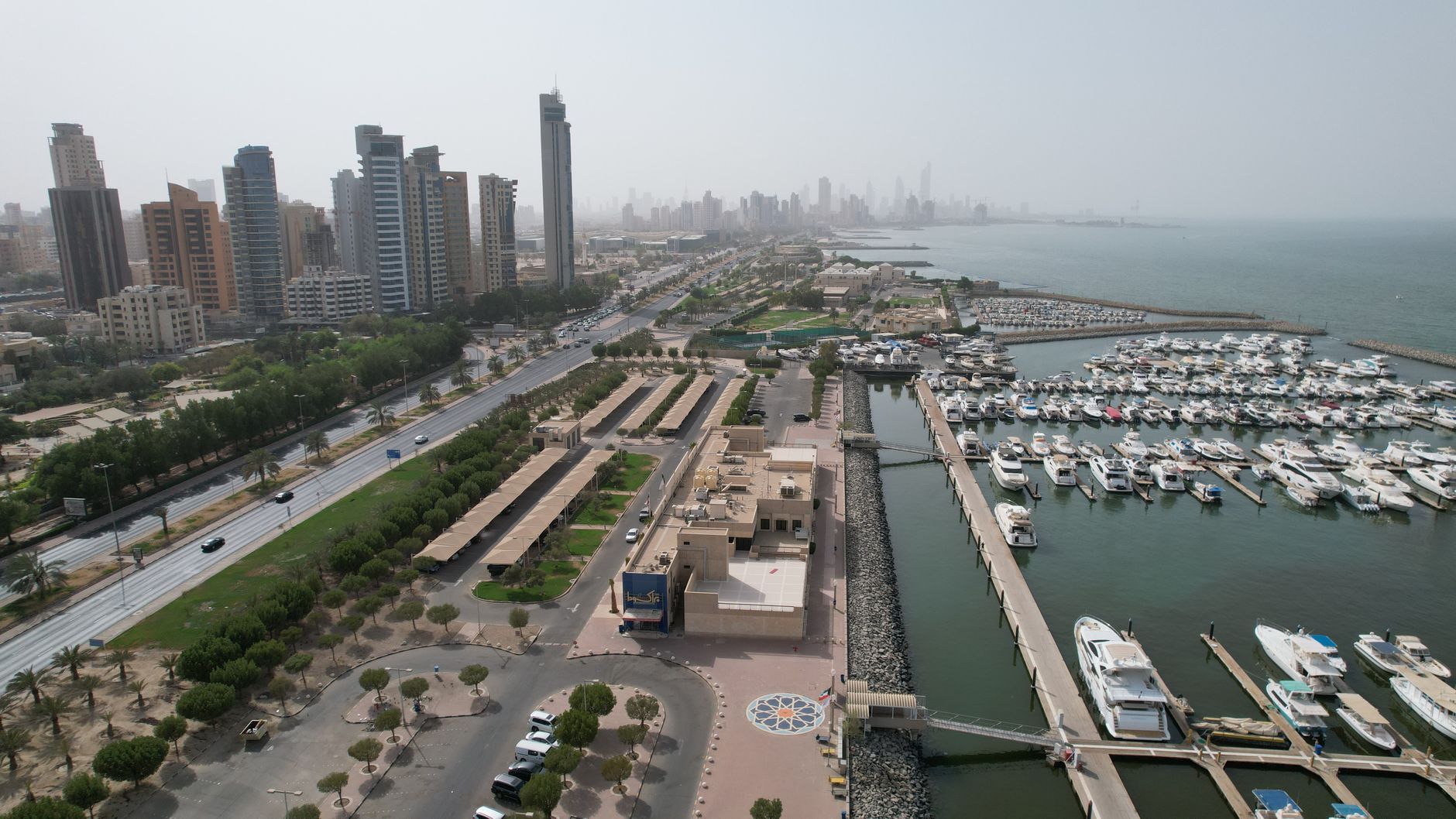
A stunning aerial perspective of Kuwait City, showcasing the contrast between the modern urban skyline and the serene, boat-filled marina along the coast.
nour qaloush on Pexels

A photographer captures the stunning illuminated skyline of Kuwait City, highlighting the iconic Liberation Tower against the evening sky.
Krishna Pula on Pexels

The modern skyline of Kuwait City glows under the soft light of sunset, creating a perfect reflection on the tranquil waters of the Arabian Gulf.
Frans van Heerden on Pexels

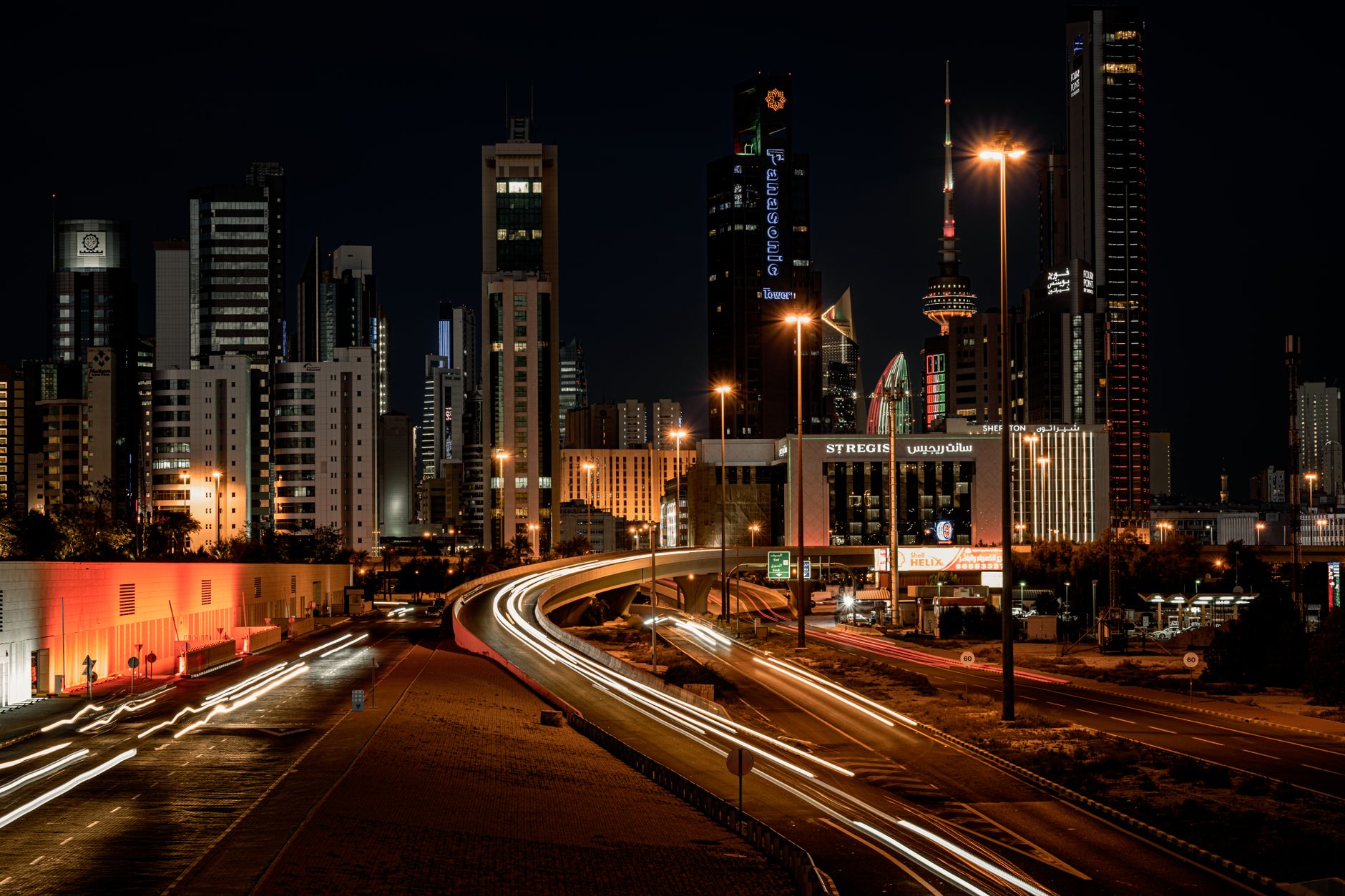
The vibrant skyline of Kuwait City glows at night, with long-exposure light trails from traffic flowing beneath modern architectural landmarks.
Optical Chemist on Pexels

The striking modern architecture of Kuwait City stands out against a dramatic, storm-filled sky in this elevated view of the capital.
Optical Chemist on Pexels

Long-exposure photography captures the vibrant energy of Kuwait City at night, with light trails flowing toward the iconic Kuwait Towers.
Optical Chemist on Pexels
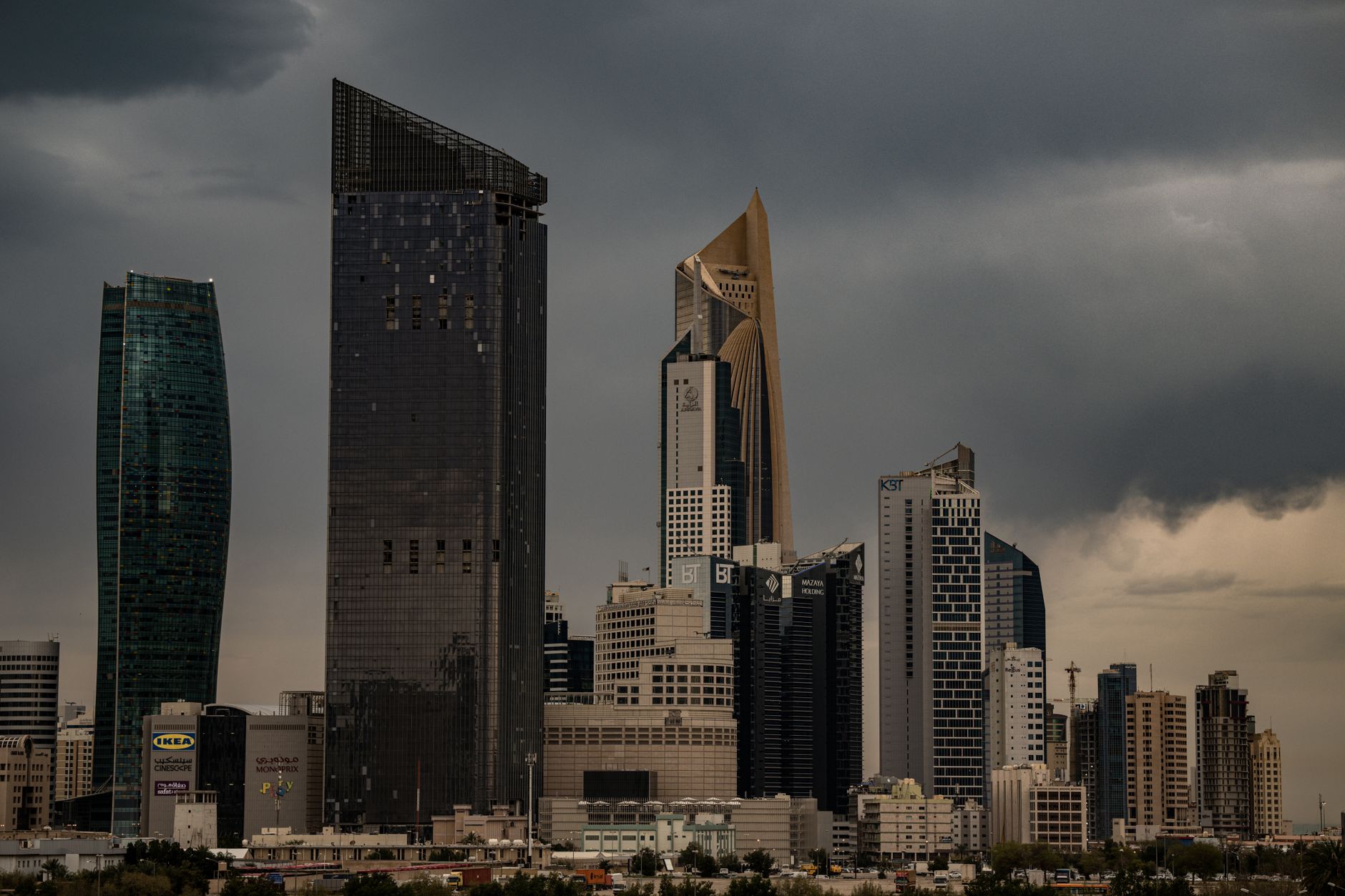
The striking modern architecture of Kuwait City's skyline stands out against a dramatic, moody backdrop of storm clouds.
Optical Chemist on Pexels

The vibrant Kuwait City skyline glows at dusk as light trails from traffic streak across the elevated highways leading into the modern metropolis.
Optical Chemist on Pexels
Yes—if you like architecture and food culture without tourist crowds. The mirrored Kuwait Towers cost 1% of Burj Khalifa tickets, and the restored souk serves machboos for 1.5 KD under timber beams older than the state itself.
Two full days cover the Towers, Grand Mosque, Souk Al-Mubarakiya and the Qurain Martyrs Museum. Add a third if you want to day-trip to Failaka Island or catch a show at the Sheikh Jaber Cultural Centre.
No—Kuwait is dry. There are no bars, licensed hotels or legal stores. Nightlife happens in late-night shisha cafés and waterfront promenades; bring your own fun or book a desert camp stargazing tour.
Shoulders and knees covered, nothing tight. Women need an abaya and headscarf to enter the Grand Mosque—both are loaned free at the side entrance. Men in shorts will be turned away.
CityBus X1 or X3 run 24/7 and reach downtown in 30 min for 500 fils. Taxis cost 8–12 KD and can be booked at the official counter outside baggage claim—ignore the touts inside.
Very. Violent crime is rare and public areas are busy until late. Dress modestly and avoid Jleeb Al-Shuyoukh after dark; otherwise walking alone in Salmiya or along the Corniche feels no different from Dubai.
Ready to book?
Kuwait International Airport (KWI) sits 16 km south of downtown. No rail link; take CityBus Express X1/X3 (24 h, 1 KD) or a taxi for 8–12 KD. Saudi Highway 40 feeds overland traffic from Dammam.
Metro: none yet (plans only). Buses: KPTC and CityBus cover the city for 250–300 fils per ride; KPTC 3-month pass is 25 KD. Careem/Uber work, but drivers rarely know street names—navigate by landmark.
Winter days 18–22 °C, nights can dip to 8 °C. Summer peaks at 47 °C with 90 % humidity—outdoor sightseeing is miserable. Visit mid-Nov to mid-Mar; rain is scarce (<120 mm/yr) and falls mainly in January.
Violent crime is low; solo women report comfortable evenings along the corniche. Avoid Jleeb Al-Shuyoukh after dark (petty theft). Crossing roads is the real hazard—traffic yields to no one.
0 places, one continuous walking route. Free with your first city.