Mombasa
Kenya Updated Apr 2026
The first thing that hits you in Mombasa, Kenya, isn't the ocean breeze—it's the smell of cardamom coffee drifting from a doorway that looks like it hasn't changed since 1650. One minute you're dodging tuk-tuks on a crumbling coral-stone street, the next you're watching dolphins arc through water the temperature of bathwater. This island city keeps two clocks: one set to the 21st-century port's container-ship schedule, the other to the call of the muezzin that has echoed across the same rooftops for 400 years.
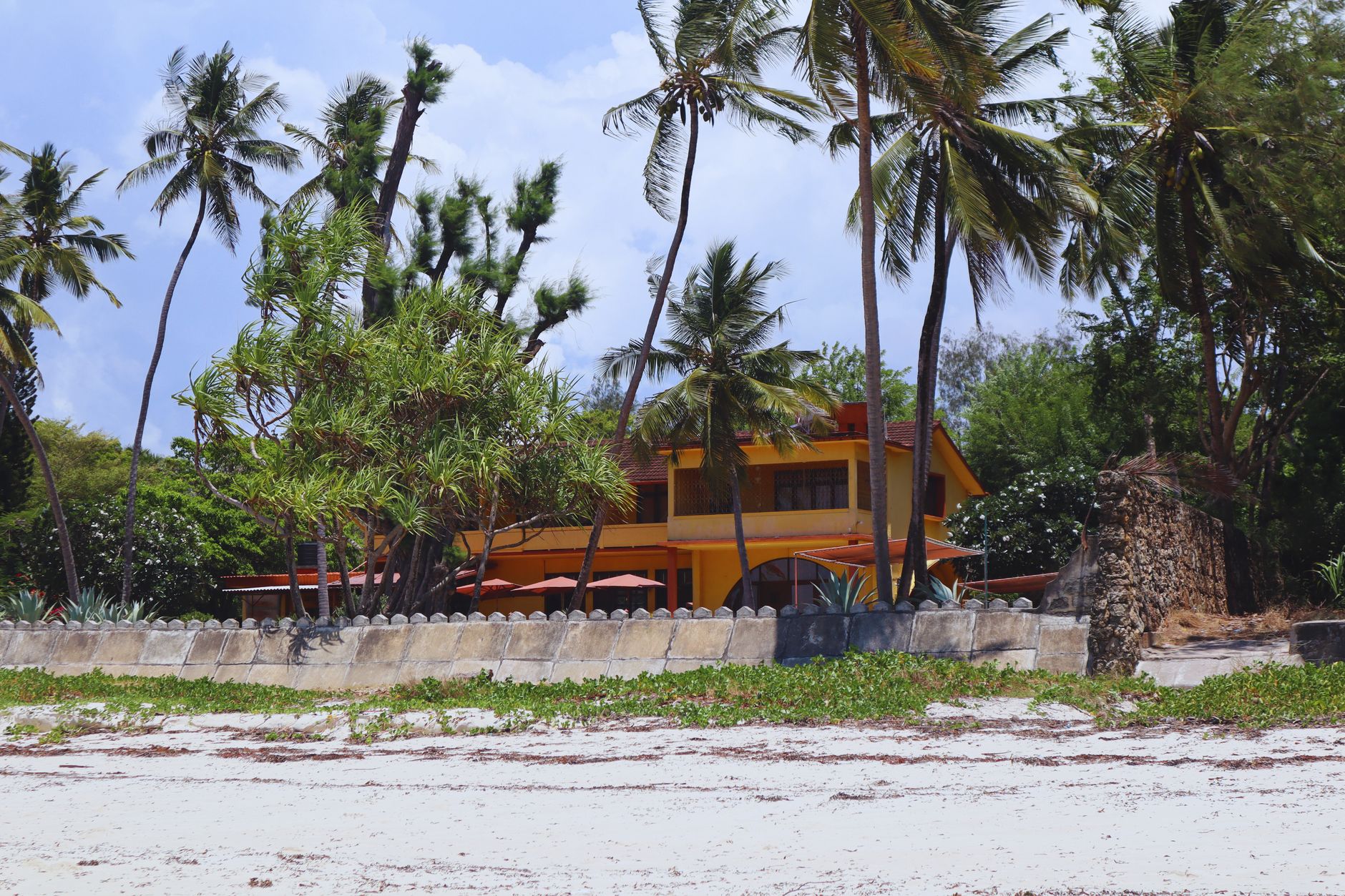 Photo: Royal Wave ENT / Pexels
- Attractions
- 12
- Audio
- 32 min
- Trip length
- 3–5 days
- Best season
- Dec–Mar & Jul–Oct (dry)
Why Mombasa
Built from cited sources · see the method · How we make our guides →
Portuguese cannons still point seaward from Fort Jesus, their barrels rusted the color of dried blood, while inside the walls a Swahili woman sells you cold coconut water for 50 shillings through a hatch that once stored gunpowder. The contrast isn't staged for tourists—it's Tuesday. Children kick footballs against 16th-century battlements; guides skip the official script to tell you which bastion ghosts supposedly favor after dark.
Food arrives on plastic plates that cost less than the spices that perfume them. A single spoonful of birani at Royal House tells the whole story: cloves from Zanzibar, chilies from Goa, saffron that crossed the ocean in Arab dhows before your grandfather was born. Eat it under a ceiling fan that turns too slowly to matter; the sweat on your upper lip is part of the recipe.
The city doesn't care if you fall in love with it. Ships will still queue outside Kilindini Harbour, the ferry will still groan across Likoni Channel every fifteen minutes, and the tide will still expose the same littered sandbanks where crabs perform their sideways choreography. Stay long enough and you'll stop noticing the contradictions. That's when Mombasa has you.
Fort Jesus After Dark
The sound-and-light show turns 16th-century stone into a 360-degree cinema; Portuguese cannons glow orange while Swahili voices echo from hidden speakers. Arrive at 18:30 to sit on the seawall—bats overhead, tide slapping the ramparts.Quarry-Turned-Sanctuary
Haller Park’s reclaimed limestone chimneys are now roosts for vervet monkeys; you hand-feed giraffes at 16:00 sharp while hippos grunt in the reclaimed lake. The trail from quarry pit to rainforest canopy takes 45 minutes and smells of wet cement and wild basil.Door Stories in Old Town
Every carved Swahili door on Ndia Kuu Street tells who lived inside: chains for Indian traders, lotus buds for Arab merchants, Portuguese roses for 18th-century administrators. Look for the 1740 door with brass studs—originally Bombay bullet-proofing repurposed as ornament.Tusks with a Tale
The aluminum tusks on Moi Avenue were thrown up overnight in 1952 for Queen Elizabeth’s coronation stopover—locals still call them ‘Pembe Za Ndovu’. At dusk the setting sun catches the metal, throwing elephant-shaped shadows across the street’s mango sellers.
Neighborhoods
Where to wander, by quarter — each with its own rhythm.
Old Town
Narrow alleys barely two meters wide keep the noon sun off your neck and the 19th-century stories in your ears. Teak doors studded with brass spikes—originally to repel war elephants—open onto courtyards where grandmothers shell peas and teenage boys fix smartphones under the same carved balconies. The air is equal parts sea salt, cardamom, and diesel from passing scooters; the soundtrack is mosque loudspeakers dueling with Bollywood basslines.Nyali
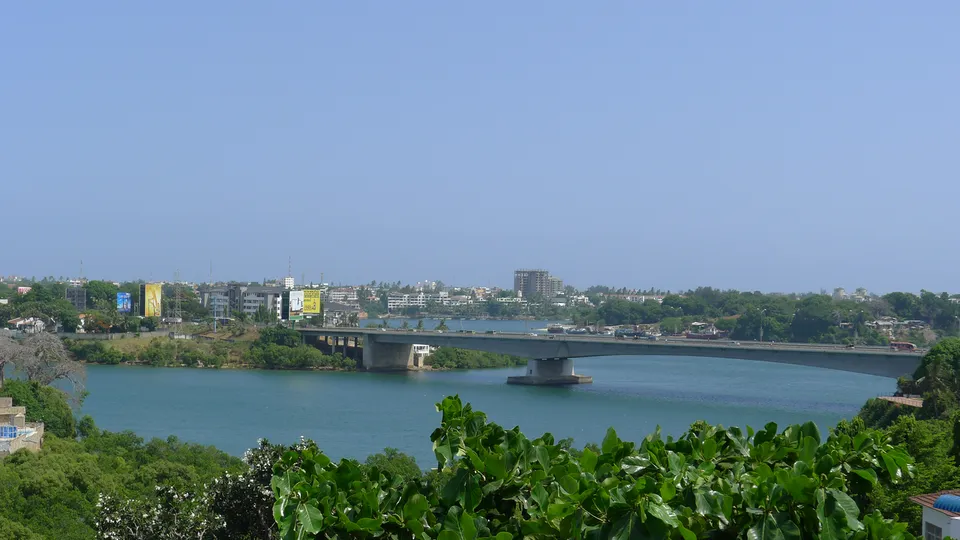
North of the island, linked by the 400-meter Nyali Bridge, this strip feels like Mombasa's answer to Miami if Miami had monkeys crossing the road. Resorts line a beach wide enough for morning camel rides and sunset football matches; behind them, gated compounds hide diplomats and Kenyan tech workers who commute to the tech hub in Shanzu. Come dusk, Moonshine Beach Bar fills with the clink of Tusker bottles and the smell of grilling lobster tails that cost three times what locals pay two kilometers inland.Bamburi
Built on reclaimed coral rag, the neighborhood parties like the quarry that created it is still paying overtime. Beach boys hustle jet-ski rides by day; by night the same stretch turns into an open-air disco where the bass rattles the sand. Street food vendors park their carts outside Pirates Beach Bar at 2 a.m., selling viazi karai so hot you'll burn your tongue and still order seconds.Kizingo
The administrative heart feels almost colonial in its quiet: jacarandas drop purple petals on single-lane roads named after long-dead governors. Here, civil servants in short-sleeve shirts walk to offices where ceiling fans spin the same speed since 1963. It's the place to find a shaded bench, watch hornbills argue in the fig trees, and realize the city can actually pause.Tudor
Across the creek from Old Town, Tudor's waterfront is a working-class theater of ship welders, fish brokers, and kids who dive for coins tossed by ferry passengers. The smell is engine oil meets low-tide seaweed; the soundtrack is steel hammers on steel hulls. Stop at the signless kiosk near the slipway for fried cassava and a shot of kahawa chungu—bitter coffee that tastes like someone distilled Monday morning.Likoni
The mainland side of the channel survives on ferry time: everything resets every fifteen minutes when the ramp drops and human cargo floods off. Women balance basins of mangoes on their heads, men push handcarts loaded with mattresses, and kids dart between bumpers selling peanuts in twists of newspaper. Beyond the terminal, streets dissolve into coconut plantations where you can still find a blacksmith making machetes exactly as his great-grandfather did.
Plan your trip
Before you go
- Getting There
- Moi International Airport (MBA) sits 10 km west; Bolt rides to Nyali run KES 1,800. Madaraka Express SGR terminates at Miritini station—take the commuter shuttle to the old city station for 50 KES. Highway A109 links Nairobi to Mombasa in 7 hrs by coach.
- Getting Around
- No metro—move by tuk-tuk (negotiate down to KES 200 for city hops) or Bolt. Matatus crowd the Tononoka terminus; route 1 runs island to Bamburi every 5 min. A Bus Rapid Transit line is under construction 2026-28; cycle lanes now line Mama Ngina waterfront.
- Climate & Best Time
- Coastal mercury hovers 27–32 °C year-round. Long rains April–June turn streets to mirrors; short rains November coincide with the Carnival. Come January–March for glass-clear snorkeling or July–October for drier safari add-ons.
- Language & Currency
- Swahili buys you smiles, English gets the bill. Kenya Shilling (KES) rules—carry small notes for matatus and coconut vendors. M-Pesa mobile money works everywhere; tap your phone at the Tusks juice stall.
Where the Monsoon Winds Rewrote Empires
From iron-age anchorages to container cranes, an island that always charged a toll on the future
- c. 600 CE
Iron-Smelters Arrive
Potters of the Triangular-Incised-Ware tradition land on Mombasa’s coral knobs. They light furnaces that glow the color of a lion’s eye at night, trading iron arrowheads for mangrove poles with dhow captains who speak of monsoons the way priests speak of God. The first Swahili word recorded here is ‘mvita’—war.
- c. 1150
Queen Mwana Mkisi Rules
Legend hands the island to a queen who refuses to live behind stone. She walks the tide line barefoot, her brass anklets clinking like small bells, issuing laws from beneath a baobab that still stands behind Fort Jesus today. Her dynasty plants the seeds that become Old Town’s crooked lanes.
- 1331
Ibn Battuta Sips Coconut Water
The Moroccan traveler steps off a dhow smelling of cardamom and salt. In his journal he calls Mombasa ‘a place of devout Muslims whose mosques are carved from coral rag so fine it feels like ivory.’ He stays long enough to learn the local rhythm: dawn prayers, then the creak of anchors as ships leave for India.
- 1498
Da Gama’s Cannon Reply
Vasco da Gama’s fleet appears at dawn, red crosses blazing on white sails. Mombasa’s archers answer with poisoned arrows. The Portuguese retreat but leave behind a promise carved into a baobab: they will return with bigger guns. The tree is gone; the promise wasn’t.
- 1593
Fort Jesus Rises
Italian engineer Giovanni Battista Cairati sketches a star fort on coral limestone, its bastions angled to catch every whisper of the monsoon. 500 Indian masons, 200 Portuguese soldiers, and innumerable Swahili porters stack stone for three years. When the final cannon is winched into place, the island smells of wet mortar and gunpowder for a week.
- 1698
Omani Flags Snap in Wind
After a 33-month siege, Portuguese surrender keys carved from ebony. Omani commander Imam Sa’if bin Sultan rides through the breached gate on a white charger; the animal slips on blood-slick coral. The fort’s chapel becomes a mosque overnight, its altar turned 90° to face Mecca.
Show the full timeline (18 moments)
- c. 1741
Mazrui Governors Take Reins
The Mazrui clan—originally governors sent from Oman—declare de-facto independence. They mint copper coins stamped with conch shells and levy duties on every sack of cloves. For 82 years they rule like merchant-kings, their palace windows framing both the sea and the gallows.
- 1822
British Bombardment Begins
HMS Leven and Barracouta open fire at sunrise, punishment for Mazrui flirtations with the Saudis. Cannonballs skip across the harbor like angry stones. The bombardment lasts four hours; the smell of charred cloves drifts as far as Zanzibar. A protectorate follows, signed under a tamarind tree.
- 1896
Lunatic Express Reaches Island
The Uganda Railway’s final spike is driven at the edge of Kilindini Harbor. Locals watch a black locomotive hiss like an angry leopard. White settlers toast with warm champagne; porters earn three rupees a month and names like ‘Mbotela’—he who rides the iron snake. Mombasa becomes the gateway to an inland empire.
- 1902
Hut Tax Ignites Rebellion
Colonial officers demand one rupee per grass roof. Women grind millet at night to hide grain; men melt hoe blades into spears. The revolt is crushed in three weeks, but the tax stays. A generation learns that coral houses—untaxed—are worth any debt.
- 1913
999-Year Leases Printed
The Crown Lands Ordinance offers coastal acres to white farmers for a millennium. Swahili families receive stamped certificates that read ‘occupation at sufferance.’ Overnight, ancestral farms become someone else’s coffee plantation. The ink smells of alcohol and betrayal.
- 1952
Aluminum Tusks Cross Moi Avenue
Workers bolt two pairs of 30-foot elephant tusks into concrete to honor Princess Elizabeth’s overnight stop. They curve like question marks over the new dual-carriageway. No one yet knows she will leave Kenya a queen; the tusks become the city’s favorite selfie frame anyway.
- 1963
Uhuru Drums on the Beach
At midnight, 12 December, the Union Jack is lowered inside Fort Jesus for the last time. A thousand people light palm-frond torches; shadows jump across 370-year-old walls. The band plays ‘Kenya Taifa’—the anthem less than a month old. Fireworks reflect in the harbor like scattered coins.
- 1972
Nyota Ndogo Is Born
Mwanaisha Abdalla enters the world in Mshomoroni, her cries mixing with the 5 a.m. call to prayer. Twenty-three years later she will record ‘Watu na Viatu,’ a taarab-rap hybrid that blares from every matatu on Nyerere Avenue. She sings in Kimvita, the Swahili dialect that smells of cardamom and low tide.
- 1987
Bamburi Quarry Becomes Haller Park
A cement company hires Swiss naturalist Rene Haller to fix a 200-acre scar. He plants casuarinas, introduces giraffes, and teaches a hippo named Owen to accept carrots from tourists. Within a decade butterflies outnumber bulldozers. The air tastes of wild basil instead of limestone dust.
- 1998
U.S. Embassy Blast Shatters Glass
At 10:39 a.m. a truck bomb detonates outside the embassy on Moi Avenue, shattering windows a kilometer away. The blast kills 13 and chips coral blocks in Fort Jesus. For weeks the sea breeze carries the sour smell of burnt diesel. Mombasa learns it is no longer a backwater but a front line.
- 2017
Madaraka Express Docks
A Chinese-built locomotive glides in at 120 kph, air-conditioned and Wi-Fi ready. The journey from Nairobi now takes four hours—half the time of the old iron snake. Vendors outside the new terminus sell ndizi ya kuchemsha for 20 shillings; commuters stare at their phones where once they watched giraffes.
- 2021
Khadija Abdalla Bajaber Wins Prize
The Mombasa writer’s debut novel ‘The House of Rust’ nets the inaugural Graywolf Africa Prize. Set in a fishing village that smells of octopus ink and clove tea, the book reimagines the city as a place where grandmothers duel demons with harpoons. She dedicates the award to the alley behind her aunt’s house where stories were currency.
Who lived here
-
Political Scientist · 1933–2014
Ali Al-Amin Mazrui
Born and raised in Mombasa
He grew up in a house overlooking the old port, absorbing the city’s layered Arab-African pulse that later shaped his essays on Islam and democracy. Mazrui would still recognise the dawn call to prayer echoing off Fort Jesus, though he’d be startled by the SGR trains whistling past his childhood beach.
-
Military Architect · 16th Century
Giovanni Battista Cairati
Designed Fort Jesus 1593-96
The Milanese engineer never saw his star-shaped masterpiece finished; he died at sea en route to Goa. Had Cairati sailed into modern Mombasa, he’d grin at his walls still standing while selfie sticks poke over his battlements.
-
Explorer · 1304–1369
Ibn Battuta
Visited 1331
He described Mombasa’s pious Muslims and wooden mosques; today’s narrow alleys still lead to coral-stone madrasas where children recite the same Quran verses. The ferry he boarded would have been a sewn dhow—no diesel fumes, just coconut oil lamps and monsoon wind.
-
Novelist · born 1995
Khadija Abdalla Bajaber
Mombasa-based writer
Her debut ‘The House of Rust’ sets djinn and fishermen loose in the city’s night markets; she writes on a veranda where the smell of grilling mishkaki drifts in from the street. Bajaber keeps an old brass door key—proof, she says, that every Mombasa tale starts with letting yourself in.
-
Fashion Model · born 1994
Malaika Firth
Born in Mombasa
Discovered at a beach football match on Bamburi sand, she went from barefoot goal-keeper to Prada runway in two years. When back, she still buys viazi karai from the same aluminum pot outside the mosque her grandfather helped build.
Where to Eat
Where locals actually book dinner — not the tourist menus.
Insider tips
Small things that change how the city treats you.
Carry Small Cash
Matatu fares, street food, and most market stalls take only Kenyan shillings in small denominations. Break your 1,000 KES notes at supermarkets or banks before heading out.Skip Rush-Hour Ferries
The Likoni ferry is free for pedestrians but packed 7–9 a.m. and 5–7 p.m. Walk on at 10 a.m. or after 8 p.m. to board in minutes instead of an hour.Eat Right-Hand Only
Swahili households and many Old Town cafés serve without cutlery. Use your right hand; the left is considered unclean. Wet wipes are polite to carry.Ask Before Snapping
Old Town residents are photo-weary. A friendly “Naomba kupiga picha?” (“May I take a photo?”) and a 50 KES tip prevent awkward stand-offs.Rain = Reef Deals
November short rains knock 30 % off diving trips. Marine park visibility still hits 15 m and you’ll have the coral to yourself.Bolt Over Tuk-Tuk
Ride-hailing apps quote fixed fares; tuk-tuk drivers start at triple. From airport to Nyali, Bolt averages KES 1,800; airport taxis open at KES 4,000.
Gallery
The city, as it actually looks.




Frequently asked
Is Mombasa worth visiting?
Yes—Mombasa gives you a 500-year-old fort, living Swahili cuisine, and reef snorkeling within one city day. It’s cheaper than Zanzibar, warmer than Cape Town, and the old quarter still smells of cardamom and salt.
How many days in Mombasa?
Three full days covers Fort Jesus, Old Town, a marine-park snorkel, and a plate of biriani at Royal House. Add two more if you want Shimba Hills safari or Wasini dolphin trip.
Is Mombasa safe for solo female travellers?
Tourist areas—Nyali, Bamburi, Old Town by day—are generally safe. After dark use ride-hailing, avoid empty beaches, and dress knee-length outside resorts; modesty deflects most hassle.
Can I use US dollars or cards?
Cash Kenya shillings rule street food, matatus, and entrance fees. Cards work at hotels and big restaurants; carry KES 5,000 in small notes per day.
What’s the cheapest way from Nairobi to Mombasa?
Madaraka Express SGR: KES 1,000 second-class, 4.5 hrs coast-to-coast. Book online a week early; walk-up tickets sell out on Fridays.
Which beach has the clearest water?
Shanzu, north of Mombasa Marine Park—10 m visibility most mornings, no river silt. Go at 8 a.m. before dhows stir the sand.
Pick up where you left off
Saved and recently read places — kept on this device only.
Photo credits (11)
- Royal Wave ENT — Pexels License (https://www.pexels.com/license/) — Source: https://www.pexels.com/photo/20693413/
- Aerial Nyali bridge — Kibet Yegon — CC BY-SA 2.0 (https://creativecommons.org/licenses/by-sa/2.0/) — Source: https://commons.wikimedia.org/wiki/File:Aerial_Nyali_bridge.jpg
- Entering the old town, Mombasa — Shiraz Chakera — CC BY-SA 2.0 (https://creativecommons.org/licenses/by-sa/2.0/) — Source: https://commons.wikimedia.org/wiki/File:Entering_the_old_town,_Mombasa.jpg
- Burda Recitation at Mombasa Old Town — Mwendwa.andrew — CC BY-SA 4.0 (https://creativecommons.org/licenses/by-sa/4.0/) — Source: https://commons.wikimedia.org/wiki/File:Burda_Recitation_at_Mombasa_Old_Town.jpg
- Mbaraki Creek, Mombasa — Kiriungi — CC BY-SA 4.0 (https://creativecommons.org/licenses/by-sa/4.0/) — Source: https://commons.wikimedia.org/wiki/File:Mbaraki_Creek,_Mombasa.jpg
- Downtown Mombasa — Victor Ochieng — CC BY-SA 2.0 (https://creativecommons.org/licenses/by-sa/2.0/) — Source: https://commons.wikimedia.org/wiki/File:Downtown_Mombasa.jpg
- Digo road, Mombasa — Marcel Oosterwijk — CC BY-SA 2.0 (https://creativecommons.org/licenses/by-sa/2.0/) — Source: https://commons.wikimedia.org/wiki/File:Digo_road,_Mombasa.jpg
- Likoni Ferry (cropped) — Victor Ochieng — CC BY-SA 2.0 (https://creativecommons.org/licenses/by-sa/2.0/) — Source: https://commons.wikimedia.org/wiki/File:Likoni_Ferry_(cropped).jpg
- Mombasa Building — Stefan Magdalinski — CC BY 2.0 (https://creativecommons.org/licenses/by/2.0/) — Source: https://commons.wikimedia.org/wiki/File:Mombasa_Building.jpg
- Likoni Ferry — Victor Ochieng — CC BY-SA 2.0 (https://creativecommons.org/licenses/by-sa/2.0/) — Source: https://commons.wikimedia.org/wiki/File:Likoni_Ferry.jpg
- Mombasa County — Omondi — CC BY-SA 3.0 (https://creativecommons.org/licenses/by-sa/3.0/) — Source: https://commons.wikimedia.org/wiki/File:Mombasa_County.jpg
Photos may have been resized or cropped.