Astana
Kazakhstan Updated Apr 2026
The wind in Astana, Kazakhstan hits you like a slap from a ghost. At -30°C, your breath crystallizes mid-air and falls as glittering dust while glass pyramids and golden spheres rise from the steppe as if someone hacked a Photoshop file into real life. This is a capital that didn't grow — it was summoned.
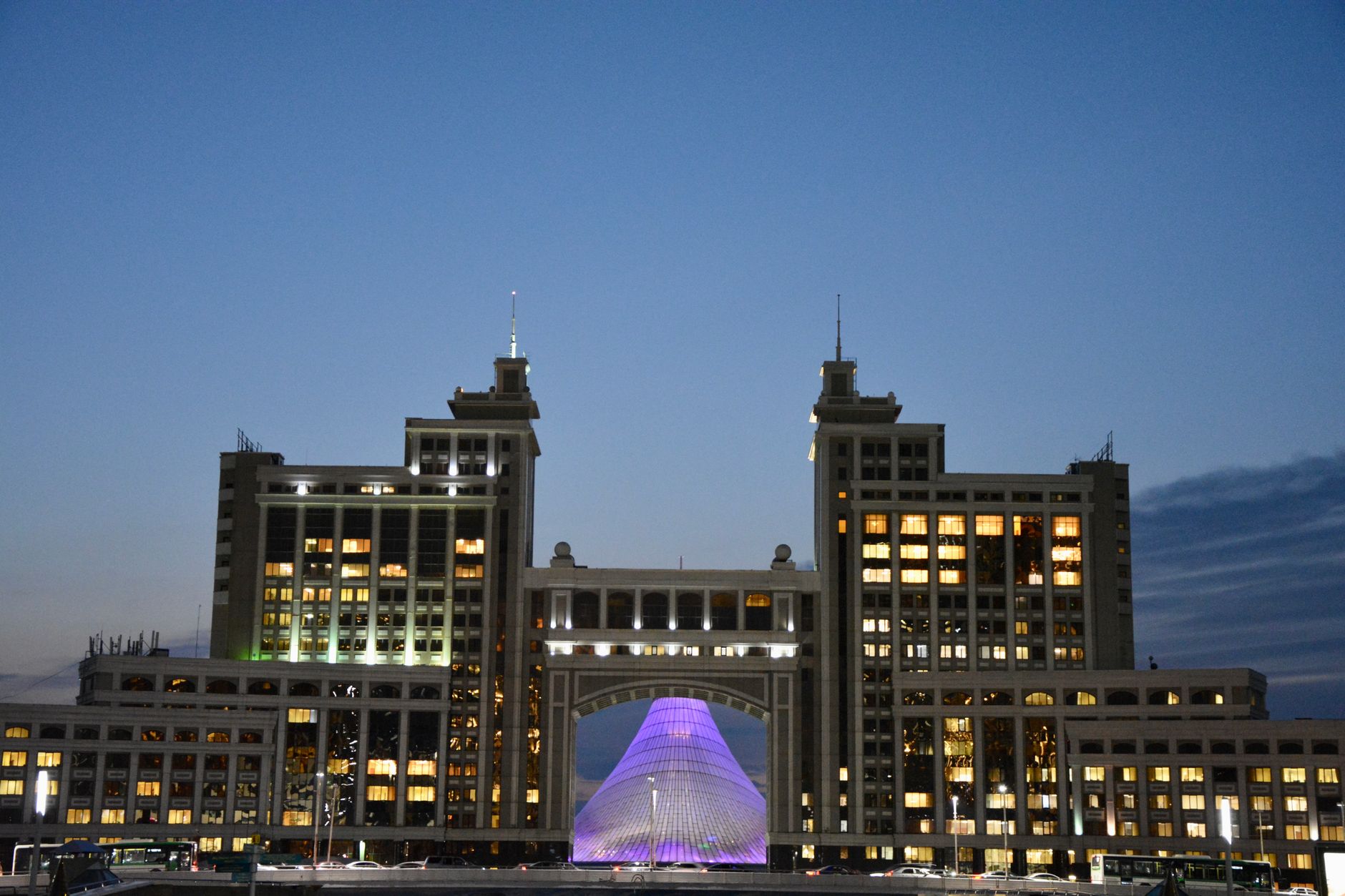
 Photo: Нурлан / Pexels
- Attractions
- 8
- Trip length
- 2–3 days
- Best season
- Spring (April–May) or early autumn (September)
Why Astana
Built from cited sources · see the method · How we make our guides →
One minute you're walking past Stalin-era apartments on the right bank, the next you're inside Khan Shatyr, a 150-meter-tall transparent tent where imported-Maldives sand stays at 35°C year-round. The city flips architectural channels faster than Netflix: Norman Foster's pyramid of peace, Kurokawa's tilting concert hall, a finance ministry shaped like a dollar bill. Locals call the left bank "Instagram" and the right bank "the kitchen" — one for showing off, the other for eating.
They'll pour you black tea until your bladder begs for mercy, then refill the cup anyway. Hospitality here is competitive sport: leave one dumpling on the platter or risk insulting the cook. Between toasts you'll learn the city's three names in twenty years — Akmola, Astana, Nur-Sultan, back to Astana — each swap a political weather vane you can read in changed metro-station plaques overnight.
Come July, the steppe erupts in green and the Ishim River fills with paddle-boarding students. Winter returns like a loan shark in October, driving life indoors to coffee roasters inside converted shipping containers and opera houses where the chandelier weighs more than a 737. Stay three days and the place starts making sense: it's not a city with history; it's a city betting its mortgage on the future, one outrageous blueprint at a time.
Architecture from the Future
Baiterek's golden egg levitates 105m above the steppe, Khan Shatyr’s 150m tent glows like a yurt-shaped sunrise, and Norman Foster’s glass pyramid hosts interfaith dialogues inside black-marble Soviet memory.Capital Still Naming Itself
Since 1997 the city has answered to Akmola, Astana, Nur-Sultan, and now Astana again—each renaming erasing and rewriting what it means to be the seat of a nomadic-turned-hydrocarbon republic.Steppe Meets Siberian Winter
River Ishim freezes solid by November; locals skate to work while Burabay’s granite cliffs and pine lakes lie 250 km north like a misplaced slice of Scandinavia reachable on a 12-hour boat-and-horse day trip.Air-Conditioned Beach Inside a Mall
Khan Shatyr keeps 35°C summer inside its ethylene tetrafluoroethylene skin—shop Zara, then ride the monorail to an indoor beach whose sand was flown in from the Maldives.
Neighborhoods
Where to wander, by quarter — each with its own rhythm.
Left Bank (Nurzhol Boulevard Strip)
The postcard axis — Baiterek tower at dead center, flanked by the presidential palace, the pyramid, and the shopping-tent big enough to swallow nine football fields. Come dusk the LED skin of Khan Shatyr shifts from ice-blue to magma-orange while government chauffeurs idle in heated Mercedes. Everything looks best from the 97-meter-high viewing orb: the city a scale model, the steppe a rumpled duvet fading into January fog.Right Bank (Old Tselinograd Grid)
Low-rise Soviet blocks, bakeries that still stamp "ХЛЕБ" on rye loaves, and cafeterias where lunch costs less than a metro token. Walk south from the river and the pavement narrows; babushkas sell jarred honey from folding tables, boys kick footballs against murals of cosmonauts. It's here you'll find TSE Gallery in a repurposed print shop and the city's best beshbarmak served on patterned trays big enough to feed a cavalry squadron.Esil River Embankment
The official viewing platform for Astana's architectural ego. In summer the city plants beanbags and outdoor projectors; locals cycle past couples slow-dancing to Kazakh pop. Cross the Atyrau Bridge at 2 a.m. in February and the metal hums like a cello — wind speeds double as they tunnel under the structure, hurling snow horizontally into your scarf.BC Moskva Cluster
Glass-box finance district built around Moscow Tower, home to Restaurant Vechnoye Nebo on the 24th floor. Business lunches pivot from sushi to horse-meat burgers within the same menu; bankers chase deals with fermented-mare's-milk shots at nearby Satti. Come night the neon spills onto Dostyk Street where doormen calculate your tip-worthiness by shoe shine alone.KazMunayGas Quarter
Headquarters shaped like a triumphal arch marks the western gate of the ceremonial axis. Inside: oil traders, expat geologists, and a secret staff canteen rumored to serve the city's finest laghman. After-clock-out bars keep Borat jokes on the blacklist; instead you'll hear Russian, Kazakh, and Texan English debating pipeline pressure over £12 pints.Nazarbayev University Belt
A campus city dropped onto former grazing land, drawing students who grew up in villages 1000 km away. Coffee roasters, English-language stand-up nights, and dorm balconies that double as steppe laundries. The average age drops ten years the moment you step off the bus; debates spill from lecture theatres into 24-hour pancake kiosks.
Plan your trip
Before you go
- Getting There
- Fly into Nursultan Nazarbayev International Airport (NQZ). Astana-1 and Astana-2 railway stations link to Almaty (14 hrs) and Karaganda (3 hrs). M36 highway connects south to Almaty; A1 runs west toward Aktobe.
- Getting Around
- No metro exists in 2026. Ride buses and marshrutkas—routes 10, 12, 27 tie airport to Left Bank. Buy an Onay NFC card (500 KZT) or tap contactless bank cards at validators. Yandex Go averages 600–1,200 KZT across town.
- Climate & Best Time
- Winter bottoms out at –30 °C; summer tops 35 °C with dry steppe wind. Visit April–May (12–22 °C, 30 mm rain) or September–October (8–22 °C) when café terraces reopen and day trips don’t require survival gear.
- Language & Currency
- Kazakh and Russian dominate; English spoken in hotels and by younger professionals. Currency is Kazakhstani tenge (KZT). Cards work almost everywhere, but carry cash for bazaars and marshrutkas.
- Safetyety
- Violent crime is rare; watch for pickpockets on buses 12 & 27 and around Zhandosov Bazaar. Drivers speed on snow-packed roads—use lit crossings and 2GIS to avoid icy shortcuts after dark.
Five Names, One Skyline
How a Cossack outpost became Central Asia's boldest capital
- c. 2000 BCE
First Hoofbeats on the Steppe
Stone Age herders drive cattle across the Ishim's frozen banks. Their flint tools lie scattered beneath what will become Left Bank glass towers. The winter wind that makes them huddle in felt yurts is the same one that will one day whistle through Norman Foster's steel cables.
- 1830
Akmoly Rises from Mosquito Marsh
Imperial surveyors drive wooden stakes into boggy ground, founding Akmoly settlement. Summer brings clouds of mosquitoes so thick they darken tents. Cossacks build the first wooden fort where the President's palace will stand in 170 years.
- 1832
Akmolinsk Gets Its Charter
The Tsar's decree arrives on parchment, renaming the muddy outpost Akmolinsk. Siberian merchants use the new brick caravanserai to trade Bukharan silk for Kazakh horses. Population: 2,000 souls wrapped in sheepskin against -40°C nights.
- 1893
The Train Whistles Across the Steppe
The Trans-Aral Railway reaches town. Suddenly Akmolinsk grain reaches Omsk markets in days, not weeks. Red brick warehouses replace felt yurts along the tracks. You can still smell coal smoke in the old station's cracked tiles.
- 1917
Red Flags Over the Fort
Bolshevik soldiers ride in from Omsk, replacing the double-headed eagle with the red star. Local Kazakh elders watch nervously as icons come down from the Orthodox church. The vodka distillery becomes the workers' club overnight.
- 1940
Nursultan Nazarbayev
Born in a nearby village, this steelworker would move the capital 57 years later. He'd design the city's most audacious buildings by describing dreams to architects. Every major skyline element bears his personal sketches on presidential napkins.
Show the full timeline (20 moments)
- 1941
War Evacuees Fill the Barracks
Leningrad factory girls arrive with sewing machines and frostbite. They turn the old Cossack stables into a textile plant, making uniforms while Kazakh women teach them to drink fermented mare's milk. Population triples by 1945.
- 1954
Virgin Lands Volunteers Arrive
Khrushchev's agricultural campaign floods the town with 22-year-old students from Moscow universities. They sleep in railway cars, plowing 400,000 virgin hectares. The steppe blooms with wheat for the first time in history.
- 1955
Kassym-Jomart Tokayev
Born in Alma-Ata, this diplomat's career would circle back to rename the capital three times. As Foreign Minister, then Prime Minister, he'd witness every name change from Astana to Nur-Sultan and back. His signature ended the naming carousel in 2022.
- 1961
Hello, Tselinograd
The decree arrives: Akmolinsk becomes Tselinograd, 'Virgin Lands City.' Concrete apartment blocks rise like wheat stalks. A statue of Lenin points toward the collective farms, his bronze finger green with steppe patina.
- July 1994
Parliament Votes to Move the Capital
After 97 minutes of debate, Kazakhstan's Supreme Council chooses this provincial town over Almaty. The deciding factor: earthquakes. Akmola sits on bedrock; Almaty trembles. Nobody tells the 250,000 residents they'll wake up in a capital.
- December 1997
The Presidential Convoy Arrives
Nazarbayev's motorcade crawls through snow to the new Ak Orda palace. Construction workers in orange vests line the streets, still pouring concrete for ministries. The temperature: -28°C. The budget: $3.2 billion. The vision: Dubai on the steppe.
- May 1998
Astana Means Capital
By presidential decree, Akmola becomes Astana—literally 'the capital.' The name change costs $4 million in new signs alone. Overnight, every business card, every map, every school textbook becomes obsolete.
- 1998
Kisho Kurokawa's Master Plan
The Japanese architect unfurls blueprints showing a city that grows like a living organism. His 'symbiotic architecture' imagines glass pyramids beside traditional yurt forms. The model sits on Nazarbayev's desk for three months while he traces new metro lines in red ink.
- 2002
Baiterek Touches the Sky
The 105-meter golden egg opens to visitors. Locals joke it looks like a lollipop stuck in the steppe. From the top deck, you can see the entire city—both the Soviet concrete blocks and the glass fantasies still under scaffolding.
- 2006
Pyramid of Peace Consecrated
Norman Foster's glass pyramid glints in the endless steppe sun. Inside, 1,300 delegates from world religions share a circular table. The angled elevator climbs 62 meters at 30 degrees—just steep enough to make imams and rabbis grip the handrails.
- 2010
Khan Shatyr Opens
The world's largest tent—150 meters tall—unfurls above the Ishim. Inside, palm trees grow 15 meters from the steppe floor. The temperature stays 19°C year-round while outside swings from -40°C to +40°C.
- March 2019
Nur-Sultan Rises
Hours after Nazarbayev's resignation, the capital officially bears his first name. New signs appear overnight. Taxi drivers still say 'Astana' for months, like a habit they can't break.
- September 2022
Astana Again
After January protests topple Nazarbayev statues, Parliament votes to restore the original name. The city enters Guinness World Records for most name changes—five in 60 years. The old signs become collector's items overnight.
- 2026
Abu Dhabi Plaza Tops Out
At 320 meters, the twisting glass tower becomes Central Asia's tallest building. Its observation deck opens with 360-degree views from Soviet-era blocks to Norman Foster's fantasy skyline. The elevator ride takes 45 seconds—faster than the train journey that took a week in 1893.
Who lived here
-
First President of Kazakhstan · born 1940
Nursultan Nazarbayev
Moved capital here in 1997
He flew foreign architects in to sketch a dream city on the frozen steppe—then made himself its namesake in 2019. Revellers toppled his statue in 2022; the boulevard still carries his imprint in every angle of glass.
-
Japanese architect · 1934–2007
Kisho Kurokawa
Master-planned Astana 1998
His "symbiotic" blueprint stretched the city along a ceremonial axis that feels half Tokyo, half spaceship landing strip. Walk Left Bank at dusk and you’re inside his charcoal sketches—neon tubes threading through wind-sculpted plazas.
Where to Eat
Where locals actually book dinner — not the tourist menus.
-
Beshbarmak
Horse-boiled flat noodles served on a communal platter—eaten by hand, traditionally after a toast of fermented mare’s milk. Ask for lamb if equine protein feels extreme.
-
Kazy
Air-dried horse sausage; slices are fatty, smoky, and slightly gamey. Found sliced atop beshbarmak or sold vacuum-packed at Green Bazaar stalls.
-
Baursak
Puffy fried dough pillows drizzled with honey—street carts sell them hot outside Hazret Sultan Mosque after Friday prayers.
-
Restaurant Vechnoye Nebo
Perched 30 floors up Moscow Tower, the 360° view pairs smoked sturgeon with a cityscape that looks like Dubai slammed into a steppe.
-
Shashlik at Lineinyi Park Kiosks
Charcoal-grilled lamb skewers for 1,200 KZT each, eaten while watching the Left Bank skyline dissolve into lilac dusk over the Ishim.
Insider tips
Small things that change how the city treats you.
Check the bill
Upscale restaurants often add 10–15% service; if it’s there, just round up. Cash tips go straight to staff—leave coins or small notes.Winter gear rule
January averages –19°C and buses queue outdoors. Pack layered merino, insulated boots and touchscreen gloves—frostbite warnings start at –25°C.Ride bus 12
Bus 12 runs every 10 min from the airport to Left-Bank hotels for 180 KZT—30 min vs 2,000 KZT taxi. Validate with Onay card or tap-to-pay.Cross the river
Right-Bank canteens like Sunduk dish out $5 beshbarmak; Left-Bank views cost triple. Walk the pedestrian bridge at dusk for both tastes and lights.Blue hour shot
Khan Shatyr’s LEDs switch on 20 min after sunset. Stand on the river embankment for a perfect mirror photo—no tripod needed, stone parapet is steady.Visit in May
May serves 21°C days, steppe green-up and Capital City Day concerts without July’s 35°C glare or winter’s –40°C nights.
Gallery
The city, as it actually looks.




Frequently asked
Is Astana worth visiting?
Yes—if you like audacious architecture dropped on empty steppe. The city is basically an open-air expo: glass pyramids, the world’s biggest tent-mall, and a 105m golden egg you can climb for $4.
How many days do I need in Astana?
Two full days cover the Left-Bank icons and a museum dive. Add a third for a Burabay lakes day-trip or to wait out a –30°C blizzard.
Does Astana have a metro?
No metro, no trams. Buses and marshrutkas blanket the city; download 2GIS for real-time arrivals. Anything under 3 km is walkable on the Left Bank’s heated underpasses.
Is it safe to walk at night?
Violent crime is rare, but winter ice and aggressive drivers are the real hazards. Stick to lit boulevards; cross only at signalised crossings—cars will not yield.
How much is a coffee or beer?
Flat white at Rafe: 1,200 KZT ($2.50). Local lager in a bar: 800–1,000 KZT. Expect hotel lounge prices to double.
Can I use euros or dollars?
No—tenge only. ATMs are everywhere; cards work on buses, in taxis and even market stalls. Bring a couple of 5,000 KZT notes for small canteens that still prefer cash.
Pick up where you left off
Saved and recently read places — kept on this device only.
Photo credits (12)
- Нурлан — Pexels License (https://www.pexels.com/license/) — Source: https://www.pexels.com/photo/11128448/
- Valeria Drozdova — Pexels License (https://www.pexels.com/license/) — Source: https://www.pexels.com/photo/34814717/
- Orbit Communication — Pexels License (https://www.pexels.com/license/) — Source: https://www.pexels.com/photo/16075568/
- Aibek Skakov — Pexels License (https://www.pexels.com/license/) — Source: https://www.pexels.com/photo/31608923/
- Radis B — Pexels License (https://www.pexels.com/license/) — Source: https://www.pexels.com/photo/31322614/
- Aibek Skakov — Pexels License (https://www.pexels.com/license/) — Source: https://www.pexels.com/photo/18549878/
- Aibek Skakov — Pexels License (https://www.pexels.com/license/) — Source: https://www.pexels.com/photo/31612754/
- Radis B — Pexels License (https://www.pexels.com/license/) — Source: https://www.pexels.com/photo/30216357/
- Aibek Skakov — Pexels License (https://www.pexels.com/license/) — Source: https://www.pexels.com/photo/30263176/
- Aibek Skakov — Pexels License (https://www.pexels.com/license/) — Source: https://www.pexels.com/photo/32026139/
- Aibek Skakov — Pexels License (https://www.pexels.com/license/) — Source: https://www.pexels.com/photo/18550446/
- Aibek Skakov — Pexels License (https://www.pexels.com/license/) — Source: https://www.pexels.com/photo/30069481/
Photos may have been resized or cropped.