Amman
Jordan Updated Apr 2026
The call to prayer rolls over limestone hills just as the scent of cardamom coffee drifts up from alleyways where Roman columns poke through asphalt. Amman, Jordan’s capital, keeps its oldest stories at street level — a 6,000-seat theater still sells tickets, Bronze-age walls double as park benches, and every taxi driver can tell you which Umayyad caliph threw the wildest parties in the desert east of town.
 Photo: AXP Photography / Pexels
- Attractions
- 8
- Trip length
- 3-4 days
- Best season
- Spring (April-May) & Autumn (Sept-Nov)
Why Amman
Built from cited sources · see the method · How we make our guides →
This is a working city, not a life-size diorama. Office clerks smoke argileh beside Byzantine mosaics, art students turn 1920s villas into galleries in Jabal al-Weibdeh, and the best falafel is served at 7 a.m. to men in suits who eat standing up. Layer upon layer — Ammonite, Roman, Ottoman, mid-century modern — survives because people simply built around it.
Expect iron staircases that climb cliffs where roads wouldn’t fit, a single mosque that welcomes non-Muslims inside, and Friday mornings so quiet you can hear your footsteps echo between hills. Amman doesn’t unveil itself quickly; it offers a trade — patience for proximity. Accept the first tiny cup of coffee, ask the cabbie his grandmother’s knafeh recipe, and the city shifts from stone to story.
Seven Cities on One Hill
The Citadel's stones date from 1800 BCE to 750 CE in a single archaeological layer. Stand where Roman centurions, Umayyad caliphs, and Ayyubid sentries took the same skyline photo you're about to take.Living Ottoman Canvas
Al-Balad's iron staircases climb hills too steep for roads, revealing 1950s facades painted the exact shade of pistachio ice cream. This is still Amman's working heart, not a museum.Desert Castles in a Day
Quseir Amra's frescoed hammam lies 60 km east—an 8th-century spa with a zodiac dome painted 600 years before Copernicus. Pair it with the unfinished winter palace at Mushatta for a complete Umayyad afternoon.Roof-Top Friday Souk
Rainbow Street's Souk Jara spills across rooftops every summer Friday, where local ceramicists sell coffee cups thinner than eggshells while oud players tune up for sunset sets.
Neighborhoods
Where to wander, by quarter — each with its own rhythm.
Al-Balad (Downtown)
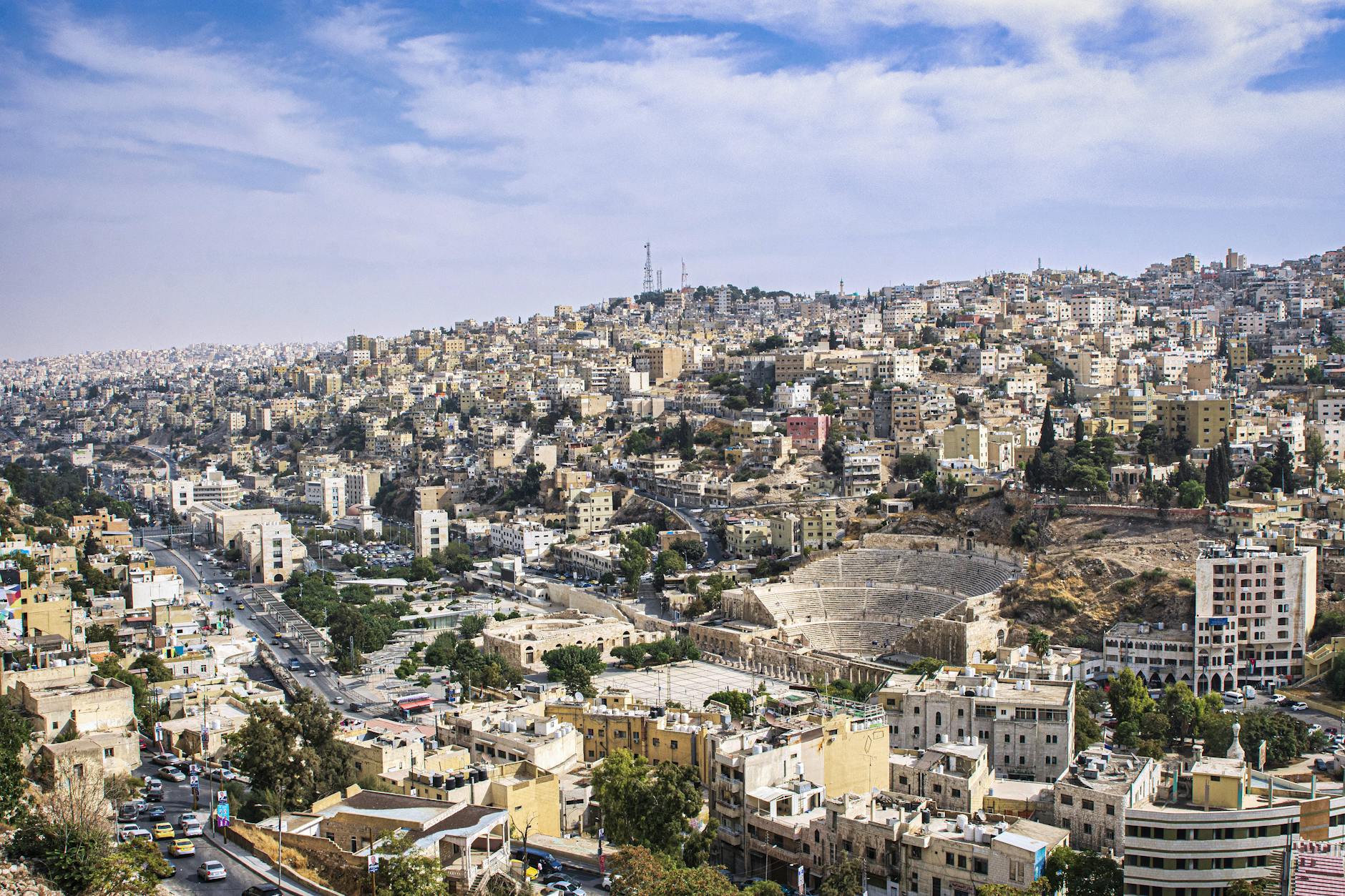
The original steep grid where Roman Al-Hashemi Street meets Ottoman souks. Roasted nut smoke drifts past gold displays, pomegranate vendors, and the 2nd-century theater that still stages concerts. Iron staircases bolted to cliffs save legs from the 45-degree incline; at the bottom, Habibah serves knafeh so hot the cheese pulls in elastic strings.Rainbow Street (Jabal Amman)
A single ridge road linking 1st to 3rd Circle, lined with 1930s houses turned cafés, bookshops, and bars that brew coffee by day, pour arak by night. Friday’s seasonal Souk Jara spills handmade lamps and vintage records onto the pavement; rooftop terraces give front-row seats for sunset calls to prayer bouncing between hills.Jabal al-Weibdeh
Amman’s answer to Montmartre: narrow lanes, limestone villas, and Darat al-Funun gallery where contemporary Arab video installations play inside 1920s courtyards. Students nurse single-origin coffee while cats nap on Ottoman arches; evening art talks roll into cheap beer gardens glowing under jacarandas.Jebel al-Ashrafiyeh
Residential ridge with the city’s widest 360° skyline for the price of a shared cab. Locals buy flatbread straight from wood-fired ovens, kids kick footballs beside 1930s mosques, and photographers camp on unmarked corners for pastel dusk layers that Instagram hasn’t found yet.Abdali
The glass-and-steel newcomer where the blue-domed King Abdullah I Mosque lets non-Muslims enter through a side door, loaning abayas in every size. Beyond its prayer halls, boulevards of cafes and co-working lofts signal Amman’s pivot toward start-ups and late-night sushi — proof the city refuses one single era.
Plan your trip
Before you go
- Getting There
- Queen Alia International Airport (AMM) sits 35 km south. JETT coaches run to Abdali terminal for 3.25 JOD; fixed-rate taxis cost 22 JOD. No rail link—this is a city built for cars and hills.
- Getting Around
- No metro, no trams—just Uber, Careem, and yellow taxis that work better than you'd expect. For the Citadel, take a taxi up and walk the 1.2 km down through Al-Balad's stair-streets. Desert castles require private transport; no public buses serve Quseir Amra.
- Climate & Best Time
- March-May hits 16-26 °C with 20 mm of rain; September-November mirrors this. July-August peaks at 30 °C and zero precipitation—ruins become frying pans. January brings 76 mm of rain and possible snow flurries.
- Language & Currency
- Arabic dominates, but English works in tourist zones. Jordanian Dinar (JOD) trades at 1.41 USD—always carry cash for taxis and souks since cards fail at the worst moments.
- Safety
- Downtown Rainbow Street and Abdali remain calm despite the March 2026 Level 3 advisory tied to regional tensions. Dress codes: cover shoulders and knees in Al-Balad; abayas and scarves provided at King Abdullah I Mosque.
Seven Hills, Seven Thousand Years
Where Bronze Age statues watched Rome rise and fall
- c. 7000 BCE
First Clay Gazes
The Ain Ghazal statues emerge from Amman's soil—32 haunting plaster faces with cowrie-shell eyes, taller than your refrigerator. These aren't fertility idols but witnesses to something we've forgotten. They stand here 4,000 years before the pyramids.
- c. 1200 BCE
Rabbath Ammon Rises
The Ammonite kingdom crowns its capital on the highest hill. Bronze Age traders carry Mycenaean pottery up the switchback paths. The name sticks for 800 years—Rabbath Ammon, 'the Capital of the Ammonites.'
- c. 1000 BCE
King David's Siege
David's armies torch the Ammonite wheat fields. The smell of burning grain drifts across seven hills for days. The city rebuilds with thicker walls—stone foundations you can still touch at the Citadel.
- c. 300 BCE
Philadelphia Is Born
Ptolemaic soldiers rename the city after Alexander's brother. The streets shift from mud brick to limestone. Greek becomes the language of contracts, but locals still whisper 'Rabbath Ammon' when they think no one's listening.
- 63 BCE
Pompey's Decapolis
Roman legions march through the valley. Philadelphia joins the Decapolis league—ten cities bound by Latin law and Greek culture. Tax collectors arrive speaking three languages, counting coin by coin.
- 130 CE
Theater Carved into Living Rock
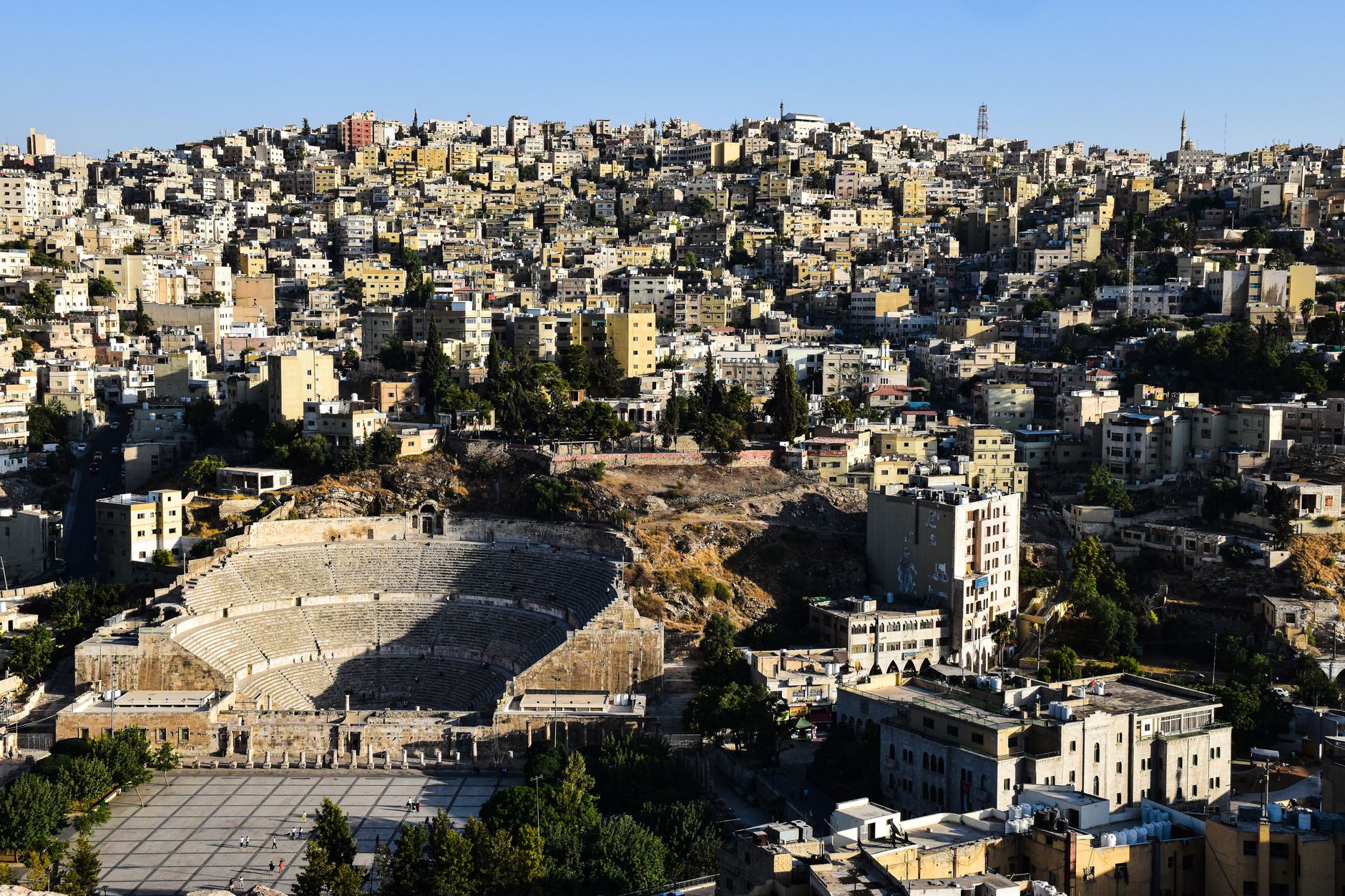
6,000 seats carved from the hillside in one decade. The acoustics still work—whisper from the top row, and someone in the orchestra hears every word. Trash collectors find clay oil lamps stamped with gladiator names.
Show the full timeline (20 moments)
- c. 180 CE
Temple of Hercules
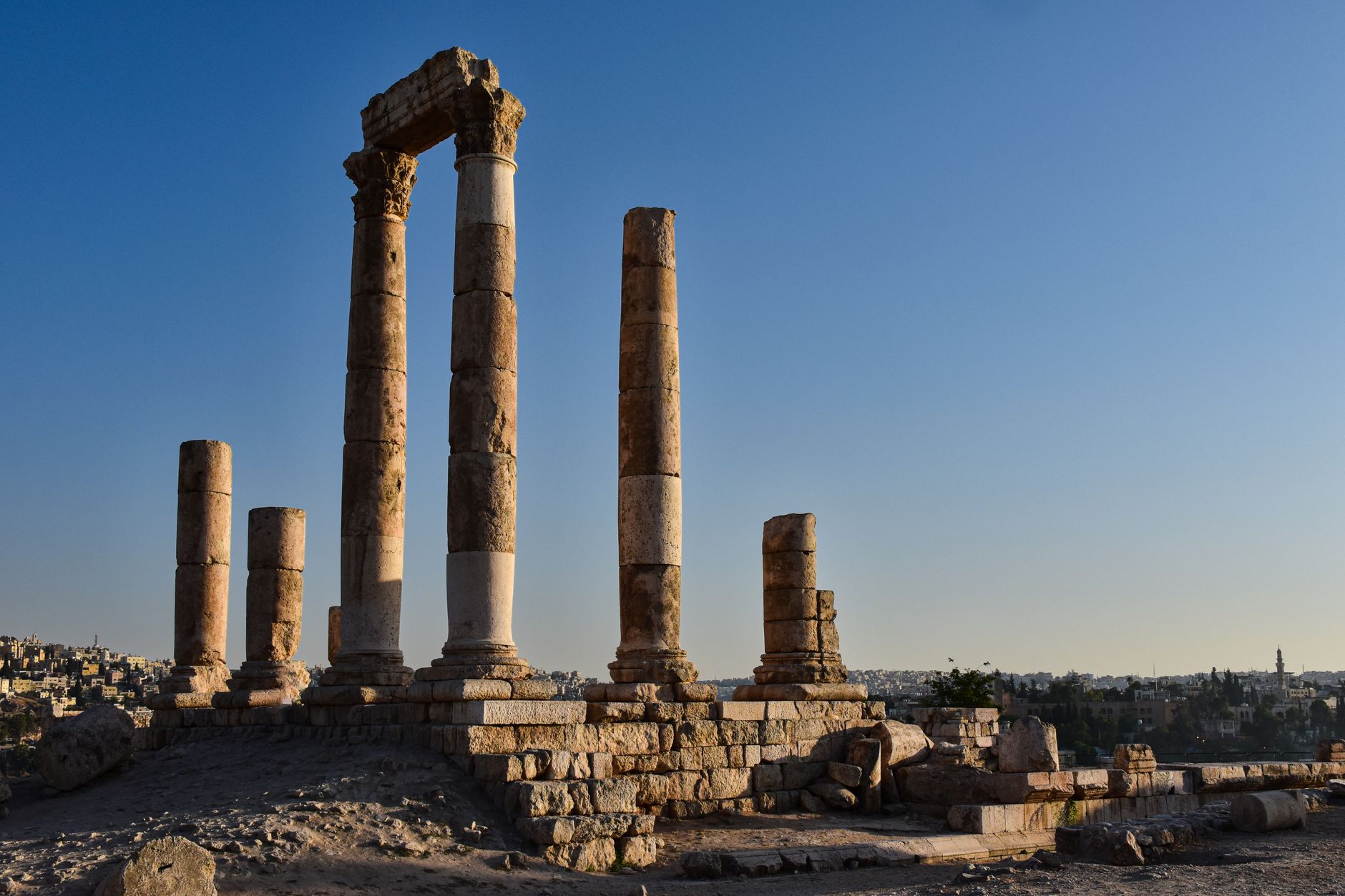
Columns rise 33 meters—taller than a ten-story building. Only six survive, but they frame the sunset perfectly. Local masons carve the lion-headed god into the capitals; their grandchildren will convert the temple into a church.
- 634 CE
Islamic Arrival
Rashidun cavalry rides through the Roman gate. No siege. The city surrenders to avoid bloodshed. Greek inscriptions on public fountains get Arabic graffiti underneath—'There is no god but God.'
- c. 700 CE
Umayyad Palace Crown
Abd al-Malik builds a palace complex above the Roman temple. The audience hall's dome is covered in gold leaf that catches the morning light from thirty miles away. Court poets compose verses comparing the city to a string of pearls.
- 723 CE
Poet Kuthayyir 'Azza
The court poet writes of 'Qastal el-Balqa'—the castle of the high plateau. His verses spread from Cordoba to Baghdad. He dies young, drunk on date wine, but his description of Amman's limestone walls becomes the city's first travel guide.
- 1516 CE
Ottoman Twilight
Sultan Selim's forces claim the Levant. Amman shrinks to a village of 400 souls. Goats graze in the Roman theater. The call to prayer echoes off stones that once heard Latin orations.
- 1878 CE
Circassian Refugees Rebuild
Ottoman authorities settle 500 Circassian families fleeing Russian persecution. They rebuild the abandoned Roman houses, plant mulberry trees, and reopen the ancient market. Their descendants still bake ekmek bread on domed clay ovens.
- 1921 CE
Hashemite Capital
Emir Abdullah I chooses Amman as his capital. The population is 5,000. British advisors draw new streets over Roman roads. The first parliament meets in a converted Ottoman barracks—the windows still have bullet holes from Arab Revolt skirmishes.
- 1935 CE
King Hussein Is Born
The future king enters the world in a modest stone house on Jabal Hussein. His mother stores his birth certificate in an empty Turkish delight tin. Five decades later, he'll die in the same city, having ruled longer than any Arab monarch.
- May 25, 1946
Independence Day
Abdullah I proclaims Jordan's independence from British mandate. The crowd in the Roman theater sings the new anthem off-key but with feeling. British flags come down; the red, white, and green rises over the Citadel for the first time.
- 1952 CE
Hussein Crowned
The 17-year-old king takes the throne after his father's assassination. He drives his own car to the coronation—a white Lincoln Continental. The city plants 7,000 jacaranda trees to mark the occasion; they bloom purple every spring.
- 1988 CE
Darat Al Funun Opens
Artist Suha Shoman converts three Ottoman villas into a gallery. The first exhibition features Jordanian painters who learned from Picasso in Paris. The courtyard fountain runs with Roman aqueduct water—still drinkable after 2,000 years.
- 1989 CE
King Abdullah I Mosque
Hussein builds a blue-domed mosque in memory of his grandfather. The dome is covered in 3,000 square meters of Turkish tiles depicting 99 names of God. Non-Muslims can enter—if they wear the provided blue robes that make everyone look like Smurfs.
- 2003 CE
Diana Karazon Wins Arab Idol
The Amman-born singer belts Fairuz classics on live TV. Her victory party spills into Rainbow Street until 4 AM. For weeks, taxi drivers play her songs on repeat—a Jordanian voice finally outselling Lebanese pop in taxis.
- 2015 CE
The Martian Filmed
Matt Damon drives a rover across Wadi Rum, then gifts it to Jordan's Royal Automobile Museum. The museum adds it between Hussein's 1952 Lincoln Cosmopolitan and Queen Elizabeth's 1984 Range Rover. Tourism jumps 14%.
Who lived here
-
Monarch · 1935–1999
King Hussein I
Born here; ruled from Raghadan Palace
He learned to drive in the palace courtyard at 14 and later raced tourists down Airport Road. Today his 1952 Aston Martin sits in the Royal Automobile Museum, still bearing the dent where he swerved to avoid a camel outside town.
-
Novelist · 1933–2004
Abdel-Rahman Munif
Born here; wrote Cities of Salt in Jabal Amman cafés
He scribbled the oil-boom epic that Saudi Arabia banned while chain-smoking on Rainbow Street before it was cool. The same cafés now serve $6 lattes to bloggers who quote him without knowing he once got kicked out for not ordering.
-
Queen Consort · born 1970
Queen Rania
Lives in Beit al-Baraka Palace, Amman
She tweets about women’s rights from a limestone villa where the previous queen kept pigeons. Walk the adjacent street at dusk and you might catch her security detail buying knafeh from the same window she queued at as a new bride in 1993.
-
Pianist & Composer · born 1979
Zade Dirani
Born here; first performed at 12 in Roman Theater
He played Chopin on a portable keyboard balanced on the theater’s ancient stones for a school talent show. Two decades later he sold out the same venue with an orchestra, proving Amman’s acoustics beat any concert hall.
Where to Eat
Where locals actually book dinner — not the tourist menus.
Insider tips
Small things that change how the city treats you.
Sunset Citadel
Taxi up to the Citadel an hour before sunset. The Hercules columns frame downtown’s concrete quilt turning rose-gold, and you’ll beat the morning tour-bus stampede.Group Mansaf
Skip solo mansaf in tourist restaurants—locals eat it communally. Join a Friday family feast through Couchsurfing or ask your hotel to call Jabri downtown; they’ll squeeze you in if you phone before noon.Iron Stair Hack
Downtown’s steep hills hide public iron staircases between King Talal and Hashemi Streets. Use them to climb in minutes what takes taxis 20; great for photos of layered Ottoman roofs without traffic.Uber After 9 PM
Yellow taxis jack up fares after 9 PM. Switch to Uber or Careem—still legal despite 2026 disruptions—and you’ll pay the daytime rate even at 2 AM.Mosque Dress Loan
King Abdullah I Mosque loans abayas and scarves free at the gate. Return them wet-wiped and you’ll skip the 5 JD rental stalls outside.
Gallery
The city, as it actually looks.




Frequently asked
Is Amman worth visiting if I’m only going to Petra?
Yes—Amman is where Jordan lives. You’ll eat mansaf at 7 AM with taxi drivers downtown, walk Roman stones that still carry bus exhaust, and hear the call to prayer echo off glass banks. Do it first; Petra makes more sense after the city explains the country.
How many days in Amman is enough?
Three full days. Day 1: Citadel, Roman Theater, downtown souks. Day 2: Desert Castles east or Jerash north. Day 3: Rainbow Street cafés, Jordan Museum, sunset from Jebel al-Ashrafiyeh. Add a fourth if you want day-trips to the Dead Sea or As-Salt.
Can I drink alcohol in Amman?
Yes, but only inside licensed hotels, bars on Rainbow Street, or Weibdeh cafés that flip to bars after 9 PM. Public drunkenness is illegal—finish your drink before stepping outside.
Is Amman safe for solo female travelers?
Generally yes; harassment is lower than regional averages. Dress elbows-to-knees downtown, use Uber/Careem at night, and sit in the back seat of taxis. Police checkpoints are routine; keep your passport photo on your phone.
Do I need cash in Amman?
Yes—falafel stalls, taxis, and souks are cash-only in dinars. Cards work at hotels and upscale restaurants; withdraw at airport ATMs for best rates and skip hotel exchanges.
Pick up where you left off
Saved and recently read places — kept on this device only.
Photo credits (11)
- AXP Photography — Pexels License (https://www.pexels.com/license/) — Source: https://www.pexels.com/photo/18717635/
- AXP Photography — Pexels License (https://www.pexels.com/license/) — Source: https://www.pexels.com/photo/18717593/
- AXP Photography — Pexels License (https://www.pexels.com/license/) — Source: https://www.pexels.com/photo/18717590/
- AXP Photography — Pexels License (https://www.pexels.com/license/) — Source: https://www.pexels.com/photo/18717637/
- Hisham Zayadneh — Pexels License (https://www.pexels.com/license/) — Source: https://www.pexels.com/photo/5749598/
- Hisham Zayadneh — Pexels License (https://www.pexels.com/license/) — Source: https://www.pexels.com/photo/5746873/
- AXP Photography — Pexels License (https://www.pexels.com/license/) — Source: https://www.pexels.com/photo/18682596/
- Sherif Emad — Pexels License (https://www.pexels.com/license/) — Source: https://www.pexels.com/photo/32549230/
- Hasan Abwini — Pexels License (https://www.pexels.com/license/) — Source: https://www.pexels.com/photo/9912973/
- heba alwahsh — Pexels License (https://www.pexels.com/license/) — Source: https://www.pexels.com/photo/11932400/
- Motaz Al Turk — Pexels License (https://www.pexels.com/license/) — Source: https://www.pexels.com/photo/37064245/
Photos may have been resized or cropped.