
Machida Athletic Stadium
TokyoJapan 35° N · 139° E Updated Apr 2026
FC Machida Zelvia finished 3rd in J1 on debut in 2024 — remarkable for a club that plays on a forested hilltop 30 minutes from Tokyo, accessible only by bus.
- Time needed
- 3–4 hours (match day); 1–2 hours (park visit only)
- Entry
- Match tickets typically ¥1,500–¥4,000; Nozuta Park entry is free
- Access
- Hilly approach on foot; 2021 back stand has elevator access
- Best season
- Spring (March–May) and autumn (September–November)
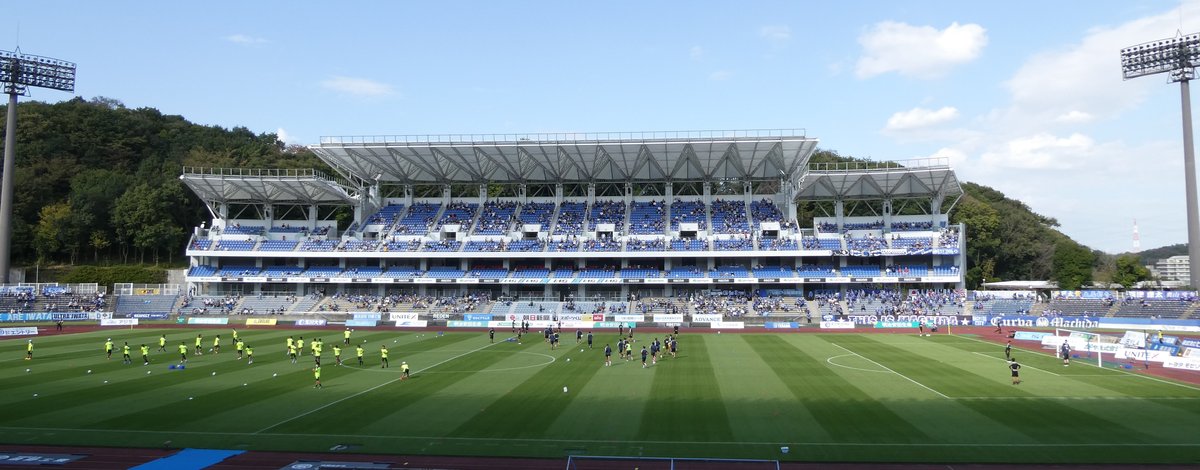
Fans call it the Castle in the Sky, and the name isn't marketing hyperbole. Machida GION Stadium sits on a forested hilltop in Tokyo's western Tama Hills, so far from the neon sprawl that wild birds circle above the pitch during warmups. This is Japan's most improbable top-flight football ground — a 15,489-seat arena reached only by bus, hidden inside Nozuta Park in Machida City, where the trees outnumber the lampposts.
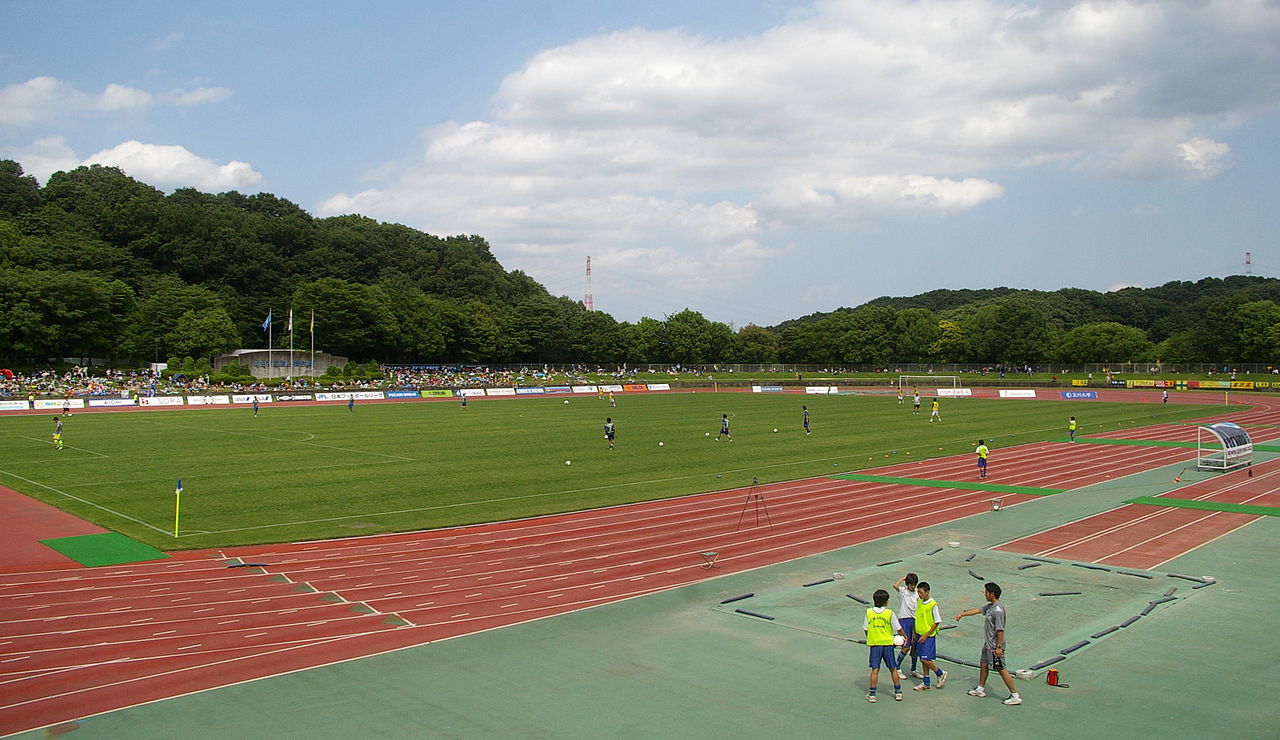
The stadium is the home of FC Machida Zelvia, a club that spent decades grinding through the lower tiers of Japanese football before storming into the J1 League in 2024 and finishing third — ahead of clubs with ten times the budget and fifty times the history. The ground itself underwent a parallel transformation, expanding from a modest 6,200-capacity athletics track with grass banks into a proper football arena between 2009 and 2021.
Getting here is part of the experience. You take the Odakyu Line to Tsurukawa Station, board a bus, and then climb a hill through woodland that feels more like rural Nagano than Tokyo. The reward is a stadium atmosphere unlike anything else in the Japanese top flight — intimate, loud, and wrapped in green canopy rather than concrete.
On non-match days, the surrounding park offers walking trails and birdsong. On match days, the forest path becomes a pilgrimage route for supporters the club poetically calls clouds surrounding their fortress. Either way, you won't forget the climb.
What to see
-
The Hilltop Approach Through Nozuta Park
The walk from the bus stop to the stadium gates is the best pre-match ritual in Japanese football. You climb through Nozuta Park's wooded slopes — dense zelkova and oak canopy, birdsong, the smell of damp earth after rain — for about fifteen minutes before the concrete of the back stand appears through the trees like a fortification. The contrast between the forest trail and the roar of 15,000 supporters is jarring in the best way. On non-match days, the park itself justifies the trip: walking trails wind through wildflower meadows and a silence that seems impossible for a city of 430,000 people within Tokyo's metropolitan boundary. -
The Back Stand
Completed in May 2021, the three-story reinforced concrete back stand is the stadium's architectural statement — 7,552 seats arranged steeply behind the goal, topped by a cantilevered roof that traps sound and pushes it back toward the pitch. During J1 matches, Zelvia's most vocal supporters pack this end, and the acoustic effect of the roof turns their chanting into something physically felt in your chest rather than merely heard. The stand is roughly the height of a six-story building. From the upper rows you can see the Tama Hills rolling westward, forest upon forest — a reminder that you're watching top-flight football in what is essentially a woodland clearing. -
Match Day at the Castle
FC Machida Zelvia's home matches are theatrical in a way that larger Japanese stadiums rarely manage. The medieval fantasy theme pervades everything: announcers reference the fortress, vendors play the role of quartermasters, and the crowd — compressed into 15,489 seats instead of the 40,000-plus capacity enjoyed by rivals like Yokohama F. Marinos or Urawa Reds — generates a density of noise that bigger grounds can only dilute. Zelvia's 2024 third-place finish turned this difficult-to-reach hilltop into a destination that draws football fans from across East Asia. The bus ride is inconvenient. That's the point.
Plan your visit
- Getting There
- There is no train station nearby — buses are your only option. On match days, take the Odakyu Line to Tsurukawa Station and catch a direct shuttle from Bus Stop #5. Non-match days require a regular city bus from either Tsurukawa or Machida Station, followed by a steep uphill walk through Nozuta Park that will take 15–20 minutes and leave you understanding why locals call this place the Castle in the Sky.
- Opening Hours
- As of 2026, the stadium and Nozuta Park grounds are generally accessible during daylight hours on non-event days for joggers and walkers using the track. FC Machida Zelvia's J1 League home matches typically run on weekends from late February through early December — check the J.League fixture calendar for exact dates and kickoff times, as evening matches under floodlights are common in summer.
- Time Needed
- A match day demands at least four hours: one hour for the bus-and-hike approach, two hours for the match itself, and another hour to leave. Budget extra time before kickoff to soak in the forest walk and the fan zone merchandise stalls — themed as medieval armory shops. On a non-match day, a casual visit to the park and stadium exterior takes about 90 minutes round trip from Tsurukawa Station.
- Tickets
- FC Machida Zelvia tickets are sold through the J.League ticket platform and convenience store kiosks (Lawson, 7-Eleven). Since their 2024 promotion to J1 and a third-place finish that earned AFC Champions League qualification, demand has surged — book well in advance for marquee fixtures. The 15,489-seat capacity is small by J1 standards, roughly a third the size of Yokohama's Nissan Stadium.
Photo Gallery



History
From Anniversary Gift to J1 Fortress
Machida City built this stadium to celebrate its own 30th birthday. Construction began in 1988, and on October 7, 1990, the gates opened on what was then a modest municipal athletics facility — an eight-lane urethane track, natural grass infield, and terraced grass banks with room for about 6,200 spectators. For its first two decades, the stadium hosted school sports days and regional track meets. Nobody was planning for professional football.
That changed when a local youth football school, founded in 1977, grew into something larger. The club that would become FC Machida Zelvia formalized its senior team in 1989, worked its way through the Tokyo Prefectural League, the Kanto League, and the Japan Football League, and by 2014 had reached the J3 — the third tier of Japanese professional football. The stadium had to keep up.
The turning point
Go Kuroda and the Three-Year Miracle
When manager Go Kuroda took charge of FC Machida Zelvia, the club was a comfortable mid-table J2 side — competitive enough to survive, not hungry enough to threaten anyone. Kuroda changed the culture. His Zelvia played aggressive, disciplined football that turned the hilltop stadium into a place opponents dreaded visiting. The bus ride up the hill started to feel like an away day in hostile territory.
On October 22, 2023, Zelvia clinched the J2 championship with 87 points and earned promotion to the J1 League for the first time in the club's history. Four months later, on February 24, 2024, forward Junya Suzuki converted a 17th-minute penalty against Gamba Osaka to score the club's first-ever top-flight goal. The match ended 1–1, but the stadium — by then expanded to 15,489 seats — was already a different place than the quiet municipal ground of 1990.
Zelvia finished their debut J1 season in third place and qualified for the 2025–26 AFC Champions League Elite. For a club that was playing prefectural-level football two decades earlier, this was roughly equivalent to Leicester City's 2016 Premier League title — a story so unlikely it would be rejected as fiction.
A Stadium That Rebuilt Itself
Between 2009 and 2021, Machida GION Stadium underwent a transformation as dramatic as the club's rise. Floodlights arrived in 2009. Fixed seats replaced the grass banks by 2012. The defining change came between 2019 and 2021, when a three-story reinforced concrete back stand rose behind one goal, adding roughly 7,500 seats and a roof. Total capacity nearly tripled from its original 6,200. Every expansion tracked a specific licensing requirement — J2 standards in 2012, J1 in 2021 — making the ground a physical record of one club's upward trajectory, each concrete tier a chapter written in poured cement.
Zelvia: A Name Rooted in the Soil
The club adopted its nickname in 2009 by fusing zelkova and salvia — the official tree and flower of Machida City, both words with Portuguese roots carried to Japan centuries ago. The choice was deliberate: this is a club that draws identity from its municipality, not a corporate sponsor. In January 2020, logistics company GION acquired the stadium's naming rights, rechristening it Machida GION Stadium (locals abbreviate it to G-Sta). GION renewed the deal in January 2026 through mid-2034 — a seven-and-a-half-year commitment that signals genuine confidence in a ground most J1 clubs would dismiss as too remote to fill.
Tips for visitors
Embrace the Climb
The 20-minute uphill walk from the bus stop through forested Tama Hills is part of the experience, not an inconvenience. FC Machida leans into this — their official branding frames arrival as a pilgrimage to a castle, and the canopy-covered trail genuinely feels like approaching a hilltop fortress rather than a football ground.Weather Preparation
The hilltop location catches wind and rain with nowhere to hide during the approach. The Main Stand and Back Stand have roofs, but the Side Stand does not — if rain threatens, choose your seat accordingly. Summer evening matches are the most comfortable; midday summer kickoffs on the exposed side can be brutal.Eat Before You Arrive
The stadium sits in a park on a forested hill — there are no restaurants within walking distance outside of match-day food stalls. Grab something at Tsurukawa or Machida Station before boarding the bus. On match days, the fan zone vendors sell standard Japanese stadium fare: yakisoba, karaage, beer.Leave Early After Matches
With 15,000 fans funneling down a single hillside path to a limited bus service, post-match queues can stretch past 45 minutes. Leaving five minutes before the final whistle — heresy for some — saves you a significant wait. Alternatively, linger in the park for 30 minutes and let the first wave clear.Photograph the Approach
The most striking images aren't inside the stadium — they're on the walk up, where the floodlight towers appear above the treeline like a structure that has no business being there. The contrast between dense woodland and a modern sports venue is genuinely surreal and photographs better than the interior.Combine with Machida City
Machida Station is a proper shopping and dining hub with two major department stores and the covered Nakamise arcade. Build the stadium visit into a half-day that includes lunch or dinner in town — the stadium alone doesn't justify a trip from central Tokyo unless you're attending a match.
Watch & Explore Machida Athletic Stadium.

Frequently asked
Is Machida GION Stadium worth visiting?
Yes, particularly if you're watching FC Machida Zelvia — the setting alone justifies the effort. The stadium sits on a forested hilltop in Nozuta Park, and the approach through woodland feels nothing like arriving at a conventional city ground. The surrounding park is free to enter year-round.
How do I get to Machida GION Stadium?
There is no direct train access — the stadium sits on a forested hilltop and is served only by bus. On match days, take the Odakyu Line to Tsurukawa Station (鶴川駅) and catch the direct shuttle from Bus Stop 5. The ride takes roughly 20 minutes from the station.
How long do you need at Machida GION Stadium?
A match day visit runs 3–4 hours including the bus journey, pre-match atmosphere, and post-match queues. Visiting Nozuta Park without a fixture, 1–2 hours covers the trails and hilltop views. The park sits within the Tama Hills and feels considerably more rural than its proximity to Tokyo would suggest.
What is the capacity of Machida GION Stadium?
The stadium holds 15,489 spectators (J.League match capacity: 15,320). The back stand alone — a three-story reinforced concrete structure completed in May 2021 — seats 7,552 people, more than the entire stadium held when it first opened in 1990.
Who plays at Machida GION Stadium?
FC Machida Zelvia, currently competing in Japan's J1 League. The club won promotion to the top flight as J2 champions in October 2023 and finished 3rd in their debut J1 season in 2024, qualifying for the 2025–26 AFC Champions League Elite — an extraordinary result for a newly promoted side.
What is the 'Castle in the Sky' at Nozuta?
It's the official matchday concept FC Machida Zelvia have used since 2021, branding the stadium as 天空の城 野津田 (Castle in the Sky: Nozuta). Arriving is officially called 'ご来城' (arrival at the castle), merchandise stalls are framed as 'weapon shops,' and supporters are cast as the clouds surrounding the fortress on the hill.
When was Machida GION Stadium built?
Construction began in 1988 and the stadium opened on October 7, 1990, as part of Machida City's 30th municipal anniversary celebrations. The most recent major expansion — a three-story back stand — was completed in May 2021, bringing total capacity from roughly 10,000 to 15,489.
How far is Machida GION Stadium from central Tokyo?
Roughly 30–40 minutes from Shinjuku by the Odakyu Line to Tsurukawa Station, plus a 20-minute bus ride through the hills. The total journey from central Tokyo typically runs 50–60 minutes — and the final stretch through the forested Tama Hills makes it feel considerably further.
Sources & attribution 7
- Japanese Wikipedia — Machida GION Stadium (町田GIONスタジアム) — Primary source for construction dates, opening date (October 7, 1990), stand-by-stand capacity breakdown, renovation timeline, and JAAF Category 3 certification details
- GION Co. Corporate Website — Confirmed naming rights acquisition (January 1, 2020), renewal announcement (January 20, 2026), and new contract period (January 1, 2027 – June 30, 2034)
- J.League Official — FC Machida Zelvia — Club history, J2 championship date (October 22, 2023, 87 points), first J1 home match result (February 24, 2024 vs. Gamba Osaka, 1–1)
- ESPN — FC Machida Zelvia coverage — J1 promotion confirmation, Junya Suzuki's first top-flight goal (17th-minute penalty), 2024 J1 3rd-place finish and AFC Champions League qualification
- Nozuta Park Official Site — 2009–2014 renovation details, JAAF Category 3 certification, and J.League J2 licensing compliance improvements
- ASILLA — Anora AI Crowd Detection System — Confirmed installation of Anora AI-powered discomfort detection system at Machida GION Stadium
- Tokyo Shimbun Digital — Feature on the 'Castle in the Sky: Nozuta' branding and the matchday experience for supporters making the journey through the Tama Hills
Built from cited sources · see the method · How we make our guides →
More in Tokyo.
422 places to discover — a few worth pairing.

Pick up where you left off
Saved and recently read places — kept on this device only.
Photo credits (2)
- Machida-banner — Waka77 — CC BY-SA 3.0 (https://creativecommons.org/licenses/by-sa/3.0/) — Source: https://commons.wikimedia.org/wiki/File:Machida-banner.jpg
- Machidashiriku2013-1 — Waka77 — CC BY-SA 3.0 (https://creativecommons.org/licenses/by-sa/3.0/) — Source: https://commons.wikimedia.org/wiki/File:Machidashiriku2013-1.JPG
Photos may have been resized or cropped.