Osaka.

34° N · 135° E Japan

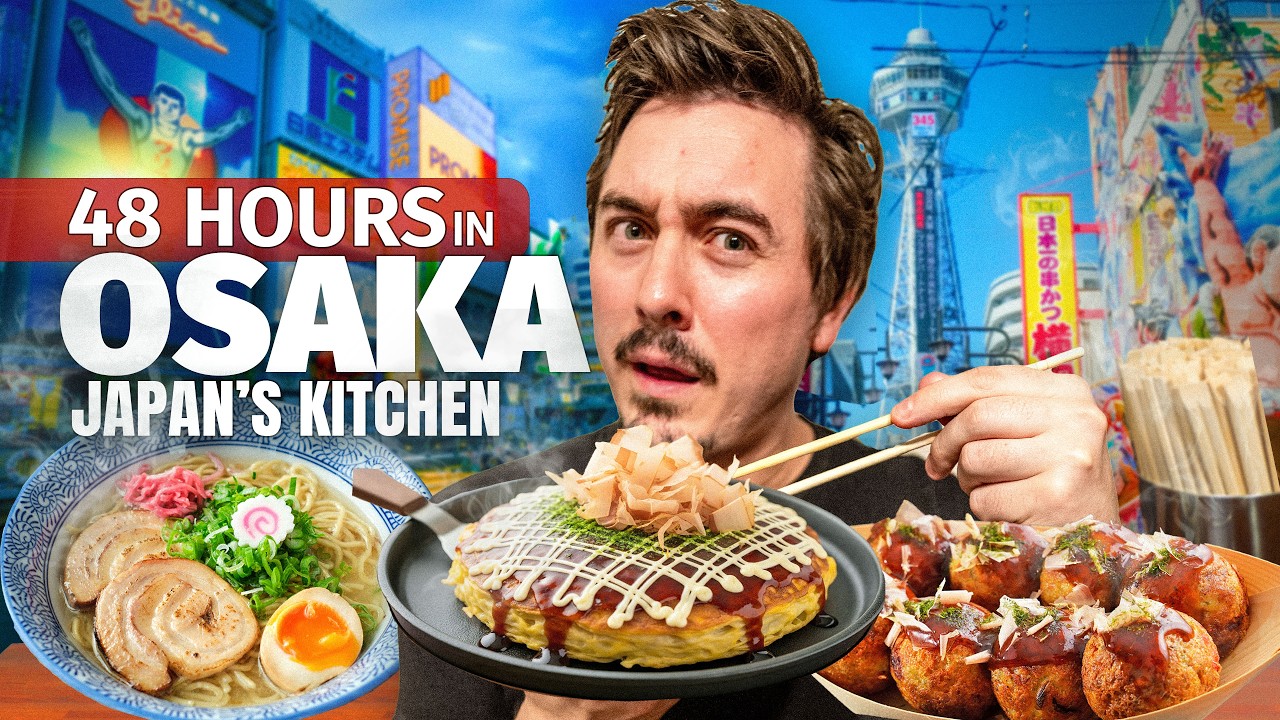
The first thing that hits you in Osaka is the smell of takoyaki batter sizzling on a 300-yen griddle at 11 p.m., mixed with the low roar of salarymen laughing too loudly in a standing bar no wider than a train carriage. This is Japan’s anti-Kyoto, a city that never learned to whisper. While Tokyo chases the future and Kyoto polishes its past, Osaka simply eats, drinks, and argues about which kushikatsu joint has the crispier panko.

Listen to the guide — 20 h 36 min Open the map
Osaka, Japan
Osaka · Japan
12
attractions
3-5 days
trip length
Spring (April–May) and Autumn (October–November)
best season
EN · EN
narration

03 Top tickets in Osaka.

Book ahead

Curated from places in this city. Same price as official sites.

Osaka Kickstart: Hotspots & Hidden Gems Tour
Osaka Castle
Osaka Kickstart: Hotspots & Hidden Gems Tour
4.9 from €37.66
Osaka Castle Walking Tour and Castle Tower Admission
Osaka Castle
Osaka Castle Walking Tour and Castle Tower Admission
5.0 from €27.69
Ultimate Osaka Walking Tour: Castle, Dotonbori & Hidden Gems
Shinsaibashi-Suji Shopping Street
Ultimate Osaka Walking Tour: Castle, Dotonbori & Hidden Gems
5.0 from €70.97
Private Osaka Tour with a Local, Custom Highlights & Hidden Gems
Shinsaibashi
Private Osaka Tour with a Local, Custom Highlights & Hidden Gems
4.8 from €61.05
Osaka Highlights Walking Tour: Castle, Dotonbori & Hidden Gems
Shinsaibashi
Osaka Highlights Walking Tour: Castle, Dotonbori & Hidden Gems
5.0 from €54.59
Walk Osaka in 4 Hours: Castle, Dotonbori, Highlights – Top Spots
Osaka Castle
Walk Osaka in 4 Hours: Castle, Dotonbori, Highlights – Top Spots
4.9 from €44.31

Prices shown are indicative — final pricing and availability are confirmed at checkout. Audiala may receive a commission from bookings made via these links.

01 An introduction

synthesized from 240+ sources ·

OThe first thing that hits you in Osaka is the smell of takoyaki batter sizzling on a 300-yen griddle at 11 p.m., mixed with the low roar of salarymen laughing too loudly in a standing bar no wider than a train carriage. This is Japan’s anti-Kyoto, a city that never learned to whisper. While Tokyo chases the future and Kyoto polishes its past, Osaka simply eats, drinks, and argues about which kushikatsu joint has the crispier panko.

Locals wear their motto like a badge: kuidaore. Eat until you drop. The city has spent centuries perfecting the art of turning simple ingredients into minor religious experiences. Octopus balls with a molten center. Cabbage pancakes grilled until the edges crackle. Deep-fried skewers you double-dip at your peril. The food isn’t delicate. It’s honest, loud, and impossible to forget.

Yet beneath the neon of Dotonbori and the salaryman roar of Tenma lies something older. The Mozu-Furuichi Kofun Group, 49 keyhole-shaped burial mounds built between the 3rd and 6th centuries, sit so quietly in Sakai that most visitors never know they’re standing on top of an emperor’s tomb. The contrast is pure Osaka: ancient silence two stops from controlled chaos.

Budget Friendly Photography Hotspot

02 Why Osaka.

What makes this place worth slowing down for.

Osaka Castle

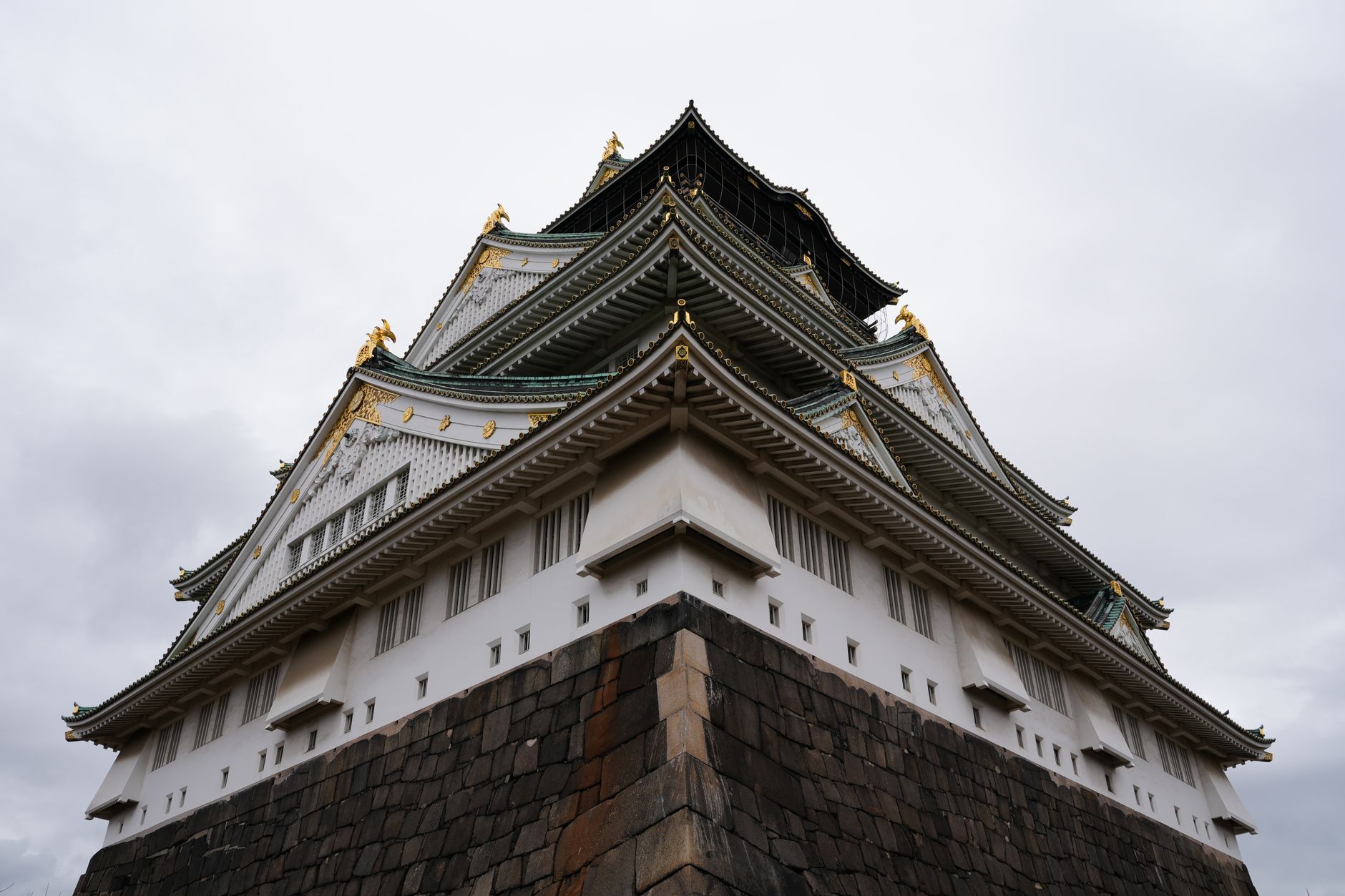
The five-story black-and-gold keep rises above a 15th-century stone base wide enough to swallow two city buses. Stand on the top floor at 4pm and watch the sun drop behind the surrounding moat while salarymen eat taiyaki on the grass below. The contrast between 1583 military engineering and 2026 picnics never gets old.

Kuidaore Culture

Locals still live by the 400-year-old motto of eating until you go broke. The smell of takoyaki batter and smoky kushikatsu drifts from alley carts at 11pm the same way it did when salarymen wore wooden geta. Come hungry. Leave with opinions.

Umeda Sky Building

Two 173-meter towers connected 170 meters up by a floating circular garden. The glass tube escalators feel like boarding a spaceship inside a 1980s Japanese anime. On clear days the observation deck shows you why Kansai airport was built on a man-made island 38 kilometers away.

Mozu-Furuichi Kofun

Forty-nine keyhole-shaped imperial tombs from the 3rd to 6th century, some longer than the Forbidden City's main hall. Most visitors never see them. The largest, Daisen Kofun, measures 486 meters and is still off-limits to archaeologists because the emperor's family claims it. Ancient power, quietly intact.


03 Places to Visit.

Not every monument, just the ones we'd walk you past ourselves.

Osaka Castle
Editor's pick
01 · Place

Osaka Castle

Osaka Castle, known as 大阪城 (Ōsaka-jō) in Japanese, is a historical landmark that stands as a testament to Japan's rich cultural heritage and tumultuous history.

Umeda Sky Building
02 Place

Umeda Sky Building

Osaka, Japan, is a city renowned for its blend of traditional culture and modern innovation, and one of its most iconic structures is the Umeda Sky Building.

03 Place

Tsurumi-Ku

Nestled in the heart of Osaka, Japan, Tsurumi Ryokuchi Park stands as a testament to environmental rejuvenation and international collaboration.

04 Place

Orix Theater

Nestled in the lively Nishi-ku district of Osaka, Japan, the Orix Theater stands as a premier cultural and entertainment landmark that seamlessly blends rich…

Shinsaibashi-Suji Shopping Street
05 Place

Shinsaibashi-Suji Shopping Street

Welcome to 心斎橋筋商店街 (Shinsaibashi-suji Shopping Street), a bustling arcade in the heart of Osaka-shi, Japan.

06 Place

Osaka Castle Park

Osaka Castle Park stands as one of Japan’s most iconic and historically significant landmarks, drawing millions of visitors annually who seek to immerse…

Shitennō-Ji
07 Place

Shitennō-Ji

Nestled in the vibrant city of Osaka, Shitenno-ji (四天王寺) is a testament to Japan's rich cultural and religious history.

All 96 places in Osaka

04 Neighborhoods.

Where to wander, by quarter — each with its own rhythm.

01

Dotonbori

The neon heartbeat. The giant moving crab, the Glico Running Man sign lit since 1935, and the canal that reflects it all in oily streaks of pink and gold. Come at night when the takoyaki vendors are working their 400-degree griddles and the air smells like grilled octopus and cheap beer. It’s touristy for a reason. Just don’t expect subtlety.

02

Shinsekai

Built in 1912 as a New World entertainment district, it now feels like a charmingly scruffy time machine. Tsutenkaku Tower looms over streets thick with kushikatsu shops. The no double-dipping rule is sacred here. Locals claim the takoyaki tastes better in these alleys than anywhere in Dotonbori. They might be right.

03

Umeda

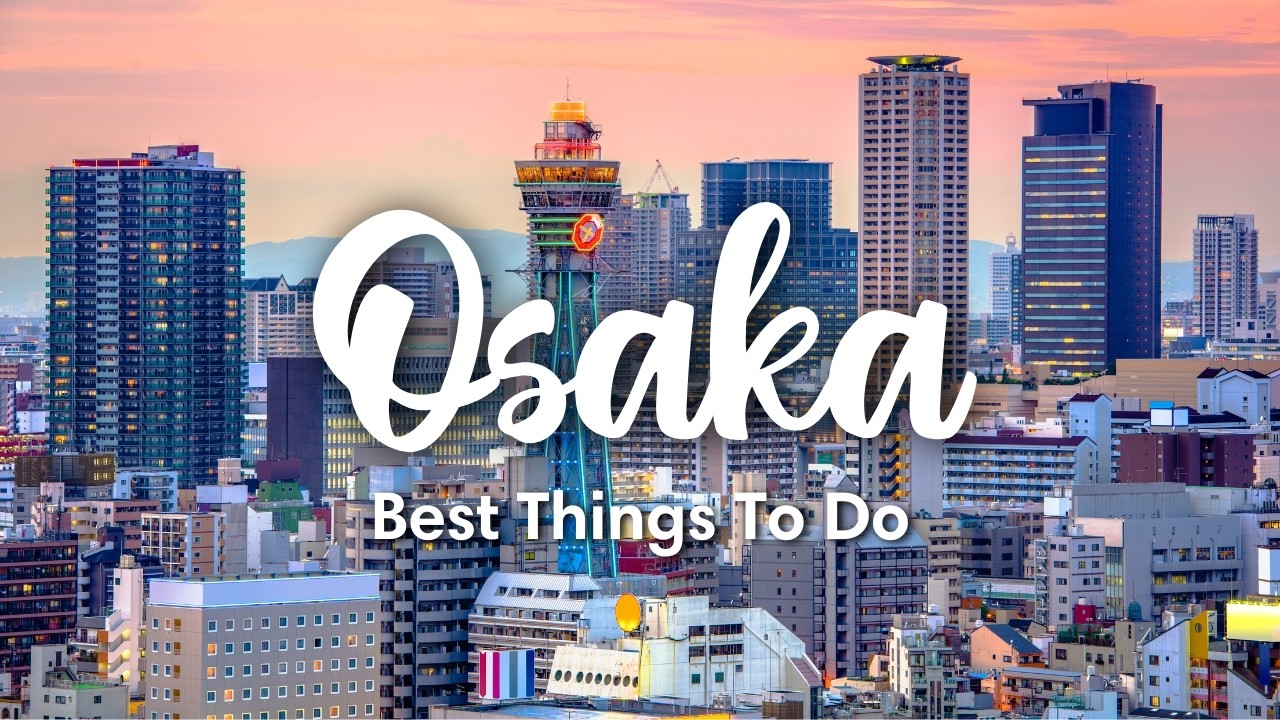
The northern business district where the Umeda Sky Building’s floating garden observatory hangs 170 meters up, connected by those surreal glass tube escalators. Department stores, underground malls, and the occasional red-brick survivor from the Meiji era hide between glass towers. This is where Osaka puts on its serious face before going drinking.

04

Tenma

The locals’ drinking district. Two-point-six kilometers of Tenjinbashisuji Shopping Street feed into narrow alleys packed with tachinomiya standing bars. Salarymen in suits stand shoulder to shoulder with artists and off-duty chefs. The vibe is after-work honest. No cocktail lists, just cold beer and conversation that starts whether you want it to or not.

05

Fukushima

Just west of Umeda, this former industrial strip has become the thinking person’s bar hop. Small-plate izakayas occupy converted warehouses. The light is lower, the music better, the crowds thinner than Tenma. It’s where Osakans go when they want to drink without performing for tourists.

06

Namba & Shinsaibashi

The southern commercial heart where covered arcades stretch for blocks and department stores compete with underground food halls. Hozenji Yokocho alley hides atmospheric okonomiyaki restaurants steps from the chaos. At night the energy shifts toward clubs in Higashi-Shinsaibashi that simply refuse to close.

07

Karahori

Preserved nagaya longhouses from another century now house independent coffee roasters and workshops. The light falls differently here, filtered through wooden lattices and quiet courtyards. It’s the Osaka that moves at the speed of an afternoon pour-over instead of a standing bar at midnight.

08

Nakanoshima

The elegant island district between two rivers where the 1913 Osaka City Central Public Hall stands in red brick and the underground National Museum of Art lets natural light pour into César Pelli’s subterranean galleries. Grand Green Osaka is still rising here. The contrast between 19th-century Western ambition and 21st-century Japanese restraint is perfect.

Historical Timeline

The Merchant City That Refused to Stay Down

From imperial granary to bombed-out phoenix

Ancient Foundations
5th century CE

Settlement at the Water's Edge

The first clusters of homes appeared where the Yodo River meets the sea. Merchants and monks arrived from the continent bringing iron, Buddhism, and writing. Osaka began its long habit of absorbing foreign ideas before anyone in Kyoto knew they existed.

593

Prince Shotoku Builds Shitennoji

Prince Shotoku ordered Japan's first full-scale Buddhist temple on the Uemachi Plateau. The scent of fresh cypress and incense drifted across the plain. This single act planted both religion and continental learning deep into Osaka soil.

645

Naniwa Palace Becomes Capital

Emperor Kotoku moved the imperial court to Naniwa. For a few brief years the emperor's palace stood here, its tiled roofs reflecting in the canals. The decision confirmed Osaka's role as gateway between Japan and the wider world.

Sengoku Era
1496

The Warrior Monks Raise Ishiyama Honganji

Rennyo built a temple-fortress on the same plateau. Its massive stone walls and moats turned faith into firepower. For nearly a century the Pure Land sect ruled Osaka like a city-state.

1580

Nobunaga Burns the Honganji

After ten grinding years of siege, Oda Nobunaga's army finally torched the temple complex. Black smoke rolled across the city for days. The plateau lay in ruins, waiting for its next ambitious owner.

Azuchi-Momoyama Period
1583

Hideyoshi Raises Osaka Castle

Toyotomi Hideyoshi began piling granite blocks the size of small houses. The keep soared eight stories above the plain, its black and gold walls glittering after rain. He had turned a smoking ruin into the strongest fortress in Japan.

1615

The Summer Siege Ends a Dynasty

Tokugawa Ieyasu's 155,000 troops stormed the castle after weeks of cannon fire. The Toyotomi clan died in the flames along with their dream. Osaka's first golden age ended in ashes and silence.

Edo Period
1683

Yukichi Fukuzawa Studies at Tekijuku

The teenage Fukuzawa arrived at Ogata Koan's school of Dutch medicine. He spent nights hunched over oil lamps translating Western texts. The knowledge he absorbed here later helped Japan survive the modern world.

c. 1700

Osaka Becomes the Kitchen of Japan

Rice from every province flowed into the city's warehouses along the canals. Merchants set the national price of grain each morning in the Dojima Exchange. Kyoto and Edo ate what Osaka allowed them to eat.

c. 1720

Bunraku and Kabuki Find Their Voice

Puppet theaters along the Dotonbori canal perfected Joruri chanting while actors developed a distinctly Osaka style of Kabuki. The smell of grilled squid mixed with the rhythm of wooden clappers. Culture became commerce here.

Meiji Era
1872

Yasunari Kawabata Is Born in Kita

Kawabata entered the world in Osaka's northern district, orphaned young. The city's particular loneliness and its sudden flashes of beauty would surface decades later in his spare, devastating prose.

1889

Osaka Incorporates as a Modern City

The old merchant town officially became a municipality. Chimneys already outnumbered temple roofs. The city traded its wooden past for brick and ambition almost overnight.

1903

Japan's First Streetcars Rattle Through Tennoji

Electric trams began running the same year as the National Industrial Exposition. Sparks flew from overhead wires at night. Osaka had declared itself Japan's workshop.

Modern Era
1926

Osamu Tezuka Is Born in Toyonaka

The boy who would become manga’s god grew up drawing on the floor of his family’s house while listening to air-raid sirens. Osaka’s frantic postwar energy later poured straight into the panels of Astro Boy.

1945

Fire Raids Erase a Third of the City

American B-29s dropped 1,500 tons of incendiaries in a single night. Wooden neighborhoods burned so fiercely they created firestorms. Survivors emerged to a landscape of chimneys standing in fields of ash.

1970

Osaka Hosts Asia's First World's Fair

The Expo '70 site in Suita buzzed with 64 million visitors. The iconic Tower of the Sun stared down at crowds with its three faces. The event announced that the ruined city had not only recovered, it was ready to lead.

1989

Matsushita Konosuke Dies

The founder of Panasonic who once sold bicycle lamps from a tiny workshop in Osaka passed away. His empire had helped rebuild Japan and then flooded the world with affordable electronics. The city he transformed now exported its inventions globally.

Contemporary Period
2014

Abeno Harukas Pierces the Sky

The 300-meter tower opened in Abeno, briefly the tallest building in Japan. From its observatory you can see the curve of the Kansai plain where kofun mounds still rise among suburban roofs. Old burial grounds and new ambition share the same horizon.

2025

Osaka Prepares for Another World's Expo

Construction cranes swarm Yumeshima island for Expo 2025. The city that burned to the ground twice is once again betting on spectacle and renewal. Some locals roll their eyes. Others remember 1970 and smile.

Present Day

06 Who lived here.

The people who shaped the city — and were shaped by it.

Warrior and unifier 1537–1598

Toyotomi Hideyoshi

Built Osaka Castle in 1583

Hideyoshi turned a burned-out temple site into Japan’s most formidable fortress in 1583. He understood Osaka’s strategic position at the crossroads of trade routes. Walking the castle grounds today, you can almost hear the echoes of the 1615 siege that ended his clan’s rule.

Manga artist 1928–1989

Osamu Tezuka

Born and raised in greater Osaka

Born in Toyonaka and shaped by the city’s postwar energy, Tezuka created Astro Boy in 1952 and basically invented modern manga. The frantic pace of Osaka’s streets and its mix of old and new appear throughout his work. He would probably smile at the giant Gundam statues now scattered around the city.

Tennis champion born 1997

Naomi Osaka

Born in Osaka

Born in the city to a Japanese mother from Osaka, Naomi took the family name that now appears on billboards across town. She learned to hit a ball in nearby courts before the world knew her name. The city still claims her even when she’s winning Grand Slams on the other side of the planet.

Educator and philosopher 1835–1901

Yukichi Fukuzawa

Studied at Tekijuku school in Osaka

Fukuzawa studied Western science at Ogata Kōan’s Tekijuku school here before founding Keio University and helping drag Japan into the modern age. The school’s spirit of practical learning still feels present when you watch young salarymen devouring new skills in tiny standing bars after work.

08 Where to Eat.

Where locals actually book dinner — not the tourist menus.

Kushikatsu Agetenka Kushikatsu Agetenka
Local favorite €€

Kushikatsu Agetenka

4.5 View
Orobianco Orobianco
Local favorite €€

Orobianco

4.5 View
Ginpei Kitashinchi Branch Ginpei Kitashinchi Branch
Local favorite €€

Ginpei Kitashinchi Branch

4.2 View
Cacaotier Gokan Cacaotier Gokan
Cafe €€

Cacaotier Gokan

4.3 View
Streamer Coffee Company Shinsaibashi Streamer Coffee Company Shinsaibashi
Cafe €€

Streamer Coffee Company Shinsaibashi

4.3 View
Hotel Monterey Grasmere Osaka Hotel Monterey Grasmere Osaka
Quick bite €€

Hotel Monterey Grasmere Osaka

4.2 View

09 Insider tips.

Small things that change how the city treats you.

Never Double Dip

In Shinsekai kushikatsu restaurants the communal sauce is strictly one-way. Dip once and only the first 2cm of your skewer. Locals will notice if you break this rule.

Visit in October

October brings 20.1°C days with low humidity and the first autumn colours at Minoh Park. Avoid June–August when temperatures hit 29.9°C and rain is constant.

Skip the Tip

Tipping is unknown here and can confuse staff. Pay the exact amount on the bill. Your server will thank you for understanding local etiquette.

Get an ICOCA

Load an ICOCA card at Kansai Airport and tap it everywhere: Nankai Rapi:t to Namba in 40 minutes, Metro, buses, and even vending machines. Apple Wallet works for iPhone users.

Mind the Noise

Osaka Tourism Bureau now runs campaigns against loud talking on trains and improper rubbish disposal. Speak softer than you would in other cities.

Buy Osaka Amazing Pass

The pass gives unlimited subway and bus rides plus entry to 40 attractions including the Aquarium and Abeno Harukas observatory. It pays for itself in two days.

10 Watch.

A few films to set the scene before you go.

5 Must Try Japanese Foods in Osaka 🇯🇵
Abroad in Japan

5 Must Try Japanese Foods in Osaka 🇯🇵

OSAKA Food Guide | 20 Places to Eat & Drink (With Prices!)
Locavore Eats

OSAKA Food Guide | 20 Places to Eat & Drink (With Prices!)

Our ULTIMATE Osaka, Japan FOOD tour! 🇯🇵 (10+ dishes!)
Adventures of A+K

Our ULTIMATE Osaka, Japan FOOD tour! 🇯🇵 (10+ dishes!)

OSAKA, JAPAN (2026) | 10 Awesome Things To Do In & Around Osaka (+ Travel Tips)
World Wild Hearts

OSAKA, JAPAN (2026) | 10 Awesome Things To Do In & Around Osaka (+ Travel Tips)

12 Frequently asked

Is Osaka worth visiting?

Yes, if you care about food and real Japanese city life more than polished temples. Osaka’s “kuidaore” culture means the best meals of your trip will probably happen in a back alley at 11pm. The city feels lived-in and friendly in a way Kyoto rarely does.

How many days do you need in Osaka?

Three full days let you cover Osaka Castle, Dotonbori at night, the Aquarium, and still have time for Shinsekai or Tenma bar hopping. Add a fourth day if you want a proper day trip to Nara or Kyoto. Five days is ideal.

How do I get from Kansai Airport to Osaka city centre?

Take the Nankai Airport Express or Rapi:t train straight to Namba in 40–50 minutes. JR Haruka goes to Tennoji or Shin-Osaka if you’re staying in Umeda. Both are faster and cheaper than the limousine bus unless you have heavy luggage.

Is Osaka safe for tourists?

Osaka is safe by big-city standards but avoid Nishinari-ku (Kamagasaki) at night and watch your belongings in crowded nightlife areas around Namba and Shinsekai. Standard urban awareness is enough.

Is Osaka expensive to visit?

Osaka is noticeably cheaper than Tokyo for food and transport. You can eat extremely well for ¥1,000–1,500 per meal. The Osaka Amazing Pass makes sightseeing affordable. Budget travellers do very well here.

What is the best area to stay in Osaka?

Choose Namba/Shinsaibashi if you want neon, food and nightlife outside your door. Umeda works better for transport connections and slightly quieter evenings. Both beat staying further out.

Ready to book?

03 Top tickets in Osaka.

Book ahead

Curated from places in this city. Same price as official sites.

Osaka Kickstart: Hotspots & Hidden Gems Tour
Osaka Castle
Osaka Kickstart: Hotspots & Hidden Gems Tour
4.9 from €37.66
Osaka Castle Walking Tour and Castle Tower Admission
Osaka Castle
Osaka Castle Walking Tour and Castle Tower Admission
5.0 from €27.69
Ultimate Osaka Walking Tour: Castle, Dotonbori & Hidden Gems
Shinsaibashi-Suji Shopping Street
Ultimate Osaka Walking Tour: Castle, Dotonbori & Hidden Gems
5.0 from €70.97
Private Osaka Tour with a Local, Custom Highlights & Hidden Gems
Shinsaibashi
Private Osaka Tour with a Local, Custom Highlights & Hidden Gems
4.8 from €61.05
Osaka Highlights Walking Tour: Castle, Dotonbori & Hidden Gems
Shinsaibashi
Osaka Highlights Walking Tour: Castle, Dotonbori & Hidden Gems
5.0 from €54.59
Walk Osaka in 4 Hours: Castle, Dotonbori, Highlights – Top Spots
Osaka Castle
Walk Osaka in 4 Hours: Castle, Dotonbori, Highlights – Top Spots
4.9 from €44.31

Prices shown are indicative — final pricing and availability are confirmed at checkout. Audiala may receive a commission from bookings made via these links.

13Before you go

Practical Information

Flight

Getting There

Kansai International Airport (KIX) sits 38 km southwest on an artificial island. The Nankai Rapi:t whisks you to Namba in 39 minutes. JR Haruka reaches Shin-Osaka in 49 minutes and Tennoji in 30. Most international flights still arrive at KIX in 2026; Itami (ITM) handles domestic routes only.

Directions transit

Getting Around

Osaka Metro runs eight lines with English signage on every platform. ICOCA cards work on every train, bus, and even vending machines. The Osaka Amazing Pass (¥2,800 for 1 day, ¥3,600 for 2) covers unlimited subway rides plus 40 attractions. Apple Wallet users can add ICOCA directly in 2026.

Thermostat

Climate & Best Time

Spring (April–May) averages 12–20°C with sudden rain. Summers hit 29°C and 80% humidity from June to August. October and November bring 15–22°C days and the best light for photography. Avoid Golden Week in late April and Obon in mid-August when every train feels like rush hour.

Shield

Safety

Osaka remains one of Japan's safest major cities for visitors. Avoid Kamagasaki in Nishinari-ku after dark, especially near the Airin district. The neon streets of Shinsekai and parts of Namba see occasional pickpocketing after midnight. Standard city awareness is enough.

Take Osaka with you

20 h 36 min of Osaka,
downloaded once.

96 places, one continuous walking route. Free with your first city.

Get this guide on the app Open in browser

All Places to Visit.

96 places to discover

Osaka Castle
Place

Osaka Castle

Umeda Sky Building
Place

Umeda Sky Building

Place

Tsurumi-Ku

Place

Orix Theater

Shinsaibashi-Suji Shopping Street
Place

Shinsaibashi-Suji Shopping Street

Place

Osaka Castle Park

Shitennō-Ji
Place

Shitennō-Ji

Ebisu Bridge
Place

Ebisu Bridge

Shinsaibashi
Place

Shinsaibashi

Place

Tempozan Ferris Wheel

Hirakata Park
Place

Hirakata Park

Place

Tower of the Sun

Theater Brava!
Place

Theater Brava!

Place

National Bunraku Theatre

Naniwa Palace
Place

Naniwa Palace

Place

Shin Umeda City

Tenma Bridge
Place

Tenma Bridge

Place

Nakanoshima Park

Osaka Museum of History
Place

Osaka Museum of History

Place

Nifrel

Kita-Ku
Place

Kita-Ku

Yoshimoto Manzai Theater
Place

Yoshimoto Manzai Theater

Tsurumiryokuchi Expo '90 Commemorative Park
Place

Tsurumiryokuchi Expo '90 Commemorative Park

Hollywood Dream – The Ride
Place

Hollywood Dream – The Ride

Place

Shin-Umeda Shokudogai

Place

Hommachi Bridge

Place

The Tower Osaka

Place

Sakuranomiya Park

Place

Yes Theater

Place

Osaka Castle Band Shell

Place

Nmb48

Place

Aioi Nissay Dowa Insurance Phoenix Tower

Pias Tower
Place

Pias Tower

Place

Umeda Dt Tower

Place

Sakuranomiya Bridge

Higo Bridge
Place

Higo Bridge

Place

Ōe Bridge

Nagara Bridge, Osaka
Place

Nagara Bridge, Osaka

Place

Gate Tower Building

Place

Crystal Tower (Osaka)

Farmer'S Bridge
Place

Farmer'S Bridge

Farmer'S Bridge
Place

Farmer'S Bridge

Kyocera Dome Osaka
Place

Kyocera Dome Osaka

Yodogawa Great Bridge (Route 2)
Place

Yodogawa Great Bridge (Route 2)

Osaka Prefectural Gymnasium
Place

Osaka Prefectural Gymnasium

Osaka-Jō Hall
Place

Osaka-Jō Hall

Place

Nhk Osaka Hall
Place

Nhk Osaka Hall

Showing 48 of 96 — search any place to jump straight there.