What Tsūtenkaku is
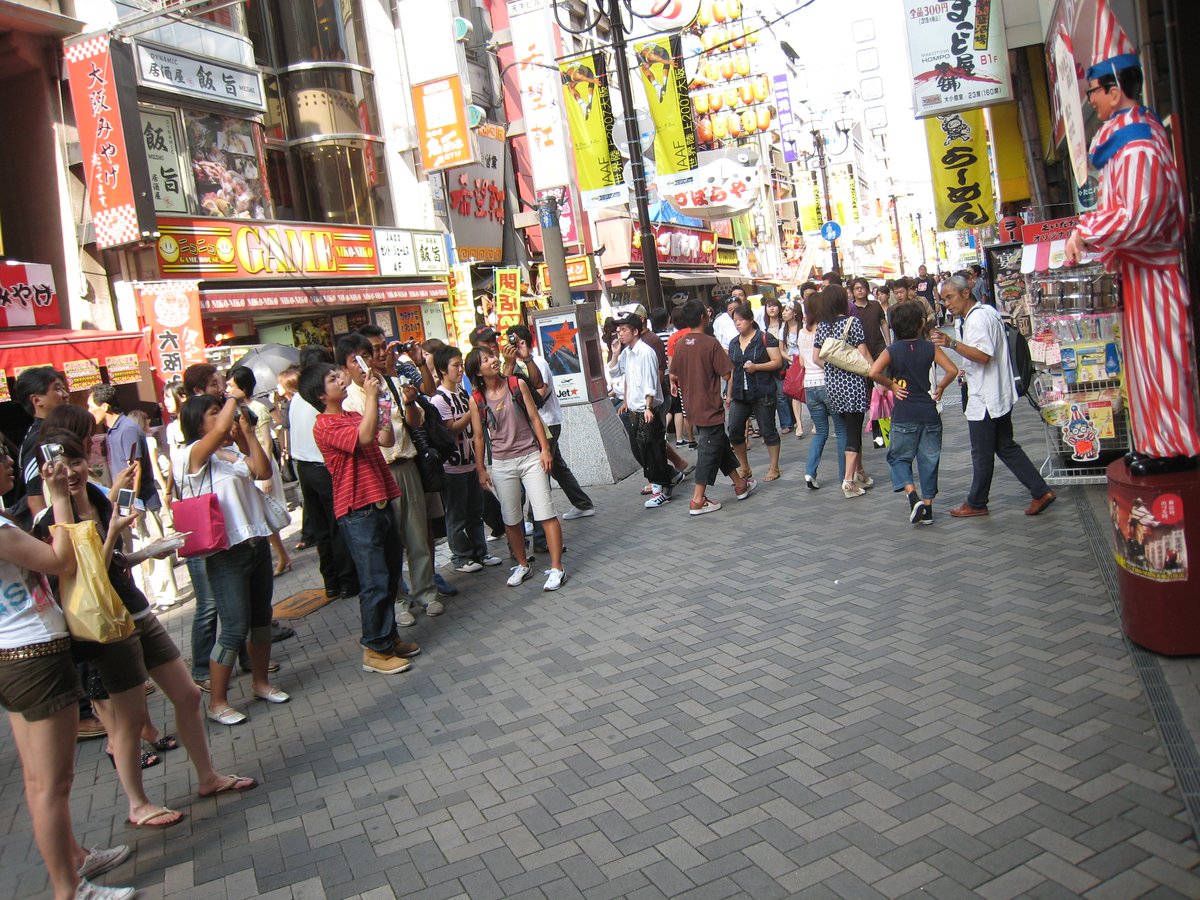
Tsūtenkaku, whose name means “Tower Reaching Heaven,” is a landmark in Osaka’s Shinsekai district and a symbol of the city’s resilience and modernization. It is registered as a national tangible cultural property. The tower and the surrounding neighborhood reflect Osaka’s blend of tradition and modernity, with a retro atmosphere of neon lights, arcades, and traditional eateries alongside modern attractions (Osaka.com).
History
The original tower
Tsūtenkaku was built in 1912, during Japan’s Meiji-era modernization. Modeled after the Eiffel Tower and the Arc de Triomphe, the original structure stood 64 meters (210 feet) tall, making it the second tallest structure in Asia at the time (Osaka.com; Japan Travel).
The tower was part of Shinsekai, meaning “New World,” a district designed to inspire visitors with futuristic architecture and attractions. It was connected to the Luna Park amusement park by an aerial tramway, which gave visitors a “flying sensation” as they entered the park. The tower and park drew visitors from across the region and became popular destinations in Osaka (The Culture Trip; Japan Travel).
Fire and dismantling
In January 1943, a fire severely damaged the original tower. Authorities chose to dismantle it rather than repair it, and its steel was repurposed for the World War II effort. Afterward, Shinsekai’s reputation declined, and the district changed from a vibrant amusement area into a neglected neighborhood (Osaka.com).
Post-war reconstruction
After the war, local residents campaigned to have the tower rebuilt. Tsūtenkaku Kanko Co., Ltd., a private company, was established to oversee the project. Architect Tachū Naitō, often called Japan’s “Father of Towers” and also the designer of Tokyo Tower, was commissioned to design the new structure (Wikipedia).
Completed in 1956, the new tower stands 103 meters (338 feet) tall, with an observation deck at 91 meters (299 feet). Its eight-sided structure recalls the original tower, while incorporating modern architectural elements. It again became a beloved Osaka landmark and a symbol of the city’s resilience and modernization (Japan Travel).
What to see and do
The observation deck offers panoramic views of Osaka’s cityscape (Osaka Info). On the golden observation platform, visitors can see the statue of Billiken, known as the “god of luck.” It is said that touching the soles of Billiken’s feet brings good fortune (Japan-Travel-Note).
The tower has also added newer attractions, including the Tower Slider, an outdoor observation platform, and the “TIP THE TSUTENKAKU” overhanging observation deck (Prepare Travel Plans).
Practical visiting information
Hours and admission
Tsūtenkaku is open daily from 8:30 AM to 9:30 PM. Last admission is at 9:00 PM.
The listed admission fees are 900 yen for adults and 400 yen for children until March 31, 2024. From April 1, 2024, the fees are 1,000 yen for adults and 500 yen for children (Prepare Travel Plans).
Getting there
The nearest stations are Ebisucho Station and Dobutsuen-Mae Station, both within walking distance (Osaka Info).
Tips
Tsūtenkaku hosts special events throughout the year, including seasonal festivals and light-up events. Guided tours are also available to provide more information about the tower’s history and significance. Check the official Tsūtenkaku website for current event schedules and tour information (Osaka Info).
The tower’s night-time illumination creates a contrast against the Osaka skyline. The observation deck and the surrounding Shinsekai district also offer photographic backdrops (Japan-Travel-Note).
Nearby places
Shinsekai has retro-style eateries, arcades, and shops. Tennoji Zoo and the Osaka City Museum of Fine Arts are also within walking distance (Live Japan).
FAQ
What are Tsūtenkaku’s visiting hours?
The tower is open daily from 8:30 AM to 9:30 PM, with last admission at 9:00 PM (Prepare Travel Plans).
How much are Tsūtenkaku tickets?
Admission fees are 900 yen for adults and 400 yen for children until March 31, 2024. From April 1, 2024, the fees are 1,000 yen for adults and 500 yen for children (Prepare Travel Plans).
How do I get to Tsūtenkaku?
The nearest stations are Ebisucho Station and Dobutsuen-Mae Station, both within walking distance (Osaka Info).
What are some nearby attractions?
Nearby attractions include the Shinsekai district, Tennoji Zoo, and the Osaka City Museum of Fine Arts (Live Japan).
Are there special events at Tsūtenkaku?
Yes. Tsūtenkaku hosts events throughout the year, including seasonal festivals and light-up events. Check the official Tsūtenkaku website for current event schedules (Osaka Info).