Kingston
Jamaica Verified Apr 2026
The first thing you notice in Kingston is the bass. It leaks from rum-shop doorways, rattles the windows of Half-Way-Tree buses, rolls downhill from Skyline Drive at 2 a.m. like distant thunder you can dance to. Jamaica’s capital doesn’t ask for attention; it takes yours, tunes it to 45 rpm and hands it back with a patty wrapper.
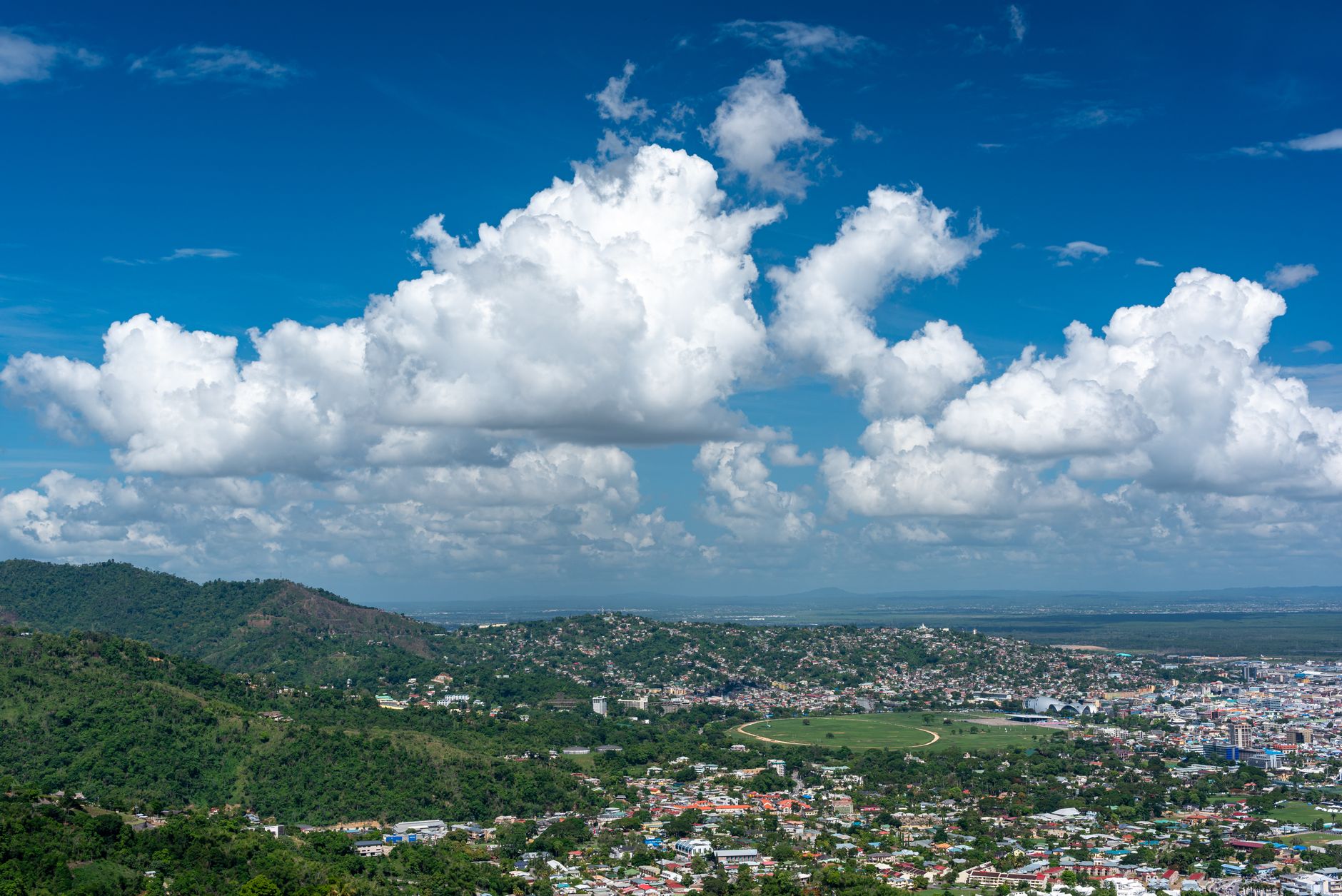 Photo: Dominik Gryzbon / Pexels
- Attractions
- 12
- Trip length
- 3-4 days
- Best season
- December–April (dry season)
Why Kingston
Built from cited sources · see the method · How we make our guides →
Kingston is two cities stapled together: the grid of colonial stone and wrought-iron balconies that survived the 1907 earthquake, and the concrete yards where ska, rocksteady and dancehall were invented in successive decades. Between them runs Marcus Garvey Drive, six lanes of diesel and ambition that still smell of molasses when the wind crosses the harbour—the seventh-largest natural deep-water port on earth, big enough to dock every ghost ship that ever traded sugar for slaves and rum for songs.
Here, art is not in museums (though the National Gallery is excellent); it’s stencilled on zinc fences, shouted over clattering dominoes, or whispered by an old Rastaman outside the Culture Yard: “This is where Marley wrote ‘No Woman, No Cry’—same cracked concrete you’re standing on.” Come Sunday night you can stand on it yourself while Kingston Dub Club’s outdoor speakers stack fifteen feet high and the city lights below look like low stars that learned to pulse off-beat.
Birthplace of Reggae
Trench Town's concrete yards still echo with the bass lines that became Bob Marley's "No Woman, No Cry." The Culture Yard keeps his single-room home exactly as he left it—one mattress, one guitar, one window facing the courtyard where neighbors once sang harmony.Pirate Capital Ruins
Port Royal's Fort Charles juts into the harbor where Henry Morgan's fleet once moored. After the 1692 earthquake, half the city slid underwater; you can still trace the old street grid while snorkeling above the submerged storefronts.Millionaire's Ice Cream
Devon House's 19th-century verandas shade the best ice-cream parlor in the Caribbean. Order the ginger-beer scoop—sharp, peppery, the exact opposite of the sweet coconut the mansion's first owner, Jamaica's first Black millionaire, would have tasted.
Neighborhoods
Where to wander, by quarter — each with its own rhythm.
New Kingston
High-rise banks and mirrored hotels shoulder up to rum bars where lawyers in Italian shoes argue cricket with street vendors. By day it’s all spreadsheets and espresso; after dark the same parking lots become dance-floor spillover for Ribbiz Ocean Lounge and Usain Bolt’s sports-bar empire. Safest place to wander after midnight, but still keep your wits and your phone in separate pockets.Half Way Tree
The city’s thumping heart: a traffic oval where twenty bus routes collide and 346 reviewers on TripAdvisor swear the Tastee patty is hotter, flakier, faster than the rest. Roasted-corn men thread between cars; sugar-cane juicers crank hand presses; speakers on max volume sell phone cards. Go at 7 a.m. for breakfast with the workforce, or at 7 p.m. to watch Kingston commute in three different accents.Downtown
Georgian brickwork tilts alarmingly above Coronation Market’s tarpaulin maze—2,000 vendors of scotch-bonnet towers and callaloo bunches. Street grids still follow the 1692 blueprint of Port Royal refugees who arrived with pocket watches and pirate gold. History drips faster than sweat here; go only in daylight, preferably with a guide who knows which alleys smell like nutmeg and which like trouble.Hope Road
A shaded, villa-lined boulevard that keeps two national shrines: Devon House’s 1881 mansion where George Stiebel, Jamaica’s first Black millionaire, served ice cream still scooped today; and 56 Hope Road, Bob Marley’s former home, bullet holes intact beside his unfinished guitar. Tuesday night the Kingston Night Market sets up on Hillcrest Avenue—food trucks, craft stalls, and the smell of pimento wood smoke drifting over the wall.Trench Town
Concrete government yards where a teenage Bob Marley learned three chords and infinite rebellion. Guides who grew up here will show you the single room he shared with Rita, the 1960 VW van used as a tour bus, and the communal drum kit still played at sunset. Taxi drivers from the hills will shake their heads; visitors who come leave humming redemption songs under their breath.Port Royal
A fishing village grafted onto a sunken pirate capital. Ferries leave the mainland at 11 a.m., 1 p.m., 3 p.m.; twenty minutes later you’re eating peppered snapper beside Fort Charles cannons that once guarded Morgan’s fleet. In 1692 the earth opened and swallowed two-thirds of the city; you can still snorkel past submerged brick walls, chasing parrotfish through parlours where captains once counted pieces of eight.Skyline Drive
No shops, no addresses, just switchbacks climbing into the cool Blue Mountain foothills. At 7b Skyline, Kingston Dub Club turns a private yard into the city’s best sound system every Sunday—speakers the size of wardrobes, city lights below, mosquitoes above. Bring a sweater and something smoky to share; the bouncer searches for weapons, not herb.
Plan your trip
Before you go
- Getting There
- Norman Manley International (KIN) sits on the Palisadoes peninsula, 30 minutes east of downtown. No rail lines serve Kingston; most visitors arrive via the A4 coastal highway from Montego Bay or the A3 through the Blue Mountains.
- Getting Around
- Kingston has no metro. Ride the yellow JUTC buses (J$150 flat fare) or shared route taxis marked by red plates. No tourist transit pass exists; keep small bills. Cycling is rare—traffic and heat make walking limited to New Kingston's shaded sidewalks.
- Climate & Best Time
- December–April is dry and 26–30°C. May brings afternoon thunderstorms; June–November is hurricane season with 32°C highs. Come February for the Jamaica Jazz & Blues Festival, when nights cool to 22°C and hotel balconies overlook the lit harbour.
- Money
- Jamaican dollars (JMD) only; USD accepted at Devon House and most attractions. Scotiabank ATMs inside the Sovereign Centre mall give the best rates. Tipping 10–15% is standard; check bills—some restaurants quietly add service charge.
From Pirate Haven to Reggae Capital
Where earthquakes, sugar fortunes, and bass lines shaped a Caribbean metropolis
- c. 1000 BCE
Taino Footprints
The Liguanea Plain lay beneath royal palms when Taino hunters carved conch shells here. Their petroglyphs still surface after heavy rains at the botanical gardens, whispering of a world before sugar and steel.
- 1655
English Take Jamaica
Admiral Penn's cannons forced Spanish surrender at Port Royal. Within months, Henry Morgan's pirate fleet dropped anchor, transforming the harbor into the Caribbean's most profitable den of thieves.
- 7 June 1692
Port Royal Swallowed
At 11:43 am, the earth cracked open. Two-thirds of Port Royal slid beneath the waves, carrying 3,000 souls and countless gold doubloons. Survivors fled to the mosquito-ridden Liguanea Plain, clutching what remained of their shattered world.
- 22 July 1692
Kingston Rises
For £1,000, Colonel Barry's former hog crawle became Kingston. Surveyor John Goffe drew straight lines across mangrove swamp, creating the grid that still governs downtown's stubborn geometry.
- 1720
Calico Jack Hanged
John Rackham swung from the gallows at Gallows Point. His lover Anne Bonny watched from prison, reportedly pregnant with his child. The pirate era was ending; Kingston's sugar boom was beginning.
- 1755
Capital Bid Fails
Governor Knowles argued Kingston's deep harbor made it the obvious choice. London refused, keeping the capital at Spanish Town. The snub only sharpened Kingston merchants' ambition.
Show the full timeline (19 moments)
- 1788
Sugar's Human Cost
Census recorded 16,659 enslaved people among 26,478 residents. Every brick warehouse, every stone mansion rose on backs that would never see freedom. The waterfront reeked of molasses and human misery.
- 1834
Emancipation Day
The whip fell silent. Former slaves walked away from sugar estates, carrying nothing but names they'd chosen themselves. Kingston's streets filled with new voices, new music, new possibilities.
- 1872
Kingston Becomes Capital
After 230 years in Spanish Town, the Assembly finally moved. Victoria Market rose where enslaved people once sold produce on Sundays. The city that built Jamaica would now rule it.
- 1881
Devon House Built
George Stiebel, Jamaica's first Black millionaire, raised his mansion on 51 acres. Three stories of Jamaican Georgian elegance, built with gold from Venezuelan mines and pride that money couldn't buy.
- 14 January 1907
The Great Earthquake
6.5 magnitude hit at 3:. Downtown collapsed. 800 dead. The fire that followed erased what remained of colonial Kingston. When the smoke cleared, only the harbor remained unchanged.
- 1927
Marcus Garvey Returns
The prophet of Pan-Africanism came home to find his people still in chains of a different kind. He spoke to crowds at Edelweiss Park, weaving dreams of a Black star rising over Marcus Garvey Drive.
- 1945
Bob Marley Born
Robert Nesta Marley entered the world in Nine Mile, but Kingston would claim him. Trench Town's zinc fences and concrete yards would teach him that every scar carries a song.
- 6 August 1962
Independence Day
The Union Jack came down. The black, green, and gold went up. Kingston erupted — not with bombs this time, but with drums. A new nation danced in the streets where sugar once ruled.
- 1963
Studio One Opens
Coxsone Dodd's record shop on Brentford Road became Jamaica's Motown. In one ramshackle studio, ska was born, rocksteady evolved, and a skinny kid named Bob Marley learned to make revolution sound like love.
- 3 December 1976
Marley Shot
Gunmen stormed 56 Hope Road during rehearsal. Bullets tore through Marley's flesh but missed his spirit. Two days later, he performed with his arm in a sling, singing redemption songs to a divided nation.
- 1978
One Love Peace Concert
At National Stadium, Marley made political enemies clasp hands on stage. For three minutes, Kingston forgot its garrison lines. The moment passed, but the footage still makes Jamaicans cry.
- 11 May 1981
Marley Dies
Cancer took him at 36 in Miami, but Kingston stopped breathing. His body came home to a state funeral. 56 Hope Road became a museum where bullet holes still tell the story of a prophet who sang freedom.
- 2015
Marlon James Wins Booker
A Kingston-born novelist won English literature's biggest prize for 'A Brief History of Seven Killings.' The book crawls through Kingston's ganglands and music studios, proving the city's stories still shake the world.
Who lived here
-
Musician · 1945–1981
Bob Marley
Formed The Wailers in Trench Town
He wrote 'No Woman, No Cry' about the government yard at 6–8 Lower First Street, where bullets once flew through his kitchen window. Today, that bullet hole is under plexiglass while tourists pay $30 to stand where he made tea for Rita.
-
Sprinter · born 1986
Shelly-Ann Fraser-Pryce
Born in Waterhouse, trains on Kingston's National Stadium track
The pocket rocket who won Olympic 100m gold in 2008 still runs past boys playing football on the same dusty streets where she learned to fly. Her old neighbors sell festival bread from the same zinc-roofed stalls.
-
Hip-hop pioneer · born 1955
DJ Kool Herc
Born in Kingston before moving to the Bronx
Clive Campbell took the sound system culture of his Jamaican childhood — the outdoor dances, the heavy bass, the selector's patter — and transplanted it to 1520 Sedgwick Avenue, birthing hip-hop. Kingston's street parties echo in every breakbeat ever sampled.
-
Cultural theorist · 1932–2014
Stuart Hall
Born in Kingston, founded cultural studies at Birmingham
The boy who grew up hearing patois battle English in Half Way Tree market became the intellectual who explained how Caribbean identity flows between colonial past and postcolonial future. His mother's callaloo recipes probably shaped his theories of cultural hybridity.
-
Medical pioneer · 1805–1881
Mary Seacole
Born in Kingston, ran boarding house at 7 East Street
This Jamaican nurse took her battlefield medicine skills to Crimea when Florence Nightingale refused her. Her Kingston boarding house funded her first clinic — the woman who faced down cholera also faced down Victorian racism with rum punch and determination.
Where to Eat
Where locals actually book dinner — not the tourist menus.
-
Devon House I-Scream
The ginger-beer ice cream tastes like liquid Christmas—fiery, sweet, over-spiced in the best way. A single scoop costs J$450 and melts fast under the royal palms; eat it on the mansion's veranda where breeze carries the smell of fresh waffle cones.
-
Blue Mountain Coffee
Kingston cafés serve beans grown 30 km uphill at 1,500 m. Expect chocolate and hazelnut notes, zero bitterness, best drunk black at 6 a.m. when the city smells of diesel and sea salt. Buy whole beans at the airport—ground coffee loses aroma within days.
-
Jerk Chicken at Scotchies
Pimento wood smoke drifts across Half-Way Tree as chicken quarters roast over open fire. The meat arrives mahogany-dark, skin blistered, served with foil packets of festival bread. Ask for extra jerk sauce—scotch-bonnet heat blooms slowly, then lingers.
-
Patties at Juici
Flaky turmeric pastry pockets filled with curried goat or callaloo. The goat version oozes rich gravy that stains your fingers yellow; napkins are useless. Eat one standing outside the New Kingston branch where office workers queue at noon for J$350 each.
Insider tips
Small things that change how the city treats you.
Skip Downtown Nights
After sunset, stick to New Kingston or Half Way Tree. Downtown's abandoned warehouses turn sketchy fast without a local guide.Follow the Smoke
Real jerk isn't served on plates. Look for roadside drums belching pimento smoke — that's where the $3 perfection lives.Cash Still Wins
ATMs charge $5+ per withdrawal. Take out larger sums at Scotiabank or NCB, and keep small bills for patties and route taxis.Port Royal Ferry Hack
The $5 water taxi from downtown beats the $40 taxi ride. Twenty minutes across the harbor, plus fried snapper waiting at the dock.Dub Club Sundays
Kingston Dub Club starts slow at 10pm. Bring bug spray, climb Skyline Drive, and watch the city lights pulse to bass lines until 4am.
Gallery
The city, as it actually looks.

Frequently asked
Is Kingston worth visiting?
Absolutely — if you care about music history. This is where reggae was born, where Bob Marley walked Trench Town's government yards, where dancehall still erupts on Tuesday street parties. The museums and live venues outrank any beach resort for cultural depth.
How many days in Kingston?
Three full days hits the sweet spot. Day one for Bob Marley Museum and Devon House. Day two for Port Royal and National Gallery. Day three for Trench Town Culture Yard and a proper sound system party. Add a fourth if you want Blue Mountain coffee farm tours.
What's the cheapest way from Kingston airport to city?
Route taxis from Norman Manley International run $12-15 to New Kingston — look for the red license plates. They're shared rides but half the price of private taxis. Uber isn't reliable here yet.
Is Kingston safe for tourists?
New Kingston and Half Way Tree are fine during daylight. Stick to these areas after dark unless you're with a trusted local guide. Don't flash jewelry or phones, and skip downtown at night. The music venues have good security.
What does 'likkle more' mean?
It's how locals say 'see you later' — but Jamaican time is fluid. When someone says 'five minutes,' budget twenty. The phrase captures Kingston's unhurried rhythm better than any guidebook.
Pick up where you left off
Saved and recently read places — kept on this device only.
Photo credits (2)
- Dominik Gryzbon — Pexels License (https://www.pexels.com/license/) — Source: https://www.pexels.com/photo/30871803/
- Rashad Browne — Pexels License (https://www.pexels.com/license/) — Source: https://www.pexels.com/photo/32115340/
Photos may have been resized or cropped.