Introduction
An Ivory Coast travel guide starts with a surprise: this is a country where rainforest chimpanzees, mud-brick mosques, and coupé-décalé nightlife sit in the same itinerary.
Most trips begin in Abidjan, the economic capital and the place that explains modern Côte d’Ivoire fastest. Plateau rises in glass and concrete above the Ébrié Lagoon, then Treichville and Cocody pull you back to street level: maquis smoke, grilled fish, music that refuses to stay background noise. Forty kilometers east, Grand-Bassam changes the tempo. French colonial facades peel in the salt air, the surf pounds just beyond town, and the old capital still feels like a place caught between archive and beach. That contrast is the point. Ivory Coast works because it never settles into one mood for long.
Head inland and the country opens into entirely different worlds. Yamoussoukro has the improbable scale of a purpose-built capital, with the Basilica of Our Lady of Peace rising over broad avenues that can feel almost theatrical in their emptiness. Westward, Man trades boulevards for highlands, waterfalls, and Dan cultural traditions, while Taï leads toward the last major block of primary rainforest left in West Africa. North and northeast, Korhogo and Kong tell another story again: savanna light, craft traditions, and old trade routes shaped by Dyula merchants, kola commerce, and Islamic scholarship. Few countries shift this sharply between coast, forest, and Sahelian edge.
Food ties the map together. In Abidjan, you can eat garba standing at a roadside counter, with fried tuna, chile, and attiéké catching the oil underneath; in smaller towns, foutou, sauce graine, and kedjenou make a stronger case for staying longer than you planned. The Atlantic gives you another route entirely, from Assinie’s lagoon strip to San-Pédro and Sassandra, where the shoreline feels less packaged than in much of West Africa. This is a country for travelers who like movement: city to beach, beach to forest, forest to savanna, with each stop speaking in a different register.
A History Told Through Its Eras
Before the Colony, the Forest Already Had Its Courts
Forest Worlds and Caravan Frontiers, Before 1700
Morning mist hangs above the great western forest, and the first sound is not a cannon or a church bell but the crack of a kola nut. Long before a governor in Grand-Bassam signed anything in triplicate, the land we now call Côte d'Ivoire was already thick with routes, loyalties, shrines, and bargains. Ce que l'on ignore souvent, c'est que the country began less as a single kingdom than as a meeting line between lagoon peoples, forest societies, and Muslim merchant networks coming down from the Sahel.
In the north, Dyula traders carried scales, letters, and Islam across the savanna. Their caravans linked present-day Korhogo and Kong to a wider commercial world that stretched toward Djenné and beyond, and the prized cargo was often kola, the forest nut that could travel farther than gossip and last longer than fresh food. A nut picked in the humid south could end up in a scholar's hand deep in the western Sudan. That is how wealth moved here: not in gold alone, but in stimulants, trust, and reputation.
The south lived to another rhythm. Along the lagoons and surf-beaten coast, Krou and related peoples knew waters that frightened Europeans silly. The sea looked close; landing was another matter. Local canoe-men became indispensable because they could read the breakers, the currents, the bad moods of the shore. Power, here, belonged to those who knew the crossing.
And then the forest itself. Taï, in the southwest, preserves a fragment of what once covered a vast belt of the country, a living archive older than every palace that came later. Oral traditions from western communities speak of migrations, omen-bearing birds, and smiths who could read fate in movement overhead. Whether every detail is documented is another matter; what is certain is this: by the time Europe took an interest, Côte d'Ivoire was already old, connected, and far from mute.
The anonymous Dyula merchant matters here more than any crowned head: a literate broker with a ledger and a prayer mat helped shape the north before a single French flag was raised.
Portuguese and later European ships often relied on local canoe specialists to come ashore, because the surf along this coast could wreck a landing long before diplomacy even began.
A Queen at the River, a Muslim City in Flames
The Age of Kong and the Baoulé Migrations, c. 1700-1897
A river in flood, a royal woman in flight, an infant offered to save a people: few foundation stories in West Africa are as severe, or as unforgettable, as that of Queen Pokou. According to Baoulé tradition, Abla Pokou led her followers west during an Asante succession war in the 18th century and reached the Comoé with enemies behind her and water before her. The price demanded by the river was the child she loved most. "Ba ou li," she is said to have murmured after the crossing: the child is dead. A people took their name from grief.
That scene belongs to the forest. In the north, the century produced something quite different: Kong, a trading and scholarly city that made the savanna feel almost urbane in the classical sense. Founded by Sékou Ouattara around the early 18th century, Kong sat on the routes that linked forest kola, regional gold, Islamic learning, and political ambition. Its mosques, with their projecting wooden beams, were not picturesque curiosities; they were maintained architecture, built to be replastered with the seasons and used by communities that expected endurance.
Ce que l'on ignore souvent, c'est que Kong was both devout and practical. Islam brought law, literacy, and prestige, but it also brought commercial discipline, contracts, and a language shared across long distances. A ruler could pray and calculate in the same morning. That doubleness made the city formidable.
Then came the violence of the 19th century's end. In 1897, Samori Touré's retreating forces destroyed Kong rather than leave it intact for the advancing French. Libraries vanished, families scattered, and one of the great inland centers of the region became a memory written in mud walls and absence. From that ash rose the next chapter, because the French arrived not in a vacuum but in the wreckage of powers they had not created.
Queen Pokou survives in memory not as a marble heroine but as a mother forced into a choice that no throne can justify and no people can forget.
The earthen mosques of the Kong region were built with timber beams jutting from the walls so they could serve as permanent scaffolding during annual replastering after the rains.
Grand-Bassam, Forced Roads, and the Price of Empire
French Conquest and Colonial Rule, 1893-1960
Salt air, white facades, a veranda facing the lagoon: the colonial story begins, in built form, at Grand-Bassam. France made it the first colonial capital in 1893, and one still feels the administrative vanity of the place in its arcades and geometry. But the postcard is only half the truth. Behind the shutters stood clerks, soldiers, merchants, and doctors trying to impose order on territories that had their own logic, while outside that official quarter labor, coercion, and negotiation never stopped.
The colony did not settle gently. Roads, plantations, and rail links demanded bodies, and forced labor became one of the great brutal facts of early French rule. Families were drawn into cocoa and coffee production; villages were taxed, moved, or pressed into service; local chiefs were recognized or ignored according to convenience. The beautiful export story began with calloused hands.
Abidjan changed everything. When the French gradually shifted their center of gravity there in the first half of the 20th century, helped decisively by the opening of the Vridi Canal in 1950, they turned a lagoon-edge settlement into the colony's great port city. Ce que l'on ignore souvent, c'est que this was not just an urban improvement project. It rewired the whole country, pulling wealth, administration, and ambition toward the coast.
Resistance did not always march under one banner, but it was real. In 1944, Félix Houphouët-Boigny, still a planter and doctor by training, founded the Syndicat Agricole Africain to challenge the colonial order that enriched empire while humiliating African producers. From that moment, the colony had produced the man who would dominate independence. And like so many men shaped by empire, he learned from the system he intended to outlast.
Félix Houphouët-Boigny entered politics through the grievances of planters, which tells you a great deal about how colonial Côte d'Ivoire turned economic frustration into national leadership.
Grand-Bassam lost its capital status after repeated yellow fever outbreaks, a reminder that mosquitoes have altered imperial geography more than one minister ever did.
From the Miracle to the Cracks in the Mirror
Independence, the Houphouët State, and the Fractured Republic, 1960-Present
On 7 August 1960, independence arrived with ceremony, calculation, and one towering personality. Félix Houphouët-Boigny became the republic's first president and stayed there until his death in 1993, an almost monarchical longevity that Stéphane Bern would recognize at once. He cultivated stability, welcomed investment, and presided over what admirers called the Ivorian miracle as cocoa and coffee money reshaped the country. Abidjan rose in concrete and glass; ministers dined well; the state spoke the language of order.
But dynasties of this kind always leave a complicated inheritance. Houphouët-Boigny moved the political capital to Yamoussoukro, his hometown, and there he raised the Basilica of Our Lady of Peace, consecrated in 1990, on a scale so extravagant it still startles visitors. It is one of those buildings that makes you ask whether you are looking at devotion, vanity, or both. The answer, of course, is both.
After his death, the republic lost its choreography. Henri Konan Bédié inherited power, then came the 1999 coup, the doctrine of ivoirité, and the slow poisoning of national belonging. By 2002 the country was effectively split, with the north under rebel control and the south under the state, a political wound that ran straight through families and roads alike. Korhogo, Bouaké, and Abidjan were no longer simply names on a map; they became coordinates in a crisis.
The 2010 election turned the crisis lethal again when Laurent Gbagbo refused to accept defeat to Alassane Ouattara. Abidjan saw street fighting and fear in neighborhoods that had once worried more about traffic than artillery. Since 2011, the country has rebuilt fast, sometimes impressively, and remains one of West Africa's economic engines, from the port of Abidjan to the political symbolism of Yamoussoukro and the remembered elegance of Grand-Bassam. But history has left its mark. Modern Côte d'Ivoire is not a simple success story; it is a brilliant, wounded state still arguing with the terms of its own unity.
Houphouët-Boigny governed like a republican patriarch with a monarch's instinct for ceremony, patronage, and stone monuments that outlived debate.
The basilica in Yamoussoukro was modeled in clear conversation with St Peter's in Rome, and for years locals joked that the town had received a Vatican-sized gesture before it received a capital's ordinary bustle.
The Cultural Soul
A sentence with three passports
In Côte d’Ivoire, speech does not walk in a straight line. It leaves the lycée in polished French, cuts through the market in Dioula, then slips into Nouchi with the grin of a pickpocket who has already returned your watch because the joke mattered more than the theft.
Abidjan lives on this voltage. A taxi driver can greet you with courtroom courtesy, insult traffic with operatic invention, then offer a proverb so exact it feels chiseled rather than spoken; wit is social currency here, and grammar is expected to earn its keep.
Some words do work whole paragraphs cannot. "Yako" is sympathy placed gently on the table between two people. "Gbê" is truth after the smoke clears. And "gaou" is the one who has not yet learned the code of the room, which is a dangerous condition in a country where everybody hears the rhythm before the sentence ends.
This abundance changes the atmosphere of ordinary life. Silence is not forbidden, but it feels underdressed. In Bouaké, in Korhogo, in the maquis of Yamoussoukro, greeting comes first and takes time, because a human being is not an obstacle between you and your errand.
Cassava, fire, and the law of the hand
Ivorian food begins with touch. Forks exist, naturally, but the real grammar of the table is written by fingers that pinch, roll, dip, and lift, with a bowl of water nearby and no need for speeches about authenticity because the hand already knows what the mouth wants.
Attiéké is the country’s sly masterpiece: fermented cassava steamed into pale grains that look modest until they meet fish from the grill, raw onion, tomato, and pepper. The slight sourness does what good acid always does. It makes everything else confess.
Then comes garba, that great urban theorem of hunger and speed. In Abidjan, especially in Treichville and Yopougon, a mound of attiéké receives fried tuna, onion, chile, and a spill of oil that seeps downward like a secret; you eat standing, half-standing, or pretending you have time.
The inland table changes the texture of thought. Kedjenou de poulet arrives from Akan country sealed in its own steam, while foutou banane with sauce graine asks for the right hand and a little dignity. A country is a table set for strangers, but Côte d’Ivoire adds a condition: you must be willing to get sauce on your fingers.
Where grief learns choreography
Music in Côte d’Ivoire is not a separate art. It is a practical technology for surviving the day, the traffic, the flirtation, the loss, the heat at 16:00, the wedding at midnight, the football match that should have ended peacefully and did not.
Coupé-décalé was born in Abidjan with the elegance of a dare. It turns excess into rhythm, swagger into percussion, and dancing into a social argument: if the world insists on seriousness, one may answer with impossible shoes, devastating timing, and a beat that refuses to sit down.
Even the country’s famous sorrow has cadence. Listen closely at a funeral, a celebration, a roadside bar, and the border between lament and dance grows unreliable. That is not frivolity. It is a method. Even grief arrives with choreography.
Elsewhere the sound changes shape without losing nerve. In Man, masked ceremonies still carry drums that seem older than speech. In Korhogo, the north leans toward balafon and praise-song traditions shaped by trade routes and prayer. The ear travels faster than the body here.
The ceremony before the matter
An impatient traveler will misread Ivorian politeness as delay. That is the first mistake. Before business, there is greeting; before the question, the health of your family, your sleep, your road, the heat, the day itself must be acknowledged, because conversation without this ritual has the brutality of entering a church in motorcycle boots.
The handshake matters. So does the time spent inside the prelude. What looks ornamental to an outsider is in fact architecture: a way of proving that the person in front of you is not merely the door to information, a fare, a plate of fish, a stamped document.
This etiquette has style, not stiffness. In Abidjan it can be rapid, witty, sparkling with Nouchi and side glances. In Kong or Odienné it may feel more measured, shaped by Muslim courtesies and older mercantile forms. The principle remains identical. Respect is spoken aloud or it does not exist.
One learns quickly that efficiency is a European superstition. Here, relation comes first. The surprise is that this does not waste time. It gives time a human face.
Mud walls, basilica, and lagoon glass
Côte d’Ivoire has the good taste to distrust a single architectural doctrine. It offers, instead, a delicious quarrel: earthen mosques in the north with wooden beams jutting from their walls like ribs or ladders, colonial facades in Grand-Bassam fading elegantly by the lagoon, and the audacity of Yamoussoukro, where a basilica rises with such disproportion that disbelief becomes part of the visit.
Kong is the place that teaches humility. The Sudanese-style mosques there are made of banco and yearly repair, which means they survive by being touched again and again; permanence, in this climate, depends less on stone than on communal repetition.
Grand-Bassam tells another story. Verandas, shutters, arcades, sea air, and the aftertaste of empire. The buildings remain beautiful in the way certain old lies remain grammatically perfect. Beauty does not absolve anything. It sharpens the question.
Then Abidjan appears across the Ébrié Lagoon, all towers and bridges and mirrored surfaces, and the country changes costume without changing character. Water, humidity, money, improvisation: the city wears modernity like a tailored jacket thrown over a dancing body.
Masks that do not ask permission
Ivorian art has never been content to remain decorative. A Dan mask from the west, a Senoufo figure from the north, a woven strip of cloth from Korhogo, a painted panel in Abidjan: these things are not neutral objects waiting politely for interpretation. They arrive with intention.
The masks of the Man region still carry the old scandal of transformation. One moment you are looking at carved wood, raffia, pigment, the competent nouns of ethnography; then the dancer moves, the crowd answers, and the object ceases to be an object. It becomes an event. Museums dislike this fact because glass cases cannot perform possession.
In Korhogo, cloth and craft refuse the hierarchy that puts so-called fine art above useful things. Mud-dyed textiles, carved stools, metalwork, painted fabrics: each piece understands that beauty should serve the hand, the body, the room, the ritual. Luxury is not the point. Precision is.
Abidjan adds galleries, fashion houses, photography, irony. Contemporary artists there borrow from street codes, football fever, religious imagery, colonial leftovers, and nightclub light. A city teaches its painters how to look. Abidjan teaches velocity.
What Makes Ivory Coast Unmissable
Lagoon Cities
Abidjan is the country’s engine room: business towers in Plateau, maquis in Treichville, and nightlife that shaped modern Ivorian style. Grand-Bassam adds a quieter counterpoint, with UNESCO-listed colonial streets facing the Atlantic.
Primary Rainforest
Taï National Park protects one of the last great primary rainforest blocks in West Africa. This is where travelers come for chimpanzees, pygmy hippos, and the feeling of stepping into a forest older than the republic itself.
Mosques and Kingdoms
Northern Ivory Coast carries the memory of trans-Saharan trade routes, Islamic scholarship, and the old Kong Empire. Kong and Korhogo make sense of that history through mud architecture, craft traditions, and savanna landscapes.
Street Food That Matters
Attiéké, garba, alloco, kedjenou, and foutou are not side notes to the trip; they are part of how the country introduces itself. The best meals often come without ceremony, eaten with your hands at a plastic table or a roadside stall.
Coast and Lagoons
Ivory Coast has about 550 kilometers of coastline, but the appeal is not just beaches. Assinie, Sassandra, and San-Pédro mix surf, estuaries, fishing towns, and long lagoon edges that still feel lightly developed.
Highlands of Man
The west breaks the country’s coastal rhythm with mountains, waterfalls, and cooler air. Man is the base for hiking, mask traditions, and some of the most dramatic scenery in Côte d’Ivoire.
Cities
Cities in Ivory Coast
Abidjan
"West Africa's most kinetic skyline rises from a lagoon peninsula where a garba stall and a rooftop cocktail bar can occupy the same block."
Yamoussoukro
"A political capital built around a basilica larger than St. Peter's in Rome, surrounded by crocodile-filled sacred lakes and roads wide enough to land a plane."
Grand-Bassam
"The crumbling colonial arcades of France's first Ivorian capital sit directly on a surf beach, the empire's ambition and its decay in one unedited frame."
Man
"A highland market town in the Dan country where stilt dancers perform at funerals, the air drops ten degrees from the coast, and Mont Nimba begins its climb toward Guinea."
Korhogo
"The Senufo weaving and bronze-casting capital of the north, where sacred Poro society masks hang in family compounds and the harmattan turns the light amber by noon."
Bouaké
"Ivory Coast's second city rebuilt its street life after civil war with a stubbornness that reads less like resilience tourism and more like sheer refusal."
San-Pédro
"A deep-water port town that ships more cocoa than most countries produce, with an untouched Atlantic coastline stretching west toward Liberia that almost no one visits."
Sassandra
"A small colonial river port where pirogue fishermen still work the estuary at dawn and the beaches south of town have been largely ignored by the travel industry for decades."
Kong
"A Dyula Islamic city-state burned to ash by Samori Touré in 1897 and never fully rebuilt, its surviving earthen mosque still plastered each rainy season by the families of the men who built it."
Odienné
"A remote northwestern town on the edge of the Mandinka cultural world, closer to Bamako in spirit than Abidjan, where the call to prayer competes with nothing."
Taï
"The gateway village to the last primary rainforest block in West Africa, where researchers have documented chimpanzees cracking nuts with stone anvils in an unbroken tradition older than any human settlement nearby."
Assinie
"A narrow sand strip between the Atlantic and a lagoon that has been Abidjan's weekend escape since the 1970s, with a particular quality of late-afternoon light that explains why Jacques Doillon filmed here."
Regions
Abidjan
Lagoon Coast
Southern Ivory Coast lives on water and humidity. Abidjan gives you towers in Plateau, traffic jams over the Ébrié Lagoon, smoked fish in Cocody, and nights that start late; east along the coast, Grand-Bassam and Assinie trade the city's voltage for sea air, old facades, and weekend beach houses.
Yamoussoukro
Central Heartland
The center is where state ambition turns theatrical. Yamoussoukro has broad avenues and the Basilica of Our Lady of Peace, a building so outsized it feels less like faith than a personal argument with Rome, while Bouaké brings the country back to commerce, transport, and the pace of a city that people use rather than admire.
Korhogo
Northern Savannah and Trade Towns
The north runs drier, dustier, and older in its trade logic. Korhogo is the practical anchor for Sénoufo country, craft workshops, and cloth traditions, while Kong carries the afterimage of an Islamic trading city that once mattered far beyond its present size.
Man
Western Highlands
The west rises into a greener, rougher country of ridges, waterfalls, and masked dance traditions. Man is the obvious base, but the mood of the region comes from the roads around it: mountain views, Dan country, and the feeling that Ivory Coast has stopped performing for the coast and gone back to itself.
San-Pédro
Southwest Forest and Ocean
This corner mixes cargo port, fishing coast, and some of the last serious rainforest in West Africa. San-Pédro gives you the main transport hub, Sassandra slows the coast down, and Taï opens onto the forest block that makes the southwest different from everywhere else in the country.
Odienné
Northwest Frontier
Odienné sits in a part of Ivory Coast that many travelers skip, which is exactly why it earns time. The far northwest feels less coastal, less polished, and closer to the overland West African world of long distances, border trade, and towns that still work as junctions before they work as attractions.
Suggested Itineraries
3 days
3 Days: Lagoon Edge and Old Colonial Coast
This is the short route that makes sense after a long flight. Start in Abidjan for markets, lagoon views, and a first lesson in maquis timing, then move east to Grand-Bassam and Assinie for colonial streets, Atlantic light, and the beach-lagoon strip that weekenders from the capital use when they need air.
Best for: first-timers, short breaks, food-focused travelers
7 days
7 Days: Basilica, Market Towns, and the Northern Trade Route
This inland route moves from the political theater of Yamoussoukro to the commercial pulse of Bouaké, then up into Korhogo and Kong where mud architecture and old trade geography still shape the map. It works well for travelers who care more about history, craft, and regional contrast than beaches.
Best for: history readers, architecture fans, repeat West Africa travelers
10 days
10 Days: Rainforest, Surf Coast, and the Western Highlands
Begin on the Atlantic in San-Pédro and Sassandra, where the coast still feels more working shoreline than resort strip. Then turn inland through Taï for rainforest country and finish in Man, where mountain roads, mask traditions, and cooler evenings change the rhythm completely.
Best for: nature travelers, photographers, travelers who do not need polished infrastructure
14 days
14 Days: Abidjan to the Far Northwest
This longer trip starts in Abidjan for logistics, then climbs into the western highlands at Man before pushing on to Odienné near the Guinea and Mali frontiers. It is the route for travelers who want fewer obvious stops, longer road days, and a stronger sense of how quickly Ivory Coast shifts once the coast drops away.
Best for: slow travelers, overland specialists, second-time visitors
Notable Figures
Abla Pokou
18th century · Queen and founding heroineShe enters Ivorian memory at the edge of a flooded river, not on a throne. Tradition says her sacrifice during the flight from Asante country gave the Baoulé people both safe passage and their name, which is why she still feels less like folklore than like political ancestry.
Sékou Ouattara
c. 1680-1745 · Founder of the Kong EmpireHe turned Kong into a city of trade, scholarship, and ambition at the meeting point of savanna and forest. What matters is not only that he ruled, but that he understood Islam, commerce, and power as parts of the same machine.
Samori Touré
c. 1830-1900 · Empire builder and anti-colonial war leaderHe was fighting French expansion, yet his army's destruction of Kong left one of the deepest scars in northern memory. That contradiction gives him his force: hero of resistance, bearer of ruin, never a simple monument.
Félix Houphouët-Boigny
1905-1993 · First president of Côte d'IvoireDoctor, planter, negotiator, and master of longevity, he gave the young state stability at the price of an overwhelming personal system. Abidjan's rise and Yamoussoukro's monumental vanity both carry his signature.
Henri Konan Bédié
1934-2023 · President and heir to the first republicHe inherited not just a presidency but a court without a king, which is a dangerous gift. His years in office are tied forever to ivoirité, the doctrine that narrowed belonging and helped turn political rivalry into national fracture.
Laurent Gbagbo
born 1945 · Historian and presidentA man of books who became a man of barricades, he embodied the tragic intelligence of modern Ivorian politics. His refusal to yield after the 2010 vote turned constitutional dispute into urban warfare, especially in Abidjan.
Alassane Ouattara
born 1942 · Economist and presidentHe arrived with the language of markets, reconstruction, and international confidence, and under him Côte d'Ivoire regained much of its economic momentum. Yet his story is inseparable from the identity battles that once tried to exclude him from the national narrative.
Bernard Dadié
1916-2019 · Writer, poet, and public intellectualIf politics built the state, Dadié gave it a voice that could remember irony, pain, and dignity at once. He belongs to Côte d'Ivoire because he wrote Africans as subjects of history, not decor in someone else's empire.
Ernesto Djédjé
1947-1983 · Musician and creator of ziglibithyHe did not govern, but he changed the national mood. By drawing on Bété rhythms and electrifying them for a modern audience, he made music sound like a country inventing itself after the flag had already been raised.
Photo Gallery
Explore Ivory Coast in Pictures
Low angle view of the Basilica of Our Lady of Peace dome framed by columns in Yamoussoukro, Côte d'Ivoire.
Photo by Cedric G on Pexels · Pexels License
View of Basilica of Our Lady of Peace in Yamoussoukro, showcasing majestic columns and architecture.
Photo by Cedric G on Pexels · Pexels License
Aerial view of the Monument of Reunification in Yaoundé, Cameroon. Iconic city landmark.
Photo by Kelly on Pexels · Pexels License
Tranquil beach scene in Natal, Brazil with calm waves and cloudy sky, perfect for nature themes.
Photo by Ivett M on Pexels · Pexels License
People relaxing on a scenic beach in Rio Grande do Norte, Brazil.
Photo by Ivett M on Pexels · Pexels License
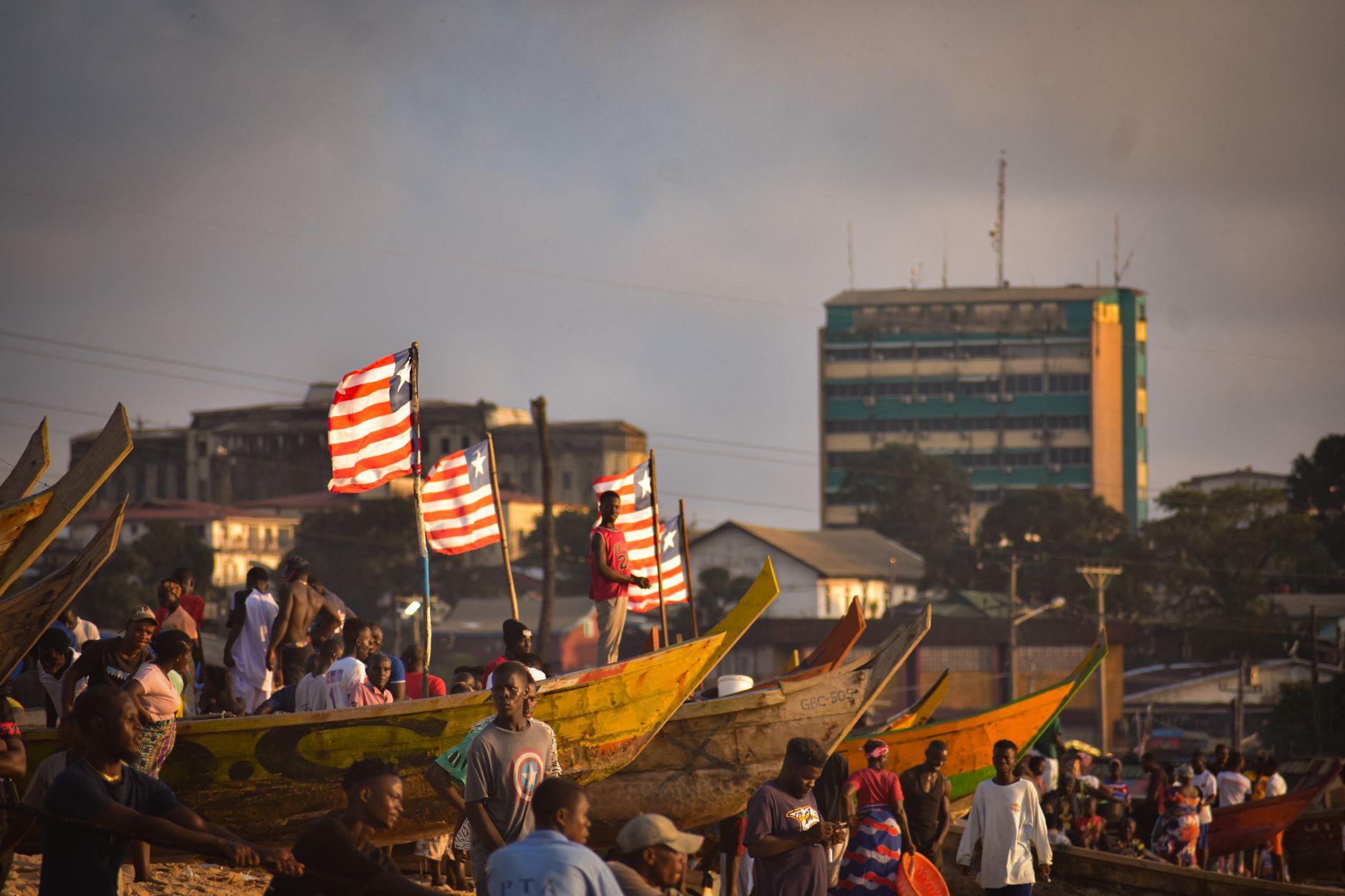
Vibrant scene of fishermen and canoes along the Monrovia coast during day.
Photo by Isiaka D. Massalay on Pexels · Pexels License
A large bowl filled with fresh cocoa beans, ready to be processed into chocolate products.
Photo by Mr Pixel on Pexels · Pexels License
Practical Information
Visa
Most visitors need a visa before travel, including passport holders from the EU, US, UK, Canada, and Australia. The standard route is the SNEDAI e-visa: pre-enroll online, then complete biometric enrollment and collect the visa on arrival at Félix-Houphouët-Boigny International Airport in Abidjan. Plan on a passport valid for at least six months, a yellow fever certificate, and an application buffer of at least 10 working days.
Currency
Ivory Coast uses the West African CFA franc, abbreviated XOF, and the rate is fixed to the euro at 655.957 XOF for €1. Cash still runs daily travel outside big hotels and malls in Abidjan, so keep small notes for taxis, markets, maquis, and bus stations. In smarter restaurants, 5 to 10% is fine if service is not already included.
Getting There
For almost everyone, the practical gateway is Abidjan, which handles the country's main international air traffic. Direct flights are strongest from France, West Africa, and Central Africa, while long-haul travelers usually connect through Paris, Casablanca, Addis Ababa, or another regional hub. Domestic flights from Abidjan save serious time if you want to reach Man, Korhogo, Odienné, or San-Pédro without losing a day on the road.
Getting Around
Intercity buses and shared taxis connect the main corridors well, especially between Abidjan, Yamoussoukro, Bouaké, Grand-Bassam, and San-Pédro. Inside Abidjan, SOTRA buses handle the formal network, while Yango and Heetch are the simplest ride-hailing options for visitors. Self-driving is possible, but a car with driver is often the saner choice once you leave the big urban axes.
Climate
The easiest travel window runs from mid-November to April, when roads are drier and the north is less punishing. Coastal Ivory Coast stays humid for much of the year, with heavy rains from April to June and another shorter wet spell around October and November. The north is hotter and drier, with Harmattan dust between December and February.
Connectivity
Mobile data is the practical default, and coverage is solid in Abidjan, Yamoussoukro, Bouaké, Grand-Bassam, Korhogo, and most main-road towns. Hotel Wi-Fi ranges from decent to ornamental, so buy a local SIM or eSIM if you need maps, ride-hailing, or work calls. In Taï and stretches of the far west and far north, expect weaker coverage and download what you need in advance.
Safety
Urban travel is manageable with the usual big-city habits: use app rides after dark, keep phones out of sight in traffic, and do not flash cash at markets or bus stations. Road risk is the bigger issue, especially at night, because of driving standards, checkpoints, and patchy lighting outside major corridors. Malaria remains a real concern countrywide, so sort prophylaxis, repellent, and long sleeves before you start thinking about beachwear.
Taste the Country
restaurantAttiéké-poisson
Fingers pinch cassava grains. Grilled fish, onion, tomato, chile. Lunch tables, roadside braziers, lagoon evenings in Grand-Bassam and Abidjan.
restaurantGarba
Paper tray, plastic spoon, quick hands. Attiéké, fried tuna, onion, oil, pepper. Night hunger, students, drivers, jokes, standing bodies.
restaurantAlloco
Plantain pieces caramelize in oil. Toothpicks, fingers, chile, onion. Twilight snacks, beer tables, street corners after work.
restaurantKedjenou de poulet
Clay pot, sealed lid, steam, chicken, tomato, ginger. Family meals, Sunday tables, slow talk. Rice or attiéké receives the sauce.
restaurantFoutou banane et sauce graine
Right hand pinches and rolls. Plantain, cassava, palm-fruit sauce, smoked fish. Noon meals, family compounds, patient eaters.
restaurantPlacali et sauce gombo
Elastic cassava tears between fingers. Okra sauce coats and stretches. Shared bowls, practical silence, full afternoons.
restaurantCafé Touba
Small cup, hot pour, clove, pepper, sugar. Dawn kiosks, bus stations, market openings. Sleep retreats.
Tips for Visitors
Carry Small Cash
ATMs are easiest in Abidjan and large regional cities, but daily travel still leans hard on notes and coins. Keep small denominations for taxis, garba stalls, market snacks, and bus-port fees that nobody will have change for at 6 a.m.
Skip Rail Planning
Do not build your itinerary around passenger rail. The Abidjan to Ouagadougou line exists as infrastructure, but service reliability and restart status can shift, so buses and domestic flights are the safer planning base.
Book Ahead in Abidjan
Abidjan hotel prices jump fast during business peaks, conferences, and football events. Reserve early if you want a decent mid-range room in Plateau, Cocody, or Marcory without paying airport-hotel money for a very average bed.
Use Day Buses
Intercity buses are cheapest and usually the best value, but take daytime departures for longer routes. Night roads are the weak point here, not the buses themselves.
Read the Maquis Clock
A maquis is not a rushed meal. Go after the lunch crush or later in the evening, order grilled fish or chicken with attiéké, and do not expect everyone to speak English once you leave the business districts of Abidjan.
Bring Health Basics
Pack repellent, sunscreen, oral rehydration salts, and any malaria medication before arrival. Pharmacies in Abidjan are fine, but a forest or upcountry itinerary is smoother when you are not hunting for basics in a town where you stop only one night.
Open With Greetings
Greet before you ask for anything. A quick bonjour or bonsoir, followed by the question, goes further than perfect French delivered like an order.
Explore Ivory Coast with a personal guide in your pocket
Your Personal Curator, in Your Pocket.
Audio guides for 1,100+ cities across 96 countries. History, stories, and local insight — offline ready.
Audiala App
Available on iOS & Android
Join 50k+ Curators
Frequently Asked
Do I need a visa for Ivory Coast as a US, UK, EU, Canadian, or Australian traveler? add
Yes, in most cases you do. The standard route is the SNEDAI e-visa, which you pre-enroll online before travel and then finalize on arrival at Abidjan airport with biometric enrollment and visa issuance.
Can I get an Ivory Coast visa on arrival? add
Not in the walk-up sense most travelers mean. You need to complete the official e-visa pre-enrollment before departure, then finish the process on arrival at Félix-Houphouët-Boigny International Airport in Abidjan.
Is yellow fever vaccination required for Ivory Coast? add
Yes, for most arriving travelers aged 9 months and older. Carry the international vaccination certificate because airlines and border officials may ask for it before you even reach immigration.
Is Ivory Coast expensive for tourists? add
It can be moderate or pricey depending on where you sleep. Street food, local transport, and intercity buses are cheap, but Abidjan hotel rates push budgets up fast, especially if you want reliable air-conditioning and a central neighborhood.
Is Abidjan safe for tourists? add
Generally yes with sensible city habits, but it is not a place to drift around carelessly at night. Use ride-hailing after dark, stay alert around traffic and markets, and put more caution into road travel outside the city than into walking central districts by day.
What is the best month to visit Ivory Coast? add
January is one of the safest bets for weather. It sits inside the dry season, roads are easier, and the north is more manageable than during the wetter months, though the coast still stays humid.
Can you travel around Ivory Coast without speaking French? add
You can, but it is harder than in Ghana or Senegal's most tourist-facing areas. In Abidjan business hotels and some upscale restaurants manage English, yet buses, taxis, markets, and smaller towns work far more smoothly if you have basic French.
What is the easiest way to get around Ivory Coast? add
For most travelers, it is a mix of intercity buses, app rides in Abidjan, and the occasional domestic flight. That combination costs less than private transport everywhere and avoids the fatigue and risk of self-driving long distances.
Is Grand-Bassam worth a day trip from Abidjan? add
Yes, easily. It is close enough for a simple day out, and the mix of colonial streets, beach atmosphere, and artisan stalls gives you a cleaner contrast with Abidjan than another neighborhood in the capital ever could.
Should I visit Man or San-Pédro on a first trip to Ivory Coast? add
Choose Man if you want mountains, culture, and a stronger sense of the interior; choose San-Pédro if you want coast, port energy, and access toward Taï. If you only have one week, Man usually gives the bigger shift in scenery and atmosphere.
Sources
- verified SNEDAI E-Visa Côte d'Ivoire — Official e-visa process, fee, required documents, and on-arrival biometric procedure at Abidjan airport.
- verified UK Foreign, Commonwealth & Development Office - Côte d'Ivoire travel advice — Current entry rules, visa timing guidance, safety notes, and transport cautions for foreign travelers.
- verified BCEAO — Authoritative source for the West African CFA franc and its fixed peg to the euro.
- verified UNESCO World Heritage Centre - Côte d'Ivoire — Primary source for World Heritage listings including Taï National Park, Comoé National Park, and Grand-Bassam.
- verified SOTRA Mobile — Confirms Abidjan's public transport operator and current app-based access to routes and network information.
Last reviewed: