An introduction.
Researched by the Audiala editorial team from historical records, architectural archives, and local expertise.
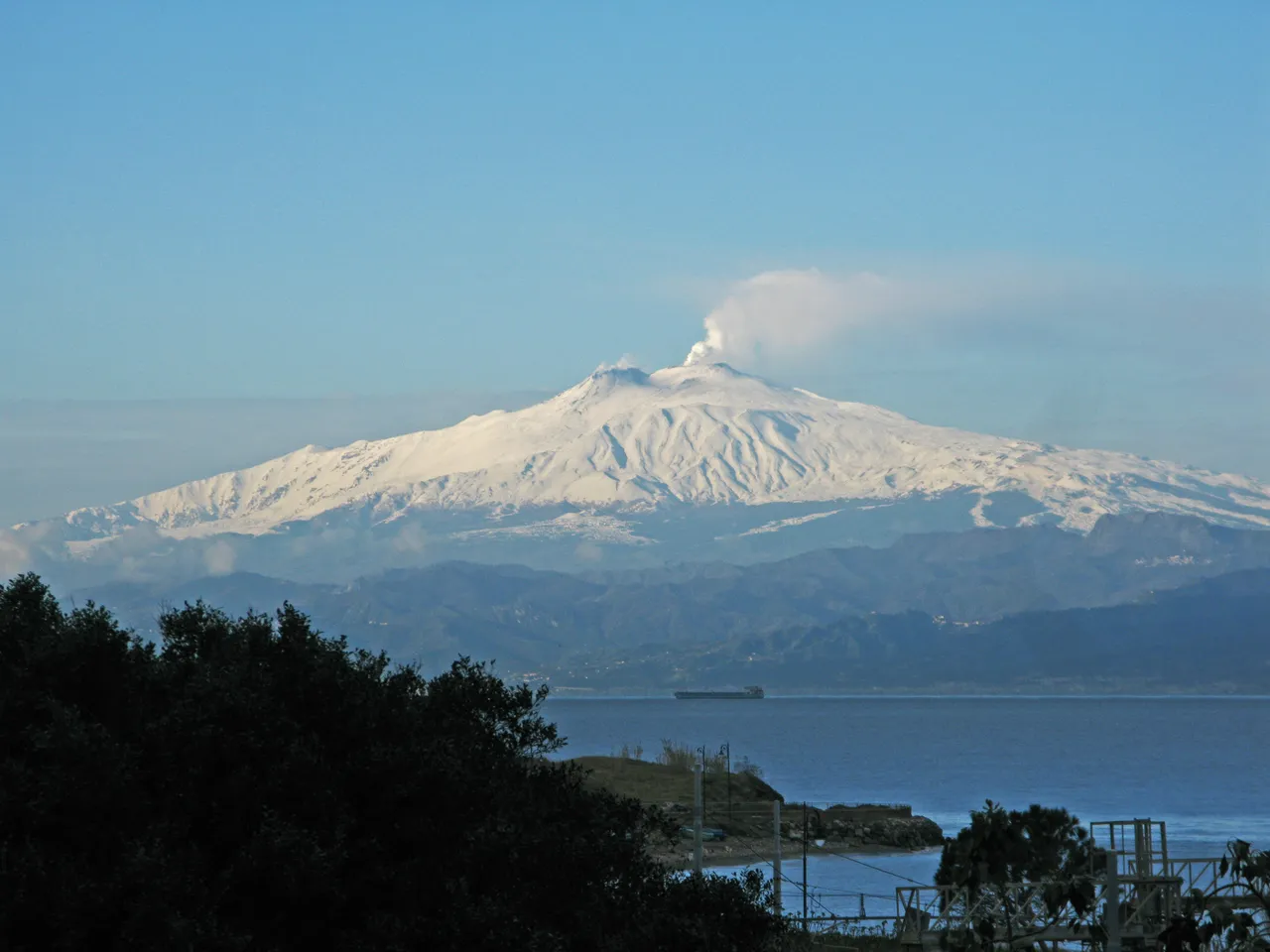
WWhy would a town that spent 473 days watching a wall of basalt creep toward its last street still plant vines on the same slope? Zafferana Etnea, on the eastern flank of Mount Etna in Sicily, Italy, answers with a sensory contradiction: black lava crusts split by yellow broom, smoke drifting from summit craters, and a marble Madonna staring down the exact frozen wave that stopped 700 meters from the Sciara quarter in May 1992. You come for the volcano; you stay for the bargain the Etneans have struck with it.
Etna is not one volcano but a stack of older, collapsed ones. The summit rises near 3,350 meters above the Ionian Sea, and the 5-by-7-kilometer Valle del Bove is not a crater but the scar left when part of the ancient mountain slid away roughly 9,000 years ago. Drive toward Rifugio Sapienza and you are standing on evidence of that failure.
Zafferana Etnea clings to the southeastern flank like a balcony town. From its belvedere you can watch smoke rise from the summit, then walk past lava-stone portali and shops selling volcanic honey and Etna DOC wine. The volcano isn't a backdrop here. It's the reason the town exists.
01 What to see.
Valle del Bove from Monte Zoccolaro
The first view into Valle del Bove rearranges your sense of scale. A horseshoe of basalt cliffs drops a kilometre into a 5-by-7-kilometre bowl of black lava; that's three Eiffel Towers of vertical rock. No photograph prepares you for it.
From the 1,739-metre ridge at Monte Zoccolaro, you're close enough to hear the Southeast Crater degas, a low thrum that seems to come from inside your chest rather than the mountain. Go early, before the wind gets up. In May the broom glows yellow against the cinder and the only sound is your boots crunching volcanic glass.
Grotta del Cassone
A rusted iron ladder drops through a hole in the 1792 lava into a basalt tube that once carried a river of liquid rock. The temperature falls 10–15°C in the first few rungs. In July that's a shock; in December it's a relief.
Run a hand over the ceiling and you'll feel denti di cane, tiny dog-tooth lava stalactites. They formed when the molten core drained and left the roof dripping stone like candle wax. Wear long trousers. Bring a headlamp; the floor is as abrasive as a coarse sharpening block.
The 1991–1993 Lava Front Walk from Zafferana
Start in Piazza Belvedere as the light goes gold and the Ionian Sea turns the colour of cold steel below you. Then drive or walk the SP92 west toward Piano dell'Acqua. The 473-day eruption ended here, within sight of the town.
A roadside shrine to the Madonna della Provvidenza marks the exact spot. Jagged May 1992 basalt froze not much further from the altar step than a parked car. Look across the road: brickwork and iron railings poke from the same black tongue, domestic ruins half-swallowed by the flow that nearly reached Zafferana.
End the walk at a nearby palmento. The old gravity-fed wine cellar is a reminder that the same volcanic stone that nearly destroyed the town now ferments Nerello Mascalese into something improbably good.
02 In pictures.


Plan and listen to Mount Etna with Audiala.
Audio guide in your pocket, itinerary in your browser. Built for the way you actually visit.
03 Visitor logistics.
The practical scaffolding for a good visit — kept short.
Getting There
From Zafferana Etnea, follow the SP92 up the eastern flank to Rifugio Sapienza (1,910 m); it's about 19 km and takes 30–35 minutes by car. Parking there runs roughly €1.20/hour or €6 for a full day. The AST bus from Catania Centrale (Piazza Giovanni XXIII) departs around 08:15 and returns from Rifugio Sapienza around 16:30, but direct buses from Zafferana are limited, and walking from town isn't practical.
Opening Hours
The park is open 24/7 year-round, but high-altitude hiking is limited to daylight and can close during red or yellow alert orders. As of 2026, the Funivia dell'Etna cable car at Rifugio Sapienza runs daily 08:45–16:10/16:30, with summer (June–September) extensions to 16:45–17:00 on clear days and winter closures possible in high wind, heavy ice, or explosive activity.
Time Needed
A quick visit—drive to Rifugio Sapienza, poke around the lower Crateri Silvestri, and eyeball the 1991–1993 lava edge—takes 1.5–2.5 hours. The standard cable car + 4x4 Unimog bus to the Torre del Filosofo area (about 2,900 m) needs 3–4 hours. A full guided summit trek to the active craters runs 5–7 hours.
Accessibility
The cable car cabins can take standard wheelchairs with operator help at both terminals, and the Rifugio Sapienza base, shops, and lower restaurants are paved and level. The Crateri Silvestri trail is short but steep and covered in loose lapilli, and the upper mountain is not suitable for wheelchairs, strollers, or anyone with serious mobility or cardio/respiratory issues.
Cost & Tickets
Park entry is free, including the lower Crateri Silvestri. As of 2026, the cable car round-trip costs about €50–52 per adult; cable car + 4x4 bus + volcanological guide to 2,900 m is roughly €78–85, while authorized summit treks (around 3,300 m) run €100–140 per person. Booking online avoids the 09:00–11:00 ticket window crush at Rifugio Sapienza.
04 Tips for visitors.
Small things that change the day.
Pack for a 20°C drop
Temperatures at 2,500–3,000 m run 10–20°C colder than the Sicilian coast, with sharp windchill. Wear ankle-high hiking boots—volcanic ash grinds into low-cut sneakers—and layer a windbreaker over a fleece; rental jackets and boots sit next to the cable car base if you arrive underdressed.
Leave the drone in the car
Handheld photos and video are fine on the mountain, but drones are strictly prohibited without prior written permits from ENAC and Ente Parco dell'Etna. The volcano is an active reserve under military and rescue flight corridors, so recreational UAVs get grounded hard.
Drive like ash is black ice
After eruptions, fine glass-like ash coats the SP92 and makes asphalt as slick as ice; mopeds often stop running entirely. Don't turn on wipers over a dry windshield—you'll scratch the glass—and clear ash off the car before moving.
Book only licensed guides
Above roughly 2,900 m, mayoral civil protection orders require a registered Alpine or Volcanological Guide; solo trekkers get turned back. Avoid informal touts at trailheads—legit guides belong to the Collegio Regionale Guide Alpine e Vulcanologiche Siciliane.
Eat in Zafferana, not just the cable car
Pasticceria Donna Peppina on Piazza Umberto I does the deep-fried pizza siciliana, sciatori, and tissue-thin foglie da tè for pocket change. For a proper sit-down, Trattoria Il Porcino is the mushroom-and-game choice, while Parco dei Principi offers mid-range Etnean cooking.
Go early, or go in October
The cable car ticket line backs up from 09:00 to 11:00, so book online or arrive before that. October's Ottobrata Zafferanese fills Sundays in town with honey, apples, porcini, and chestnuts, plus cooler clear air for summit views.
05 The Siege of Zafferana
Mount Etna has been rewriting Sicily's southeastern edge for half a million years. Records show 2,700 years of documented eruptions, but the mountain itself is older: a stack of earlier volcanoes whose collapses created the horseshoe scar of Valle del Bove.
Zafferana Etnea's written history begins in 1387 with the Priory of San Giacomo, then shatters in the double earthquake of January 9 and 11, 1693. Rebuilding in lava stone turned a rural hamlet into the Baroque-flavored town you see today. The mountain never stopped interrupting.
The Explosive Myth
The official story of May 1992 sounds like a war film. Franco Barberi, Italy's leading volcanologist, ordered army sappers to lower 7,000 kilograms of shaped explosives into a lava tube at 2,000 meters, blow it open, and divert the flow advancing toward Zafferana Etnea. On May 27 the charge detonated. On May 31 the civil protection minister declared the town safe. The story hardened into a simple victory: human ingenuity stopped a volcano.
But the numbers don't quite hold together. The great earthen dam at Portella Calanna, 234 meters long and 21 meters high, had already failed on April 8, inundated within hours by a faster, more fluid lava. According to volcanological records, by late May the eruption's output had already begun its natural decline. For Franco Barberi, the stakes were personal: he had gone on record to the national government that explosive diversion could work. The blast at Quota 2000 diverted the primary tube, but it was a reprieve, not a full conquest.
Stand at Piano dell'Acqua now, 700 meters from the Sciara quarter, and look at the black wall behind the marble Madonna. You won't see a trophy of human command. You'll see a negotiated pause: part engineering, part luck, part cooling magma, part the town's old habit of carrying its patron saint to the flame. The basalt stops because the mountain paused.
The Valley That Isn't a Crater
The Madonna on the Lava Front
Listen to the full story in the app
The whole Mount Etna,
told well.
Listen to sourced travel stories with local history and practical context — ready offline.
06 Frequently asked.
The questions travellers send us most about Mount Etna.
Is Mount Etna worth visiting?
Yes, especially if raw geology and the human fight against lava interest you. Europe's most active volcano has been documented erupting for over 2,700 years, and its 2013 UNESCO listing rests on that exceptional record. The eastern flank near Zafferana Etnea also holds the 1991-1993 lava front, where a town nearly lost its edge to a 473-day eruption.
How long do you need at Mount Etna?
Budget 3 to 4 hours for the standard cable car and 4x4 bus excursion to about 2,900 meters. A quick lower-slope visit to the Crateri Silvestri can take 1.5 to 2.5 hours. A full summit trek with an authorized guide runs 5 to 7 hours.
How do I get to Mount Etna from Catania?
Take the AST bus from Catania Centrale at Piazza Giovanni XXIII to Rifugio Sapienza; it departs around 08:15 and returns at 16:30. If you're driving from Zafferana Etnea, the SP92 climb to Rifugio Sapienza is about 19 km and takes 30-35 minutes. Parking at Rifugio Sapienza costs around €1.20 per hour or €6 for a full day.
What is the best time to visit Mount Etna?
May-June and September-October give you mild trekking weather without the peak summer crowds. October is especially good in Zafferana Etnea because the Ottobrata festival runs every Sunday with honey, chestnuts, mushrooms, and Etna DOC wine. Spring brings the yellow broom bloom across the black lava slopes.
Can you visit Mount Etna for free?
Yes, park entry is free, and you can walk around the lower Crateri Silvestri without paying. The cable car from 1,920 m to 2,500 m costs about €50-52 round trip per adult. A full cable car plus 4x4 bus and guide package to about 2,900 m runs roughly €78-85.
What should I not miss at Mount Etna?
Don't miss the Valle del Bove overlook from Monte Zoccolaro; the caldera is about 5 km wide and 7 km long, with cliffs dropping up to 1,000 meters. Also find the Piano dell'Acqua lava front, where the 1992 flow stopped 700 meters from Zafferana's Sciara quarter. The Grotta del Cassone lava tube is worth a helmet-and-headlamp detour.
Can you hike Mount Etna without a guide?
You can hike lower zones like the Crateri Silvestri on your own, but summit crater access above about 2,900 meters requires an authorized volcanological guide. Italian law and park ordinances prohibit solo trekkers above the safety limit. Book through licensed Alpine or volcanological guides only.
Verified, and shown.
Researched and written by the Audiala editorial team from historical records, architectural archives, and local expertise.
UNESCO inscription details, 2,700-year eruption record, park establishment, and free park entry.
Cable car ticket prices and excursion package costs.
Guide requirements, summit trek durations, and safety restrictions above 2,900 m.
Cable car operating hours and seasonal variations.
AST bus schedule from Catania Centrale to Rifugio Sapienza.
Parking costs and amenities at Rifugio Sapienza.
Valle del Bove dimensions, Crateri Silvestri formation, and spring broom bloom.
Ottobrata Zafferanese festival, local honey, and food specialties.
1992 lava diversion, Piano dell'Acqua flow terminus, and Zafferana threat.
1991-1993 eruption duration and lava volume.
Eruption chronology, Valle del Bove filling, and Zafferana lava threat.
Free park entry confirmation.
Grotta del Cassone lava tube tours and lava stalactites.
Built from cited sources · see the method · How we make our guides →