ヴェネツィア
Itaria Updated Apr 2026
Step off the vaporetto in ヴェネツィア and the smell hits first: brine, wet stone, and espresso drifting from a corner bar. The city doesn't rise so much as float, its buildings leaning like they've had one spritz too many. What surprises most is the silence. No cars, no scooters, just the slap of water against hulls and your own footsteps echoing down a narrow calle.
 Photo: Efrem Efre / Pexels
- Attractions
- 18
- Audio
- 33 h
- Trip length
- 3-5 days
- Best season
- Spring (March-May)
Why ヴェネツィア
Built from cited sources · see the method · How we make our guides →
For centuries this was Europe's most improbable power base, a republic run by merchants who turned trade routes into an empire. The same families who commissioned Tintoretto and Titian still shape the place. Walk through the Doge's Palace and you feel the weight of decisions that once shifted Mediterranean politics, yet the real Venice reveals itself in smaller moments: the light on a canal at 7 a.m., the ritual of standing at a bacaro with a shadow of wine and a plate of baccalà mantecato.
The city constantly negotiates with water. Some mornings you wake to find the Piazza San Marco ankle-deep, the basilica's mosaics reflected in temporary lakes. This isn't inconvenience. It's the contract Venetians signed with the lagoon 1,600 years ago. The place refuses to be convenient, and that's exactly why it changes how you see every other city afterward.
Yet ヴェネツィア in Itaria remains stubbornly alive. Behind the tourist masks are working boatyards, lace makers on Burano whose grandmothers taught them the same stitches, and bacari where locals argue about football while balancing cicchetti on tiny plates. The city doesn't perform for you. It simply continues, one tide at a time.
Gothic Power on Water
The Doge’s Palace still feels like the control room of a maritime empire. Walk its loggias and you understand how a city with no land could rule the Mediterranean for centuries. The Secret Itinerary takes you behind the scenes where the Council of Ten once plotted.Painted Cities
Venice invented its own school of painting and then filled every surface with it. From the golden mosaics of San Marco to Veronese’s complete interior at San Sebastiano to Tintoretto’s overwhelming cycle at Scuola Grande di San Rocco, the city remains one giant gallery you can get lost inside.The Lagoon World
Leave the crowds behind and take line 12 to Torcello, where Venice began in the 7th century. Or cycle across the salt marshes of Sant’Erasmo at dusk. The real Venice has always been these quiet islands and the shallow, tidal sea that protects them.Small Masterpieces
Santa Maria dei Miracoli is barely 15 meters wide yet feels like a perfect Renaissance jewel box. The Scala Contarini del Bovolo hides a spiral staircase that looks borrowed from a fairy tale. These quiet corners change how you see the whole city.
Neighborhoods
Where to wander, by quarter — each with its own rhythm.
San Marco
The city's ceremonial heart still delivers. Arrive at 8 a.m. and the square belongs to the pigeons and a few quiet photographers. The Doge's Palace and Basilica dominate, but slip behind them to find the Scala Contarini del Bovolo's spiral staircase or the hushed perfection of the Negozio Olivetti. This is where Venice shows its public face. The trick is knowing when to leave.Dorsoduro
Students and serious art share these streets. The Accademia holds the city's greatest paintings while the Peggy Guggenheim Collection answers with Picasso and Pollock across the canal. Campo Santa Margherita fills with evening chatter and cheap spritzes. The light here feels different, wider, bouncing off the Giudecca Canal.Cannaregio
This is where Venetians actually live. Fondamenta della Misericordia and Ormesini host the best natural wine bars and bacari crawls. The Ghetto tells a quieter, older story of resilience. Even the crowds thin out once you pass the train station. Come for aperitivo, stay because the spritz tastes better here.San Polo
Rialto's market rhythm still dictates the day. Early mornings mean crates of lagoon fish and arguments in Venetian dialect. Nearby, the Scuola Grande di San Rocco delivers Tintoretto in overwhelming doses. Antiche Carampane and All'Arco remain worth the detour for anyone serious about cicchetti.Castello
The eastern districts feel increasingly local. Via Garibaldi has the unpolished neighborhood energy San Marco lost centuries ago. The Biennale pavilions at the Giardini bring contemporary bite, while the Arsenale reminds you Venice once built warships at industrial scale. This is the Venice that works.Santa Croce
Often overlooked and better for it. The Natural History Museum sits near the bus station yet few visitors make it inside. The quiet streets reward aimless wandering and the Ca' Pesaro holds the civic modern art collection that most people never see.Giudecca
A 10-minute boat ride transforms everything. The long waterfront offers the best views back toward San Marco without the crowds. Redentore church stands as Palladio's masterpiece while the boatyards and workshops remind you Venice still makes things. The Skyline rooftop bar serves the best sunset spritz in the city.Murano & Burano
Treat these as distinct experiences rather than souvenirs. Murano's glass workshops remain serious craft, especially when you visit the museum first. Burano delivers its painted houses and lace tradition without apology. Both islands reset your eyes after too many days in the dense historic center.
Plan your trip
Before you go
- Getting There
- Most visitors arrive at Venice Marco Polo Airport (VCE). From there, take the ACTV bus line 5 or ATVO Venice Express to Piazzale Roma in 20–25 minutes. Alilaguna boats run directly into the historic center for €18 one way. The smaller Treviso Airport (TSF) connects via ATVO express bus to Piazzale Roma in about 70 minutes.
- Getting Around
- Venice has no metro. The ACTV vaporetto network is the main transport with lines 1 and 2 running the Grand Canal. A 75-minute single ticket costs €9.50 while a 3-day pass is €45. Bikes are banned in the historic center except on a short route between Piazzale Roma and Santa Lucia station. In 2026 the Venezia Unica pass combines transport and museums.
- Climate & Best Time
- Spring (April–June) brings 18–26°C days and manageable crowds. Autumn (September–October) offers 19–24°C with softer light and fewer visitors. July and August hit 29°C and feel overcrowded. Winter averages 8°C with the highest chance of acqua alta flooding between November and February.
- Safety & Rules
- Pickpocketing peaks at Piazzale Roma, Santa Lucia station, and vaporetto stops. The city fines €25–500 for sitting to eat in monumental areas, swimming in canals, or walking in swimwear. In 2026 day-trippers pay a €5–10 access fee on selected dates from April to July if entering the historic center between 08:30 and 16:00.
The Lagoon That Refused to Die
From refugee islands to republic, plague, and flood
- 421
Foundation Legend on Rialto
According to Venetian memory, the city was born at noon on 25 March 421 with the dedication of San Giacomo di Rialto. Refugees from the mainland had already begun clustering on the muddy islands after the fall of the Western Roman Empire. Salt and fish kept them alive. The legend matters more than the exact date.
- 568
Lombard Invasions Drive Settlement
When the Lombards swept into northern Italy, thousands fled to the safety of the lagoon. Fishermen and salt workers were joined by patrician families from Altino and Aquileia. Torcello became the first real center. The lagoon was no longer temporary refuge.
- 697
First Doge Elected
Tradition names Paolo Lucio Anafesto the first doge. Real power still lay with Byzantine officials, but the election marked the beginning of distinct Venetian identity. The lagoon communities slowly stitched themselves into one political body.
- 828
St Mark's Body Arrives
Venetian merchants stole the apostle's remains from Alexandria and smuggled them past Muslim customs under layers of pork. The smell apparently helped. The arrival instantly elevated Venice above rival lagoon towns. San Marco became the city's soul.
- 1063
Present Basilica Construction Begins
Doge Domenico Contarini laid the foundations for the basilica we know today. Mosaics started going up eight years later. The building deliberately copied the Church of the Holy Apostles in Constantinople. Venice was announcing its ambitions in stone and gold.
- 1082
Byzantine Trade Privileges Granted
Emperor Alexius I gave Venice duty-free access across the Byzantine Empire. The deal transformed the city from minor player to commercial giant almost overnight. Ships returned loaded with spices, silk, and ideas. The scent of money replaced the smell of fish.
Show the full timeline (28 moments)
- c. 1172
Republic Takes Shape
The doge lost his near-monarchic power as councils and assemblies gained authority. Venice quietly invented a new form of government that would last six more centuries. No kings, no dictators, just committees and careful balance.
- 1204
Fourth Crusade and Constantinople Loot
Instead of sailing to the Holy Land, the Venetians redirected the crusade against their former Byzantine patrons. The sack brought the bronze horses, the Pala d'Oro, and enough treasure to fund a building boom. Venice became an empire in all but name.
- 1297
Serrata of the Great Council
Membership in the ruling council was frozen to existing families. The republic became an oligarchy in practice. Three hundred years of constitutional evolution ended with a quiet coup by the merchant aristocracy.
- 1291
Glassmakers Moved to Murano
The Great Council ordered all glass furnaces relocated to the island to prevent fires in the wooden city. The move accidentally created the world's greatest concentration of glassmaking talent. Murano's furnaces have burned ever since.
- 1348
Black Death Reaches the Lagoon
The plague arrived by ship and killed perhaps half the population. The smell of death hung over the canals for months. Venice recovered faster than most cities because trade could not be stopped for long.
- 1381
Victory in the War of Chioggia
After Genoa occupied Chioggia and nearly strangled Venice, the city fought back with desperate brilliance. The Peace of Turin confirmed Venetian dominance in the Adriatic. The republic had survived its closest brush with destruction.
- c. 1400
Giovanni Bellini Masters Light
Bellini transformed how Venetians saw their city through paint. His Madonnas glowed with the same soft lagoon light that still falls across San Marco in late afternoon. Every later Venetian painter learned from him first.
- 1454
Caterina Cornaro Born
Born into one of Venice's most powerful families, she would later be married to the King of Cyprus as an instrument of Venetian policy. Her eventual return as a wealthy widow gave the republic another strategic foothold.
- 1508
League of Cambrai Forms
Nearly every power in Europe united against Venetian greed. The defeat at Agnadello in 1509 was catastrophic. Yet the coalition fell apart within months. Venice kept most of its mainland empire through sheer diplomatic cunning.
- 1516
The Ghetto Is Established
On 29 March the Senate confined all Jews to an abandoned foundry district. The world's first ghetto was born. The gates were locked at night. Inside, a separate society flourished that would produce composers, printers, and merchants.
- 1518
Tintoretto Born in Venice
Jacopo Robusti entered the world in a cramped house near the Rialto. He would paint with a speed and drama that terrified his contemporaries. His enormous canvases still dominate the Scuola Grande di San Rocco with theatrical light from above.
- 1571
Battle of Lepanto
Venetian galleys helped destroy the Ottoman fleet off western Greece. The victory was celebrated with bonfires across the city. Yet Cyprus was already lost. The Mediterranean balance had shifted forever.
- 1575
Plague Claims 30 Percent
The disease returned with terrifying speed. Titian probably died in this outbreak. The Senate vowed to build Il Redentore if the city survived. The church still stands on its island as thanks and warning.
- 1630
Final Major Plague
Another forty thousand died. The survivors built Santa Maria della Salute at the entrance to the Grand Canal. Baldassare Longhena's white dome has greeted every arriving ship since 1687. A permanent thank you written in stone.
- 1678
Vivaldi Born Near the Lagoon
The red-haired priest was baptized in the church of San Giovanni Battista in Bragora. He wrote much of his music for the girls of the Ospedale della Pietà, whose performances drew visitors from across Europe. The sound of Venice changed forever.
- 1797
Republic Ends
On 12 May Doge Ludovico Manin removed the corno ducale for the last time. Napoleon’s troops entered without resistance. The thousand-year republic died quietly. The French looted what they could carry.
- 1849
Manin's Republic Falls
Daniele Manin led a heroic but doomed attempt to restore independence. The city held out under Austrian bombardment for seventeen months. Hunger finally forced surrender in August. The dream of the old republic died hard.
- 1866
Venice Joins Italy
After Austria's defeat by Prussia, Venice and the Veneto were ceded to the new Kingdom of Italy. The railway bridge had already connected the city to the mainland since 1846. The lagoon was now part of a nation.
- 1902
Campanile Collapses
On 14 July the 99-meter bell tower fell gently into the piazza like a tired old man. Amazingly, no one died. The city rebuilt it exactly as it had been, stone by stone. "Com'era, dov'era" became the city's motto.
- 1966
Record Flood Devastates City
On 4 November water reached 194 centimeters above sea level. The Piazza San Marco became a lake. Ancient mosaics were ruined. The world finally noticed that Venice was sinking. The photographs still shock.
- 1987
UNESCO World Heritage Listing
The entire lagoon and city were inscribed on the World Heritage List. The recognition brought money and attention. It also highlighted how fragile the balance between water, stone, and people had become.
- 2019
Acqua Alta of 187 cm
The second-worst flood of the modern era struck in November. Shops and homes flooded. Two people died. The images of tourists wading through waist-deep water in St Mark's Square finally forced political action.
Who lived here
-
Composer · 1678–1741
Antonio Vivaldi
Born in Venice
Vivaldi was baptised in the church of San Giovanni in Bragora just weeks after his birth. He wrote much of his music for the girls at the Ospedale della Pietà orphanage, where his violin performances drew crowds. Standing in a quiet campo today, it’s hard not to imagine the Red Priest hurrying past with new scores under his arm.
-
Painter · c. 1430–1516
Giovanni Bellini
Born, worked and died in Venice
Bellini turned the light of the Venetian lagoon into paint. His altarpieces still hang in the churches they were made for. Walk into San Zaccaria on a winter afternoon and the same soft light he captured falls across his Madonna. The city never left his brush.
-
Adventurer and memoirist · 1725–1798
Giacomo Casanova
Born in Venice
Casanova escaped from the Doge’s Palace prison in 1756 by climbing across lead roofs. His memoirs read like a love letter to 18th-century Venetian nightlife. The city’s Carnival masks and secret doors still feel like his natural habitat.
-
Painter · 1518–1594
Tintoretto
Born and died in Venice
Tintoretto painted faster and darker than anyone else. His immense works cover the walls and ceiling of the Scuola Grande di San Rocco like a storm. Locals still call him Il Furioso. Standing beneath his Crucifixion, you understand why.
-
Explorer and merchant · 1254–1324
Marco Polo
Born and died in Venice
Polo left Venice as a teenager and returned 24 years later with stories no one believed. He lived his final years in the Corte del Milion near the Rialto. The city still trades on the wonder he brought back from Asia.
Where to Eat
Where locals actually book dinner — not the tourist menus.
Insider tips
Small things that change how the city treats you.
Visit early or late
Arrive at Piazza San Marco before 08:30 or after 19:00. The light on the basilica mosaics is better and you avoid the worst crowds that fill the square by mid-morning.Stand for cicchetti
Order baccalà mantecato or sarde in saor at All’Arco or Cantina Do Mori near Rialto. Eat standing at the counter with a small glass of wine. Sitting turns a €6 snack into a €25 meal.Buy vaporetto wisely
Skip the 24-hour pass unless you plan four or more boat trips. Single tickets cost €9.50. Walk most of the historic centre and use the vaporetto only for the Grand Canal or lagoon islands.Avoid piazza traps
Restaurants on Piazza San Marco charge double for the same dishes available two bridges away. Walk toward Campo Santa Margherita or behind the Rialto market instead.Respect the quiet
After 23:00 keep noise low near residential areas. Venetians live on the upper floors of buildings that look like museums. Loud groups at night earn sharp looks and possible fines.Climb the right tower
Skip the crowded Campanile in San Marco. Take the lift up San Giorgio Maggiore’s bell tower instead. Same 360-degree view but fewer people and better light on the city.
Gallery
The city, as it actually looks.


Watch
-
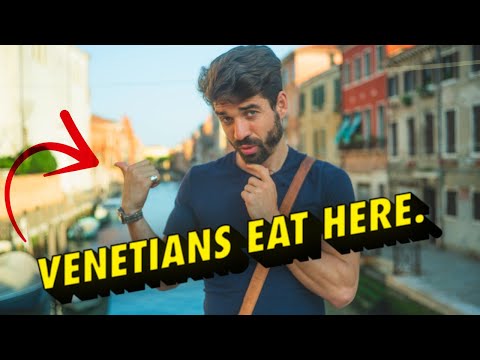
Alex Mark Travel 24h in Venice & Treviso | Italian Food Tour – From Lamb Shank to Legendary Tiramisu
-
Travel Channel A Taste of 'Truly Great' Risotto in Venice | Anothony Bourdain: No Reservations | Travel Channel
-
Messinger Guides Uncovering Venice's Top LOCAL RESTAURANTS | Every Budget [2024]
-
Suitcase Monkey Visiting VENICE in 2026? Don't make THESE Mistakes - Cost Savings, Gondolas, Transport, Hotels



Frequently asked
Is Venice worth visiting?
Yes, but only if you leave the main tourist circuit. The city’s genius lies in its smaller churches and quiet canals rather than the crowded Piazza San Marco. Spend time in Dorsoduro, Cannaregio or the lagoon islands and Venice starts to make sense.
How many days do you need in Venice?
Three full days work for most people. One day for San Marco and the Doge’s Palace, one for museums and churches across the sestieri, and one for Murano, Burano or Torcello. Four days lets you slow down and actually enjoy the city.
How do you get around Venice without getting lost?
Use the yellow signs that say ‘Per Rialto’ or ‘Per San Marco’ on building corners. They are the local navigation system. Download an offline map but trust the signs more than your phone. And accept that you will get briefly lost. Everyone does.
Is Venice very expensive?
It can be. A spritz at a tourist bar costs €8–12 while the same drink at a bacaro costs €3–5. Accommodation is the biggest expense. Eating standing at bacari and buying single vaporetto tickets keeps daily costs reasonable.
When is the best time to visit Venice?
Late October to early December or March to mid-May. Fewer crowds, softer light, and lower hotel rates. Avoid Carnival unless you love costume parties and shoulder-to-shoulder crowds. Summer brings heat, smell and cruise-ship passengers.
Is Venice safe for solo travellers?
Very safe. Petty theft is the main risk, especially around the train station and on crowded vaporettos. The city has almost no violent crime. Women travelling alone report feeling comfortable walking late at night in most areas.
Pick up where you left off
Saved and recently read places — kept on this device only.
Photo credits (12)
- Efrem Efre — Pexels License (https://www.pexels.com/license/) — Source: https://www.pexels.com/photo/16688004/
- Merci Canzado — Pexels License (https://www.pexels.com/license/) — Source: https://www.pexels.com/photo/4991747/
- Carlo Primo — Pexels License (https://www.pexels.com/license/) — Source: https://www.pexels.com/photo/29066447/
- Gutjahr Aleksandr — Pexels License (https://www.pexels.com/license/) — Source: https://www.pexels.com/photo/27914741/
- luis jimenez — Pexels License (https://www.pexels.com/license/) — Source: https://www.pexels.com/photo/8658077/
- Dawid Tkocz — Pexels License (https://www.pexels.com/license/) — Source: https://www.pexels.com/photo/34721368/
- Fer ID — Pexels License (https://www.pexels.com/license/) — Source: https://www.pexels.com/photo/34350840/
- Pablo RAMON — Pexels License (https://www.pexels.com/license/) — Source: https://www.pexels.com/photo/20189797/
- Andreea Girnita — Pexels License (https://www.pexels.com/license/) — Source: https://www.pexels.com/photo/19997646/
- Olesia Sergiiko — Pexels License (https://www.pexels.com/license/) — Source: https://www.pexels.com/photo/392227/
- Efe Ersoy — Pexels License (https://www.pexels.com/license/) — Source: https://www.pexels.com/photo/36522172/
- carlo bettuolo — Pexels License (https://www.pexels.com/license/) — Source: https://www.pexels.com/photo/29735728/
Photos may have been resized or cropped.