Historical Evolution and Significance
Roman and Medieval Origins
Palazzo Vecchia Romanelli stands on land with roots tracing back to Vicenza’s Roman founding. The site aligns with the city’s ancient grid, suggesting continuous habitation from the 2nd century BC (World Travel Connector). Through the medieval period, Vicenza’s urban fabric evolved, culminating in the palazzo’s emergence as a noble residence during the Renaissance and Venetian eras.
Renaissance and 18th-Century Transformations
Although not a Palladian palace, Palazzo Vecchia Romanelli showcases the influences of Vicenza’s Renaissance and 18th-century architectural trends. Commissioned by the Vecchia family and designed by Venetian architect Giorgio Massari in 1748, the building features a harmonious blend of classical symmetry and Baroque decoration (ViCult). The Romanelli family, later owners, were prominent in local governance and cultural circles, reflecting the palazzo’s role in Vicenza’s civic and social life.
Cultural and Urban Role
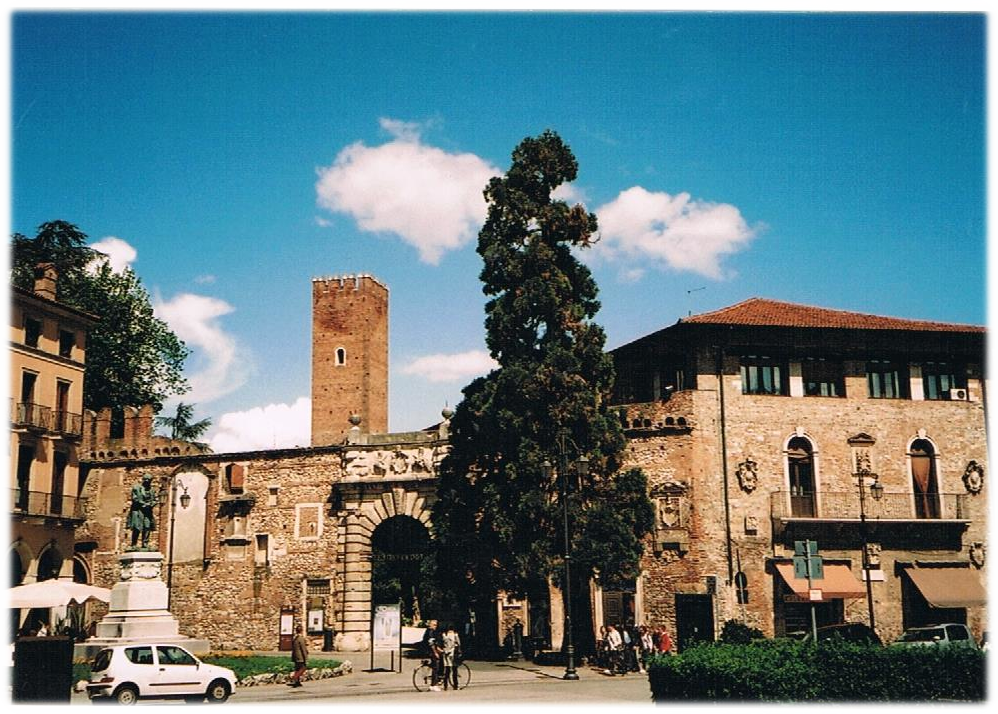
Set near Corso Palladio, the palace forms part of Vicenza’s historic ensemble alongside landmarks like Piazza dei Signori and the Basilica Palladiana. Its strategic location within the UNESCO core area underscores its contribution to the city’s architectural and cultural identity (Vicenzae.org).
Architectural Highlights
Exterior Features
Palazzo Vecchia Romanelli’s facade is a prime example of refined Vicentine architecture, displaying:
- Symmetrical stone-framed windows with subtle ornamentation
- A rusticated ground floor providing visual strength
- Horizontal string courses and decorative cornices
- A central arched portal, often highlighted during special events (Vicenzae.org)
Interior Layout
The interior, typically accessible during guided tours or cultural events, includes:
- A grand staircase ascending to the piano nobile (noble floor)
- Frescoed ceilings and walls with mythological or historical motifs, reflecting Venetian artistic influence
- Ornate stuccoes and decorative fireplaces
A central courtyard, once adorned with sculptures and a garden, enhances the palazzo’s light and ambiance (ViCult).
Visiting Information
Location and Access
- Address Contrà Cantarane, historic center, Vicenza
- Distance from train station 10–15 minutes on foot
- Transport Regional trains from Venice, Verona, and Padua; local buses and taxis; public parking nearby (Parcheggio Verdi, Parcheggio Fogazzaro) (Official Vicenza Tourism)
Visiting Hours and Tickets
- Regular Opening Generally not open for daily public visits; access is limited to special events, exhibitions, or guided tours.
- Hours Vary by event—check the official Vicenza tourism website or local tourist office.
- Tickets Prices for events or tours typically range from €5 to €10; discounts may be available for students, seniors, and groups. The Vicenza Museum Card can offer savings for multiple site visits (Vicenza Museum Card Info).
Guided Tours and Events
Guided tours are available through local operators and cultural associations, often as part of broader Palladian architecture walks. These tours provide expert commentary on the palazzo’s history and artistic features. The building occasionally hosts art exhibitions, concerts, and heritage lectures (Official Tours).
Nearby Attractions
Palazzo Vecchia Romanelli’s central location makes it a convenient starting point for exploring Vicenza’s top sites:
- Basilica Palladiana Iconic Renaissance building with exhibitions and panoramic rooftop views
- Teatro Olimpico Palladio’s famed indoor theater
- Piazza dei Signori Vicenza’s main square, vibrant with cafes and events
- Palazzo Chiericati Art museum in a Palladian palace
- Corso Palladio Lively shopping and pedestrian street (World Travel Connector)
Visitor Tips and Accessibility
Accessibility
Due to its historic nature, Palazzo Vecchia Romanelli may have steps, uneven floors, and narrow passageways. Wheelchair access is limited—contact the tourist office for detailed information regarding accessibility and potential accommodations.
Facilities
Restrooms are not typically available inside the palazzo but can be found throughout the historic center, especially near Piazza dei Signori and Corso Palladio. Numerous cafes and restaurants are within walking distance (Local Insights).
Best Times to Visit
Late spring and early autumn (May–June, September–October) offer the most pleasant weather and fewer crowds. Early mornings and weekdays are ideal for a quieter experience (Visitor Tips).
Dress Code and Photography
While no strict dress code is enforced, respectful attire is recommended, especially when visiting nearby religious or historic sites. Always ask before taking photos inside the palazzo and avoid flash or tripods unless permitted.
Frequently Asked Questions (FAQ)
Q: Is Palazzo Vecchia Romanelli open to the public?
A: Regular access is limited; the palazzo is mainly open for special events or guided tours.
Q: How do I check visiting hours and book tickets?
A: Visit the official Vicenza tourism website or contact the local tourist office for up-to-date schedules and ticketing.
Q: Is the palazzo wheelchair accessible?
A: Accessibility is limited due to historic architecture. Contact the venue or tourist office for details.
Q: Are guided tours available?
A: Yes, through local cultural associations and tour operators; advance booking is recommended.
Q: What are the best nearby attractions?
A: Basilica Palladiana, Teatro Olimpico, Piazza dei Signori, and Corso Palladio.