Introduction
Located in the heart of Verona, the Monument to Giuseppe Chiot stands as a powerful symbol of compassion and resistance during Italy’s tumultuous 20th century. Honoring Don Giuseppe Chiot, a Catholic priest and prison chaplain renowned for his humanitarian work during World War II, this monument offers visitors a chance to reflect on themes of mercy, moral courage, and social justice. Whether you are a history enthusiast, a cultural traveler, or simply exploring Verona’s rich heritage, this guide provides detailed information about the monument’s history, significance, visiting hours, accessibility, and practical travel tips.
Explore the story of Don Chiot and how his enduring legacy is memorialized through art and community remembrance, and discover how to make the most of your visit to this important yet often overlooked landmark (churchesofvenice.com; Wikipedia: Giuseppe Chiot; Radio RCS; alongdustyroads.com).
Historical Background
Verona is renowned for its Roman and medieval heritage, but its modern history is equally compelling. During World War II, following the fall of Mussolini in 1943, the city became a center of Fascist administration and repression. The prison near Castelvecchio held political prisoners, resistance members, and those accused of betraying the regime. Amidst this climate, Don Giuseppe Chiot served as both parish priest at San Luca Evangelista and as prison chaplain, providing spiritual and humanitarian support to all, regardless of political affiliation (churchesofvenice.com).
Don Giuseppe Chiot: Life and Legacy
Early Life and Ministry
Don Giuseppe Chiot (1879–1960) was a prominent religious leader in Verona. As parish priest at San Luca Evangelista and chaplain at the city’s main prison, he became a figure of moral fortitude and mercy. Chiot’s ministry spanned decades, including the most harrowing years of the Nazi-Fascist occupation (churchesofvenice.com).
Humanitarian Impact
Chiot was widely respected for his impartial compassion. He ministered to prisoners across political divides, including prominent figures like Galeazzo Ciano, Mussolini’s son-in-law, during his final days. Chiot’s refusal to judge and his unwavering commitment to human dignity left a lasting impression on inmates and the wider community (churchesofvenice.com; Wikipedia: Giuseppe Chiot).
Recognition and Memorialization
His legacy is chronicled in scholarly studies and honored by naming the street near the former prison after him. The monument and related commemorative initiatives underscore the city’s gratitude and desire to remember his acts of conscience (italia-resistenza.it).
The Monument: Artistic Significance and Symbolism
Creation and Artist
Sculpted by Vittore Bocchetta, a survivor of Fascist repression and a former prisoner who knew Chiot personally, the monument was unveiled in 1989. Bocchetta’s artwork is a deeply personal tribute, blending figurative and abstract elements to convey both Chiot’s persona and his mission (Wikipedia: Giuseppe Chiot; Radio RCS).
Design and Symbolism
The bronze figure depicts Don Chiot in a listening posture, symbolizing empathy and attentive care. He is flanked by two upright white stones representing the prison walls and the spiritual barriers he helped overcome. The orientation—facing the former prison—serves as a silent testament to the suffering endured and the hope offered within those walls. The use of bronze and local white stone highlights contrasts between endurance and purity, justice and mercy (Wikipedia: Giuseppe Chiot).
Site Context
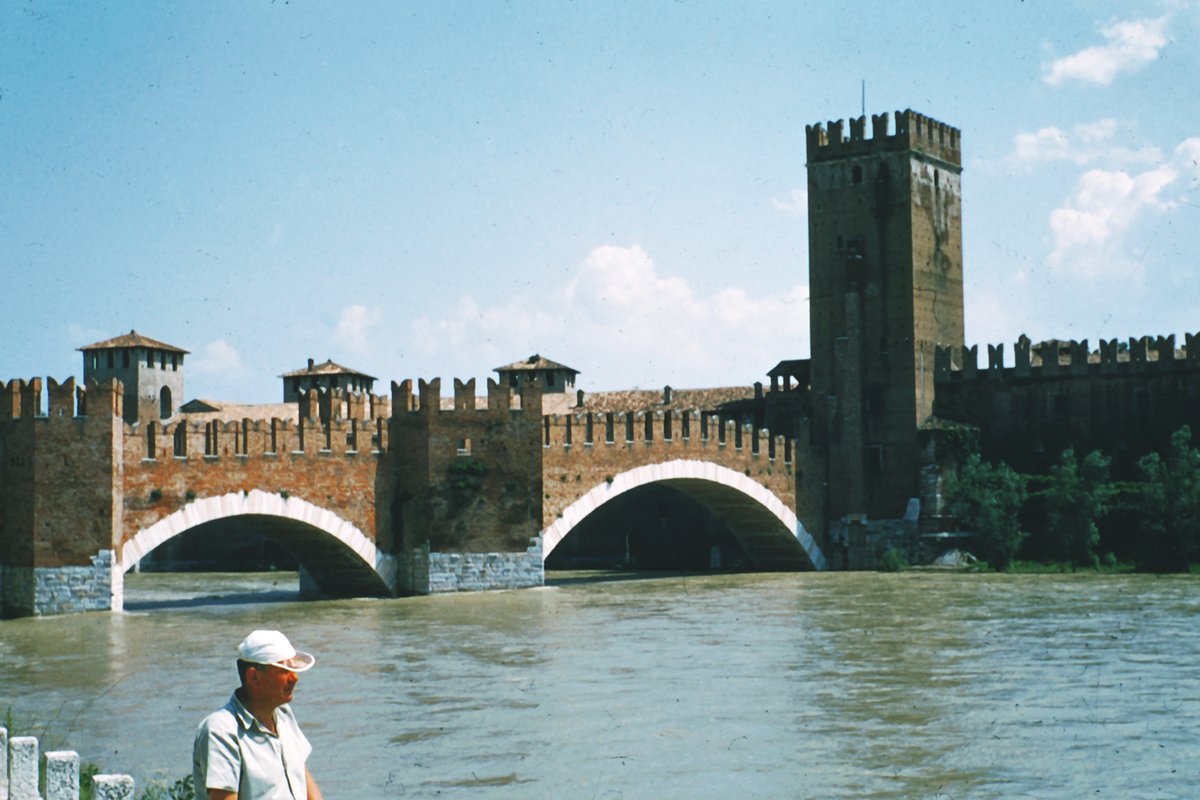
Set in Largo Don Giuseppe Chiot, opposite the former Carcere degli Scalzi and near the Church of Santa Teresa dei Carmelitani Scalzi, the monument’s placement amplifies its contemplative atmosphere. Its proximity to other sites of remembrance further anchors it within Verona’s layered history (Radio RCS).
Practical Visitor Information
Location and Accessibility
- Address: Largo Don Giuseppe Chiot, Verona, Italy (central, near Castelvecchio and Piazza Bra)
- Access: The site is pedestrian-friendly and wheelchair accessible. Public transportation reaches the area, and limited parking is available nearby. Visitors are encouraged to walk or use public transit.
Visiting Hours and Entry
- Hours: Open 24 hours, year-round.
- Tickets: No entry fee; the monument is in a public square and freely accessible (alongdustyroads.com).
Guided Tours and Events
While there are no tours dedicated exclusively to the monument, several Verona walking tours focused on World War II history and sites of resistance include this stop. Special commemorative events are occasionally held, particularly on anniversaries of the Verona Trial or local remembrance days (Radio RCS).
Photography Tips
The monument’s setting against the church and former prison makes it ideal for photography, especially during early morning or late afternoon when natural light is optimal. Please respect the site’s solemnity and avoid disruptive behavior.
Nearby Attractions
- Castelvecchio Museum: Medieval fortress and art museum.
- San Luca Evangelista Church: Chiot’s former parish, featuring a commemorative plaque (Wikipedia: Giuseppe Chiot).
- Arena di Verona and Piazza Bra: Major city landmarks within walking distance (The Crazy Tourist).
- Church of Santa Teresa dei Carmelitani Scalzi: Baroque church adjacent to the monument.
Cultural Insights and Preservation
The monument is not only an artistic memorial but also a center for community engagement, social justice events, and educational visits. Despite its importance, recent years have seen challenges such as reduced visibility due to parked vehicles and city infrastructure. Local advocacy efforts continue to push for better maintenance and increased recognition of Verona’s 20th-century heritage (Radio RCS; Visit Verona).
Frequently Asked Questions (FAQ)
Q: Is there an entrance fee to visit the Monument to Giuseppe Chiot?
A: No. The monument is located in a public square and is free to visit at any time.
Q: What are the visiting hours?
A: The site is outdoors and accessible 24/7.
Q: Is the monument accessible for visitors with mobility challenges?
A: Yes, the area is at street level and wheelchair accessible, though parked vehicles may occasionally obstruct access.
Q: Are guided tours available?
A: Many city walking tours include the monument as part of World War II or resistance-themed itineraries.
Q: Can I visit the former Carcere degli Scalzi?
A: The prison is no longer operational, but its location is marked and visible from the monument.
Listen to the full story in the app
Your Personal Curator, in Your Pocket.
Audio guides for 1,100+ cities across 96 countries. History, stories, and local insight — offline ready.
Audiala App
Available on iOS & Android
Join 50k+ Curators
Sources
- verified
- verified
- verified
- verified
- verified
-
verified
Practical Visitor Information and Accessibility for the Eiffel Tower: Your Ultimate Guide, 2025, Official Sources and Travel Guides
Last reviewed: