An introduction.
Researched by the Audiala editorial team from historical records, architectural archives, and local expertise.
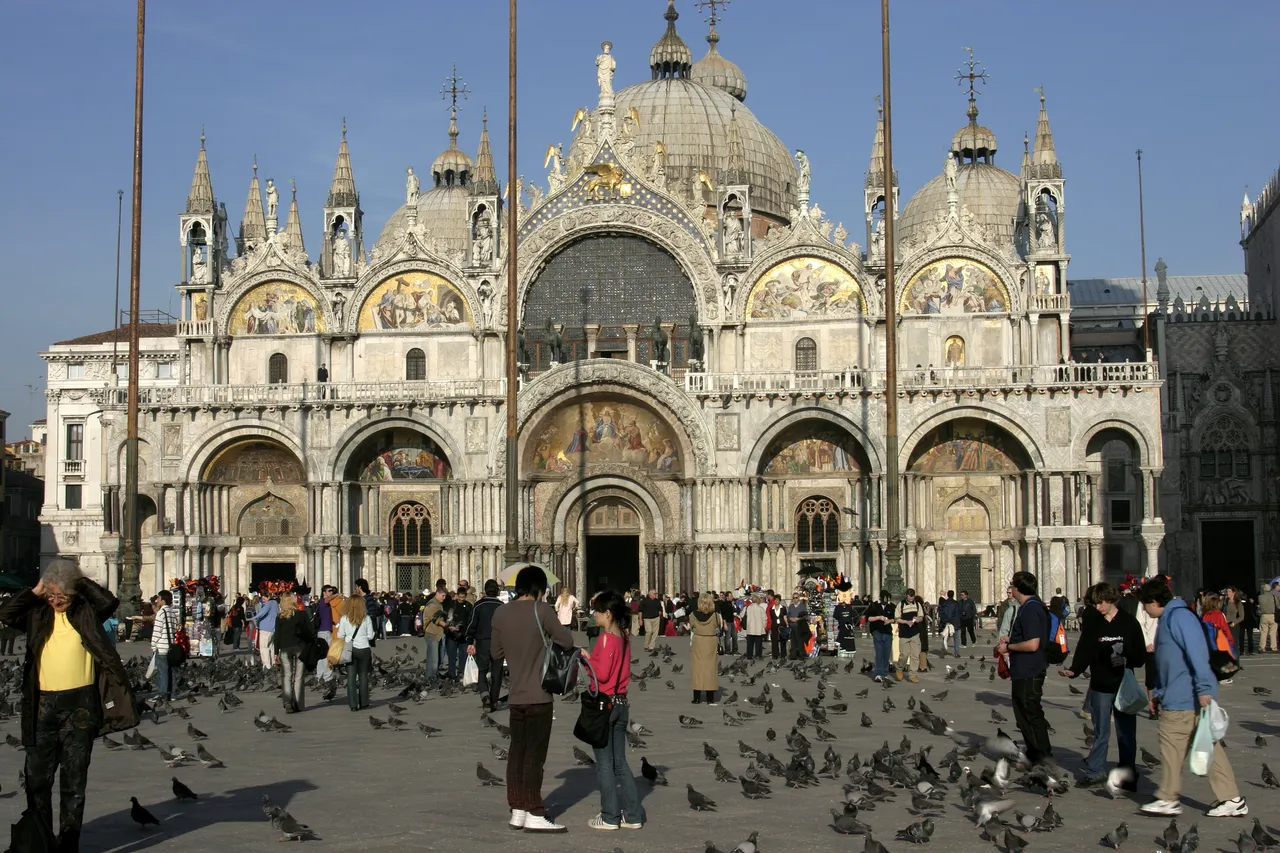
TThe body inside the central pillar may not be St Mark's at all. A persistent scholarly whisper — never settled because no church has allowed DNA testing — suggests it could be Alexander the Great, also stolen from Alexandria in late antiquity and mistaken for an evangelist by two ninth-century Venetian merchants in a hurry. St Mark's Basilica in Venice, Italy, is built on that question. You walk in expecting a cathedral and find something stranger: a gold-soaked Byzantine cave on the Adriatic, the doge's old private chapel, the most spectacular reason to come to the lagoon city.
Push through the velvet draught-curtain at the atrium and the temperature drops. Eight thousand square metres of gold mosaic press in from every dome and curve — real gold leaf sandwiched between two layers of glass, a Byzantine trick so the surface would never tarnish. Your footsteps echo off uneven marble that buckles where the tide has come up through the floor. The whole interior smells faintly of damp limestone and beeswax.
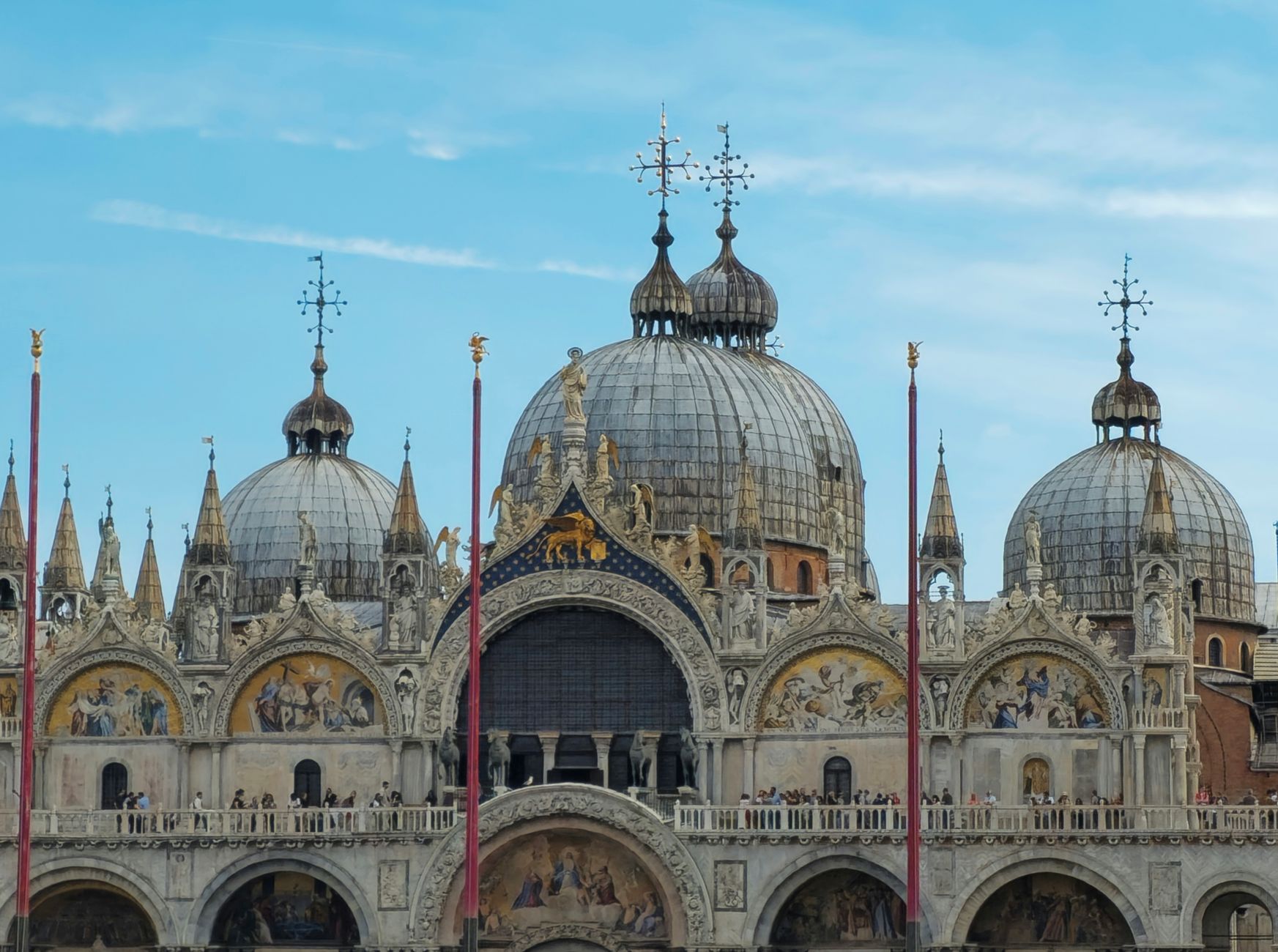
Almost everything you see was looted. More than five hundred columns were stripped from the eastern Mediterranean, mostly Byzantine sixth-to-eleventh-century, some Roman from the third. Venetians have a phrase for the basilica: deposito di refurtiva — the warehouse of stolen goods. The bronze horses on the loggia came from Constantinople in 1204, along with the porphyry tetrarchs at the southwest corner and the enamels that would later anchor the Pala d'Oro behind the high altar.
Come early or come at dusk. Skip the daytime crush in Venice and arrive when the western sun catches the Sant'Alipio mosaic above the leftmost portal — the only thirteenth-century image we have of what the basilica actually looked like in the Middle Ages, a kind of accidental photograph from 1265. The basilica is still a working cathedral, still the seat of the Patriarch, still echoing with the same polyphonic choir that has been singing here since 1316. Not a museum. The place Venice prays.
Venice Explained
Manuel Bravo01 What to see.
The Floor That Moves Like Water
Look down before you look up. The 2,099 m² pavement under your feet has been buckling for a thousand years — porphyry, serpentine, alabaster, and Egyptian marble laid in 107 distinct geometric patterns, warped by acqua alta and lagoon subsidence into something that genuinely undulates. A Venetian guide once told me to visit the basilica with my shoes, not my eyes. She was right.
Walk slowly along the right aisle and you'll find three eagles, then deer, griffins, doves, peacocks — a whole symbolic bestiary most visitors stride straight over. Best of all is the mare centrale, a panel where 11th-century artisans matched the natural veining of marble slabs to suggest waves. No mosaic. Just stone grain. Pure abstraction, eight centuries before abstraction was a word.
8,600 Square Metres of Gold
Then tilt your head back. The ceilings hold 8,600 m² of mosaic — every gold tessera a sheet of real gold leaf sandwiched between two layers of glass, set at slightly irregular angles so light scatters as you move. The effect isn't bright. It's veiled, warm, almost Middle Eastern, the way Ruskin described it when he called the place a confusion of delight.
Five domes tell five stories. The central Ascension dome (12th century) shows Christ rising in a starred medallion carried by four angels, with the twelve Apostles and the Virgin standing among golden trees of the earthly world below. Come at late afternoon if you can. The sun drops through the west façade and the gold goes from white to amber in about twenty minutes.
Climb to the Bronze Horses
Pay the extra few euros for the Museo Marciano and Loggia dei Cavalli — almost nobody does, and it's the best move in the building. Upstairs you stand eye-to-eye with the original Triumphal Quadriga, four bronze horses cast somewhere between the 2nd and 4th centuries and looted from Constantinople in 1204. The ones outside on the façade are copies. These are the real things, and they still have the seams where Crusader soldiers cut them apart for transport.
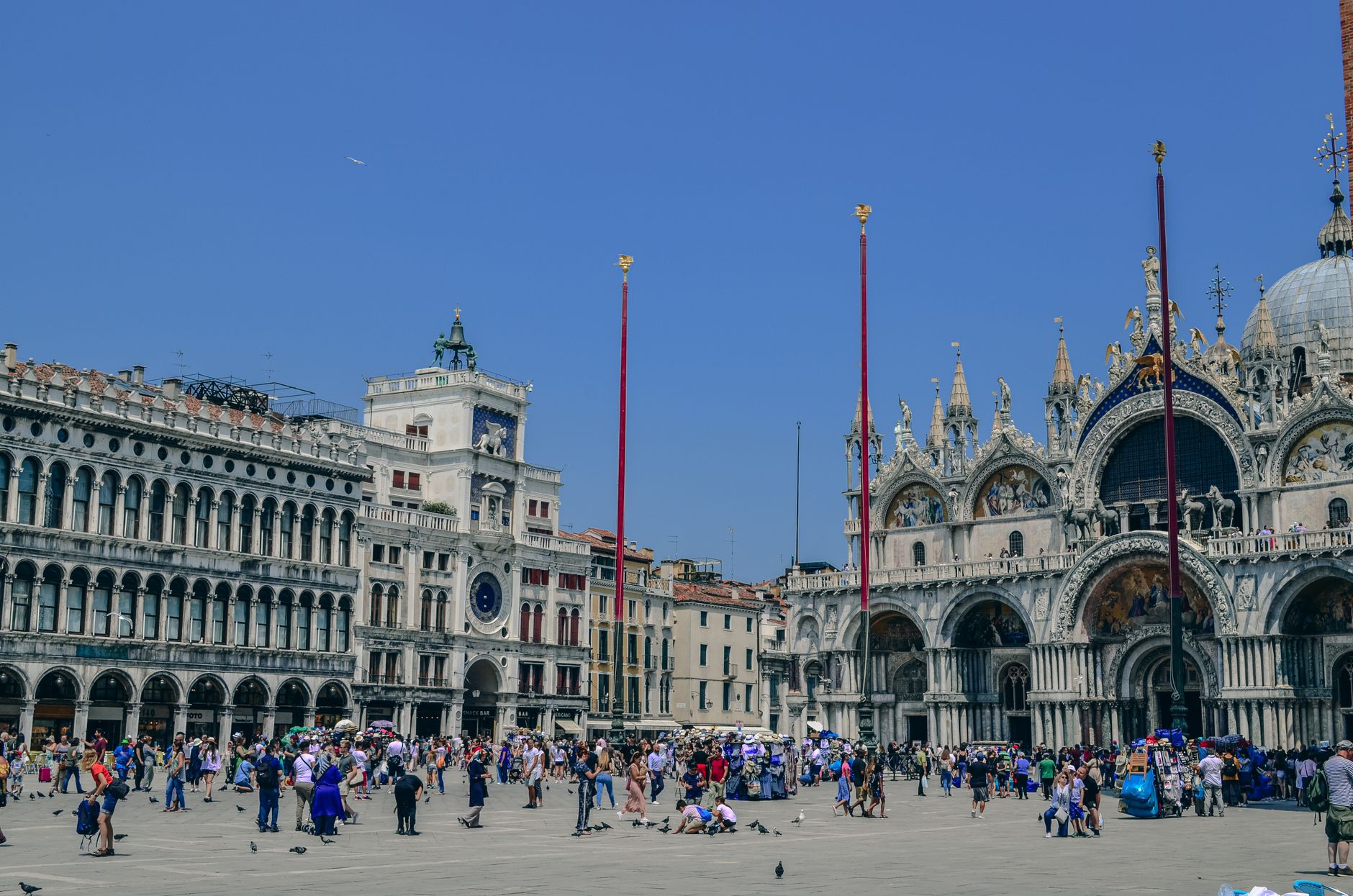
Step onto the outdoor loggia and Piazza San Marco unfolds below — the Campanile to your right, the lagoon ahead, pigeons wheeling at your feet. From the inner gallery you also get the only honest view of the floor pattern as a whole, and the dome mosaics at face level. Pair it with Santi Giovanni e Paolo the same afternoon if you want a second great Venetian interior without the crowds.
Insider tip: book the night visit
02 In pictures.



Watch & Explore St Mark's Basilica.
Plan and listen to St Mark's Basilica with Audiala.
Audio guide in your pocket, itinerary in your browser. Built for the way you actually visit.
Tickets & tours.
These are guided options from our partners — same price as booking direct.
Prices are indicative — final pricing and availability are confirmed at checkout. Audiala may earn a commission from bookings made through these links.
Also on GetYourGuide
More tours for St Mark's Basilica
Curated from GetYourGuide. Same price as official, free cancellation on most.
 GetYourGuide
Venice: St. Mark's Basilica, Doge's Palace & Bridge of Sighs
from
€43
 GetYourGuide
Doge’s Palace & St. Mark’s Basilica Tickets + Tour Options
from
€72
 GetYourGuide
St Mark's Basilica & Campanile Ticket & Tour Options
from
€25
 GetYourGuide
Venice: St. Mark’s Basilica Skip-the-Line Tickets & Tours
from
€24
Prices shown are indicative — final pricing and availability are confirmed at checkout. Audiala may receive a commission from bookings made via these links.
03 Visitor logistics.
The practical scaffolding for a good visit — kept short.
Getting There
No cars in central Venice. Vaporetto lines 1, 2, 5.1 or 7 to San Marco–Vallaresso or San Marco–San Zaccaria, then 2 minutes on foot. From Santa Lucia station: Line 1 (~35 min, slow Grand Canal route) or Line 2 (~25 min). From Marco Polo airport: Alilaguna Blu/Arancio/Rossa to San Marco, ~1h15.
Opening Hours
As of 2026: Monday–Saturday 09:30–17:15, Sunday and holy days 14:00–17:15 (mornings reserved for Mass). Last admission 16:45. Acqua alta can force temporary closure — narthex floods first. Sunday morning is worship-only, no tourist entry.
Time Needed
Nave alone: 20–30 minutes. Add Pala d'Oro and Treasury: 60–75 minutes. Full visit including Loggia, bronze horses and Museum: 90–120 minutes. Without a timed ticket, add 30–90 minutes of queue in summer. Guidebooks claiming '30 minutes is enough' underestimate the mosaics.
Tickets
Book only via tickets.basilicasanmarco.it — separate tickets for Basilica, Pala d'Oro, Treasury, Terrace and Campanile, combined ~€30. Skip-the-line resellers add €5–15 markup. Tickets are nominative. Mass attendance is free via the Porta dei Fiori on the north side, but no sightseeing of paid areas.
Accessibility
Step-free entrance on Piazzetta dei Leoncini (north side); staff assist. Free entry for disabled visitor plus one companion. Nave, presbytery and Pala d'Oro reachable by ramp. Terrace, Loggia and Treasury crypt are not accessible — narrow medieval stairs. Floor mosaic is uneven and bumpy for wheelchairs.
04 Tips for visitors.
Small things that change the day.
Dress Code Enforced
Shoulders and knees covered, both sexes. No tank tops, shorts, miniskirts, ripped jeans, flip-flops, hats inside. Security turns people away — bring a scarf or buy one from Piazza stalls for a few euros.
No Photos Inside
Photography and filming are prohibited inside the basilica as of 2026 — recently tightened from the old 'no flash' rule. Exterior, Terrace and Piazza views are fair game. Tripods and drones banned across the historic centre.
Time Your Slot
Book the 09:30 opening or arrive after 15:30 — cruise-ship surge runs roughly 11:00–14:00. Better still, attend Mass via the Porta dei Fiori for free entry and the only chance to feel the place as a church rather than a queue.
Pickpockets and Piazza Scams
Pickpockets work the entry queue and vaporetti hard. Watch for fake-petition clipboards, 'free' roses and friendship bracelets that turn into demands, costumed photographers wanting €10–20. Buy tickets only on basilicasanmarco.it — street hawkers sell fakes.
Eat Off the Piazza
Skip Caffè Florian and Quadri unless the €15 coffee plus orchestra supplement is the point. Walk 5 minutes over Rialto to Bar all'Arco or Cantina Do Mori (Venice's oldest bàcaro, 1462) for cicchetti at €1.50–2.50 with an ombra of wine. Bistrot de Venise nearby for Venetian historical recipes if you want to splurge.
Drop Bags at Ateneo San Basso
Large bags banned inside, no cloakroom. Free deposit at Ateneo San Basso on Piazzetta dei Leoncini, 30m from entry, but only for skip-the-line ticket holders, one small/medium bag, visit duration only. Otherwise Radical Storage points around San Marco run €5–7/day.
The Horses Outside Are Fakes
The four bronze horses on the loggia are replicas. The originals — the Triumphal Quadriga looted from Constantinople in 1204 — live in the Basilica Museum upstairs. Worth the Terrace ticket for the real horses plus the Piazza view from the balcony.
Pala d'Oro Faces Away
The 1,927-gem altarpiece is normally turned toward the apse, viewable only from the paid Pala d'Oro section behind the high altar. It rotates to the nave only during Patriarchal ceremonies — a mechanism added in 1958 by Patriarch Roncalli (later Pope John XXIII) after tourists kept leaning on the altar.
Where to Eat
Don't Leave Without Trying
Santo Mare Venice
fine diningOrder: The lobster is exceptional, and you absolutely cannot leave without trying their pistachio gelato.
This is a polished, high-end gem hidden in plain sight. It offers a sophisticated atmosphere with service that truly stands out for its warmth and professional detail.
Osteria Da Bubi
local favoriteOrder: The octopus is a standout, and the classic pasta dishes are consistently well-priced and delicious.
It’s a bustling, energetic spot that feels like a real neighborhood find. It’s perfect for groups who want hearty, authentic food without the stuffiness of the main tourist squares.
Bar Ai Do Leoni
quick biteOrder: An Aperol Spritz paired with a selection of their freshly prepared cicchetti.
This is the spot for an authentic 'n'ombra de vin' experience. It’s small, lively, and perfectly positioned for a quick, high-quality bite during an afternoon of exploring.
Brunch Cafe
cafeOrder: The fluffy egg white pancakes with mango and coconut sauce are a must-try.
A rare find in Venice that truly excels at morning service. It’s friendly, accommodating to dietary needs like gluten-free, and the coffee is consistently perfect.
Dining Tips
- check Tipping is not expected; service is often included as 'servizio' or 'coperto'.
- check Carry cash coins for tips or small bar tabs, as card machines often don't support gratuity.
- check Aperitivo is a local ritual; enjoy cicchetti and a spritz in the late afternoon.
- check Rialto Market's fish section is best visited Tuesday–Saturday mornings between 7:30 am and 8:00 am.
- check For sit-down restaurants near San Marco, advance reservations are highly recommended, especially for dinner.
Restaurant data powered by Google
05 The Warehouse Built Around a Body
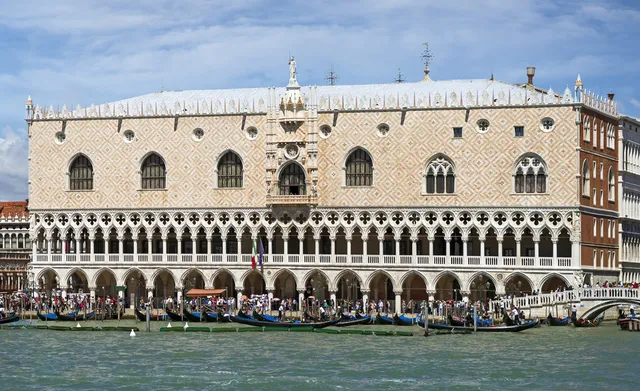
For roughly a thousand years the basilica was not Venice's cathedral. It was the doge's private chapel, attached to his palace next door, controlled by him directly. Only in 1807, after Napoleon dissolved the Republic, did San Marco become the seat of the Patriarch — the role it still holds today.
The building you see is the third on this site, begun in 1063 under Doge Domenico Contarini and consecrated in 1094. Its predecessors burned. Its decoration was stolen. Its central relic — the supposed body of St Mark — vanished, then reappeared, in ways that have never quite added up.
The Doge They Burned in the Atrium
The story most visitors hear is that the basilica is a continuous monument to civic peace — built to house an evangelist, expanded over centuries by grateful doges, gilded by trade. Five great domes of confidence above the lagoon.
Records show otherwise. On a night in 976 the city rose against Doge Pietro IV Candiano — the same Candiano who had repudiated his first wife to marry Waldrada of Tuscany for a pro-Germanic alliance, and who had blinded a rival to install his brother as Patriarch of Grado. The mob set fire to the Doge's Palace. Pietro fled with his wife and their infant son into the basilica atrium, betting that holy ground would protect them. It didn't. The crowd broke through the doors and killed all three on the spot. Fire jumped from the palace to the church and took down half of it.
That fire is why the basilica's central relic disappeared. When Doge Vitale Falier consecrated the rebuilt church in 1094, the body of St Mark — lost since 976 — conveniently emerged from a pillar during the ceremony. Pietro I Orseolo, the doge who succeeded Candiano, had paid for the entire reconstruction out of his own pocket. Walk through the atrium today and you are walking across the spot where a doge, his wife, and their child were murdered to keep Venice facing east toward Constantinople rather than north toward the Holy Roman Empire. The geopolitics of the lagoon hardened on these flagstones.
The Pala d'Oro and a Swapped Head
The Choir That Has Sung Here Since 1316
Listen to the full story in the app
The whole St Mark's Basilica,
told well.
Audio guides for 1,100+ cities across 96 countries. History, stories, and local insight — offline ready.
06 Frequently asked.
The questions travellers send us most about St Mark's Basilica.
Is St Mark's Basilica worth visiting?
Yes — it's the only Byzantine cathedral in Western Europe still operating as one, and the interior holds 8,600 m² of gold mosaic you cannot see anywhere else. Skip it only if you refuse to book ahead, since the queue without a timed ticket runs 1–2 hours in season. Go early (09:30 slot) or late afternoon when the western sun ignites the gold tesserae.
How long do you need at St Mark's Basilica?
Plan 90 minutes minimum if you want the full ticket (Basilica + Pala d'Oro + Museum + Loggia dei Cavalli). The nave alone takes 20–30 minutes, but the Pala d'Oro behind the high altar — 1,927 gemstones, begun 1105 — and the original bronze horses upstairs are why you came. Guidebooks suggesting 30 minutes are wrong.
How much does it cost to enter St Mark's Basilica?
Basilica entry is now €10 (the long-standing free entry ended in 2024), and the combined ticket with Pala d'Oro, Museum, and Loggia dei Cavalli runs around €20–30. Buy direct at tickets.basilicasanmarco.it — resellers add €5–15 markup. Free entry still applies to worshippers attending Mass via the Porta dei Fiori on the north transept.
What is the dress code for St Mark's Basilica?
Shoulders and knees must be covered for everyone — no tank tops, no shorts, no miniskirts, no crop tops, no flip-flops. Security turns people away at the door, so bring a scarf or shawl as backup. Hats off inside; men cannot wear sleeveless shirts.
Can you take photos inside St Mark's Basilica?
No — photography and filming are banned inside the basilica, a recently tightened rule. Exterior shots, the Loggia dei Cavalli, and Piazza San Marco are all fine. The best photo spot is actually the outdoor terrace at eye level with the bronze horse replicas.
What should I not miss at St Mark's Basilica?
Look down before you look up — the 1,000-year-old marble floor heaves like a frozen sea, with deer, griffins, peacocks, and a vast 'central sea' panel where artisans matched stone veining to suggest waves. Then climb to the Loggia dei Cavalli for the four original bronze horses (2nd–4th c., looted from Constantinople in 1204) and the Pala d'Oro behind the high altar. The far-left façade lunette, 'Translation of the Relics' (1265), is the only surviving original 13th-century exterior mosaic.
Why are the domes of St Mark's Basilica so tall?
The five great domes you see from outside are wood-and-lead fakes — the real brick domes inside sit much lower. Venetian builders added the taller outer shells so ships approaching the lagoon could spot the silhouette from miles out. It's a Byzantine inner church wearing a Gothic outer hat.
How do I get to St Mark's Basilica from Santa Lucia station?
Take vaporetto line 1 (slow, ~35 min, every Grand Canal stop) or line 2 (faster, ~25 min) to San Marco–Vallaresso or San Marco–San Zaccaria — both two minutes from Piazza San Marco. No cars, no metro in central Venice. Walking takes about 35–40 minutes if you can read the 'Per San Marco' signs without getting lost (you will get lost — embrace it).
Verified, and shown.
Researched and written by the Audiala editorial team from historical records, architectural archives, and local expertise.
Official chronology of the Pala d'Oro: 1105 commission, 1209 upper register, 1342–45 Gothic frame, 1847 final fixing, 1958 rotation mechanism.
Authoritative dated timeline from 828 relic theft through Sansovino consolidation, Cappella Marciana documentation, and 19th-c. restorations.
Authoritative source for 2026 ticket prices, timed-entry slots, and the four products (Basilica, Pala d'Oro, Museum, Loggia).
Confirms nominative tickets and pricing structure for combined entries.
Official enforced rules: dress code (shoulders/knees covered), photography ban, baggage limits.
Cross-checked dates: 836 first church, 976 fire, 1063 Contarini rebuild, 1094 consecration, 1807 cathedral status.
1927 gemstone inventory, Boninsegna 1342 signature, Ordelaffo Falier head-swap forensic detail.
'Xe tutto vero' Venetian dialect pun legend, framed explicitly as legend not history.
Outer domes are wood/lead fakes, 8,000 m² gold mosaics, basilica as 'warehouse of stolen goods', 1902 campanile collapse.
976 mob murder of Doge Pietro IV Candiano in basilica atrium; 1094 'rediscovery' of relic in pillar.
Opening hours: Mon–Sat 09:30–17:15, Sunday 14:00–17:15, last admission 16:45.
Visitor logistics: campanile last entry 20:45, vaporetto access, queue timing.
Confirms strict shoulders-and-knees rule, refused-entry policy.
Practical dress code guidance and on-site scarf availability around Piazza.
Confirms interior photography and filming ban.
2,099 m² mosaic floor, 'visit with your feet' guide quote, undulation from subsidence and acqua alta.
Five-dome theological program (Pentecost, Ascension, Emmanuel, St John, St Leonard); 'veiled light' description.
Double-shell dome construction, 2019 acqua alta 1.87m flood marker.
Floor symbol meanings: three eagles, deer, griffins, doves, peacocks.
Loggia dei Cavalli access, original 4 bronze horses inside Museo Marciano, replicas outside.
World Heritage Site listing covering Venice including Basilica di San Marco.
Renaissance altar restoration program inside the basilica.
Visitor sentiment on combined ticket value and queue experience.
Ruskin's 'treasure-heap' description and pavement aesthetics.
Researched from Wikidata, Wikipedia & official sources · fact-checked · How we make our guides →