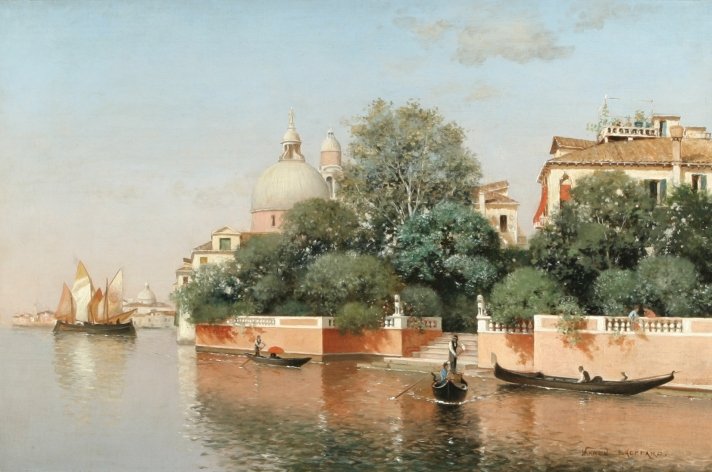
Plan and listen to Palazzo Contarini Polignac with Audiala.
Audio guide in your pocket, itinerary in your browser. Built for the way you actually visit.
Introduction
Calle Nova Sant'Agnese, nestled in the heart of the Dorsoduro district of Venice, Italy, offers a unique window into the city's rich historical tapestry and vibrant cultural scene. This enchanting street, named after the Church of Sant'Agnese, is steeped in history dating back to the early medieval period. The Dorsoduro district itself is renowned for its artistic and architectural significance, home to landmarks such as the Gallerie dell'Accademia and the Peggy Guggenheim Collection (Venezia Unica). Visitors to Calle Nova Sant'Agnese can expect to traverse a path that has witnessed centuries of Venetian life, from its initial development in marshlands to its transformation during the Gothic and Baroque periods (Religiana). This guide aims to provide a comprehensive overview, including historical insights, architectural highlights, and practical visitor information to ensure an enriching experience.

Historical Background
Origins and Early Development
Calle Nova Sant'Agnese is situated in an area renowned for its historical and cultural significance. The origins of this street date back to the early medieval period when Venice was in its formative stages. Initially characterized by marshlands and small islands, the area around Calle Nova Sant'Agnese was gradually reclaimed and developed over the centuries. The island of Sant'Agnese, where the street is located, was originally a separate entity. Historical records suggest significant extensions and developments during the 11th and 12th centuries.
Napoleonic Era and Restoration
In 1810, the Church of Sant'Agnese was closed to worship due to Napoleonic decrees, resulting in the loss of much of its interior decoration. It wasn't until the mid-19th century that the church was restored and reopened for worship, although little of the original structure remained (Religiana).
Architectural Significance
Gothic and Baroque Influences
The architectural significance of Calle Nova Sant'Agnese is closely tied to the Church of Sant'Agnese. The church's original Gothic elements were prominent until the Baroque period, which introduced new stylistic features. Although the Gothic portico is no longer present, the church's architectural evolution reflects the broader changes in Venetian architecture over the centuries (Religiana).
Nearby Architectural Landmarks
Calle Nova Sant'Agnese is also in proximity to other significant buildings, such as the Chiesa dei Gesuati and the now-demolished Chiesa di San Vio. The Gesuati church, built between 1726 and 1743, is a notable example of Baroque architecture and was originally constructed for the Dominican friars (Religiana).
Cultural and Historical Context
Dorsoduro Art District
Calle Nova Sant'Agnese is part of the Dorsoduro district, known for its rich cultural and artistic heritage. The district is home to several important cultural institutions, including the Gallerie dell'Accademia and the Peggy Guggenheim Collection. The area is also famous for its vibrant art scene, featuring both Venetian and international contemporary art (Venezia Unica).
Local Traditions and Festivals
The Dorsoduro district, including Calle Nova Sant'Agnese, is known for its local traditions and festivals. One notable event is the Madonna of Maria di Malamocco Festival, celebrated in the nearby Lido area. This festival is steeped in tradition and offers a glimpse into the local culture and heritage (Venice Travel Tips).
Visitor Information
Ticket Prices and Opening Hours
Calle Nova Sant'Agnese can be freely accessed at any time as it is a public street. However, visiting the Church of Sant'Agnese may require checking specific visiting hours and potential ticket prices, which can be obtained from local tourist information centers or their official website.
Best Time to Visit
Visiting Calle Nova Sant'Agnese and the surrounding Dorsoduro district is best done in the early morning or late afternoon to avoid the crowds and the intense summer heat. August, in particular, can be quite hot, with temperatures ranging from 25°C to 30°C (77°F to 86°F) (Venice Insider Guide).
Navigating the Area
To fully appreciate the area, visitors should consider exploring on foot. The Dorsoduro district is known for its charming streets and hidden gems, making it ideal for leisurely strolls. Key landmarks to visit include the Ponte dell'Accademia, Campo Santo Stefano, and the Church of San Barnaba, which houses a permanent exhibition of Leonardo Da Vinci's working machines (Venezia Unica).
Staying Hydrated and Comfortable
Given the summer heat, it's crucial to stay hydrated. Carrying a reusable water bottle is recommended, as there are many drinking fountains around the city providing fresh, cool water. Dressing smartly for the summer heat, with light and breathable clothing, will also enhance the experience (Venice Insider Guide).
Booking in Advance
Due to Venice's popularity, especially in August, it's advisable to book tickets for popular attractions in advance. This includes sites like the Doge's Palace and gondola rides. Booking in advance not only ensures entry but also provides more flexibility in planning the visit (Venice Insider Guide).
Hidden Gems and Off-the-Beaten-Path
Exploring Lesser-Known Areas
While Calle Nova Sant'Agnese and the Dorsoduro district are popular, there are still hidden gems to discover. Wandering through lesser-known neighborhoods like Cannaregio or Dorsoduro itself can reveal charming cafes, local boutiques, and quiet corners that offer a more authentic and intimate glimpse into the Venetian way of life (Venice Insider Guide).
Island Adventures
For those looking to venture beyond the main island, the Venetian Lagoon offers enchanting islands like Burano and Torcello. Burano is famous for its colorful houses and intricate lacework, while Torcello is known for its ancient churches and serene nature. These islands provide a tranquil escape from the bustling city and a chance to witness the authentic local lifestyle (Venice Insider Guide).
Nighttime Photography
Venice's allure doesn't diminish after dark; in fact, it becomes even more magical when the city lights up. Bringing a camera and tripod to capture stunning nighttime shots of the illuminated architecture reflected in the shimmering canals is highly recommended. A late-night stroll through the city, bathed in a golden glow, can be a memorable experience (Venice Insider Guide).
Practical Information
Getting There
Calle Nova Sant'Agnese is easily accessible from various parts of Venice. The nearest major landmark is the Ponte dell'Accademia, a wooden bridge built between 1932 and 1933, offering one of the most beautiful views of the Canal Grande (Venezia Unica).
Nearby Attractions
In addition to the Church of Sant'Agnese, visitors can explore nearby attractions such as the Chiesa dei Gesuati and the now-deconsecrated Church of San Barnaba. The latter is particularly interesting for film buffs, as its façade was used in the movie 'Indiana Jones and the Last Crusade' (Venezia Unica).
Local Cuisine
Indulging in local cuisine is a must when visiting Venice. Seasonal delights like fresh seafood, delectable cicchetti (small plates), and the renowned Bellini cocktail can be enjoyed at local bacari (wine bars) and trattorias. These venues offer a chance to mingle with locals while relishing traditional dishes that have stood the test of time (Venice Insider Guide).
FAQ
What are the visiting hours for Calle Nova Sant'Agnese?
Calle Nova Sant'Agnese is a public street and can be visited at any time. For visiting the Church of Sant'Agnese, check local sources for the most current visiting hours.
How much are tickets to visit Calle Nova Sant'Agnese?
There is no cost to visit Calle Nova Sant'Agnese as it is a public street. For entry to the Church of Sant'Agnese, check with local tourist information for any potential ticket prices.
What is the best way to navigate the Dorsoduro district?
Walking is the best way to explore the Dorsoduro district. The charming streets and hidden gems make it ideal for leisurely strolls.
Are there any special events or festivals in the Dorsoduro district?
Yes, the Madonna of Maria di Malamocco Festival is a notable event celebrated in the nearby Lido area, showcasing local traditions and culture.
Listen to the full story in the app
The whole Palazzo Contarini Polignac,
told well.
Audio guides for 1,100+ cities across 96 countries. History, stories, and local insight — offline ready.
Verified, and shown.
Researched and written by the Audiala editorial team from historical records, architectural archives, and local expertise.
Researched from Wikidata, Wikipedia & official sources · fact-checked · How we make our guides →