Introduction
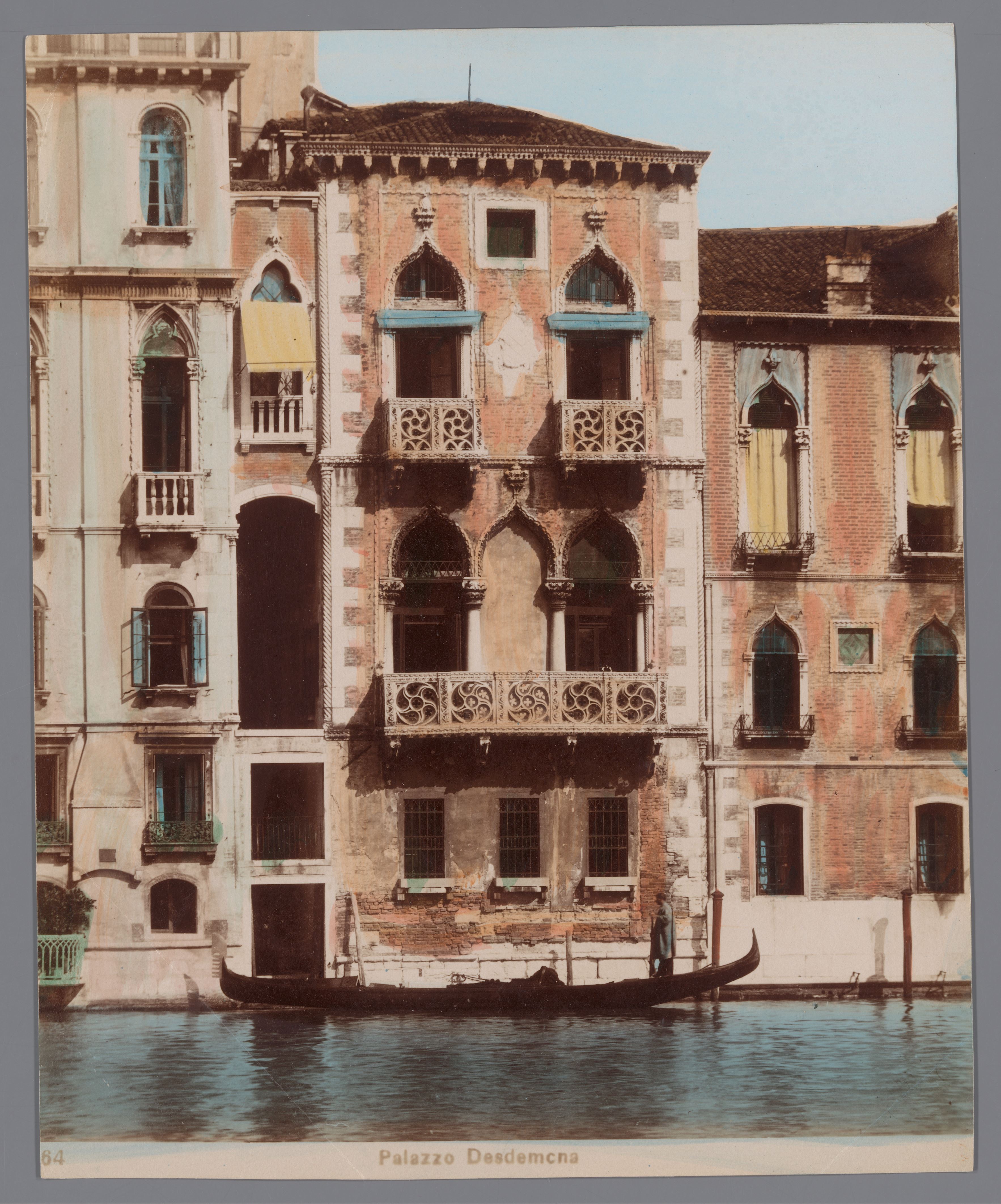
Palazzo Contarini Fasan, often called the “House of Desdemona,” is a jewel of Venetian Gothic architecture. Set along the Grand Canal in the San Marco district, this compact yet ornate 15th-century palace is renowned for its architectural elegance, literary associations with Shakespeare’s Othello, and its romantic place in Venetian lore. Though its interior remains private, the palazzo’s façade is a highlight for visitors seeking to immerse themselves in Venice’s storied past and artistic splendor (Renato Prosciutto; Bewitched by Italy; Google Arts & Culture; Wikipedia).
This guide delivers a comprehensive overview of Palazzo Contarini Fasan, with practical information on visiting, historical context, and tips for maximizing your Venice experience.
Historical Background and Origins
Palazzo Contarini Fasan was constructed between 1470 and 1480 by the illustrious Contarini family, whose members were central to Venice’s political, economic, and social life—producing multiple doges and statesmen (Renato Prosciutto). The site is believed to have been chosen for its strategic position on the Grand Canal. The Contarini’s influence and the palace’s design speak to the wealth and aspirations of Renaissance Venice, during a period when the city was flourishing as a maritime and trading powerhouse.
The alternative name, "Palazzo Contarini dei Fagiani," references the family’s passion for hunting pheasants (fagiani in Italian), further underscoring their noble status.
Architectural Features and Artistic Significance
Palazzo Contarini Fasan is a prime example of Venetian Gothic architecture, celebrated for its harmonious proportions and intricate ornamentation (Trek Zone). Key features include:
- Three-tiered balconies with delicate stone tracery and pointed arches.
- Refined marble balustrades and finely carved floral motifs.
- Mullioned windows topped with ogee arches—an S-shaped curve characteristic of Venetian Gothic style.
- Trifora window on the piano nobile, flanked by single-light windows and accented with intricate wheel tracery (Nomad Epicureans).
Despite its modest size, the palace’s façade stands out against neighboring structures, and its elegance has inspired artists such as Claude Monet, who painted it during his visit in 1908 (Google Arts & Culture).
The Contarini Family and Social Context
The Contarini were among Venice’s most prominent patrician families. Their palazzo symbolized both their status and the city’s prosperity in the late 15th century. The structure’s decorative richness and prime canal location reflect the family’s aspirations and the broader culture of Renaissance Venice (Renato Prosciutto).
Literary and Artistic Connections
The House of Desdemona
Palazzo Contarini Fasan is popularly associated with Desdemona, the tragic heroine of Shakespeare’s Othello. Though Desdemona is a fictional character, local legend holds that she lived here before her ill-fated marriage, lending the palace its evocative nickname, “Casa di Desdemona” (Wikipedia; Bewitched by Italy). The legend is further fueled by speculation that Nicola Contarini may have inspired elements of the play, though historical links remain unproven.
Art and Scholarship
Art historians like John Ruskin have lauded the palazzo's façade as one of the most elaborate in Venice, and its visual appeal has made it a favorite subject for artists and photographers (Wikipedia; Ermakvagus).
Visitor Information: Hours, Tickets, and Accessibility
Viewing Hours and Tickets
- Interior Access: The palazzo remains a private residence; interior tours are not available. There are no entry fees or tickets required for viewing the exterior.
- Façade Viewing: The façade can be viewed at any time from public spaces along the Grand Canal or from across the canal at Campo della Salute (ADAC Maps).
Best Viewing Points
- Campo della Salute: Offers unobstructed views, especially from the steps of Basilica di Santa Maria della Salute.
- Vaporetto (Line 1): Take the water bus to Salute stop for a direct view.
- Gondola: For a unique perspective, a gondola ride along the Grand Canal takes you past the palazzo.
Accessibility
- The viewing area at Campo della Salute is generally accessible, but Venice’s narrow, cobbled streets and bridges may pose challenges for those with mobility issues. Water transport is wheelchair-friendly, but always check in advance.
Travel Tips and Suggested Itineraries
- Photography: The façade faces west; late afternoon provides the best lighting. Use a telephoto lens for close-ups, and visit early morning or late afternoon for fewer crowds.
- Guided Tours: While interior visits aren’t possible, many Venice walking tours discuss Palazzo Contarini Fasan in the context of Shakespearean Venice or the Grand Canal’s history.
- Seasonal Considerations: Venice is busiest from April to October. The quieter winter months offer softer light for photography and a more peaceful experience, though some attractions may have reduced hours.
- Local Etiquette: Respect the privacy of residents. Do not attempt to enter the building, and avoid blocking narrow walkways.
Nearby Attractions
Palazzo Contarini Fasan’s central location in the San Marco district makes it ideal for including in a cultural itinerary. Notable nearby sites:
- Basilica di Santa Maria della Salute: Baroque church opposite the palazzo.
- Peggy Guggenheim Collection: Modern art museum in a historic palace.
- Teatro La Fenice: Venice’s renowned opera house.
- Rialto Bridge: Iconic crossing of the Grand Canal.
- Palazzo Contarini del Bovolo: Famous for its spiral staircase (ADAC Maps).
Preservation and Modern Status
The palace has been largely preserved in its original form, with restoration efforts focused on protecting its intricate stonework and architectural features from Venice’s environmental challenges, such as flooding and subsidence.
Frequently Asked Questions (FAQ)
Q: Is the interior of Palazzo Contarini Fasan open to visitors?
A: No, the palace is a private residence and not accessible to the public.
Q: Are tickets required to view Palazzo Contarini Fasan?
A: No tickets are required; the façade is visible from public areas and the canal.
Q: What are the best times to visit for photography?
A: Early morning or late afternoon for optimal lighting and fewer crowds.
Q: Are guided tours available?
A: While the palazzo itself isn’t open, many walking or boat tours include commentary on its history.
Q: How do I get to the best viewing point?
A: Take the vaporetto to Salute (Line 1), or walk from Piazza San Marco via Accademia Bridge.
Visuals and Media Suggestions
For the best digital experience, seek high-resolution images with alt text such as “Palazzo Contarini Fasan Gothic façade Venice.” Interactive maps and virtual tours are available through ADAC Maps and Venice Tourism Official Site.
Listen to the full story in the app
Your Personal Curator, in Your Pocket.
Audio guides for 1,100+ cities across 96 countries. History, stories, and local insight — offline ready.
Audiala App
Available on iOS & Android
Join 50k+ Curators
Sources
- verified
- verified
- verified
- verified
- verified
- verified
- verified
- verified
- verified
- verified
Last reviewed: