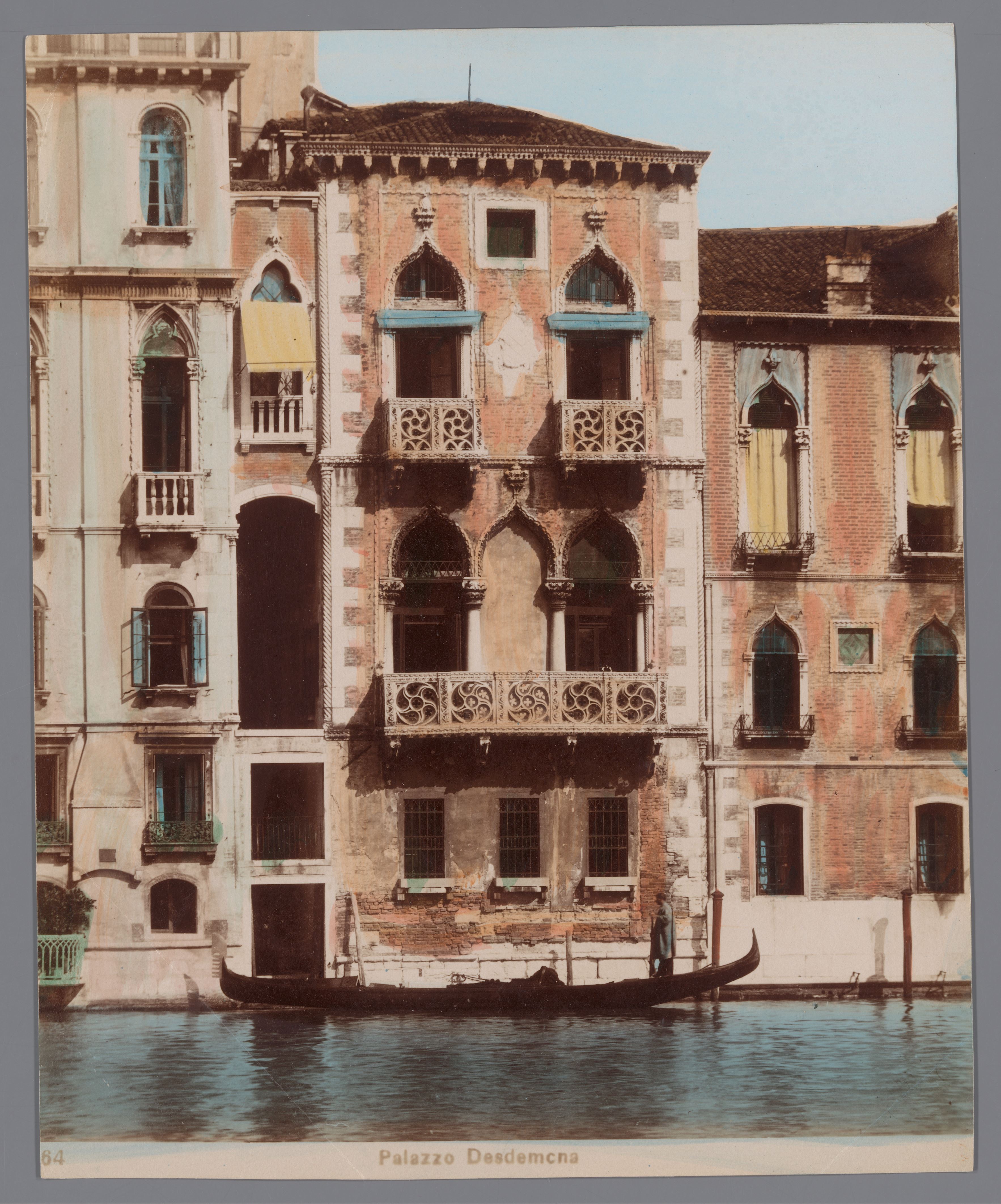
Introduction
Palazzo Barbarigo della Terrazza is an outstanding example of Renaissance architecture and a living testament to Venice’s aristocratic past. Prominently located along the Grand Canal in the San Polo district, this 16th-century palace invites visitors to experience the grandeur of Venetian noble life, architectural mastery, and enduring cultural legacy. Commissioned by the influential Barbarigo family—with ties to two doges and a canonized cardinal—and designed by Bernardino Contin, the building encapsulates the ideals of symmetry, proportion, and elegance that define the Renaissance period. Its most distinctive feature, a sweeping terrace overlooking the canal, offers one of the city’s most iconic vistas (ermakvagus.com; wikipedia).
Beyond its architecture, the palace once housed a remarkable collection of paintings by Titian, Giorgione, and Rubens—artworks that underscored the family’s role as major patrons in Venice’s cultural flowering. While much of this collection was dispersed in the 19th century, visitors can still admire original frescoes and decorative elements that evoke the refined world of Venetian nobility (universes.art).
Today, Palazzo Barbarigo della Terrazza serves as both a cultural center—home to the German Centre for Venetian Studies—and a boutique hotel, blending historical preservation with modern hospitality. Due to its status as a private residence, access is carefully managed through guided tours and special events, ensuring an authentic experience while maintaining the building’s integrity (palazzobarbarigo.com; fodors.com).
This guide presents an in-depth look at the palace’s origins, architecture, art, and visiting logistics—helping you plan a memorable encounter with one of Venice’s Renaissance treasures.
History and Construction
Palazzo Barbarigo della Terrazza was commissioned in 1566 by Daniele Barbarigo and his wife Lucietta, scions of a family renowned for their contributions to Venetian civic, military, and religious life. Bernardino Contin, celebrated for his balanced and harmonious designs, oversaw the palace’s construction, which was completed by 1570 on the site of two earlier Barbarigo properties (ermakvagus.com; universes.art).
Occupying a roughly trapezoidal plot of approximately 1,100 square meters, the palace features two façades: a shorter, more understated side facing the Grand Canal, and a longer main façade on the Rio di San Polo. The palace’s terrace, measuring 14 by 24 meters, is among the largest private terraces in Venice, giving the building its distinctive title “della Terrazza”.
The Barbarigo Family Legacy
The San Polo branch of the Barbarigo family produced two doges—Marco (1485–1486) and Agostino (1486–1501)—and Cardinal Gregorio Barbarigo, later canonized. The family’s power and wealth were reflected in their patronage of the arts and their commissioning of this grand residence. Agostino Barbarigo is also remembered for his role as a naval commander at the pivotal Battle of Lepanto in 1571 (ermakvagus.com).
Architectural Features
Designed to embody Renaissance ideals while responding to Venice’s unique urban context, Palazzo Barbarigo della Terrazza features:
- Expansive Terrace: The 14 x 24-meter terrace is a rarity in Venice, providing both a private retreat and a public display of status (wikipedia).
- Façades: Elegant arched windows, subtle marble banding, and classical proportions define the exterior. The canal-side entrance leads to the piano nobile, historically the site of grand receptions.
- Interiors: The palace boasts original frescoes, painted beam ceilings, and stucco work, alongside period furnishings and Murano glass chandeliers (universes.art; Murano Glass Museum).
Artistic Heritage
Palazzo Barbarigo della Terrazza was once home to an extraordinary collection of Renaissance and Baroque art, including works by Titian, Giorgione, and Rubens (wikipedia). Although much of this collection was sold off in the 19th century (with some pieces now in the Hermitage Museum), the palace retains significant frescoes, beam ceilings, and decorative friezes depicting the family’s history and values.
Visiting Hours, Tickets, and Accessibility
Access: Palazzo Barbarigo della Terrazza is a private residence. Public entry is available only during special events, guided tours, or cultural programs, often organized by the German Centre for Venetian Studies (Centro Tedesco di Studi Veneziani).
Typical Visiting Hours:
- Monday to Friday: 9:00 AM – 6:00 PM (subject to scheduling of tours and events)
- Weekends: Limited, usually during special events only
Tickets:
- Guided tours and event access: €10–€15, with discounts for students and seniors
- Special event entry (e.g., during the Venice Biennale): €50–€200, depending on exclusivity
- Advance booking is essential due to limited availability
Accessibility:
- The palace has made efforts to accommodate visitors with mobility challenges, but some areas—including the terrace—may have limited wheelchair access due to its historic structure.
- Contact the Centro Tedesco di Studi Veneziani in advance for details.
(palazzobarbarigo.com; Venice Insider Guide)
Recent Use and Preservation
Unlike its namesake in Dorsoduro, Palazzo Barbarigo della Terrazza has preserved much of its Renaissance character, thanks to careful oversight by the Soprintendenza per i Beni Architettonici (ermakvagus.com).
- Current Functions:
- The German Centre for Venetian Studies occupies the piano nobile, hosting conferences, lectures, concerts, and exhibitions.
- A boutique hotel, Palazzo Barbarigo Sul Canal Grande, operates on the mezzanine, offering guests a blend of historical ambiance and modern luxury (palazzobarbarigo.com; fodors.com).
- The second piano nobile is privately occupied by the Loredan family.
Notable Events
Palazzo Barbarigo della Terrazza is a key venue during events such as the Venice Biennale, hosting private receptions, scholarly conferences, and cultural gatherings. Its terrace provides a spectacular setting for observing the city’s vibrant life and historic regattas (La Biennale di Venezia).
Frequently Asked Questions
Can I visit the palazzo every day?
No, visits are only possible during scheduled tours or special events. Advance booking is required.
Are guided tours available?
Yes, tours are offered by the German Centre for Venetian Studies and select cultural organizations.
Is the palace wheelchair accessible?
Accessibility is limited; inquire in advance for specific needs.
Are photographs permitted?
Photography is usually allowed on the terrace and in select public areas, but may be restricted inside.
How do I get there?
The palazzo is accessible by vaporetto (water bus), with nearby stops at San Tomà or Ca’ Rezzonico. Private water taxis can use the palace’s own mooring.
Practical Visitor Information
- Address: San Polo 2765, 30125 Venezia VE, Italy
- Nearby Attractions: Ca’ Rezzonico, Campo San Polo, Basilica dei Frari, Teatro La Fenice, Palazzo Grassi
- Dress Code: Business casual or cocktail attire is recommended for events
- Booking: Contact the German Centre for Venetian Studies or local tour operators. Book well in advance, especially during the Biennale or Carnival.
- Languages: Tours are typically in Italian or English—confirm when booking.
Listen to the full story in the app
Your Personal Curator, in Your Pocket.
Audio guides for 1,100+ cities across 96 countries. History, stories, and local insight — offline ready.
Audiala App
Available on iOS & Android
Join 50k+ Curators
Sources
- verified
- verified
- verified
- verified
- verified
- verified
Last reviewed: