An introduction.
Researched by the Audiala editorial team from historical records, architectural archives, and local expertise.
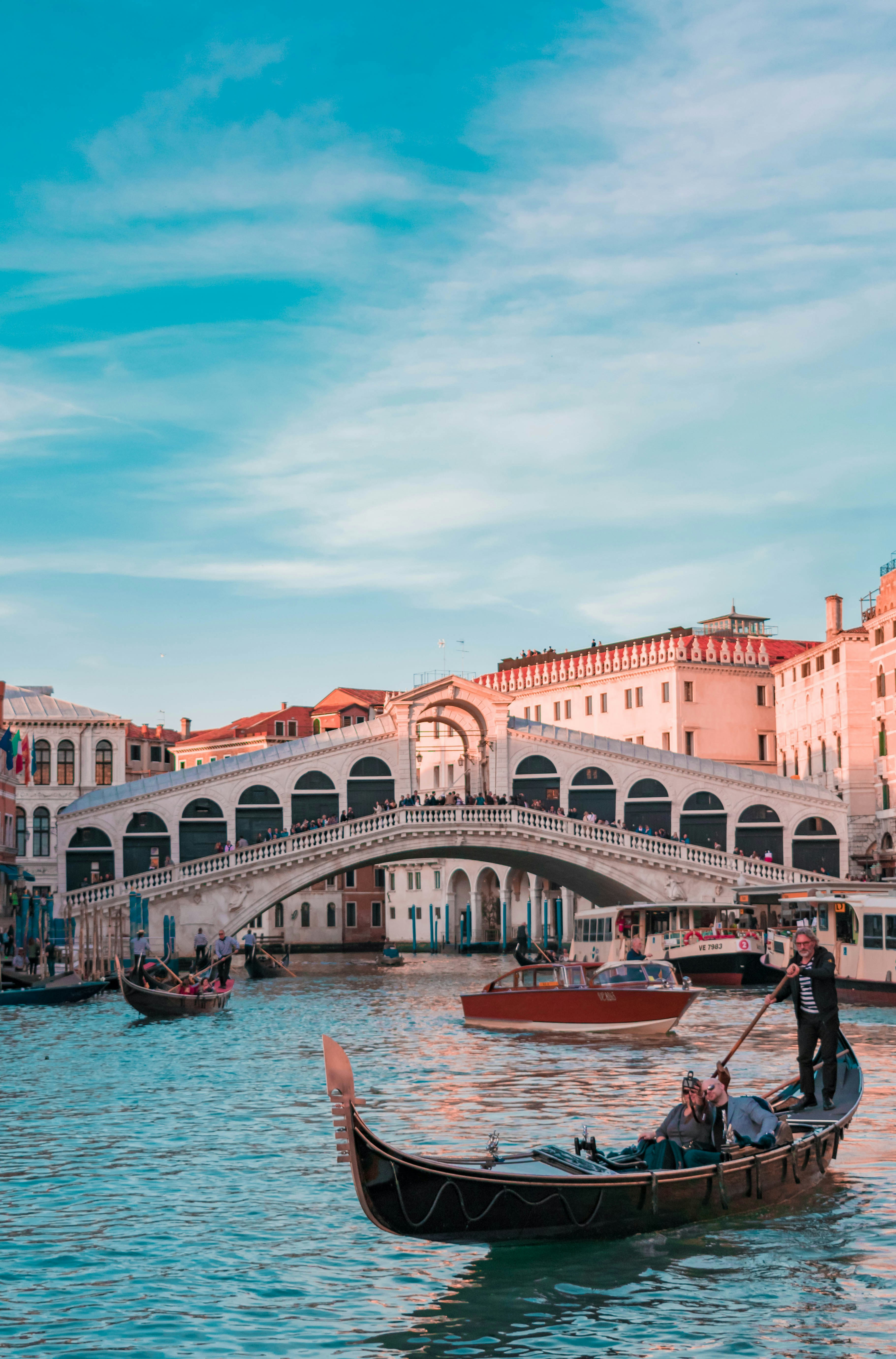
MMost people assume the Venetians dug the Grand Canal. They didn't. The 3.8-kilometer reverse-S cutting through Venice is the final stretch of an ancient river — the Una, a forgotten branch of the Brenta — that emptied into the lagoon long before stilt houses rose along its banks. What the Venetians actually built was everything you see staring back: 170-plus palazzi from the twelfth to eighteenth centuries, lined up like a stone family album, the Rialto Bridge arching over the bend at the middle. Come for what locals call the Canalazzo, Italy's most theatrical commute.
A French ambassador named Philippe de Commynes called it 'the most beautiful street in the world' five centuries ago, and Venetians still quote him. They aren't bragging — they're describing a working road. Cargo barges haul groceries. Ambulances run on water. The Number 1 vaporetto is the local bus, and a one-stop ride costs more than a Milan espresso.
Stand on any bridge, any landing, any traghetto crossing, and the canal performs three things at once — postcard, supply chain, stage. Festivals still claim the water back from the engines. The dead are still ferried across in black gondolas. Couples still get married on it. The reason the Grand Canal feels alive is that no one has ever let it stop being useful.
The Brutal History of Venice
Beyond Facts01 What to see.
Ca' d'Oro and the Gothic Parade
Start at Ca' d'Oro's neighbour-rich stretch and you'll see Venetian Gothic doing its best work. The 1421–1440 facade once wore actual gold leaf hammered into the Istrian stone — weather scrubbed most of it off centuries ago, but catch it at low sun and faint metallic glints still ghost the upper loggia. Closely-spaced columns, quatrefoil tracery, polifore windows lighting the T-shaped portego behind: this is the template every other palazzo on the canal answers to.
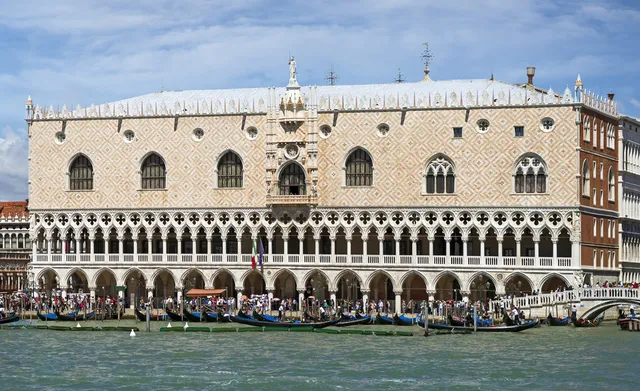
Next door, the timeline collapses. Veneto-Byzantine round arches from the 12th century sit a metre from Renaissance pediments from the 1500s, all wedged together like mismatched books on a shelf. Ride vaporetto Linea 1 from the open prow at golden hour and the pink Verona marble of the Doge's Palace downstream glows warm while the Istrian stone above the algae line goes blue-grey. Run a hand along any palazzo step at a traghetto crossing and you'll feel the tide mark — bone-dry above, cold and slick below.
Rialto and the Five-Sided Palace
Most visitors crowd the Rialto Bridge itself — the 1591 stone arch that replaced Nicolò Barattieri's wobbly pontoon of 1181. Better trick: stand on the fondamenta just north of the bridge near the fish market, where the arch frames passing gondolas instead of swallowing them. The steps under your feet are polished glass-smooth by four centuries of merchants, pilgrims, and porters hauling crates of bream up from the boats.
Then look across at Palazzo dei Camerlenghi, finished around 1525 by Guglielmo de' Grigi. Count its sides. Five, not four — the only palazzo on the canal visible from every angle, because the state treasurers wanted no blind corner where bribes could change hands. Those barred ground-floor windows you can see from the water? Debtors' prisons. Tax cheats served their time staring at the very canal that had made them rich.
Walk the Canal in 90 Minutes
Skip the gondola queue and do this instead. Start at Santa Lucia station, cross Ponte degli Scalzi, then weave the south bank toward Palazzo Dario — the visibly tilted, supposedly cursed facade where owners across five centuries have died violently or gone bankrupt. Cut inland through Dorsoduro to Punta della Dogana for the 270° payoff where the canal pours into Bacino San Marco.
Along the way, take the €2 traghetto crossing at San Tomà. Stand like a local. Thirty seconds, no photos, no Vivaldi soundtrack — just lapping water against creosoted briccole and a gondolier's "Oèèè!" warning a blind junction. End at the Fondaco dei Tedeschi rooftop (free, timed booking) and run your fingertips along the marble balustrade. Over 200 mercantile monograms incised by German merchants 500 years ago. Everyone photographs the view. Almost no one looks down at the railing.
02 In pictures.




Watch & Explore Grand Canal Venice.
Plan and listen to Grand Canal Venice with Audiala.
Audio guide in your pocket, itinerary in your browser. Built for the way you actually visit.
Tickets & tours.
These are guided options from our partners — same price as booking direct.
Prices are indicative — final pricing and availability are confirmed at checkout. Audiala may earn a commission from bookings made through these links.
Also on GetYourGuide
More tours for Grand Canal Venice
Curated from GetYourGuide. Same price as official, free cancellation on most.
 GetYourGuide
Venice: Grand Canal Gondola Ride with App Commentary
from
€37
 GetYourGuide
Venice: Grand Canal Gondola Ride with Live Commentary™
from
€39
 GetYourGuide
Venice: Shared Gondola Ride Across the Grand Canal
from
€39
 GetYourGuide
Venice: Grand Canal Boat Tour
from
€45
Prices shown are indicative — final pricing and availability are confirmed at checkout. Audiala may receive a commission from bookings made via these links.
03 Visitor logistics.
The practical scaffolding for a good visit — kept short.
Getting There
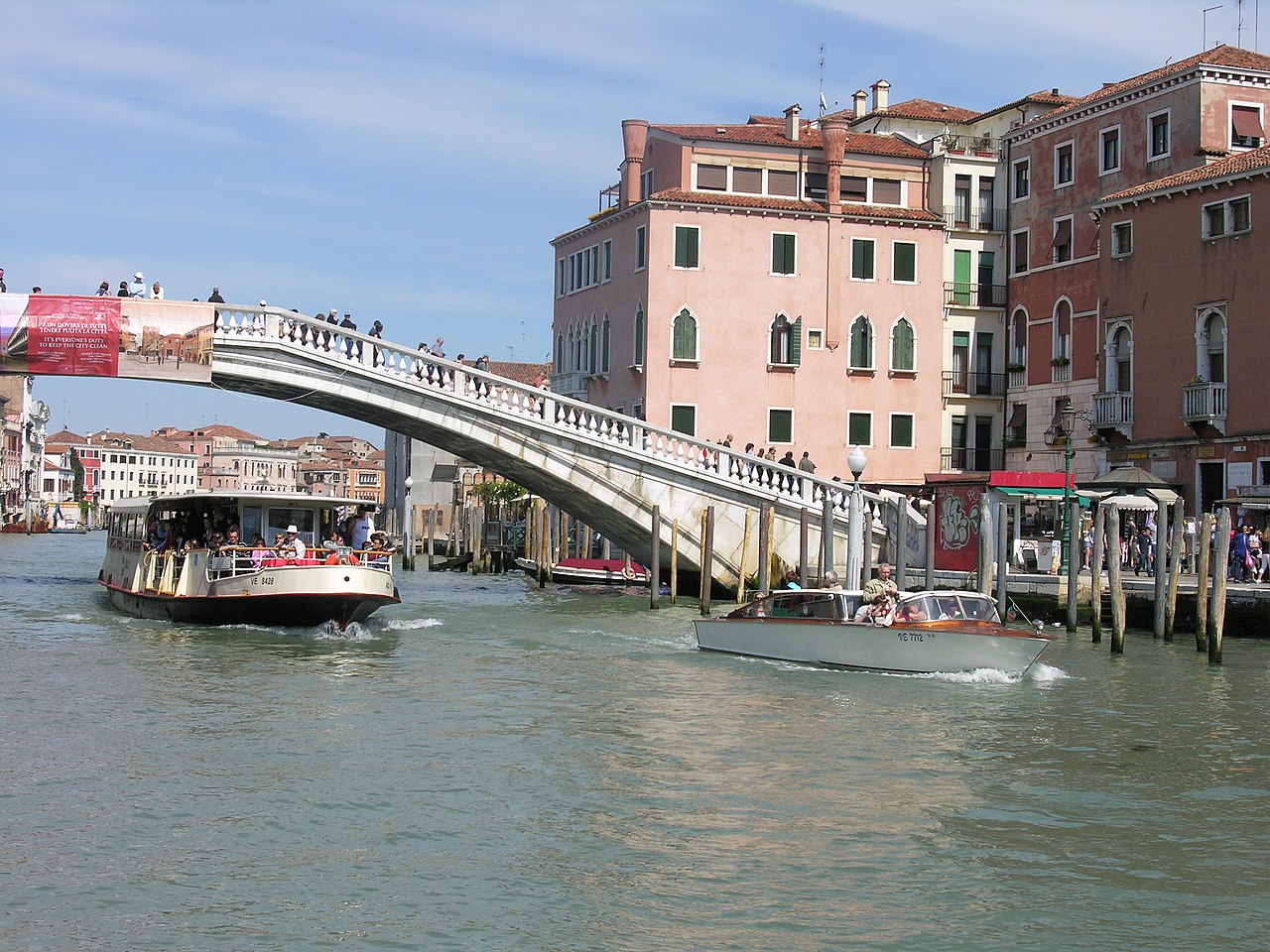
Train to Venezia Santa Lucia drops you on the Canal's north bank — vaporetto stop 'Ferrovia' is outside the door. Driving ends at Piazzale Roma (parking garages, then walk or board). From Marco Polo airport, Alilaguna waterbus (blue/orange/red) reaches Canal stops in 60–90 min; cheaper combo is ATVO bus to Piazzale Roma, then ACTV Line 1. Four bridges cross the Canal: Costituzione, Scalzi, Rialto, Accademia.
Opening Hours
Canal is a public waterway — open 24/7, no closures, no ticket. As of 2026, Vaporetto Line 1 (local, every stop) runs ~05:00–24:00, every 10–15 min at peak. Line 2 (express) covers similar hours faster. Notturno service N takes over overnight. Acqua alta (Oct–Feb) can briefly disrupt low-deck pontoons.
Time Needed
Express Line 2 Ferrovia → San Marco takes ~25 min; Line 1 with full local stops runs ~45 min and is the better sightseeing ride. To do it properly — both directions, golden hour, Rialto Bridge market at dawn, Accademia at sunset — budget 3–5 hours and a day pass.
Tickets & Passes
As of 2026, ACTV single vaporetto ticket €9.50 (75 min, one-way); day pass €25, 2-day €35, 3-day €45, 7-day €65. Disabled passengers pay €1.50 flat, companion free. Traghetto (standing gondola crossing) ~€2 cash. Private gondola tariff is city-set: €90 / 30 min daytime, €110 after 19:00 — confirm before boarding.
Accessibility
Vaporetto Lines 1 and 2 are wheelchair-accessible at most pontoons; crew deploy ramps, though gradient shifts with the tide. Three of the four bridges (Scalzi, Rialto, Accademia) are stepped and impassable; Calatrava has an external chairlift that's frequently out of service — check before relying on it. Free mobility map and the 'Venezia Accessibile' app cover step-free routes.
04 Tips for visitors.
Small things that change the day.
Skip the Gondola Here
Locals laugh at gondola rides on the Grand Canal — too choppy from vaporetto wakes, and you spend 30 minutes dodging traffic. Real gondola routes wind through the side rii; for crossing the Canal itself, use the €2 traghetto (standing gondola ferry) at one of seven crossing points.
Eat Bacari, Not Canal-Front
Skip the terrace menus around Rialto (€40–80 for frozen tourist food) and walk two minutes inland for cicheti at Cantina Do Mori (Venice's oldest bacaro, 1462) or All'Arco. Small bites €1.50–3, ombra of wine €1–2, full meal €15–25. Cantine già Schiavi in Dorsoduro is the other essential stop.
Best Viewpoint Isn't Rialto
Ponte dell'Accademia at sunset beats Rialto for Canal views — wooden bridge, fewer elbows, light hits Santa Maria della Salute straight on. Fondaco dei Tedeschi rooftop terrace is free if you book a slot. Drones banned over the historic centre without ENAC permit.
Pickpocket Hot Zones
Santa Lucia station, Lines 1 and 2 toward San Marco, the Rialto stop and the bridge itself — relay theft is the technique (one bumps, partner walks the bag away fast). Wear bags cross-body and zipped on packed vaporetti.
Don't Sit on the Steps
Since 2025 Venice fines sitting or eating on bridge steps and monuments €25–500, plus swimming in canals (up to €450) and walking shirtless. Picnic in designated spots only. The 'Infamous Green Step' — algae-slick boat steps submerged at high tide — is the one locals watch tourists slip on.
Watch the Fakes
Cheap 'Made in Venice' masks under €20 are Chinese-made and labeled decorative-use only. Buying counterfeit handbags from canal-side hawkers carries fines up to €7,000 for the buyer, not just the seller. Real artisan masks start around €40.
Time the Light
Ride Line 1 the hour before sunset for honey-coloured light on Ca' d'Oro and Ca' Rezzonico, then again at first light when the market boats unload at Rialto. Midday flattens everything and packs the boats.
Regata Storica
First Sunday of September — 6 September in 2026 — the Canal fills with costumed crews rowing gondolini, caorline and pupparini in a parade that's been running since the 1500s. Free to watch from the banks; book canal-front terraces months ahead.
Where to Eat
Don't Leave Without Trying
Mare Magno
local favoriteOrder: The ravioli stuffed with shrimp in a shrimp and scallop sauce is a standout.
This is a true Venetian gem that feels worlds away from the tourist traps, serving fresh market-driven dishes with delightful personal hospitality.
Osteria Al Squero
local favoriteOrder: Grab an 'original' Spritz and a selection of fresh cicchetti.
It offers an iconic Venetian experience where you can enjoy local snacks while watching traditional gondola repairs at the historic squero across the canal.
Rio Novo
local favoriteOrder: The blue lobster tagliatelle is a must-try, followed by their cuttlefish ink risotto.
This casual canal-side spot delivers high-quality seafood and warm service, often topped off with a complimentary limoncello after your meal.
Brunch Cafe
cafeOrder: The fluffy egg white pancakes with mango and coconut sauce are a perfect start to the day.
A quaint, welcoming spot that manages to feel both efficient and cozy, offering excellent brunch options including gluten-free choices.
Dining Tips
- check Tipping is not obligatory; service is often included as a 'coperto' or 'servizio'.
- check If you want to tip for great service, 5-10% is generous; excessive tipping is considered ostentatious.
- check Lunch is typically served 1:00 PM – 3:00 PM; dinner starts around 7:30 PM.
- check Many traditional restaurants close between lunch and dinner service, but osterie and bars often remain open.
- check Don't be afraid to order just one course; it is perfectly acceptable in casual local spots.
Restaurant data powered by Google
05 The Marriage That Outlived a Republic
For nearly eight centuries, the Grand Canal has hosted the same wedding. Every Ascension Day, Venice marries the sea. The bridegroom changes — once a doge, now a mayor — but the vow holds, and the route from San Marco out to the Lido inlet has not moved since the year 1000.
That continuity is the canal's quiet trick. Empires fell, plagues hit, Napoleon arrived, the population emptied from 175,000 to under 50,000. The water kept doing the same job.
The Ring, the Galley, and the Fire
On Ascension Sunday a costumed flotilla glides out of the San Marco basin, the Mayor stands at the bow of a gilded vessel called the Serenissima, and casts a ring into the Adriatic with the formula 'Desponsamus te, mare, in signum veri perpetuique dominii' — we wed thee, sea, in sign of true and perpetual dominion. Tourists film it and decide it's a nice piece of pageantry. They are watching something stranger.
Records show the ceremony began in the year 1000 under Doge Pietro II Orseolo, who sailed an Ascension Day fleet down this canal and out to break Slav pirates wrecking Dalmatian trade. Venice then was a Byzantine vassal squeezed between empires, and the Adriatic was the only artery; pacifying it was existential. Orseolo came back with the coast secured, and the Sposalizio del Mare became annual. Yet the boat carrying the Mayor today is a replica. The thing it stands in for is gone.
On 12 May 1797 Doge Ludovico Manin abdicated, and an 1,100-year republic ended in an afternoon. Soon after, Napoleon's troops dragged the Bucintoro — the gilded state galley that had carried thirty-six doges down this canal — to San Giorgio Maggiore, stripped its gold leaf with knives, and burned the hull for the metal. The Sposalizio went silent for over a century. The marriage was widowed.
Once you know this, the Mayor's ring is no longer costume drama. It is a ritual that survived its own funeral and started talking again. When the modern flotilla rounds the Punta della Dogana, you are watching a city refuse to admit its sovereignty was ever revoked — the water remembers what the gold could not.
What Changed
What Endured
Listen to the full story in the app
The whole Grand Canal Venice,
told well.
Audio guides for 1,100+ cities across 96 countries. History, stories, and local insight — offline ready.
06 Frequently asked.
The questions travellers send us most about Grand Canal Venice.
Is the Grand Canal in Venice worth visiting?
Yes — it's the main reason most people come to Venice and the only way to read the city's 800-year architectural timeline in a single 3.8 km glance. Veneto-Byzantine, Gothic, Renaissance, and Baroque facades sit shoulder-to-shoulder along the reverse-S curve, and locals still use it as their working main street. Skip the gondola hard-sell and ride Vaporetto Line 1 from Ferrovia to San Marco for the full sweep.
How long do you need at the Grand Canal?
About 45 minutes for a one-way Line 1 ride end-to-end, or 3–5 hours if you want to do it properly. That means one ride mid-morning, Rialto Bridge and the fish market early, Ponte dell'Accademia at sunset, plus a stop at Punta della Dogana where the canal meets Bacino San Marco. A 1-day vaporetto pass (€25) makes the back-and-forth painless.
How do I get to the Grand Canal from the train station?
You're already on it — Venezia Santa Lucia opens directly onto the canal's north end. The vaporetto stop "Ferrovia" sits outside the station doors, with Line 1 (local, every stop) and Line 2 (express) running roughly 05:00 to midnight. From Marco Polo airport, take the Alilaguna waterbus straight onto the canal, or ATVO bus to Piazzale Roma and board there.
How much does it cost to ride the Grand Canal?
A single ACTV vaporetto ticket is €9.50 for 75 minutes, which covers the full Line 1 traverse one-way. Day passes run €25 (1 day), €35 (2), €45 (3), €65 (7) — worth it after roughly three rides. Wheelchair users pay €1.50 with a companion free, and traghetto gondola crossings between the seven ferry points cost about €2 standing.
Should I take a gondola on the Grand Canal?
Locals will quietly tell you no — the canal is too choppy from vaporetti wake, and the better gondola routes are the quiet side rii. Standard regulated tariff is €90 for 30 minutes daytime, €110 after 19:00, up to 5 passengers. For a 30-second standing crossing of the canal itself at Venetian-commuter price, take a traghetto.
What is the best time to visit the Grand Canal?
March to May for clear light and manageable crowds, or first Sunday of September for the Regata Storica when 130-plus historic boats and 400 costumed figures fill the water. Golden hour about an hour before sunset turns Verona pink marble warm and Istrian limestone blue-grey. Avoid August midday — vaporetti are packed and low-tide algae smells stronger than the espresso.
Can you swim in the Grand Canal?
No, and it's been a fineable offence since the 2025 crackdown — up to €450, plus possible expulsion from the city. The water is brackish, busy with vaporetti and cargo barges, and the algae line on every palazzo will tell you what your skin would feel afterwards. Lord Byron swam its length in 1818; you are not Lord Byron.
What should I not miss along the Grand Canal?
Three things most visitors walk past: the 200-plus medieval merchant monograms incised into the marble balustrades on the Fondaco dei Tedeschi rooftop terrace (free, timed booking), the cursed tilted facade of Palazzo Dario, and the five-sided Palazzo dei Camerlenghi at Rialto with its old debtors' prisons visible from the water. End at St Mark's Basilica and the Doge's Palace where the canal opens into the Bacino.
Verified, and shown.
Researched and written by the Audiala editorial team from historical records, architectural archives, and local expertise.
Official 2026 vaporetto schedules for Lines 1 and 2 along the Grand Canal.
Live timetable and service hours for ACTV waterbuses.
Annual ritual cycle on the Grand Canal: Sensa, Vogalonga, Regata Storica, Salute, Redentore.
Date, ritual format, and civic role of the Marriage of the Sea ceremony.
Confirmation of 17 May 2026 date and procession route from San Marco to San Nicolò del Lido.
History tying ceremony to Doge Pietro II Orseolo's year-1000 expedition and 1177 Peace of Venice.
Programme, races, and Corteo Storico parade on the Grand Canal first Sunday of September.
Race categories (gondolini, caorline, mascarete, pupparini) and grandstand viewing.
Costumed figures, finish-line machina, and crowd locations along the canal.
Civic page on the votive bridge, plague-vow origin (1577) and current programme.
Historical background of the Redentore festival and its votive procession.
Confirmed 2026 fireworks date (Saturday 18 July 23:30) and regatta times.
Reportage on remiere rowing clubs and transmission of voga alla veneta.
Technical reference on gondola construction and the eight-wood building tradition.
Scholarly source on traghetto decline and the canal as working supply chain.
Disambiguation note: WHS "Grand Canal" 1443 is the Chinese canal; Venice's canal sits within "Venice and its Lagoon".
Local Venetian dialect notes and Redentore weekend timings.
Researched from Wikidata, Wikipedia & official sources · fact-checked · How we make our guides →