Plan and listen to Fagagna Castle with Audiala.
Audio guide in your pocket, itinerary in your browser. Built for the way you actually visit.
Introduction
Nestled in the heart of Udine, Italy, the charming village of Fagagna is home to the historically rich Fagagna Castle. This ancient structure, dating back to Roman times, serves as a fascinating testament to the region's intricate past. The castle's official documentation began in 983 AD during the patriarchal period when it was granted as a fief by the Patriarchs of Aquileia to a consortium of noble families (e-borghi). Over the centuries, Fagagna Castle has endured numerous reconstructions and demolitions, symbolizing resilience through tumultuous periods, including notable events in 1353 and 1385 (borghibellifvg). Today, while largely in ruins, the castle's remaining structures, such as the defensive walls and the Castellana tower, offer a unique glimpse into its storied past (Italia.it). Fagagna Castle is not only a historical monument but also a cultural beacon within the community, inviting visitors to explore its ruins, the Church of San Michele Arcangelo, and the Renaissance-era Community House, among other attractions. This comprehensive guide aims to delve into the historical significance, architectural elements, and essential visitor information for those planning a trip to this captivating destination.

Historical Significance and Evolution
Fagagna Castle, located in the picturesque village of Fagagna in Udine, Italy, stands as a testament to the region's rich historical tapestry. The site has been inhabited since Roman times, serving as a transit station on the road linking Concordia Sagittaria to Gemona (e-borghi). The first official documentation of the castle dates back to the patriarchal period in 983 AD, when the Patriarchs of Aquileia gave the castle in fief to a consortium of noble families (borghibellifvg).
The castle has witnessed numerous reconstructions and demolitions over the centuries. It was notably rebuilt and then demolished again in 1353 by Patriarch Nicolaus of Luxembourg, and once more in 1385 during the war for the appointment of Philippe of Alençon as the new Patriarch (borghibellifvg). The last significant destruction occurred in 1511 due to a fire during the popular Friulian revolt, followed by an earthquake a month later. Despite these tumultuous events, the castle was reconstructed and has since stood as a symbol of resilience and historical continuity.
Architectural Elements
The Ruins and Remaining Structures
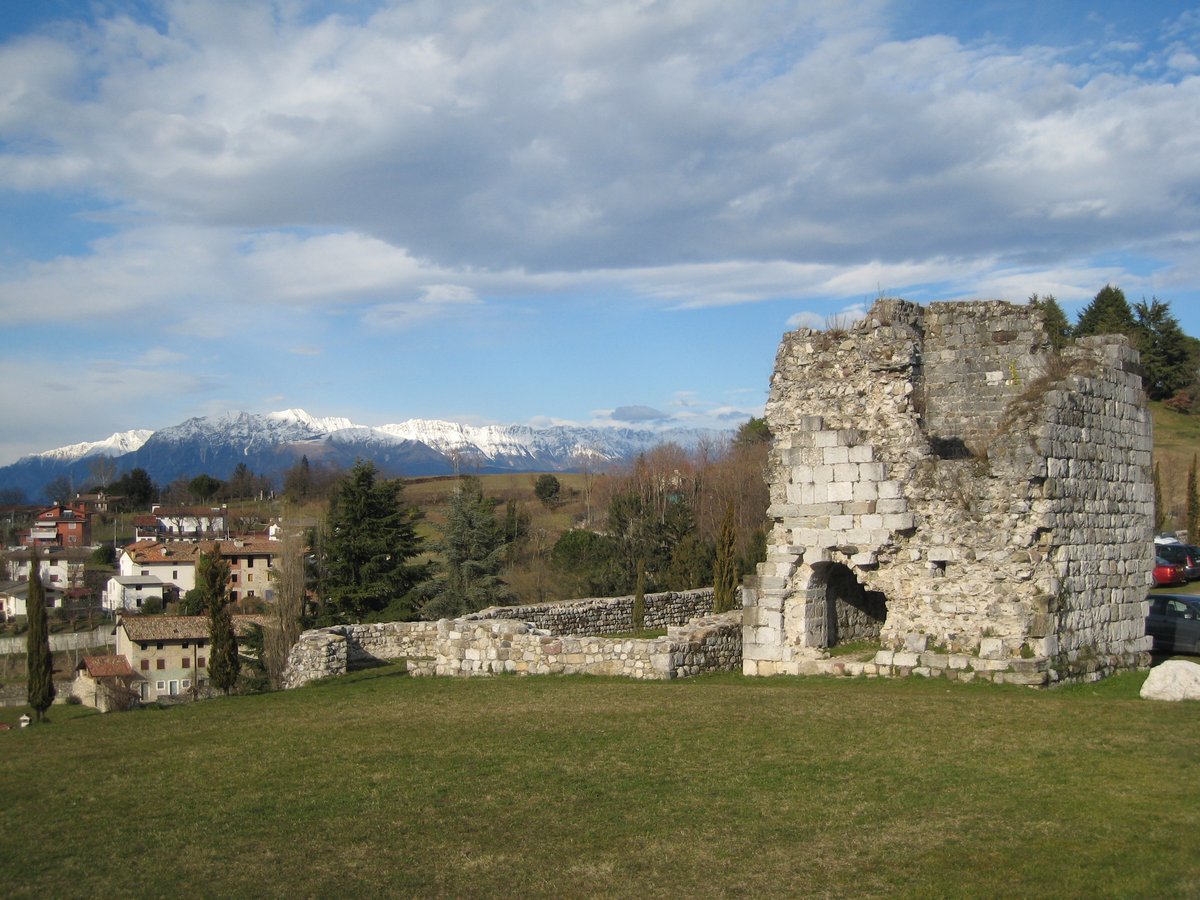
Today, Fagagna Castle is largely in ruins, but several key elements of its ancient fortifications remain. Visitors can explore fragments of the defensive walls, the Borgo gate, and the Castellana tower, which has been transformed into a bell tower (Italia.it). The ruins of the main tower and a 14th-century house also stand as silent witnesses to the castle's storied past.
The Church of San Michele Arcangelo
One of the most significant structures within the castle complex is the small church of San Michele Arcangelo. This church, considered the ancient oratory of the Castellani, dates back to at least 1386 (e-borghi). Its historical and architectural value makes it a must-visit for those interested in medieval ecclesiastical architecture.
Civil Buildings and Community House
Among the civil buildings, the Community House stands out. Dating back to the Renaissance period, this building features a beautiful loggia on the lower floor and served as the administrative and judicial headquarters of the Fagagna community from the early 16th century until 1797 (borghibellifvg). The Community House is a prime example of Renaissance architecture and offers insights into the governance and social structure of the time.
The Borgo and Surrounding Hamlets
Fagagna is composed of several ancient hamlets that have merged over time to form the current village. These hamlets, including Paludo, Sacavan, Sospia, Portafrea, and Riolo, each have their unique historical and architectural features (borghibellifvg). The village's layout, with its cobblestone pavements and terraced houses, provides a glimpse into the medieval urban planning and residential architecture.
The Brunelde Complex
To the north of the castle lies the Brunelde complex, a house-come-fortress owned by the noble Arcano family. First mentioned in 1208, the complex was extensively restructured in the early 16th century. Today, it stands as an interesting site for exploring the history of residential property types in the region (borghibellifvg).
The Naturalistic Oasis of Quadris
Not far from the modern town center, the Naturalistic Oasis of Quadris offers a unique blend of natural beauty and historical significance. This area is part of a project aimed at reintroducing white storks to the region. Visitors can often see these majestic birds nesting on rooftops and streetlights, adding a touch of natural wonder to the historical landscape (Italia.it).
The Ethnographic Museum: Ciase Cocél
A visit to Fagagna would be incomplete without exploring Ciase Cocél, an ethnographic museum housed in a typical 17th-century country house. This museum offers an immersive experience into the life of Friulian peasants at the beginning of the 20th century. Visitors can explore recreated rooms from the past, including a kitchen with a fogolâr (fireplace), a bedroom, and a barn. The museum also features live demonstrations of traditional crafts such as lace-making, milling, and blacksmithing (borghibellifvg).
The Churches and Organs of Fagagna
Fagagna is home to several historic churches, each with its unique architectural and cultural significance. The medieval church of the Virgin Mary of Tavella, located in the Madrisio countryside, and the small 14th-century church of St. Leonard are particularly noteworthy. The village also boasts five old organs, including a Nacchini organ from 1752 in the Parish church of Madrisio and a Comelli organ from 1788 in the Church of Santa Maria Assunta (borghibellifvg).
Visitor Tips
Accessibility and Routes
Visitors can access the castle ruins and other historical sites via old paved roads such as Vicolo Morcjùte and Via Cecconaia. These routes offer a scenic journey through the village's historical landscape, connecting the village square, the castle, and various churches (borghibellifvg).
Ticket Information
Currently, there is no entrance fee to visit the ruins of Fagagna Castle. However, donations are welcome to help with the maintenance and preservation of the site. For updated visiting hours and potential guided tours, it is advisable to check local tourism websites or contact the Fagagna tourist office.
Local Products and Culinary Delights
Fagagna is also known for its traditional dairy products, particularly the famous Fagagna cheese. The farmers' cooperative for dairy products, established in 1885, continues to produce high-quality cheese using unpasteurized milk. Visitors can sample these local delicacies and experience the unique flavors of the region (borghibellifvg).
FAQ
What are the visiting hours for Fagagna Castle?
Visiting hours may vary, so it's best to check with the Fagagna tourist office or local tourism websites for the most up-to-date information.
Is there a guided tour available?
Guided tours may be available upon request. It is recommended to contact the Fagagna tourist office for more details and to arrange a tour.
Are there any entrance fees?
There are no entrance fees to visit the ruins of Fagagna Castle, but donations are appreciated to support the site's upkeep.
Listen to the full story in the app
The whole Fagagna Castle,
told well.
Listen to sourced travel stories with local history and practical context — ready offline.
Verified, and shown.
Researched and written by the Audiala editorial team from historical records, architectural archives, and local expertise.
Built from cited sources · see the method · How we make our guides →