
History and Construction
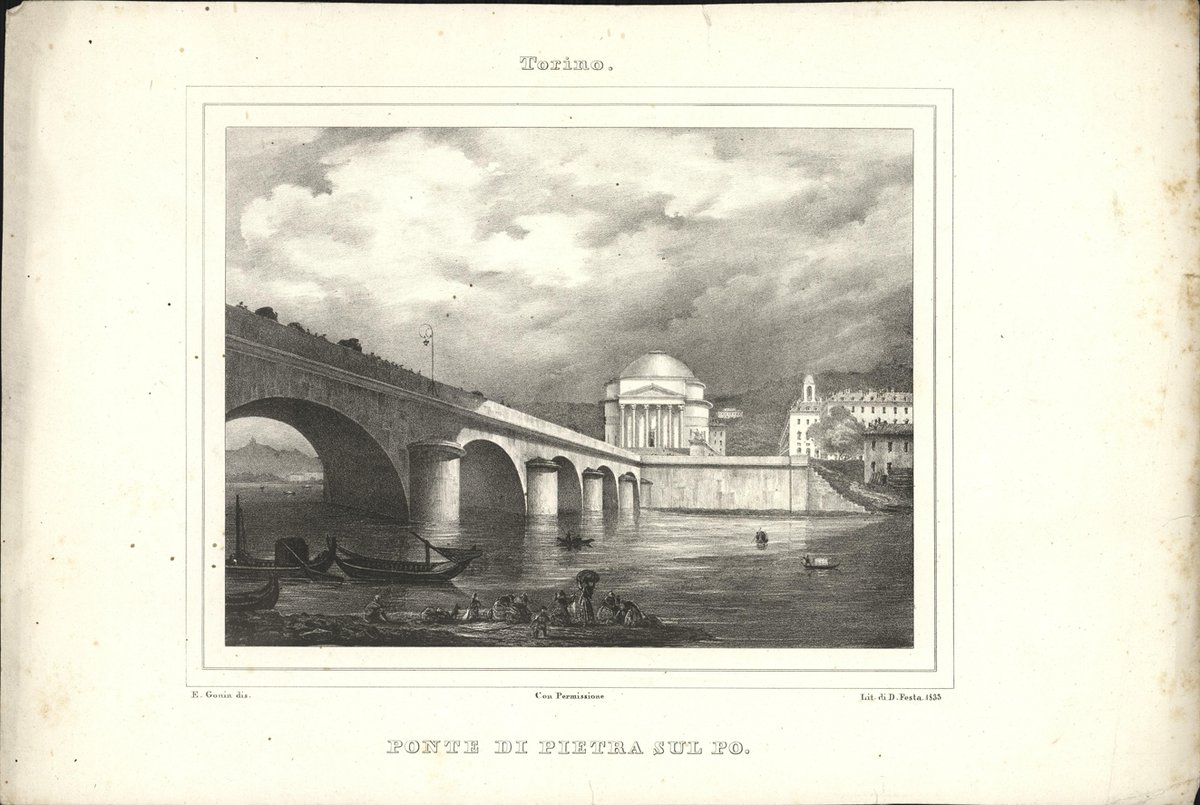
Ponte Vittorio Emanuele Primo, located in Chieri, Italy, is a significant historical structure named after King Victor Emmanuel I of Sardinia. The bridge was constructed in the early 19th century, a period marked by significant infrastructural development in the Kingdom of Sardinia. The bridge's construction began in 1814 and was completed in 1820 to facilitate transportation and trade, connecting various parts of the region more efficiently.
Architectural Design
The bridge is an exemplary piece of neoclassical architecture, a style prevalent during the early 19th century. It features a series of arches, a common design element in bridges of that era, which not only provided structural integrity but also added to the aesthetic appeal. The use of local stone in its construction highlights regional craftsmanship and the availability of materials. The bridge spans the River Po, one of Italy's major rivers, and its design was intended to withstand the river's seasonal fluctuations.
Visitor Information
- Visiting Hours The bridge is accessible to visitors 24/7.
- Tickets There is no entry fee to visit the bridge.
- Travel Tips Wear comfortable walking shoes and bring a camera to capture the stunning views.
- Nearby Attractions Make sure to visit the historic center of Chieri and the Chiesa di San Giorgio.
- Accessibility The bridge is accessible for visitors with mobility issues.
Historical Significance
Ponte Vittorio Emanuele Primo holds considerable historical significance. It was named in honor of King Victor Emmanuel I, who played a crucial role in the unification of Italy. The bridge symbolizes efforts to modernize the region and improve connectivity, essential for economic development. During the 19th century, the bridge facilitated the movement of goods and people, contributing to Chieri's growth as a commercial hub.
Role in the Unification of Italy
The bridge also played a part in the broader context of the Italian unification movement, known as the Risorgimento. Improved infrastructure, including bridges like Ponte Vittorio Emanuele Primo, enabled better communication and coordination among the various Italian states. This was crucial for the unification efforts led by figures such as Giuseppe Garibaldi and Count Camillo di Cavour. The bridge is not just a piece of infrastructure but a symbol of the unification and modernization of Italy.
Preservation and Restoration
Over the years, Ponte Vittorio Emanuele Primo has undergone several restoration projects to preserve its structural integrity and historical value. The most significant restoration took place in the late 20th century, addressing wear and tear caused by weather and increasing traffic. These efforts have ensured that the bridge remains a functional and historical landmark. The local government, along with heritage organizations, has played a pivotal role in maintaining the bridge (source).
Cultural Impact
The bridge has had a considerable cultural impact on Chieri and the surrounding region. It has been featured in various local legends and folklore, often symbolizing the resilience and unity of the local population. The bridge is a popular subject in local art and literature, reflecting its importance in the cultural heritage of Chieri. Annual festivals and events are often held near the bridge, celebrating its historical and cultural significance.
Modern-Day Relevance
Today, Ponte Vittorio Emanuele Primo continues to be a vital part of Chieri's infrastructure. It serves as a reminder of the region's rich history and the efforts made towards modernization and unification. The bridge is a popular tourist attraction, drawing visitors interested in its historical and architectural significance. Guided tours often include the bridge as a key highlight, providing visitors with insights into its history and importance (Turismo Torino).
Historical Events
Several historical events have taken place on or near Ponte Vittorio Emanuele Primo. During World War II, the bridge was a strategic point and witnessed several military movements. Although it sustained minor damages during the war, it was quickly repaired post-war, highlighting its importance to the region's infrastructure. The bridge has also been a site for various political rallies and public gatherings, further cementing its place in local history.
Influence on Local Economy
The construction and existence of Ponte Vittorio Emanuele Primo have had a lasting impact on the local economy. By improving connectivity, the bridge facilitated trade and commerce, contributing to Chieri's economic growth. Local businesses benefited from the increased movement of goods and people, and the bridge became a crucial link in the regional trade network. Even today, the bridge supports local businesses by attracting tourists and providing a reliable transportation route.
Educational Importance
Ponte Vittorio Emanuele Primo is also an important educational resource. Schools and universities in the region often include the bridge in their curriculum, teaching students about its historical and architectural significance. Field trips to the bridge are common, providing students with a tangible connection to their local history. The bridge serves as a case study in engineering, architecture, and history courses, highlighting its multifaceted importance.
FAQ
What are the visiting hours for Ponte Vittorio Emanuele Primo? The bridge is accessible to visitors 24/7.
How much do tickets cost for Ponte Vittorio Emanuele Primo? There is no entry fee to visit the bridge.
What are some nearby attractions? Nearby attractions include the historic center of Chieri and the Chiesa di San Giorgio.
Is the bridge accessible for visitors with mobility issues? Yes, the bridge is accessible for visitors with mobility issues.
What are some travel tips for visiting the bridge? Wear comfortable walking shoes and bring a camera to capture the stunning views.