
Historical Background
Ancient Origins
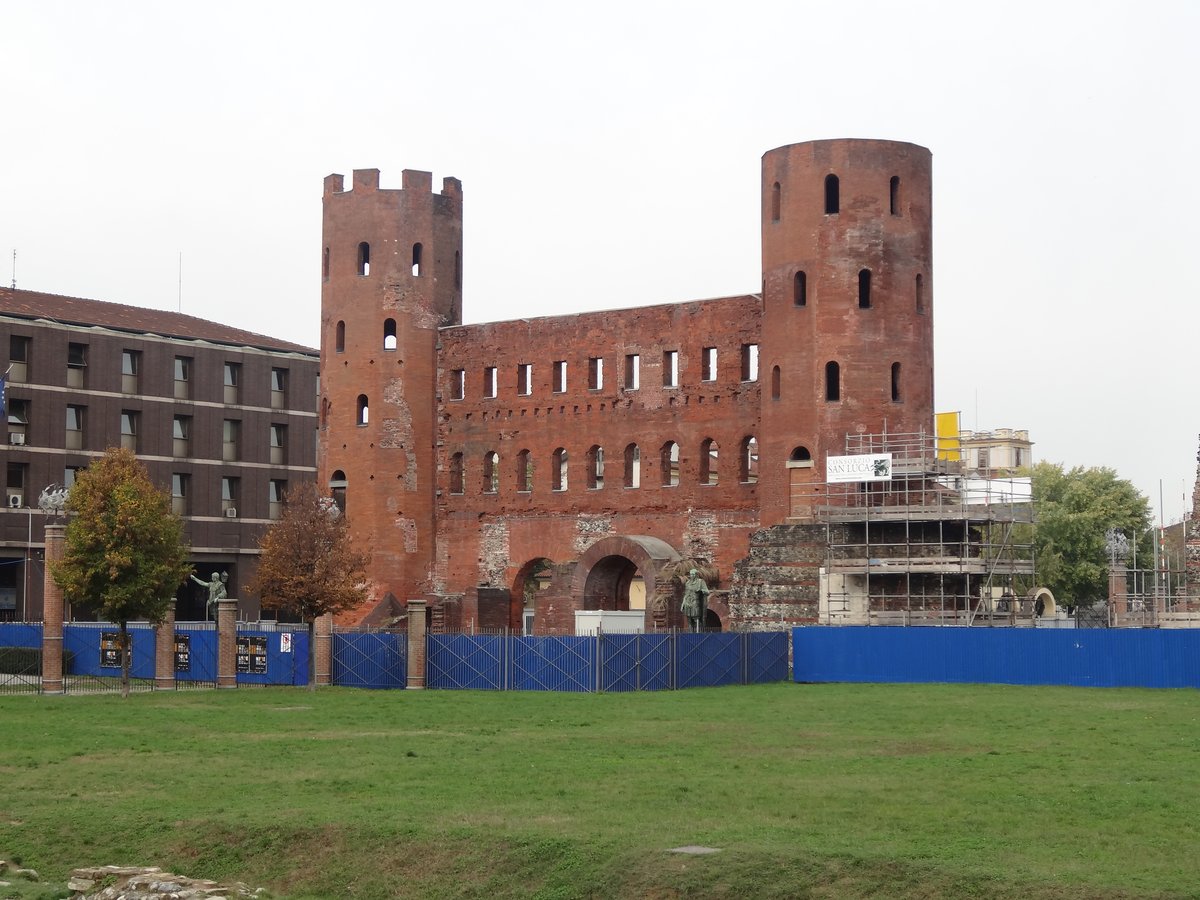
The Palatine Gate dates back to the Roman era, around the 1st century AD. It served as one of the primary entrances to the Roman city of Augusta Taurinorum, now modern-day Turin. The gate's construction is attributed to Emperor Augustus, reflecting the architectural prowess and urban planning of the Roman Empire. The Palatine Gate is one of the best-preserved Roman gates in the world, showcasing the grandeur and strategic importance of Roman infrastructure (Turin Tourism).
Architectural Significance
The gate features two massive towers flanking a central archway, designed to accommodate both pedestrian and vehicular traffic. The combination of brick and stone is typical of Roman construction techniques. The towers, approximately 30 meters high, provided a formidable defense mechanism. The central archway, about 4.5 meters wide, allowed the passage of Roman chariots and carts, facilitating trade and military movements (Roman Architecture).
Medieval Transformations
During the medieval period, the Palatine Gate underwent several modifications. In the 11th century, it was incorporated into the city's defensive walls to protect against Norman and Saracen incursions. The towers were reinforced, and additional fortifications were added. The gate also served as a customs post, where goods entering the city were inspected and taxed (Medieval History).
Renaissance and Baroque Periods
In the Renaissance period, the gate's aesthetic appeal was enhanced with decorative elements like statues and reliefs. During the Baroque period, the surrounding area was urbanized with the construction of palaces and public buildings. The gate continued to serve as a prominent landmark, reflecting the city's rich historical heritage (Renaissance Art).
Modern Era and Preservation Efforts
In the modern era, the Palatine Gate has been the focus of extensive preservation efforts. Restoration projects have stabilized the towers, cleaned and repaired the brick and stonework, and installed interpretive signage. The gate is now a protected monument and a popular tourist attraction (Italian Heritage).
Archaeological Discoveries
Excavations around the Palatine Gate have yielded significant discoveries, including pottery, coins, and tools, shedding light on the daily life and urban layout of the Roman city. These findings have been crucial in reconstructing the historical narrative of Chieri and its role within the Roman Empire (Archaeological Institute of America).
Cultural Impact
The Palatine Gate has had a lasting cultural impact, featured in numerous historical accounts, artworks, and literary works. It plays a central role in local festivals and cultural events, symbolizing the enduring legacy of the Roman Empire (Cultural Heritage).
Visitor Information
Visiting Hours and Tickets
The Palatine Gate is open to visitors year-round. Generally, the visiting hours are from 9:00 AM to 6:00 PM, but it's advisable to check the official Turin Tourism website for the most up-to-date information. Ticket prices are reasonable, with discounts available for students, seniors, and groups.
Travel Tips
- Best Time to Visit Spring and autumn offer the most pleasant weather for exploring.
- Getting There The gate is accessible by public transport, with several bus routes stopping nearby. If you're driving, parking is available in the vicinity.
- Accessibility The site is wheelchair accessible, and guided tours are available in multiple languages.
- Nearby Attractions Don't miss the nearby Roman Theatre and the Museum of Antiquities for a more comprehensive historical experience.
Visitor Experience
Visitors can explore the Palatine Gate through guided tours and interactive exhibits. Informative plaques and multimedia displays provide context and background information. The surrounding area, with its charming streets and historic buildings, offers a picturesque setting for a leisurely stroll. The Palatine Gate remains a must-visit destination for history enthusiasts and tourists alike (Visit Italy).
FAQ
What are the Palatine Gate's visiting hours?
The gate is typically open from 9:00 AM to 6:00 PM, but it's best to check the official website for current hours.
How much are tickets to the Palatine Gate?
Ticket prices vary, with discounts available for students, seniors, and groups. Check the official website for the latest pricing.
Is the Palatine Gate accessible?
Yes, the site is wheelchair accessible and offers guided tours in multiple languages.