Introduction
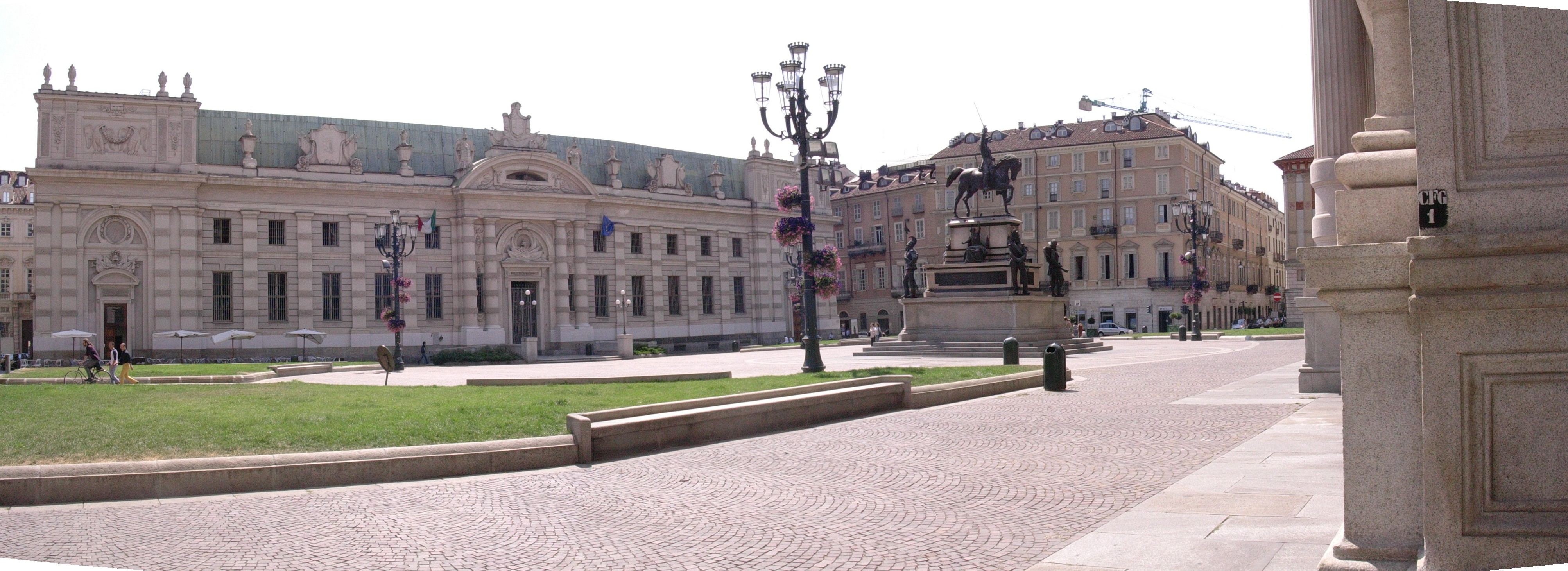
Located in the heart of Turin, Italy, the Museo Civico d’Arte Antica occupies the illustrious Palazzo Madama, a UNESCO World Heritage site. This museum offers an immersive journey through centuries of art, architecture, and political history, with collections that range from medieval to Baroque masterpieces. Set against the backdrop of a building that has evolved from Roman city gate to royal residence, the museum is a central pillar of Turin’s artistic and civic identity. Whether you are a history enthusiast, art lover, or cultural explorer, this guide provides all the essential information on visiting hours, ticketing, accessibility, and highlights to help you plan a rewarding visit to one of Italy’s most significant civic museums. For the latest updates, always refer to the official Palazzo Madama website and Turin tourism portal.
Roman Origins and Early Development
Palazzo Madama's roots trace back to ancient Augusta Taurinorum, the Roman settlement that became Turin. Visitors can see remnants of the original Roman city walls in the palace’s foundations, providing a tangible link to the city’s earliest days (PlanetWare). The strategic location at Piazza Castello established the site as a hub for defense and governance throughout history. During the Middle Ages, it transformed into a fortified castle, with defensive towers and thick walls still visible at the core of the current building, housing collections of medieval stonework and jewelry (PlanetWare).
Renaissance and Baroque Transformations
The Renaissance era marked a shift from fortress to palace as the ambitions of the House of Savoy drove expansion and embellishment. The castle became a refined residence fit for courtly life. The pivotal transformation came in the early 18th century when architect Filippo Juvarra designed the palace’s iconic Baroque façade and grand double staircase, completed in 1718. These elements showcase Piedmontese Baroque elegance and are highlights for any visitor (World City Trail; PlanetWare).
The Madama Reali and Political Significance
The palace is named for two influential regents of the House of Savoy, Christine of France and Maria Giovanna Battista of Savoy-Nemours—known as the Madama Reali. Their leadership and cultural patronage established Palazzo Madama as a focal point of power and diplomacy in Turin during the 17th and 18th centuries (World City Trail). The palace hosted key political events, further cementing its role in European history.
From Royal Residence to Civic Symbol
Following the Napoleonic period, Turin rose as a center of the Risorgimento (Italian unification movement). Palazzo Madama, with its layered architecture, became a symbol of civic pride and identity. In the 19th century, it served as the Senate of the Subalpine Parliament, reflecting its ongoing political and cultural significance (PlanetWare).
The Birth and Evolution of the Museo Civico d’Arte Antica
Founded in 1863, the Museo Civico di Torino initially showcased a diverse collection spanning archaeological finds, paintings, and memorabilia (Palazzo Madama Official Site). The museum’s core mission was to document Turin’s history and serve as a repository for decorative arts from the Middle Ages to the 18th century. Inspired by London’s South Kensington Museum, the institution later focused on art and industry, supporting local artisans and safeguarding regional heritage. In 1933, the museum relocated to Palazzo Madama, enabling a more coherent display of its vast collections, which now include:
- Medieval and Renaissance art from Piedmont and Valle d’Aosta
- Baroque paintings, sculptures, and decorative arts
- Over 4,000 ceramics
- Collections of glass, enamels, textiles, and furniture
- A numismatic archive with 26,500 coins and 6,700 medals
- Drawings, prints, and ethnographic materials (Palazzo Madama Official Site)
Restoration and Modern Museography
A major restoration between 1987 and 2006 revitalized the palace, creating an immersive museographic itinerary that guides visitors through the building’s historical layers. The museum now serves as both a record of Turin’s urban evolution and a showcase for centuries of decorative arts. Its photographic archive, containing around 350,000 images, and its ongoing educational initiatives underscore its commitment to conservation and public engagement (Palazzo Madama Official Site).
Architectural and Artistic Highlights
Palazzo Madama is renowned for its blend of architectural styles, from medieval towers to Juvarra’s grand Baroque façade (World City Trail). Inside, visitors will discover:
- Rare Flemish tapestries and intricately carved altarpieces
- Renaissance bronzes and Lombard metalwork
- Tuscan majolica, Neapolitan porcelain, and Piedmontese furniture
- Venetian glass, Limoges enamels, and medieval jewelry
- Historic textiles, lace, and fashion accessories
- The botanical garden with historical plant species (Art Museum RIGA BOURSE)
Practical Visitor Information: Tickets, Hours, and Accessibility
Opening Hours
- Tuesday to Sunday: 10:00 AM – 6:00 PM
- Closed on Mondays (check the official website for holiday exceptions)
- Last admission: 45 minutes before closing
Ticket Prices
- General admission: €10–€12 (depending on exhibitions)
- Reduced admission: €5–€10 (EU citizens aged 18–25, seniors, groups)
- Free entry: Children under 18, residents of Turin, people with disabilities and caregivers, and on select free days (InturinToday)
- Tickets are available online via the official website or at the museum entrance
Accessibility
- The museum is fully accessible, with ramps, elevators, and adapted restrooms
- Assistance for visually or hearing-impaired visitors can be arranged in advance
- Free entry for people with disabilities and accompanying persons (Renato Prosciutto)
Getting There
- Address: Piazza Castello, 10122 Torino, Italy
- Public transport: Tram lines 4 and 13; bus lines 1, 12, 13, 11, 27, 55, 57, 58 stop at Piazza Castello
- Walking: 20–25 minutes from Torino Porta Nuova railway station
- Parking: Limited in the area; public transport recommended
Museum Layout and Collection Highlights
The museum spans four main floors (WhichMuseum):
- Underground Floor: Medieval lapidary with Romanesque and Gothic stonework, mosaics, gold jewelry, and a recreated medieval botanical garden
- Ground Floor: Gothic and Renaissance art, sculptures, illuminated manuscripts, metalwork
- First Floor: Royal Apartments, Baroque art and furnishings, paintings by Orazio Gentileschi, Giovanni Battista Crespi, and more
- Second Floor: Decorative arts—ceramics, porcelain, textiles, ivories, gold, silver, and the renowned Lenci ceramics collection
Noteworthy works include Antonello da Messina’s “Trivulzio Portrait,” the “Turin–Milan Hours” manuscript, and the Cofano di Guala Bicchieri (Wikipedia; Petit Futé).
Visitor Experience: Guided Tours, Facilities, and Tips
Guided Tours and Multimedia
- Guided tours are available in Italian and English; advance booking is recommended
- Audio guides and printed materials support self-guided visits
- Virtual tours and interactive maps are available on the official website
Facilities
- Cloakroom: Free storage for coats, bags, umbrellas (large luggage not permitted)
- Restrooms: Available on every floor and wheelchair accessible
- Family amenities: Educational activities and resources for children; school/group tours by prior arrangement
- Gift shop: Books, souvenirs, and art-inspired gifts
- Cafés: No on-site café, but Piazza Castello offers many nearby options
Visitor Tips
- Book tickets online, especially for weekends or holidays (Turismo Torino)
- Free entry is available on select days (e.g., first Tuesday of the month if a weekday)
- Combine your visit with nearby sites like the Royal Palace, Egyptian Museum, and Mole Antonelliana
- Photography is allowed for personal use without flash; restrictions may apply in special exhibits
Frequently Asked Questions (FAQ)
Q: What are the Museo Civico d’Arte Antica visiting hours?
A: Tuesday to Sunday, 10:00 AM to 6:00 PM; closed Mondays.
Q: How do I buy tickets?
A: Online via the official website or at the museum entrance.
Q: Is the museum accessible for wheelchair users?
A: Yes, with ramps, elevators, and adapted restrooms.
Q: Are guided tours available?
A: Yes, in Italian and English; book in advance.
Q: Can I take photographs?
A: Non-flash photography is permitted for personal use; some restrictions apply.
Q: Is there a café on-site?
A: No, but there are many cafés in Piazza Castello nearby.
Discover More
The Museo Civico d’Arte Antica at Palazzo Madama is an essential destination for discovering Turin’s artistic and historical heritage. From its Roman and medieval origins to Baroque splendor, the museum’s collections and architecture offer a memorable, immersive experience. With accessible facilities, guided tours, and a central location, it caters to all visitors. For up-to-date information on hours, tickets, and special exhibitions, consult the official website. Download the Audiala app for personalized guides and follow us on social media for news and tips. Plan your visit and enrich your journey through Turin’s historic heart.
Listen to the full story in the app
Your Personal Curator, in Your Pocket.
Audio guides for 1,100+ cities across 96 countries. History, stories, and local insight — offline ready.
Audiala App
Available on iOS & Android
Join 50k+ Curators
Sources
- verified
- verified
- verified
- verified
- verified
- verified
- verified
- verified
- verified
- verified
- verified
Last reviewed: