Introduction
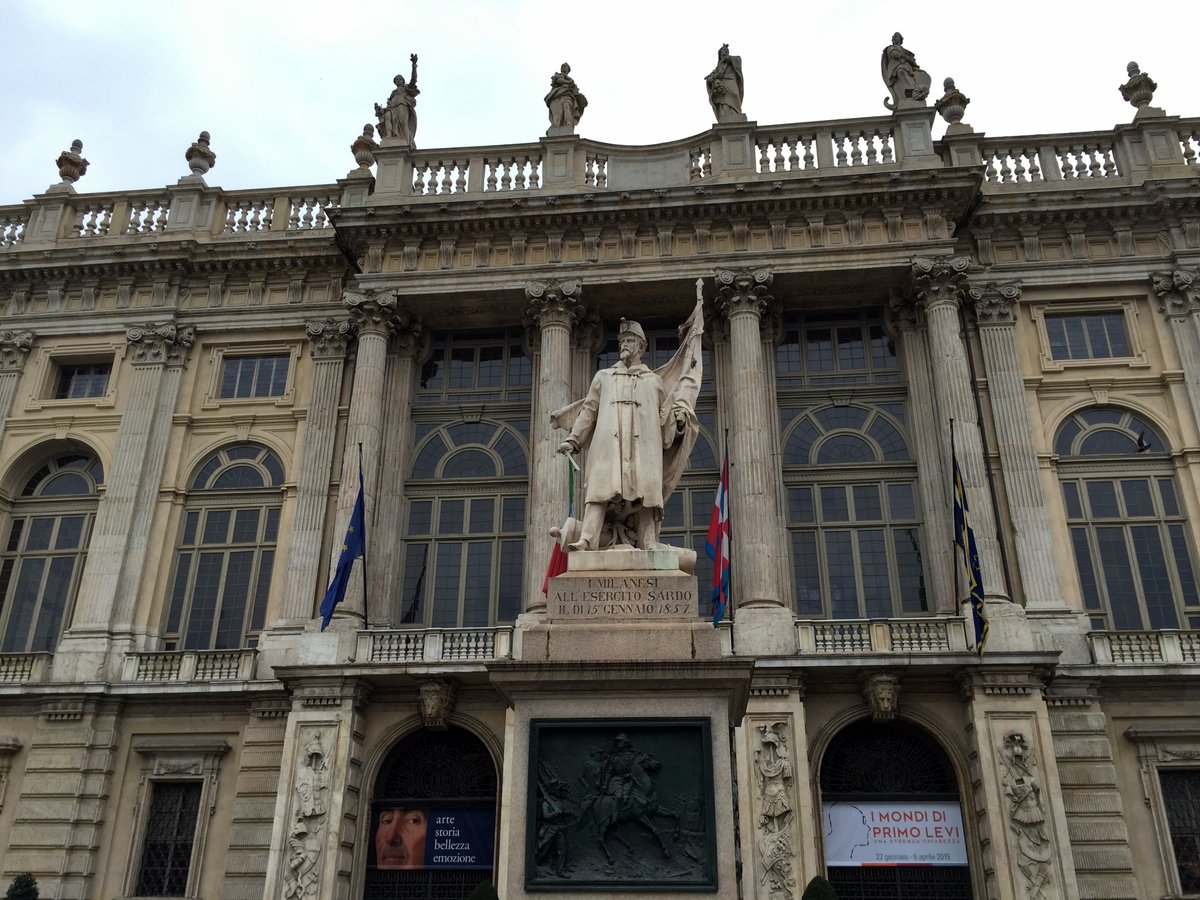
The Monument to the Standard-Bearer of the Sardinian Army (Monumento all'Alfiere dell'Esercito Sardo) stands as a powerful emblem of patriotism and unity in the heart of Turin, Italy. Located in the iconic Piazza Castello, this monument pays tribute to the soldiers of the Royal Sardinian Army, whose sacrifices played a pivotal role in the Risorgimento—the movement that led to the unification of Italy. More than an artistic landmark, the monument is a focal point of civic memory and national pride, set amid Turin’s historic urban landscape and surrounded by landmarks such as the Royal Palace and Palazzo Madama (Pietre della Memoria, Museo Torino, Dream Plan Experience).
This comprehensive guide explores the monument’s history, symbolism, artistic features, and its role in public memory. You’ll also find detailed visitor information, including practical tips, accessibility, and nearby attractions—making this an essential resource for anyone planning to explore Turin’s historical heart (Wikipedia: Royal Sardinian Army, Turismo Torino).
Photo Gallery
Explore Monument to the Standard-Bearer of the Sardinian Army in Pictures
Historical Context and the Sardinian Army
The monument commemorates the Royal Sardinian Army, whose roots date back to 1416. As the military force of the Duchy of Savoy and later the Kingdom of Sardinia, the army was central to the political and military events that shaped 19th-century Italy (Wikipedia: Royal Sardinian Army). Under the leadership of the House of Savoy, the army underwent significant modernization, especially in the decades preceding unification.
Turin, the capital of the Kingdom of Sardinia until 1861, was a strategic center during the Risorgimento. The army’s reforms, discipline, and courage enabled it to play a key role in the Wars of Independence, culminating in the creation of the Kingdom of Italy.
The standard-bearer—an "alfiere"—was a figure of supreme valor, entrusted with carrying the regimental flag into battle, often at great personal risk. The monument thus symbolizes both the collective sacrifice and the ideals that fueled Italy's unification (Museo Torino).
Symbolism and Artistic Features
Artistic Design
The original Monument to the Standard-Bearer of the Sardinian Army was crafted from marble between 1856 and 1859, blending neoclassical and romantic elements (Bridgeman Images). The statue depicts a resolute standard-bearer holding the regimental flag aloft, embodying determination, unity, and forward momentum.
- Medium and Detail: The marble sculpture’s intricate detailing—visible in the folds of the cloak, military attire, and animated posture—evokes a sense of movement.
- Base and Reliefs: The base originally included inscriptions and a bas-relief by Vincenzo Vela, intended to depict King Vittorio Emanuele II leading his troops (Google Arts & Culture).
- Symbolic Location: Located in Piazza Castello, the monument is surrounded by the city’s most important political and cultural buildings (Lonely Planet).
Symbolic Context
The standard-bearer represents not only military valor but also the aspirations of a new, unified Italy. The monument was donated by the people of Milan after the revolutionary events of 1848, reinforcing its role as a symbol of national solidarity. Its presence in Piazza Castello—the epicenter of Turin’s history—highlights its significance in the story of Italian nationhood (Bridgeman Images, Google Arts & Culture).
Visitor Information
Location and How to Get There
The monument stands in Piazza Castello, Turin’s grand central square, surrounded by cultural and historic landmarks (Turismo Torino, Dream Plan Experience). The square is a pedestrian-friendly zone with easy access to public transport:
- By Tram/Bus: Numerous lines stop at or near Piazza Castello.
- By Train: Porta Nuova and Porta Susa stations are within a 20-minute walk.
- By Car: Underground parking is available nearby, though driving is limited due to pedestrian zones.
- By Bicycle: Bike-sharing stations and dedicated lanes are available.
Visiting Hours and Tickets
- Hours: The monument is outdoors and accessible 24/7. Daytime visits are recommended for safety and best viewing.
- Tickets: No ticket or entry fee is required (Turismo Torino).
Accessibility
Piazza Castello is fully wheelchair accessible, with flat, paved surfaces and nearby public facilities. The area is safe and well-patrolled, with accessible restrooms available in cafés and museums (Dream Plan Experience).
Guided Tours and Events
Many guided tours of Turin’s historic center include the monument as a featured stop, offering insights into its history and artistic significance (Turismo Torino). During national holidays and special events, commemorative ceremonies often take place at the monument.
Best Times for Photography
- Early Morning: For soft light and a tranquil atmosphere.
- Late Afternoon/Evening: For lively city scenes and illuminated architecture.
Nearby Attractions
While visiting the monument, you can easily explore other major Turin landmarks:
- Royal Palace of Turin (Palazzo Reale): Former royal residence, now a museum.
- Palazzo Madama: Houses the Museum of Ancient Art.
- Teatro Regio di Torino: The city’s renowned opera house.
- Museo Egizio: The world’s second-largest Egyptian museum.
- Museo Nazionale del Risorgimento Italiano: The foremost museum dedicated to Italian unification.
The area is also filled with historic cafés, restaurants, and shops, making it easy to combine your visit with dining and shopping experiences.
Visitor Experience and Practical Tips
- Atmosphere: Piazza Castello is lively, especially during weekends and evenings, and offers ample opportunities for people-watching.
- Amenities: Public restrooms, tourist information offices, and numerous cafés are nearby.
- Safety: The area is well-lit and patrolled but, as in all busy places, keep an eye on your belongings.
- Cultural Etiquette: Be respectful during commemorative events or ceremonies.
Frequently Asked Questions (FAQ)
Q: What are the visiting hours for the monument?
A: The monument is accessible at all times, but daylight hours are recommended for the best experience.
Q: Is there an entry fee or ticket required?
A: No, the monument is free to visit.
Q: Is the monument wheelchair accessible?
A: Yes, Piazza Castello and the monument area are fully accessible.
Q: Are guided tours available?
A: Yes, many walking tours of Turin’s center include the monument.
Q: What are the best times for photography?
A: Early morning and late afternoon offer optimal lighting and atmosphere.
Listen to the full story in the app
Your Personal Curator, in Your Pocket.
Audio guides for 1,100+ cities across 96 countries. History, stories, and local insight — offline ready.
Audiala App
Available on iOS & Android
Join 50k+ Curators
Sources
- verified
- verified
- verified
- verified
- verified
- verified
- verified
Last reviewed: