
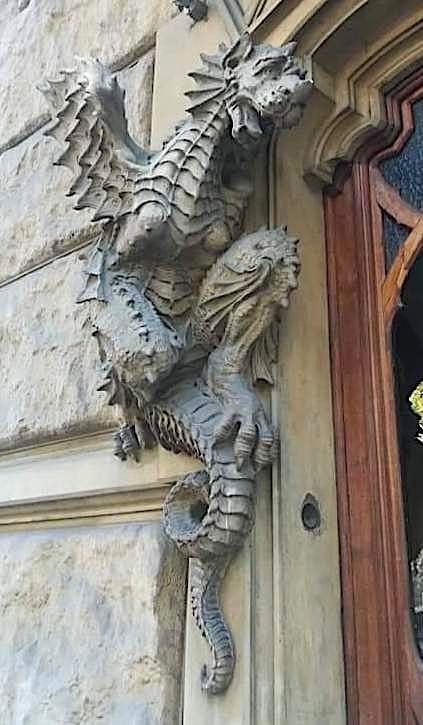
Palazzo della Vittoria
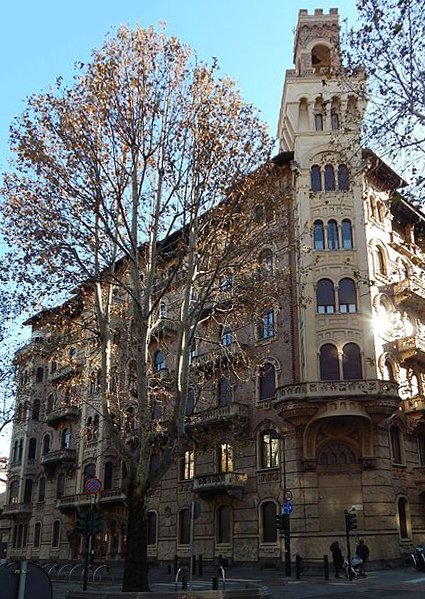
Palazzo della Vittoria is also known as Casa della Vittoria and Casa dei Draghi, or “House of Dragons.” The accounts describe it in two different settings: one places it in the heart of Chieri and relates it to that town’s heritage, while another identifies Casa della Vittoria as a residential building in the Cit Turin district of Turin. The Turin account describes a six-story building on Corso Francia, commissioned to commemorate Italy’s victory in World War I (Wikipedia).
History
Commission and construction
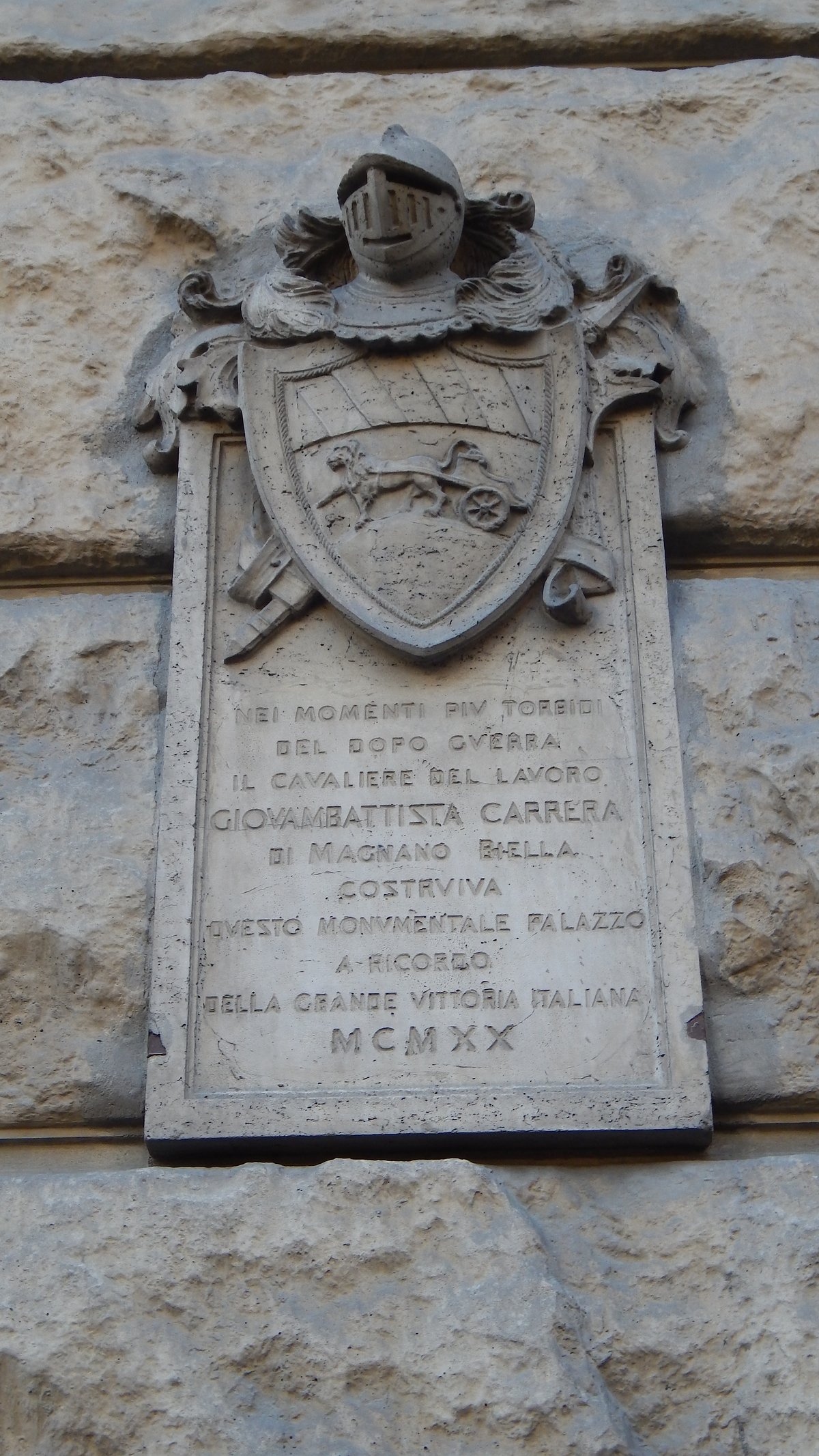
In the Turin account, Giovanni Battista Carrera commissioned the Palazzo in 1918, and engineer Gottardo Gussoni designed it. Construction was completed in 1920, during a significant period of recovery for Italy’s post-war construction sector. A plaque on the facade confirms this history (Wikipedia).
Chieri’s historical context
Chieri dates back to pre-Roman times and was a significant settlement across several historical periods. It was once more prosperous than Turin (Italia Slow Tour).
The Chieri account presents Palazzo della Vittoria as a symbol of the town’s medieval and Renaissance heritage, and as an example of its architectural evolution. The Renaissance brought economic prosperity and a flourishing of the arts, including the rebuilding of the Church of Santa Maria into its present form as the Duomo (Wikipedia).
The Balbi and Bertoni families are described as having played significant roles in Chieri’s architectural development, including that of the Palazzo (Wikipedia). Chieri’s textile industry, established from the 15th century, was renowned across Europe, particularly for producing fustian, a type of heavy cloth (Italia Slow Tour). The town’s heritage is also associated with its resilience through invasions and economic fluctuations.
Cit Turin’s historical context
In the late nineteenth and early twentieth centuries, Cit Turin experienced intense residential building activity, predominantly in the Liberty Style, or Italian Art Nouveau. Gothic Revival developed alongside it and appeared in several important buildings, including Palazzo della Vittoria.
What to see
The Turin account describes Palazzo della Vittoria as an important example of residential Medieval-revival architecture, with elements of French Gothic Revival. Features include the portal and entrance hall, balcony and interior-staircase balustrades, and a pronounced angular oriel with mullioned windows and round three-light windows, topped by a crenellated turret (Wikipedia).
The building’s beveled corner has a niche at the angle of Corso Francia and the intersecting street. It appears to have been designed to hold a statue, but no statue has ever been placed there (Wikipedia).
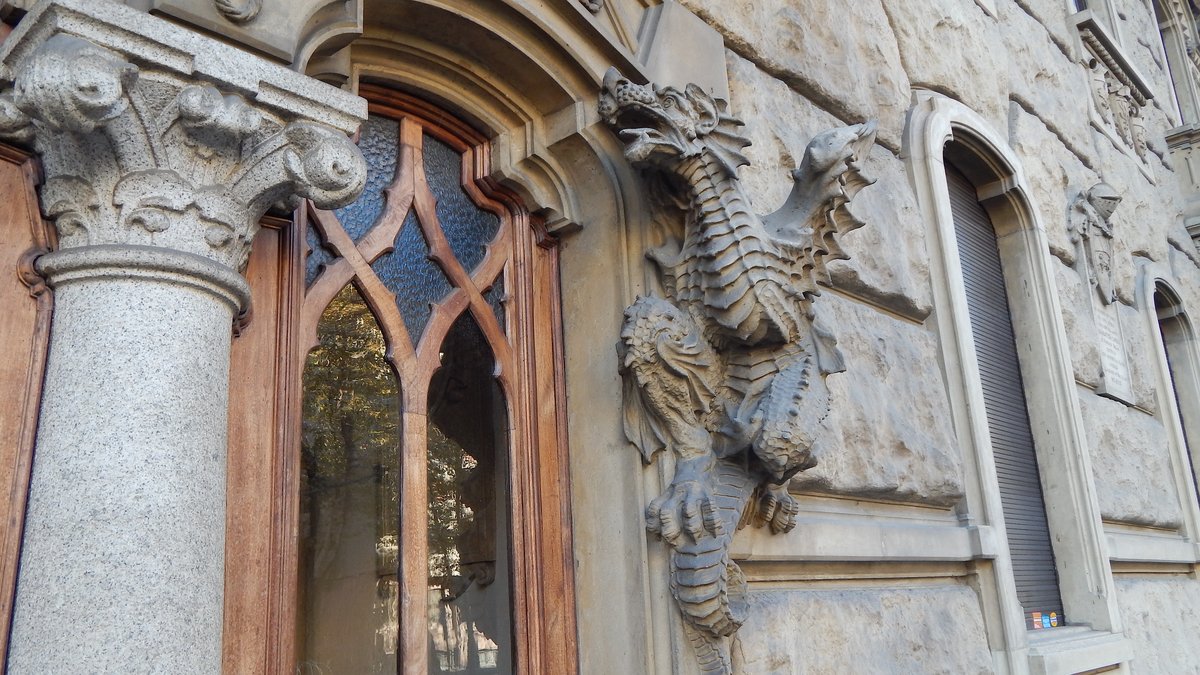
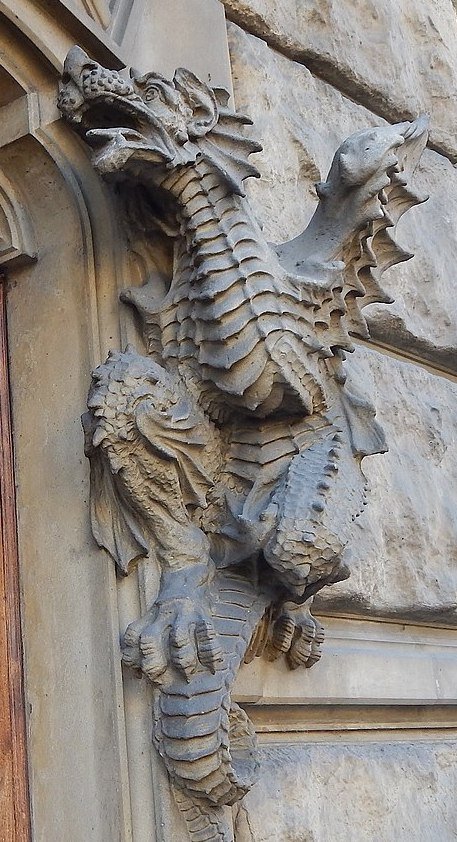
Winged cement dragons at the main entrance and on the windows give the building its “House of Dragons” nickname. They were designed to symbolize Italy’s post-war power. Other allegorical details decorate the facade (Atlas Obscura).
Palazzo della Vittoria is in an area of architectural interest with a high concentration of Art Nouveau and Gothic Revival buildings, including the nearby church of San Donato. It has also appeared in at least four films set in Turin (Wikipedia).
Practical visiting information
Opening hours and tickets
Palazzo della Vittoria is described as primarily a residential building, not a museum with regular visiting hours or ticket sales. Its exterior can be viewed at any time, and no ticket is required to see it. For interior access, check for special events or guided tours.
Another account says visiting hours vary by season and ticket prices can vary, and recommends checking Chieri’s official tourism information or contacting the local tourist office for current details (Turismo Torino).
Guided tours and events
Guided tours are occasionally organized by local cultural associations and can provide information about the building’s history and architecture. Another account describes guided tours as available and recommends them for understanding the Palazzo’s significance. For current tour and event information, consult local tourist information centers or the official city website.
Getting there and accessibility
For the Turin location, the Palazzo is accessible from the Metropolitana M1 line (Fermi–Lingotto) at Principi d’Acaja station.
The Chieri account places the Palazzo in the town’s historic center, where narrow streets and cobblestone paths may pose challenges for visitors with mobility issues. It recommends checking accessibility options in advance.
Accommodation
Chieri has accommodation options ranging from bed and breakfasts to hotels. Staying in town allows visitors to explore the Palazzo and other attractions at a leisurely pace.
Tips
Spring and autumn are recommended as the best seasons to visit, when the weather is mild and the area is less crowded. Early mornings and late afternoons offer the best lighting for photography.
Visitors to Chieri can sample local specialties including rubatà breadsticks, Freisa wine, and focaccia of Chieri (Turismo Torino).
Nearby places
In Turin’s Cit Turin district, nearby sites include Casa Fenoglio-Lafleur and Villino Raby, both significant examples of the Liberty Style, as well as the church of San Donato.
In Chieri, nearby attractions include the Duomo, also known as the Collegiate Church of Santa Maria della Scala. It is the town’s principal church, a late-Gothic building with notable architectural and artistic features (Wikipedia). The Church of St. Bernardino and Rocco is also nearby; it is known for its neoclassical facade and vibrant colors, which were restored to their original hues (Italia Slow Tour).
Preservation and conservation
Preservation and maintenance are described as important to ensuring that future generations can appreciate the building’s historical significance and architecture. Its inclusion in cultural and historical tours highlights its significance and ongoing conservation efforts (Atlas Obscura).
FAQ
What are the visiting hours for Palazzo della Vittoria?
One account says the building has no regular visiting hours because it is primarily residential, but its exterior can be viewed at any time. Another says hours vary by season. Check local tourism information or contact the relevant tourist office for current details.
Are tickets required, and how much do they cost?
No ticket is required to view the exterior. One account says the Palazzo does not have regular ticket sales; another says prices can vary. Check current tourism information for interior visits or events.
Are guided tours available?
Tours are occasionally organized by local cultural associations. Another account says guided tours are available and recommends them. Consult local tourist information centers for current details.
How can I reach Palazzo della Vittoria?
For the Turin location, take the Metropolitana M1 line (Fermi–Lingotto) to Principi d’Acaja station. The Chieri account places the Palazzo in the historic center of Chieri.
What nearby attractions are there?
In Chieri, nearby attractions include the Duomo and the Church of St. Bernardino and Rocco. In Turin, nearby sites include Casa Fenoglio-Lafleur, Villino Raby, and the church of San Donato.
What local food should I try in Chieri?
Local specialties include rubatà breadsticks, Freisa wine, and focaccia of Chieri.