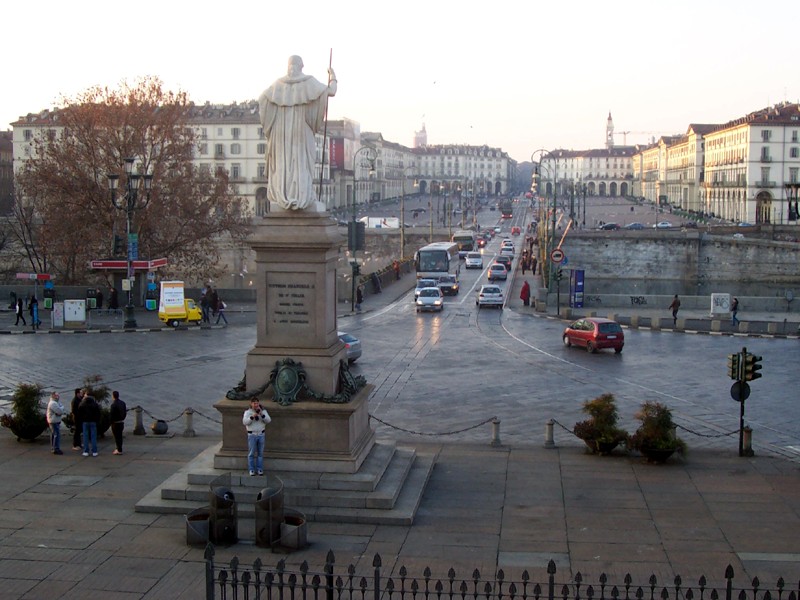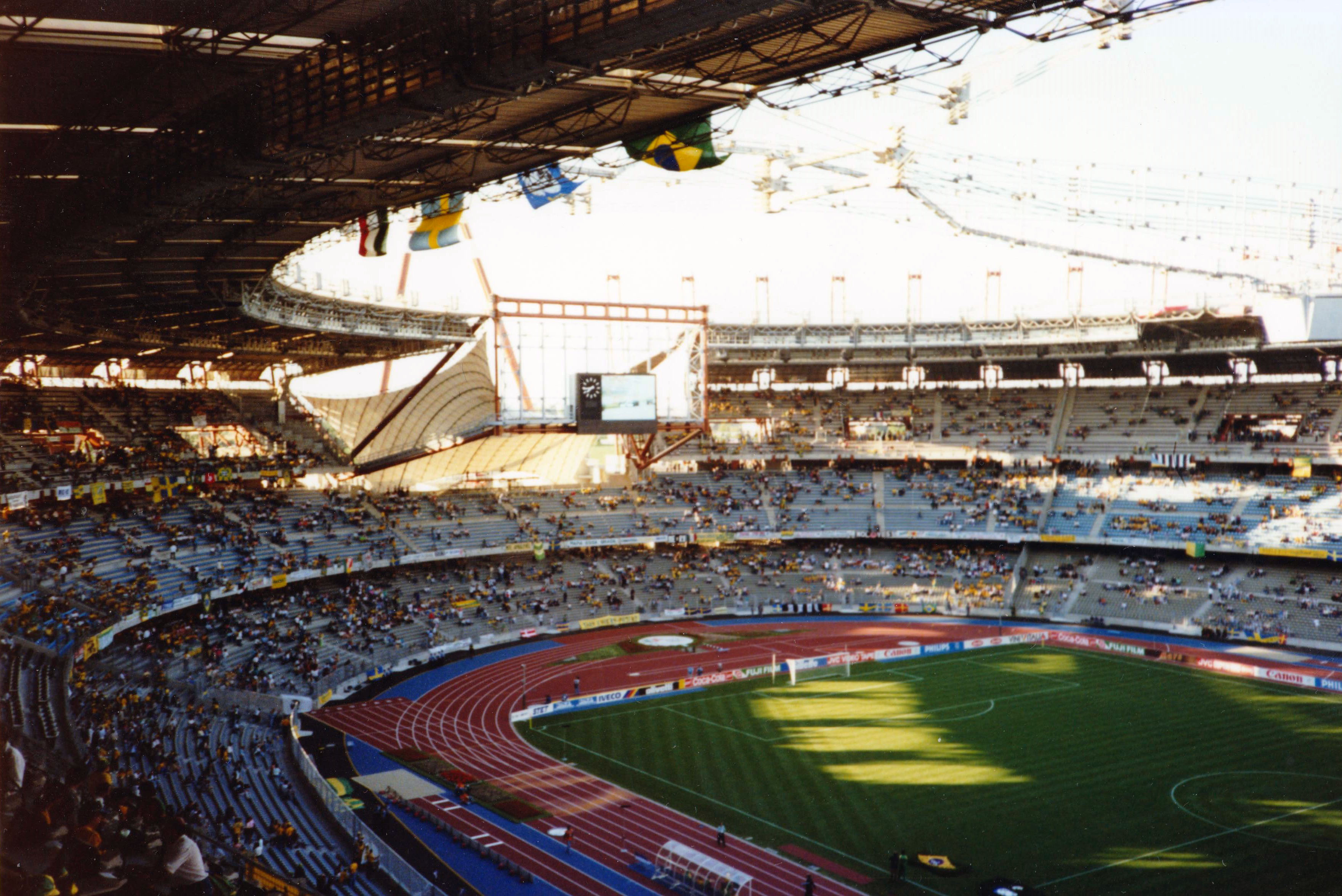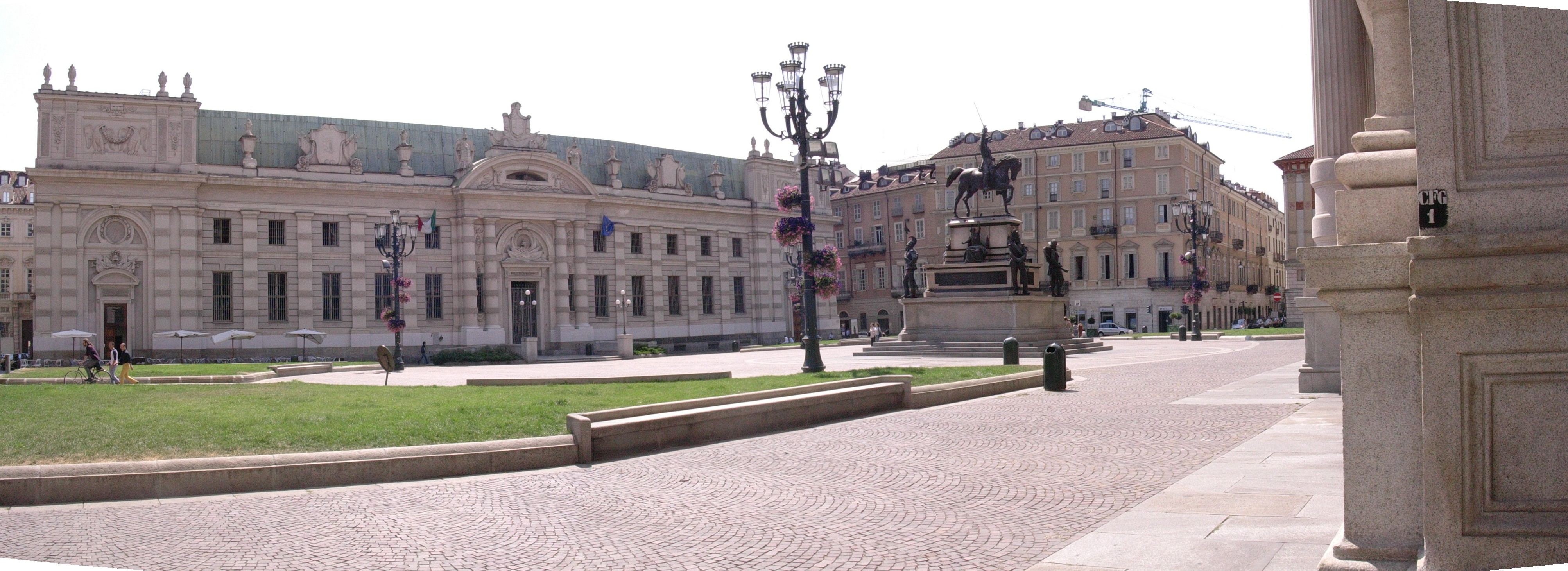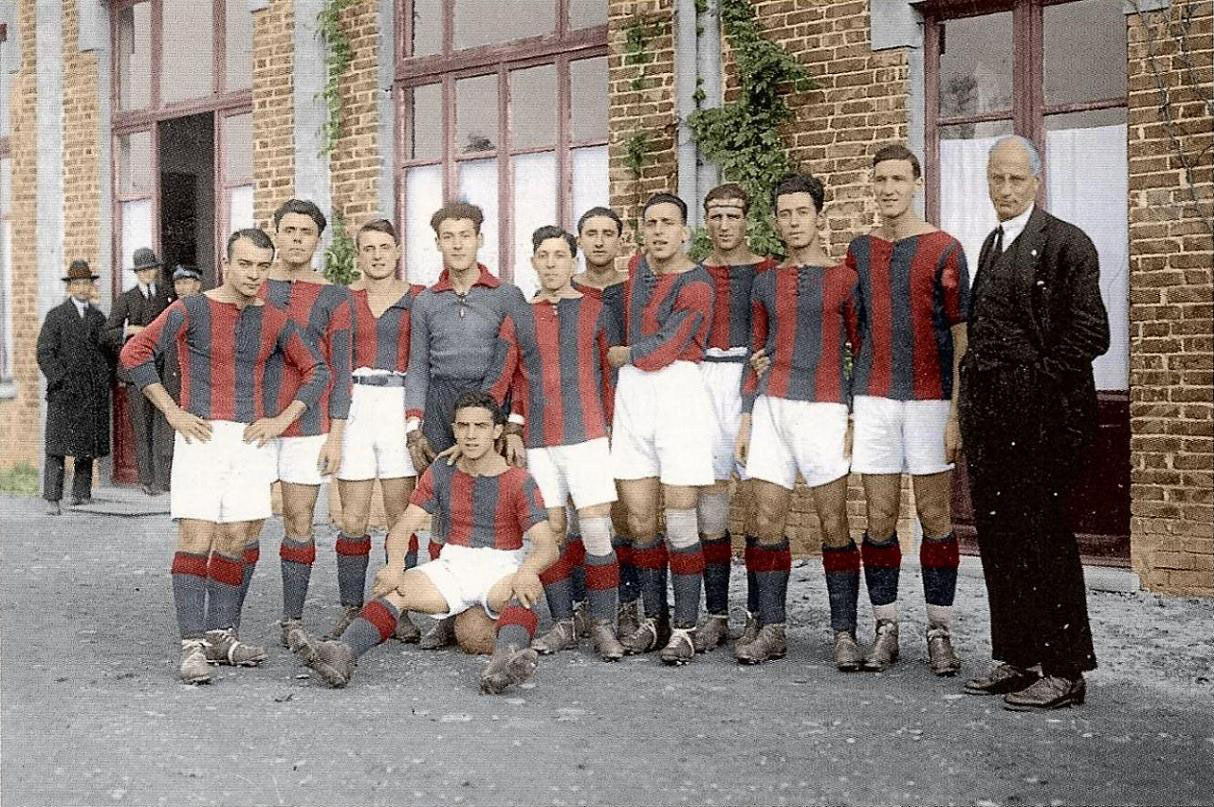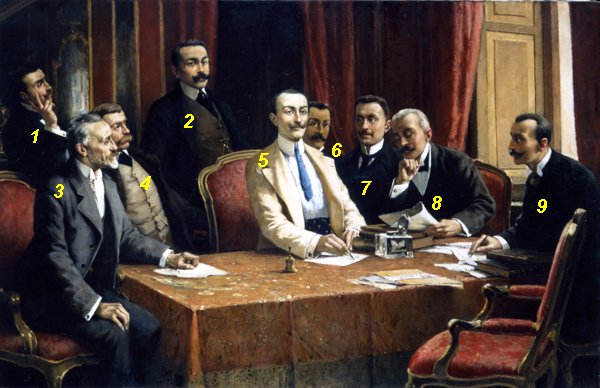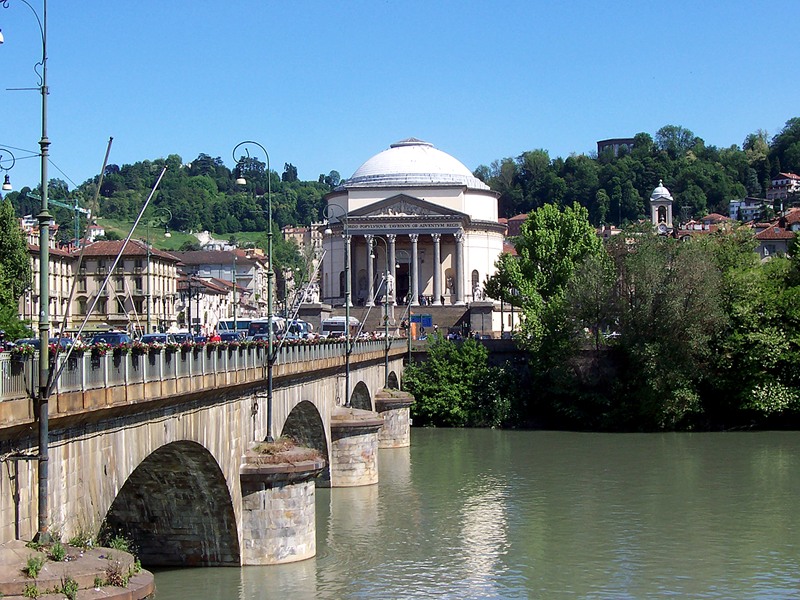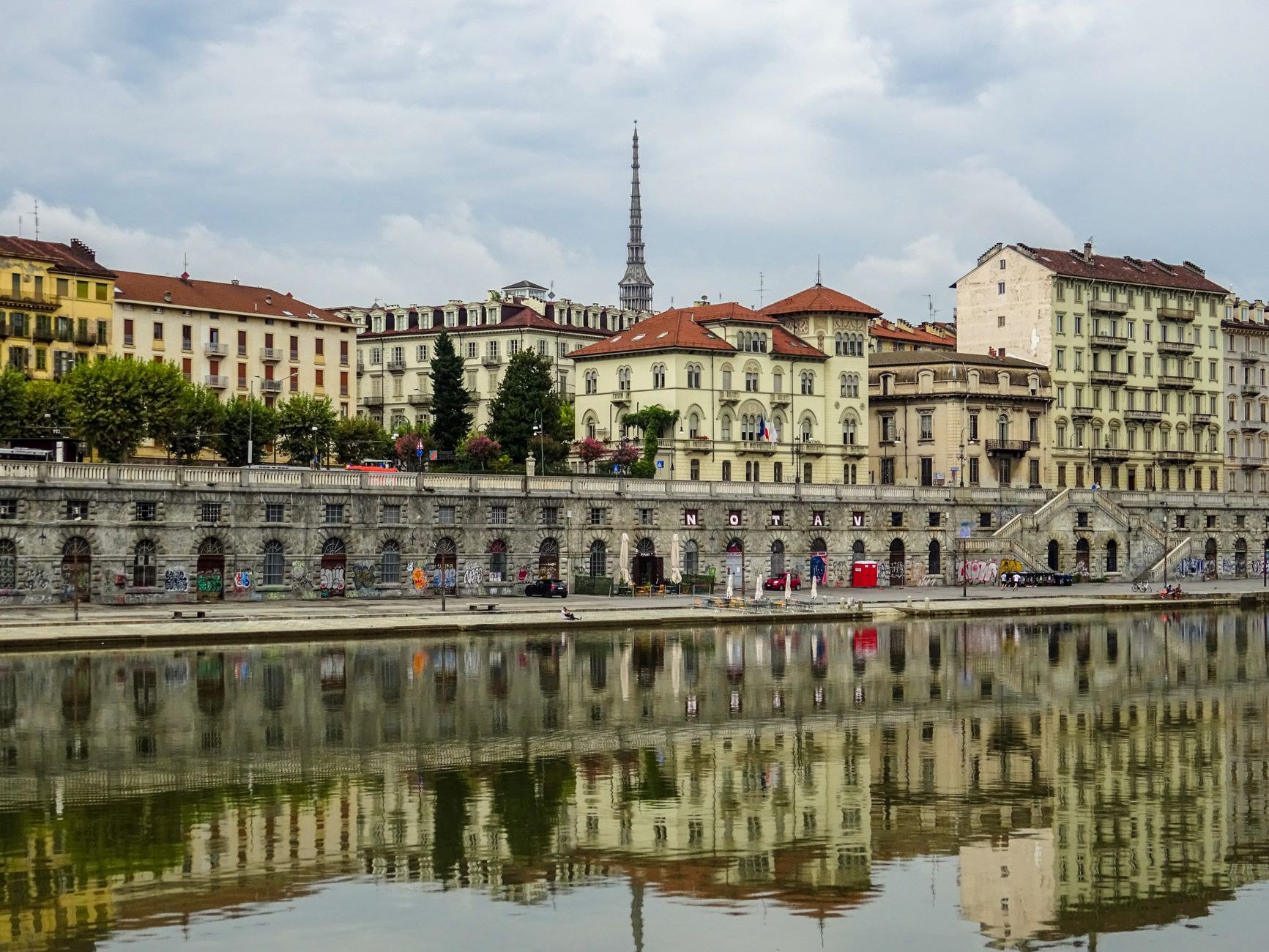
Introduction
The first thing that hits you in Turin is the smell of chocolate and cold stone. While the rest of Italy performs la dolce vita under blinding Mediterranean light, this northern city keeps its cards close, wrapped in Alpine air and a quiet aristocratic confidence that feels almost French yet remains defiantly Piedmontese.
Kings once ruled from here. The House of Savoy turned Turin into the unlikely capital of a brand-new Italy in 1861, leaving behind a majestic grid of baroque squares, royal palaces and geometric streets that still feel like a city designed by someone with a very expensive compass. Yet the place never quite surrendered its secrets. Walk five minutes from the grandeur of Piazza Castello and you’ll find tiny espresso bars where locals still drink their coffee standing up in three swift gulps.
The contradictions are delicious. One of the world’s greatest Egyptian museums sits a short stroll from the chapel that once guarded the Shroud of Turin. Mole Antonelliana, a 167-metre brick spire originally meant to be a synagogue, now houses Europe’s tallest freestanding masonry building and a cinema museum that feels like wandering inside someone’s fever dream of film. And everywhere, the ghost of gianduja lingers — that perfect marriage of hazelnut and cocoa born here because Napoleon’s blockades made proper chocolate impossible.
Turin doesn’t beg to be loved. It simply waits, elegant and slightly aloof, until one day you realise the city has quietly rewritten how you see the rest of Italy.
Places to Visit
The Most Interesting Places in Turin

Mole Antonelliana
The Mole Antonelliana, towering over Turin, Italy, is one of the most iconic landmarks in the city and a testament to the region's rich architectural and…

Piazza San Carlo
Piazza San Carlo in Chieri, Italy, is an exquisite blend of history, architecture, and cultural vibrancy.
Royal Palace of Turin
The Palazzo Reale in Chieri, Italy, might not share the same level of fame as its counterpart in Turin, but it is a hidden gem that offers a fascinating…

Basilica of Superga
The Basilica di Superga, perched majestically on a hilltop overlooking Turin, Italy, is a gem of Baroque architecture and a monument laden with historical and…

The National Cinema Museum
Nestled within Turin’s striking architectural landmark, the Mole Antonelliana, the National Cinema Museum (Museo Nazionale del Cinema) offers an unparalleled…

Turin Cathedral
Nestled in the heart of Turin, Italy, the Turin Cathedral—officially the Cathedral of Saint John the Baptist (Duomo di San Giovanni Battista)—stands as a…

Palazzo Carignano
Palazzo Carignano stands as one of Turin's most emblematic landmarks, celebrated for its exquisite Baroque architecture and its pivotal role in Italy's…
Museum of the Risorgimento
Palazzo Carignano, situated in the heart of Turin, Italy, stands as a quintessential example of Baroque architecture and a pivotal site in Italian history.
Giardini Reali (Turin)
Nestled in the vibrant heart of Turin, the Giardini Reali di Torino, or Royal Gardens of Turin, stand as a testament to the city's illustrious past and its…
Piazza Solferino
Nestled in the charming town of Chieri, Italy, the Giardino Alfredo Frassati offers visitors a serene escape while paying homage to a significant historical…
Basilica of Our Lady Help of Christians
The Basilica of Our Lady Help of Christians (Basilica di Maria Ausiliatrice) in Turin, Italy, is a profound emblem of religious devotion, architectural…

Parco Del Valentino
Parco del Valentino stands as Turin’s oldest and most treasured public green space, offering an unparalleled blend of history, culture, and natural splendor…
What Makes This City Special
Egyptian Obsession
The Museo Egizio holds 30,000 artifacts, second only to Cairo. Walk past colossal statues of pharaohs and tiny everyday objects that somehow survived 3,000 years. The quiet galleries make you feel like an archaeologist who wandered in after closing.
The Royal Crown
Turin sits at the center of the Residences of the Royal House of Savoy, a ring of 22 palaces and hunting lodges declared UNESCO World Heritage. The city itself feels like the quiet, elegant knot that holds this baroque necklace together.
Architectural Eccentrics
Alessandro Antonelli gave Turin the 167-metre Mole Antonelliana, originally meant to be a synagogue, and the 54-centimetre-wide Palazzo Fetta di Polenta. The city collects mad buildings the way others collect postage stamps.
Slow Food Capital
This is where the Slow Food movement was born and where you still find perfect agnolotti del plin and vitello tonnato served without ceremony. The aperitivo ritual in Piazza San Carlo at dusk remains one of Italy’s finest inventions.
Historical Timeline
Alpine Gateway That Forged a Kingdom
From Celtic stronghold to first capital of Italy
Hannibal Burns Taurasia
The Taurini, a stubborn Celto-Ligurian people, refused to join Hannibal against Rome. He gave their settlement three days before razing it. Smoke hung over the Po Valley for weeks. The site would rise again, but the memory of that first recorded destruction never fully faded.
Augustus Founds Roman Colony
Emperor Augustus laid out a perfect grid of 72 city blocks and named it Augusta Taurinorum. The straight streets you still walk today were drawn then. Massive stone walls and the twin Palatine Towers rose at the eastern gate. Rome had claimed its Alpine key.
Turin Becomes a Bishopric
While the Western Empire crumbled, the city gained an early bishop. The church slowly filled the vacuum left by absent legions. Incense replaced incense of sacrifice. By the time the last Roman officials vanished, the bishops already ran daily life.
Lombards Make Turin a Duchy
Long-bearded warriors from the north seized the city and turned it into one of their southernmost duchies. They strengthened the old Roman walls rather than tear them down. For two centuries the Lombard dukes ruled from a palace whose foundations still lie beneath Piazza Castello.
Charlemagne Ends Lombard Rule
Frankish heavy cavalry thundered through the Alpine passes and took Turin. The Lombard duchy disappeared overnight. Charlemagne’s administrators introduced new laws and taxes paid in silver denarii. The city changed hands but kept its walls.
Marriage Links Turin to Savoy
Countess Adelaide of Turin married Odo, Count of Savoy. That single wedding joined the city’s fate to a mountain dynasty that would eventually rule Italy. The Savoys were minor then. Nobody imagined they would one day sleep in Versailles.
Savoy Gains Full Control
After decades of half-independence and street fighting, Turin formally submitted to the House of Savoy. The city traded autonomy for protection against larger neighbors. The decision shaped the next six centuries.
University of Turin Founded
Duke Amadeus VIII established the university with a papal bull. Students argued in Latin under the same slate-grey skies you see today. The institution survived French occupations, Napoleonic closures, and two world wars. It still produces engineers who design Fiats.
Turin Cathedral Completed
The Renaissance Duomo of San Giovanni Battista rose on the site of three earlier churches. Its sober brick façade hides the black marble Chapel of the Holy Shroud. The building would witness kings, revolutions, and a suspicious fire in 1997.
French Occupy the City
Francis I’s troops marched in and stayed for twenty-six years. They turned Turin into a French provincial capital. When Emanuele Filiberto finally drove them out, he vowed the city would never be so vulnerable again. His answer was Baroque.
Capital Moves from Chambéry
Duke Emanuele Filiberto, called Iron-Head, shifted his court to Turin. What had been a modest Alpine town became the nerve center of Savoy power. Palaces shot up almost overnight. The smell of fresh plaster and wet lime filled the streets for decades.
Guarini Completes Holy Shroud Chapel
The mathematician-monk Guarino Guarini finished his black marble dome that seems to float without touching the walls. Light falls through hidden windows in complex geometric patterns. Even skeptics admit the space feels strange. Pilgrims still kneel where the Shroud once lay.
Siege of Turin Lifted
French forces surrounded the city for 117 days. On September 7 Prince Eugene of Savoy and his Imperial troops smashed through the besiegers. The victory saved the Savoy dynasty and gave the city its defining myth of resilience. The cannonballs are still embedded in some façades.
Basilica of Superga Begun
Victor Amadeus II kept a vow made during the siege and started building on the hill that overlooks Turin. Juvarra’s white basilica still dominates the skyline. Inside lie the tombs of almost every Savoy ruler. On clear days you can see both the Alps and the city they once ruled.
Kingdom of Sardinia Created
The Duchy of Savoy acquired the island of Sardinia and upgraded itself to a kingdom. Turin became a royal capital with all the ceremony that title demanded. The city’s Baroque squares were perfect stages for processions and military parades.
Victor Emmanuel II Born
The future first King of Italy entered the world inside Palazzo Carignano. The boy who would wear the crown of a unified nation grew up surrounded by Piedmontese Baroque and French revolutionary ideas. History sometimes begins in ordinary palace bedrooms.
Cavour Begins Risorgimento Work
Camillo Benso, Count of Cavour, started plotting in Turin salons. The city became the intellectual heart of Italian unification. While other Italian states wavered, Turin printed newspapers, trained soldiers, and hosted exiles. The Risorgimento smelled of cigar smoke and printer’s ink.
First Capital of United Italy
After Garibaldi’s redshirts finished their work, Turin hosted Italy’s first parliament in Palazzo Carignano. For four frantic years the city tried to govern a peninsula it barely understood. The dialect of Piedmont mixed with Neapolitan and Sicilian in the cafés. Then the capital moved south.
Construction Starts on Mole Antonelliana
Alessandro Antonelli began what was meant to be a synagogue. The building kept growing taller than anyone intended. By the time it finished in 1889 it stood 167 meters high, the tallest masonry structure in Europe. Today its lift still carries visitors above the rooftops like a Victorian spaceship.
FIAT Founded
A group of aristocrats and engineers created Fabbrica Italiana Automobili Torino. The first car rolled out two years later. Within a generation Turin transformed from Baroque capital into the Italian Detroit. The factory whistles dictated the rhythm of daily life for thousands.
Superga Air Disaster
On 4 May the plane carrying the entire Grande Torino football team slammed into the basilica hill in thick fog. All thirty-one aboard died. The city lost its sporting soul that afternoon. The memorial at Superga still draws silent pilgrims every year.
Cathedral Fire and the Shroud
Flames tore through Guarini’s chapel on the night of 11 April. Firefighter Mario Trematore smashed through three layers of bulletproof glass with a sledgehammer and rescued the Shroud. Restoration took years. Some still wonder whether the fire was entirely accidental.
Turin Hosts Winter Olympics
The city spent billions reinventing itself for the Games. New metro lines appeared, hills were reshaped, and the world suddenly noticed Turin’s elegant arcades and Alpine backdrop. The Olympics didn’t just change infrastructure. They changed how the city saw itself.
Eurovision Comes to Turin
The Pala Olimpico hosted Europe’s glitteriest night. For one week the old industrial city wore sequins without irony. The event proved Turin could still surprise people who thought they knew it. Some locals still talk about the night the city outshone Paris and London.
Notable Figures
Vittorio Emanuele II
1820–1878 · First King of ItalyBorn inside Palazzo Carignano, he grew up surrounded by the rigid court etiquette of the House of Savoy. Years later he became the figurehead of Italian unification. Today his statue stands in the middle of Piazza Castello, watching tourists photograph the palace where his life began.
Friedrich Nietzsche
1844–1900 · PhilosopherHe rented rooms at Via Carlo Alberto 6 and wrote Ecce Homo here while his mind was quietly unraveling. The elegant arcades and crisp Piedmont light seemed to suit his final productive months. One wonders what he would make of the football flags now hanging from those same balconies.
Cesare Lombroso
1835–1909 · CriminologistHe spent most of his career measuring the skulls of criminals in Turin, convinced he could read deviance in bone structure. His own skull still sits in a museum case a short walk from where he taught. The city that once embraced his theories now treats them mostly as a fascinating mistake.
Filippo Juvarra
1678–1736 · Baroque architectCalled to Turin by the Savoys, he gave the city its theatrical staircases and the hilltop Basilica of Superga. He died in Madrid but most of his genius remains here in stone. Stand at the top of the Palazzo Madama staircase he designed and you can almost hear him explaining the proportions with theatrical hand gestures.
Photo Gallery
Explore Turin in Pictures
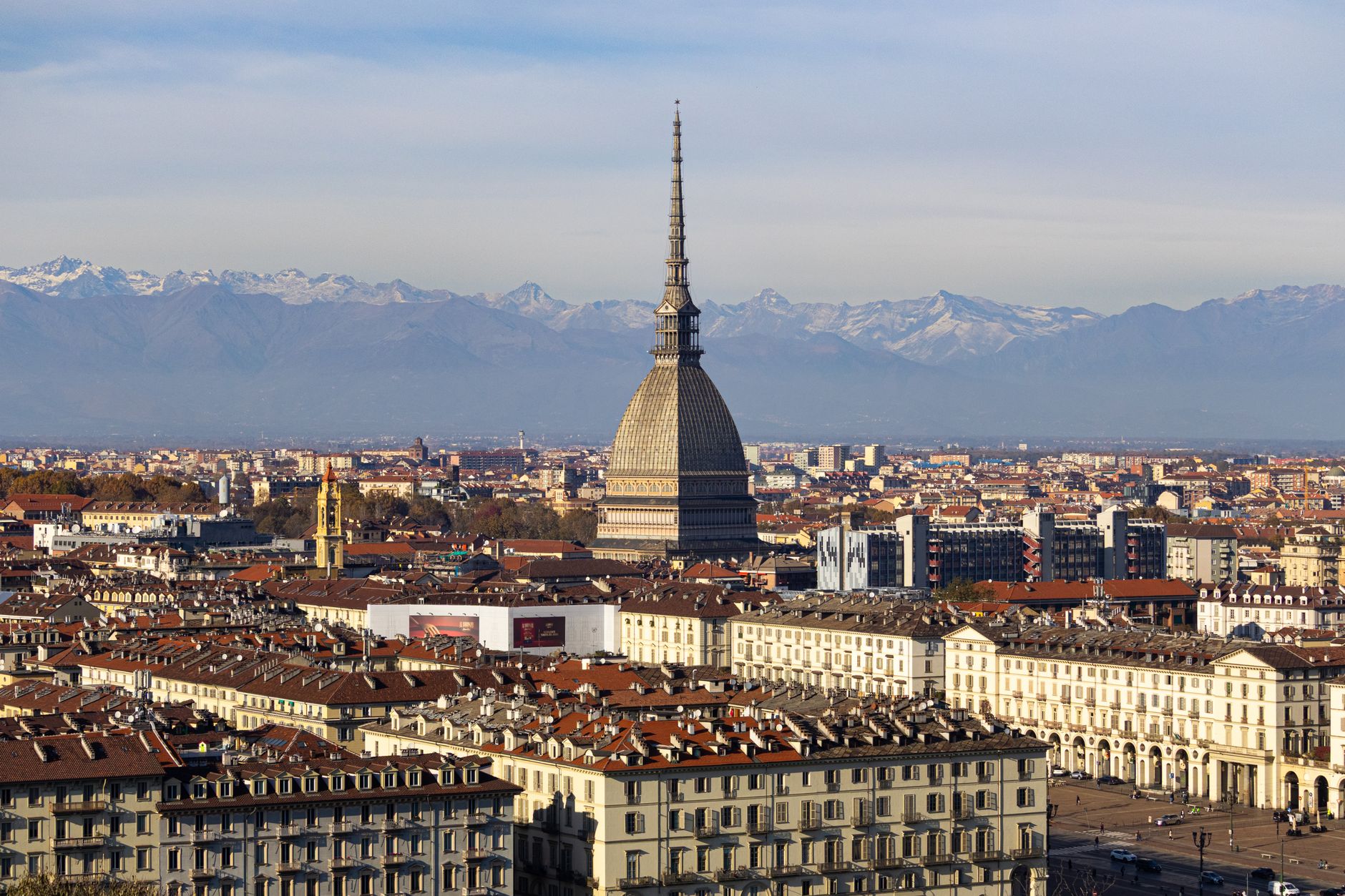
The historic skyline of Turin, Italy, dominated by the majestic Mole Antonelliana with the snow-capped Alps providing a stunning backdrop.
Ariadne Barroso on Pexels · Pexels License
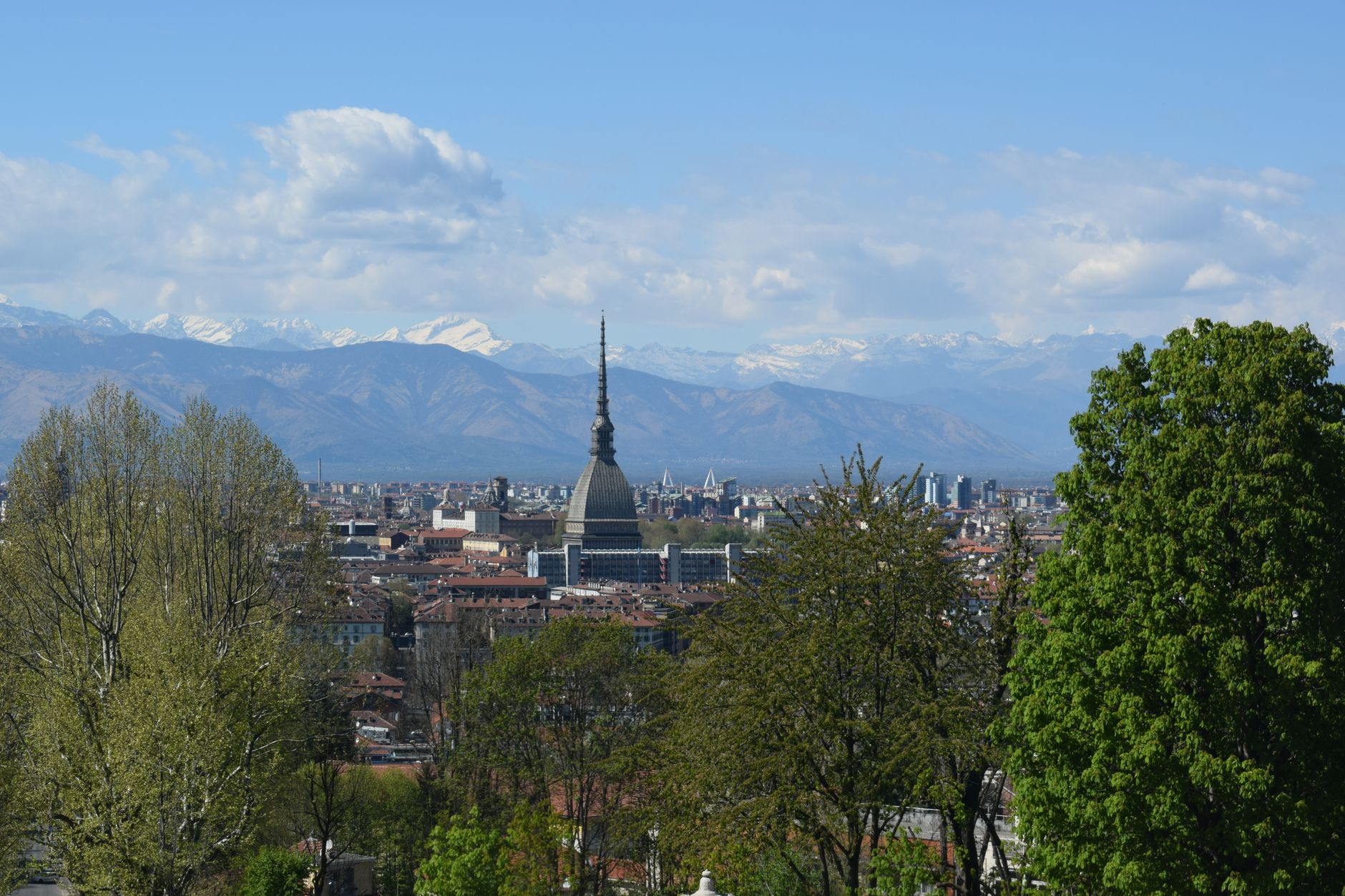
The historic Mole Antonelliana stands prominently over the city of Turin, framed by the breathtaking, snow-dusted peaks of the Italian Alps.
Fernanda W. Corso on Pexels · Pexels License

The iconic spire of the Mole Antonelliana rises above the historic streets of Turin, Italy, captured in the soft light of late afternoon.
sabrina martins on Pexels · Pexels License

An elevated perspective of Turin, Italy, showcasing the majestic Mole Antonelliana towering over the city's classic architecture.
Jakub Zerdzicki on Pexels · Pexels License

The iconic Mole Antonelliana rises above the historic skyline of Turin, Italy, as the city lights glow against a stunning sunset over the Alps.
Sergey Guk on Pexels · Pexels License

The majestic Basilica of Superga stands as a prominent Baroque landmark overlooking the city of Turin, Italy.
Diana ✨ on Pexels · Pexels License

A stunning elevated perspective of Turin, Italy, capturing the city's dense historic architecture set against a backdrop of rolling green hills.
Lulo on Pexels · Pexels License

A timeless black and white view of the historic Royal Palace and bustling public square in the heart of Turin, Italy.
Ben Spadinger on Pexels · Pexels License
Practical Information
Getting There
Turin Airport (TRN) sits 15 km north of the city. The airport train reaches Porta Susa in 30 minutes for €3.70. Direct Flibco buses take 30 minutes (€3.99 online) while Arriva Italia runs to Porta Nuova and Porta Susa in 45 minutes for €7.50. High-speed trains from Milan arrive at Porta Susa in under an hour.
Getting Around
GTT operates one metro line (Fermi to Bengasi), eight tram lines, and over 80 bus routes. Metro runs until 01:00 on Fridays and Saturdays. The city maintains 190 km of cycling lanes and the ToBike sharing system with 193 stations. In 2026 the Torino+Piemonte Card offers 48-hour transport for €7 and 72-hour for €9.
Climate & Best Time
July averages 22.6 °C with only 52 mm of rain. January drops to 1.8 °C and can reach -1.7 °C at night. November is wettest at 127 mm. May to September offers the best combination of warmth and lighter rainfall. Avoid July and August if you dislike crowds at the Mole and Egyptian Museum.
Safety
Pickpocketing remains the main risk in tourist areas, especially around Porta Nuova and during Balon market on Saturdays. Since 26 March 2026 six neighbourhoods including San Salvario and parts of Barriera di Milano sit under reinforced vigilance. Emergency number is 112. Stick to central streets after dark.
Where to Eat
Don't Leave Without Trying
Ristorante Mare Nostrum
local favoriteOrder: Fresh seafood pasta and daily fish specials — the kitchen sources from Liguria and knows how to treat raw materials with respect.
A serious seafood destination that locals trust, with over 1,500 reviews proving it's not a tourist trap. The kitchen respects Piedmont's proximity to the coast without pretension.
L'Acino
local favoriteOrder: The seasonal pasta specials and house wine pairings — locals come here for honest cooking without fuss.
Over 1,200 reviews from real diners who keep coming back. This is where Turin's food-savvy crowd eats when they want good food, good wine, and no theater.
La via del sale
local favoriteOrder: The house antipasti and seasonal risotto — this is neighborhood cooking done right, the kind of place where regulars have favorite tables.
Nearly 2,000 reviews prove this isn't a one-hit wonder. It's the sort of place locals defend fiercely because it represents Turin's unpretentious eating culture.
Enodolceria
cafeOrder: The house-made pastries and artisanal breads — this is where locals grab their morning cornetto or afternoon merenda.
A near-perfect 4.9 rating isn't accident; this is the kind of neighborhood bakery that takes pride in every loaf and pastry. Turin's baking culture on full display.
Torre Cremeria Bar
cafeOrder: The artisanal gelato and morning pastries — over 6,000 reviews mean this place is a genuine Turin institution, not a tourist destination.
With nearly 6,400 reviews, this is the kind of place that's been feeding Turin for generations. The volume of reviews proves it's beloved by locals, not Instagram tourists.
San Donato
cafeOrder: The traditional Piedmontese pastries and seasonal specialties — this is a proper pasticceria where craft still matters.
A 4.7 rating from locals who know the difference between industrial pastry and the real thing. This is where Turin's neighborhood goes for their celebrations.
Panificio Convertino 1946
quick biteOrder: Fresh bread and morning pastries — the name says it all: this place has been baking since 1946 and hasn't stopped.
A genuine neighborhood bakery with nearly 80 years of history. This is where Turin's working class gets their daily bread, not where tourists queue for Instagram photos.
sedici10 bagel torino
quick biteOrder: The house-made bagels with local fillings — this is Turin's answer to proper bagel culture, not a tourist approximation.
Over 430 reviews prove bagels have found their place in Turin's food scene. A quality-focused spot that takes the craft seriously.
Dining Tips
- check Merenda sinoira is Turin's pre-dinner tradition — locals grab small plates and wine around 6–7 PM before heading to dinner
- check Many neighborhood restaurants close Monday or Tuesday; always check ahead
- check Lunch typically runs 12:30–14:30, dinner starts around 19:30 or later
- check Mercato Centrale (Piazza della Repubblica) is open daily and is where locals source ingredients and grab quick meals
- check Porta Palazzo market runs Monday–Saturday, 7:00 AM–2:00 PM (extended Saturday until 7:00 PM) — best for fresh produce and street food
- check Cash is still common in neighborhood spots; many bakeries and cafés accept it primarily
- check Reservations are recommended for dinner at established local spots, especially weekends
Restaurant data powered by Google
Tips for Visitors
Order a Bicerin
Head to Caffè Al Bicerin near the Santuario della Consolata and ask for their signature hot chocolate-coffee-cream drink. Expect a line and no quick takeaway — this 1763 ritual is meant to be savored standing at the counter.
Choose a Piola
Skip the polished restaurants around Piazza Castello. Walk into a neighborhood piola like Piola Da Celso on Via Verzuolo or Osteria Le Ramin-e for handwritten menus, agnolotti del plin, and honest local wine by the glass.
Visit Markets Early
Reach Porta Palazzo before 9am when the stalls are freshest and the crowd thinner. Say buongiorno to vendors, carry small cash for tiny purchases, and taste before you buy.
Buy GTT Digital Tickets
Download the TO Move or GTT app for €1.90 single tickets instead of €2.00 paper versions. Validate every time you board — inspectors appear without warning on trams and the metro.
Time Your Visit
Come in May or September. July averages 22.6°C with only 52mm of rain while January drops to 1.8°C. Avoid October–February if the smell of bagna càuda isn’t your thing.
Mind the ZTL
Rental cars trigger automatic fines in the central restricted zone. Stick to trams, metro or walking. The reinforced vigilance areas in San Salvario and Dora Vanchiglia see extra police after dark.
Explore the city with a personal guide in your pocket
Your Personal Curator, in Your Pocket.
Audio guides for 1,100+ cities across 96 countries. History, stories, and local insight — offline ready.
Audiala App
Available on iOS & Android
Join 50k+ Curators
Frequently Asked
Is Turin worth visiting? add
Yes, if you like layers. One day you’re staring at the Shroud of Turin, the next you’re eating vitello tonnato at a piola while Juventus fans argue three tables away. The city feels lived-in rather than polished for visitors.
How many days do you need in Turin? add
Three full days works for the absolute highlights. Four or five lets you add Superga, a slow morning at the Egyptian Museum, and evenings drifting between Quadrilatero Romano bars. Any less and you’ll only scratch the surface.
How do you get from Turin airport to the city center? add
The cheapest option is the Flibco shuttle for €3.99 online, taking 30 minutes straight to Porta Susa. The train costs €3.70 and runs every 30 minutes. Taxis sit around €35–45 depending on traffic.
Is Turin safe for tourists? add
Pickpocketing happens in crowded places like Porta Palazzo market and around the main train stations. The city added reinforced vigilance zones in 2026 covering San Salvario and parts of the center after dark. Standard precautions are enough.
Is Turin expensive? add
It’s noticeably cheaper than Rome or Milan. A solid piola meal with wine runs €15–25. Daily public transport costs €3.70. Even the Egyptian Museum and Mole Antonelliana tickets stay reasonable. You can eat and move around without bleeding money.
What is Turin famous for? add
The Shroud, its Egyptian Museum (second only to Cairo), baroque palaces of the House of Savoy, and chocolate. Locals will tell you it’s also the city that invented the aperitivo ritual and gianduja.
Sources
- verified Italia.it Official Tourism Portal — Primary source for attractions, Royal Residences, Mole Antonelliana and Egyptian Museum details.
- verified I Eat Food Tours — Insider local customs, market behavior, aperitivo culture and neighborhood recommendations.
- verified Aeroporto di Torino Official Site — Airport transfer options, train and bus schedules and fares.
- verified Muoversi a Torino / GTT — Public transport network details, metro hours, ticket prices and ZTL information.
Last reviewed: