Plan and listen to Neapolis with Audiala.
Audio guide in your pocket, itinerary in your browser. Built for the way you actually visit.
Introduction to Neapolis Syracuse and What to Expect
Nestled in the historic city of Syracuse on Sicily’s eastern coast, the Neapolis Archaeological Park is a spectacular testament to the grandeur of ancient Greek and Roman civilizations. Established in the 5th century BCE as an extension of Syracuse’s original settlement, Neapolis—meaning “new city” in Greek—became a thriving hub of civic, religious, and cultural activity. Today, visitors can explore monumental relics such as the Greek Theatre, Roman Amphitheatre, Altar of Hieron II, and the legendary Ear of Dionysius. These sites reveal the layers of history and architectural ingenuity that have made Syracuse a cornerstone of Sicilian and Mediterranean heritage.
For travelers, understanding visiting hours, ticketing options, accessibility, and available tours ensures a seamless experience. The park is open daily, with variable hours depending on the season, and offers a range of ticket options, including concessions and combined tickets with other Syracuse attractions. Accessibility has been thoughtfully integrated, with paved paths and ramps in key areas, though some ancient structures remain challenging to access. The park’s proximity to Ortigia Island, the Paolo Orsi Archaeological Museum, and other Syracuse landmarks further enriches the visitor experience.
This detailed guide compiles expert insights and up-to-date information on the park’s history, key monuments, visitor logistics, and surrounding attractions. Whether you are a history enthusiast, a cultural explorer, or a first-time visitor, Neapolis Archaeological Park promises an unforgettable encounter with the ancient past of Syracuse. For additional planning, refer to reliable sources such as Algilà Hotel Guide, Sicily.co.uk, and official tourism platforms (archeologicasicilia.it).
Origins and Historical Development of Neapolis
Neapolis was conceived as an urban expansion outside the original island of Ortigia, accommodating a growing population and facilitating Syracuse’s evolution into one of Magna Graecia’s most influential cities. The district followed the grid plan typical of Greek colonies, with monumental public spaces and robust integration into the surrounding landscape (Algilà Hotel Guide). Neapolis soon became the civic and religious heart of Syracuse, hosting grand structures such as the Greek Theatre, the Altar of Hieron II, and vast necropolises. These developments underscored Syracuse’s prominence among Hellenistic cities, rivaling Athens and Alexandria in both scale and cultural achievement.
Key Monuments and Archaeological Features
Greek Theatre (Teatro Greco)
The Greek Theatre is the park’s crown jewel and one of the largest and best-preserved ancient theatres globally. Carved into Temenite Hill, it dates to the 5th century BCE and was expanded under Hieron II in the 3rd century BCE, originally seating up to 15,000 spectators. The theatre hosted dramatic performances, political assemblies, and public ceremonies, reflecting the centrality of theatre in Greek civic life. Its exceptional acoustics continue to support performances today (Sicily.co.uk).
Roman Amphitheatre
Dating to the 3rd century CE, the Roman Amphitheatre is among Italy’s largest, measuring approximately 140 by 119 meters. Unlike the Greek Theatre, the amphitheatre was dedicated to gladiatorial games and public spectacles. Its elliptical shape and subterranean corridors showcase advanced Roman engineering and the era’s shift in entertainment (catisoutoftheoffice.com).
Altar of Hieron II (Ara di Ierone II)
The Altar of Hieron II, constructed in the 3rd century BCE, is a colossal altar dedicated to Zeus Eleutherios, measuring 198 meters long and 22.8 meters wide. It was the site of public sacrifices during major religious festivals, symbolizing the political and religious power of Hieron II (Visit Sicily).
Ear of Dionysius (Orecchio di Dionisio)
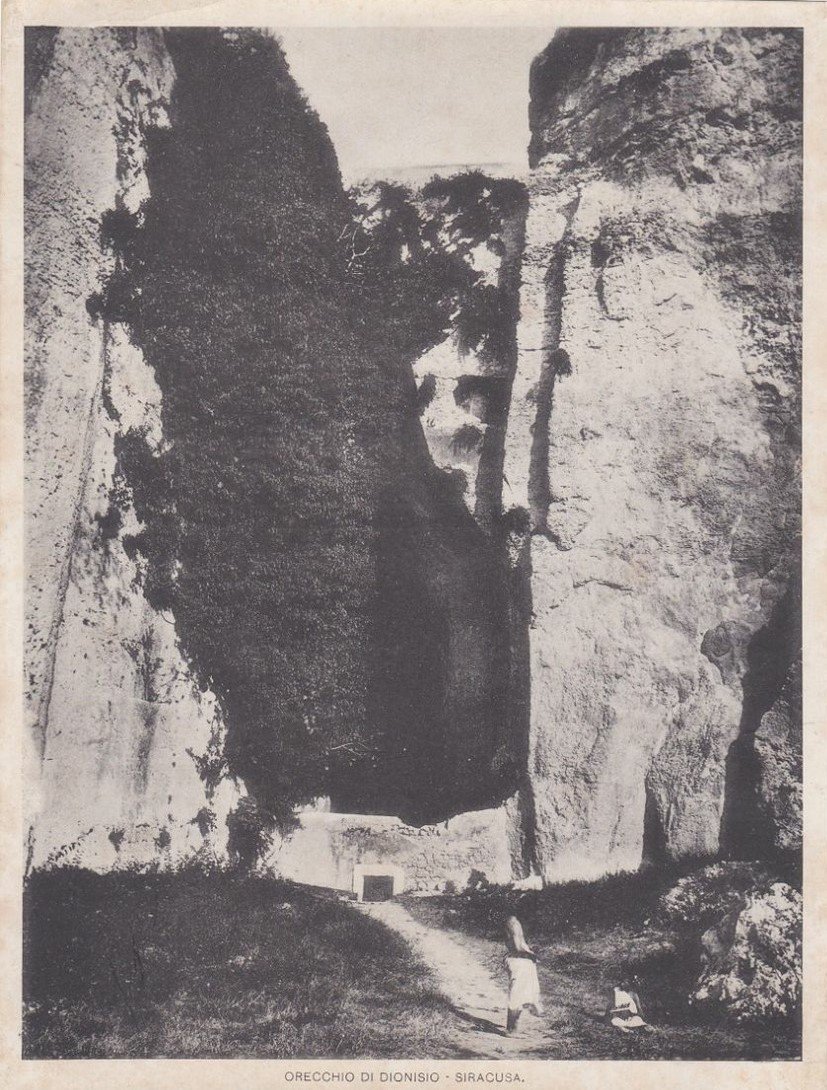
A man-made limestone cave within the Latomia del Paradiso quarries, the Ear of Dionysius is famed for its remarkable acoustics. According to legend, Dionysius I used the cave to eavesdrop on prisoners. Visitors today can experience its echoing acoustics firsthand (hitsicily.com; twogetlost.com).
Latomia del Paradiso
These ancient stone quarries provided building material for Syracuse’s monuments and later served as prisons. Today, they are lush and atmospheric, blending natural beauty with historical intrigue (blog.siciliansecrets.it).
Grotta dei Cordari
Adjacent to the Ear of Dionysius, this cave was used by rope-makers who benefited from its cool, humid environment. It offers an insight into the site’s later industrial history (thegeographicalcure.com).
Roman Gymnasium
The remains of the Roman Gymnasium illustrate daily life and the importance of physical and intellectual development in ancient Syracuse (hermes-sicily.com).
Temenite Hill and Sanctuary of Apollo
Temenite Hill, named from the Greek “temenos” (sanctuary), was once the site of a sanctuary dedicated to Apollo. Archaeological evidence points to continuous occupation since the Middle Bronze Age (enjoysicilia.it).
Paolo Orsi Regional Archaeological Museum
Located nearby, the Paolo Orsi Museum houses artifacts from prehistoric, Greek, and Roman periods, complementing a visit to the park (thegeographicalcure.com).
Visiting Hours and Tickets
- Summer (April–October): 8:30 AM – 7:00 PM (last entry 6:00 PM)
- Winter (November–March): 8:30 AM – 4:30 PM (last entry 3:30 PM)
- Closed: December 25, January 1
Ticket Prices (as of 2025):
- Adults: €13
- Reduced (EU citizens aged 18–25): ~€5–6
- Free: Children under 18, residents of Syracuse
Combined tickets for other sites, such as the Paolo Orsi Museum, may be available. Purchase tickets online via the official website or at the park entrance. Online booking is recommended during peak seasons (GetYourGuide).
Accessibility and Visitor Tips
- Accessibility: The park features paved paths and ramps in main zones, but uneven terrain remains in some areas. Visitors with mobility needs should contact the park in advance for guidance.
- Best Times to Visit: Spring and autumn offer mild weather and smaller crowds. Early mornings or late afternoons are ideal in summer.
- What to Bring: Comfortable walking shoes, a hat, sunscreen, and refillable water bottles are essential.
- Facilities: Restrooms (including accessible facilities), a café, snack bar, souvenir shop, and shaded benches are available near the entrance (thegeographicalcure.com).
- Navigation: Maps are available at the entrance and online; digital guide apps can enhance the experience (hermes-sicily.com).
Guided Tours and Special Events
Guided tours are available in multiple languages and can be booked online or at the entrance. Tours typically last 1.5–3 hours and may include other Syracuse highlights. The Greek Theatre hosts annual classical performances in spring and early summer—booking in advance is advised (GetYourGuide).
Nearby Attractions and Events
- Ortigia Island: Historic core with the Cathedral of Syracuse, Temple of Apollo, lively markets, and artisan shops.
- Paolo Orsi Archaeological Museum: Premier collection of Sicilian artifacts.
- Catacombs of Syracuse: Early Christian burial sites.
- Castello Maniace: 13th-century fortress with panoramic views and cultural events (Visit Sicily).
Many tour operators offer combined itineraries featuring Neapolis, Ortigia, and other highlights.
Frequently Asked Questions (FAQ)
Q: What are the Neapolis Archaeological Park visiting hours?
A: Daily from 8:30 AM to 7:00 PM (April–October) and 8:30 AM to 4:30 PM (November–March). Last entry is one hour before closing.
Q: How much do tickets cost?
A: Approximately €13 for adults; discounts for EU youth and free entry for children under 18 and residents.
Q: Are guided tours available?
A: Yes, in multiple languages. Audio guides are also offered.
Q: Is the park wheelchair accessible?
A: The park has partial accessibility. Some areas remain challenging; contact the park for details.
Q: Can I take photographs inside the park?
A: Personal photography is allowed throughout the park; professional equipment and drones require special permission.
Q: Are restrooms and refreshments available?
A: Yes, modern restrooms, a café, and vending machines are available near the entrance.
Safety, Sustainability, and Practical Regulations
- Supervise children closely due to uneven terrain and steep drops.
- Do not touch or climb on ancient structures.
- Only service animals permitted.
- Dispose of waste responsibly and use refillable water bottles.
- Smoking is restricted to designated areas.
First aid is available at the visitor center. Emergency numbers are posted throughout the park.
Tickets & tours.
These are guided options from our partners — same price as booking direct.
Prices are indicative — final pricing and availability are confirmed at checkout. Audiala may earn a commission from bookings made through these links.
Listen to the full story in the app
The whole Neapolis,
told well.
Audio guides for 1,100+ cities across 96 countries. History, stories, and local insight — offline ready.

Verified, and shown.
Researched and written by the Audiala editorial team from historical records, architectural archives, and local expertise.
Researched from Wikidata, Wikipedia & official sources · fact-checked · How we make our guides →