Plan and listen to Grotta Dei Cordari with Audiala.
Audio guide in your pocket, itinerary in your browser. Built for the way you actually visit.
Introduction
Hidden within the lush expanse of the Neapolis Archaeological Park in Syracuse, Sicily, the Grotta dei Cordari is a unique destination where natural geology, ancient industry, and local legend converge. This atmospheric cave—once an ancient quarry and later a rope-makers’ workshop—stands as a symbol of Syracuse's adaptability and cultural richness. After years of restoration, the Grotta dei Cordari welcomes visitors into its cool, mossy chambers, offering a fascinating journey through the ages.
This in-depth guide provides essential information on Grotta dei Cordari visiting hours, tickets, accessibility, and expert tips, as well as an overview of the cave’s history and its context within Syracuse’s UNESCO-listed heritage. Whether you are a history enthusiast or a casual traveler, use this resource to plan your visit and explore one of the most evocative Syracuse historical sites. For up-to-date details, always refer to official and authoritative sources, such as Enjoy Sicilia, Finestre sull’Arte, and Lasiciliainrete.

Origins and Historical Development
Ancient Quarry and the Latomia del Paradiso
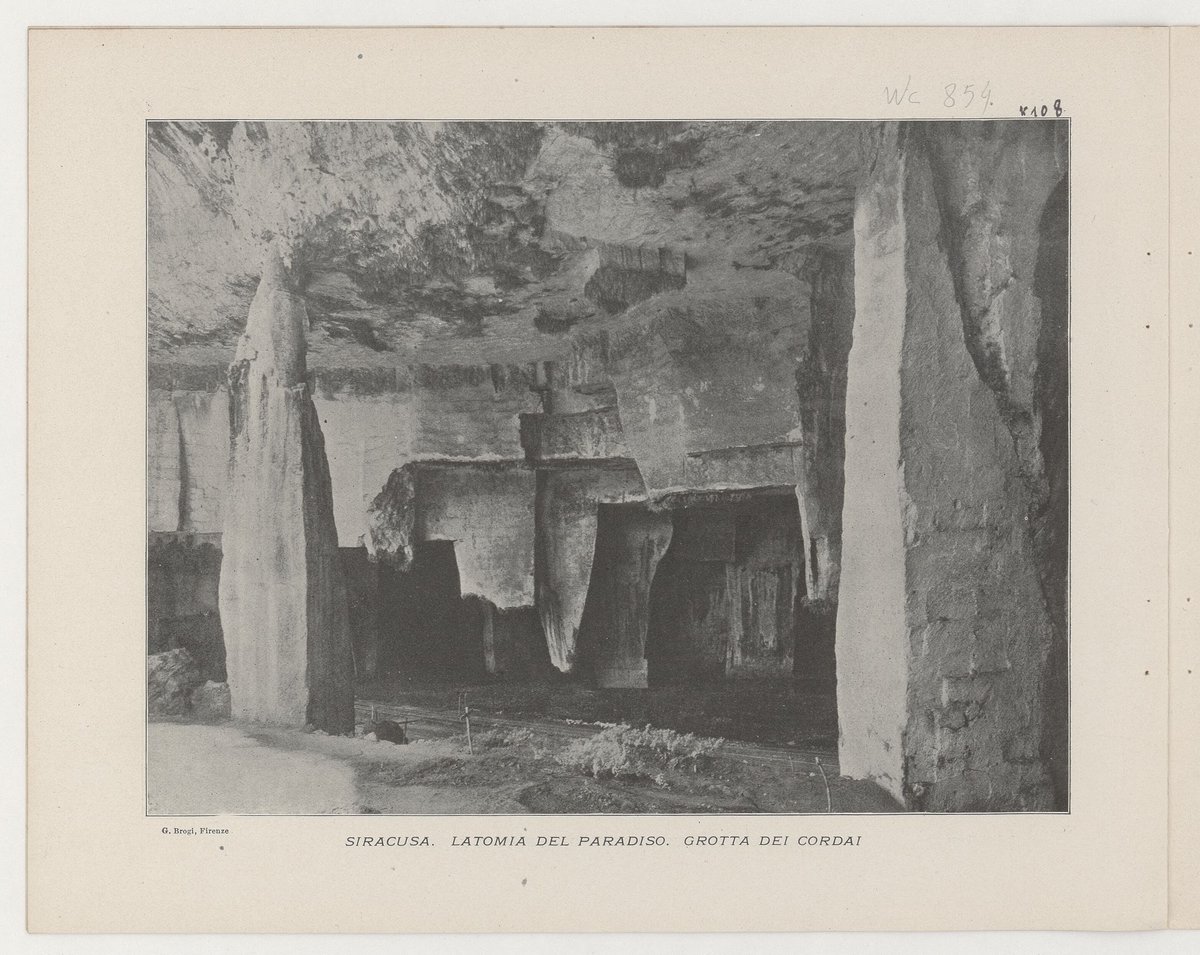
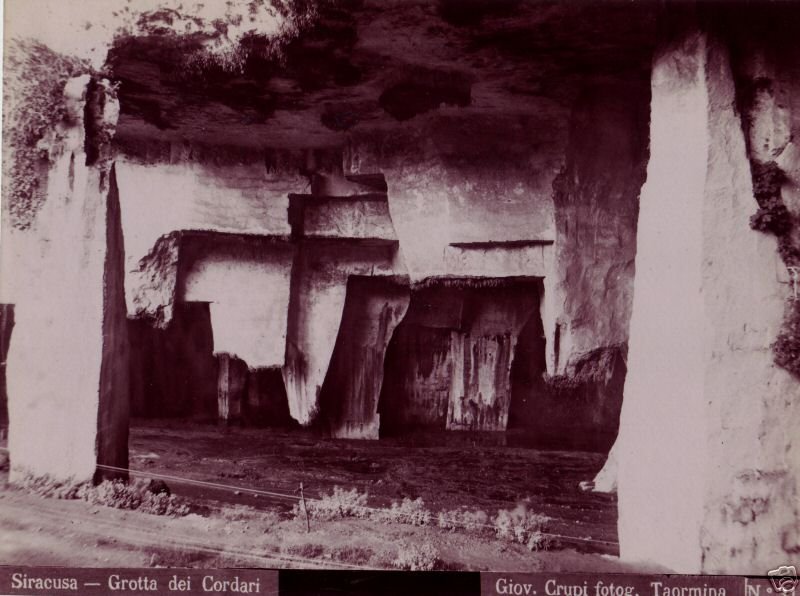
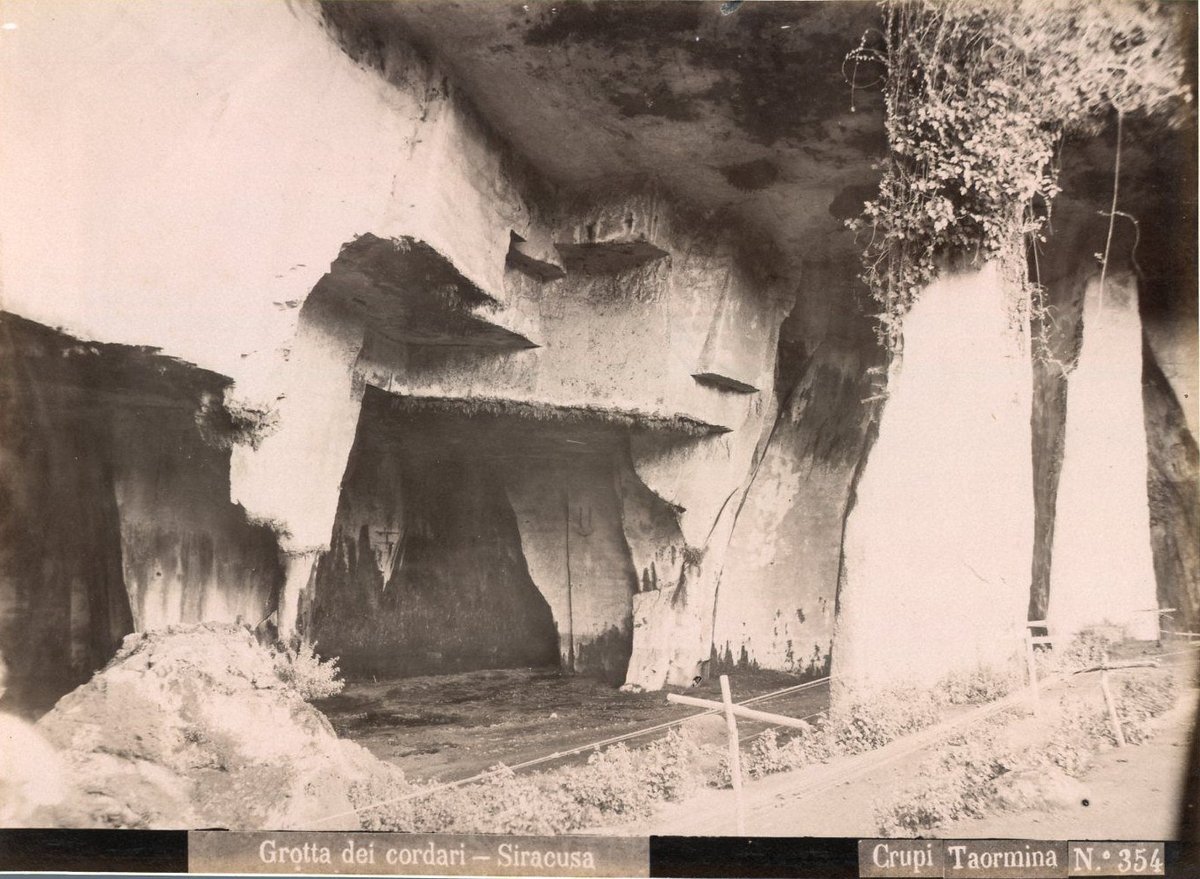
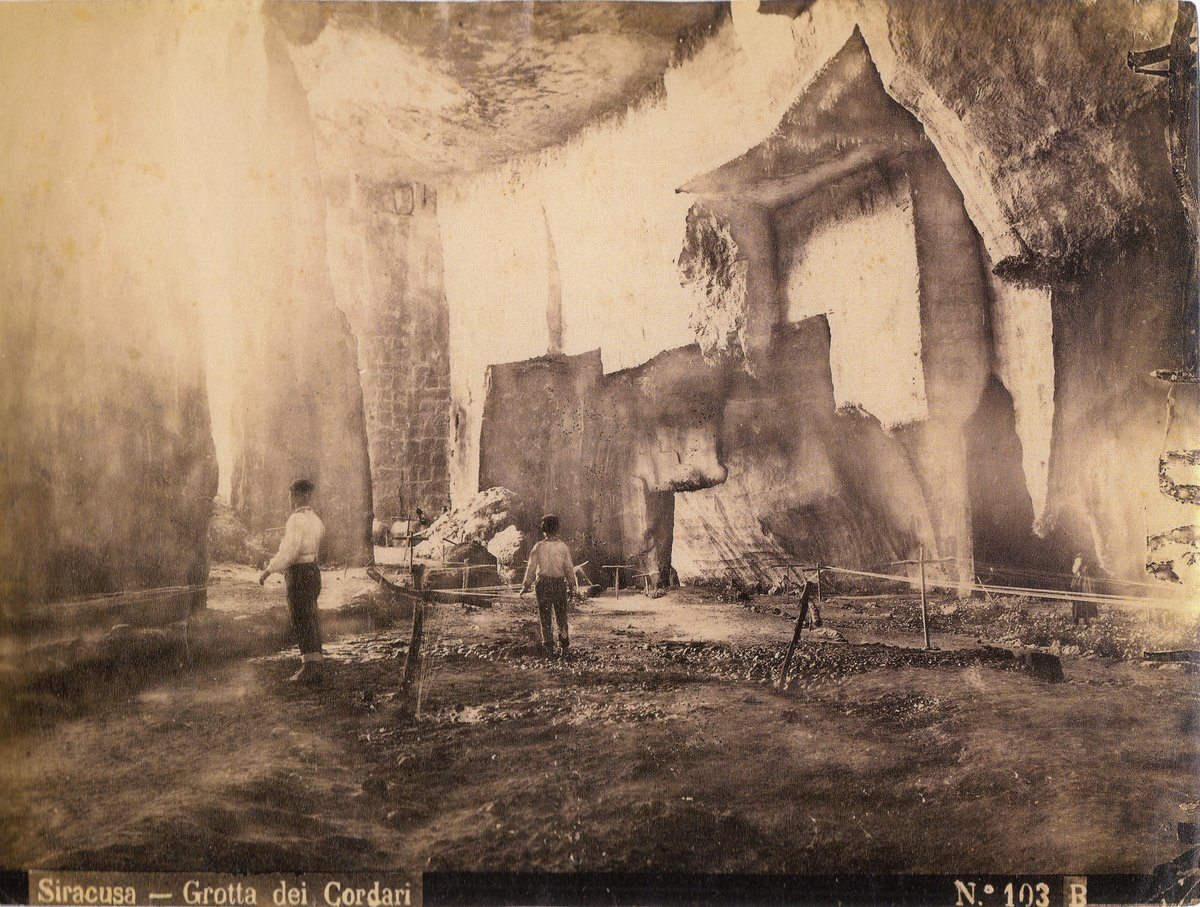
The Grotta dei Cordari is carved horizontally into the soft limestone of the Latomia del Paradiso, one of Syracuse’s most important ancient quarries. The term "latomia" comes from the Greek for "stone quarry," and these vast underground spaces supplied stone for Syracuse’s temples, theaters, and city walls during the Greek and Roman periods (Enjoy Sicilia; Sicilian Secrets). The Grotta dei Cordari’s architecture is distinguished by massive pillars and squared blocks left by ancient quarrymen to support the vault (Comune di Siracusa).
Rope-Making Tradition and Industrial Heritage
From the 17th century until 1983, the cave was repurposed for rope-making by local artisans ("cordari"). The cave’s length, high humidity, and stable temperature made it ideal for stretching and twisting hemp fibers into ropes, vital for Syracuse’s maritime economy (Finestre sull’Arte). Rope-makers used traditional hand-wheel systems within the cave, and groundwater perpetually seeping through the limestone helped maintain the required humidity (Enjoy Sicilia). The craft was so integral to local life that the adjacent Church of San Nicolò ai Cordari was granted to the rope-makers’ guild as early as 1093 (Lasiciliainrete).
Legends, Myths, and Cultural Depictions
The Grotta dei Cordari is steeped in legend. Diodorus Siculus recounted that Dionysius I, the tyrant of Syracuse, used the nearby caves as prisons, exploiting their unique acoustics to eavesdrop on inmates (SmartEducationUnescoSicilia). Local tradition also claims that Saint Paul preached to the Syracusans within the cave’s echoing chambers (UNESCO Siracusa Pantalica). Artists and writers have long been inspired by the cave’s dramatic light and shadow, as seen in 19th-century watercolors and literary references (SmartEducationUnescoSicilia).
Modern Rediscovery and Conservation
Closed for nearly 40 years, the Grotta dei Cordari reopened in 2021 after extensive restoration and safety works (Finestre sull’Arte). Today, the site stands as an outstanding example of industrial archaeology, blending ancient engineering, rope-making heritage, and natural beauty.
Visitor Information
Visiting Hours
The Grotta dei Cordari is accessible within the Neapolis Archaeological Park. Standard opening hours are:
- March to October: 8:30 AM – 7:00 PM (last entry one hour before closing)
- October to March: 8:30 AM – 5:00 PM (last entry one hour before closing)
- Closed on some holidays; check the official website or local tourist centers for seasonal updates.
Tickets and Admission
- Grotta dei Cordari access is included with the Neapolis Archaeological Park ticket.
- Standard tickets: ~€10 for adults.
- Reduced rates: Available for EU citizens aged 18–25, school groups, and seniors.
- Free entry: For children under 18 and residents of Syracuse.
- Combined tickets: May be available for multiple Syracuse sites.
- Purchase tickets on-site or online (recommended to avoid queues during peak periods).
Accessibility
The cave features uneven stone floors and steps, which may challenge those with limited mobility. Contact the park in advance to arrange assistance or check for updates on accessible routes.
Guided Tours and Visitor Tips
- Guided tours are available in multiple languages and highly recommended for historical context and hidden details.
- Practical advice:
- Wear sturdy, non-slip shoes (surfaces can be damp and uneven).
- Bring a light jacket; it is cooler inside the cave.
- Flash photography may be restricted; check guidelines at the entrance.
- Carry water, especially during summer months.
Facilities and Amenities
- Cafés and restrooms: Available near the park entrance and within the park.
- Shuttle and public transport: Free shuttle bus #20 from Piazza Archimede and several city bus lines serve the park (Algilà Hotel).
- Souvenir/bookshops: Offer guidebooks, crafts, and memorabilia (Hermes Sicily).
Nearby Attractions
The Neapolis Archaeological Park is home to several must-see Syracuse historical sites:
- Greek Theatre of Syracuse – A grand ancient theater still used for performances.
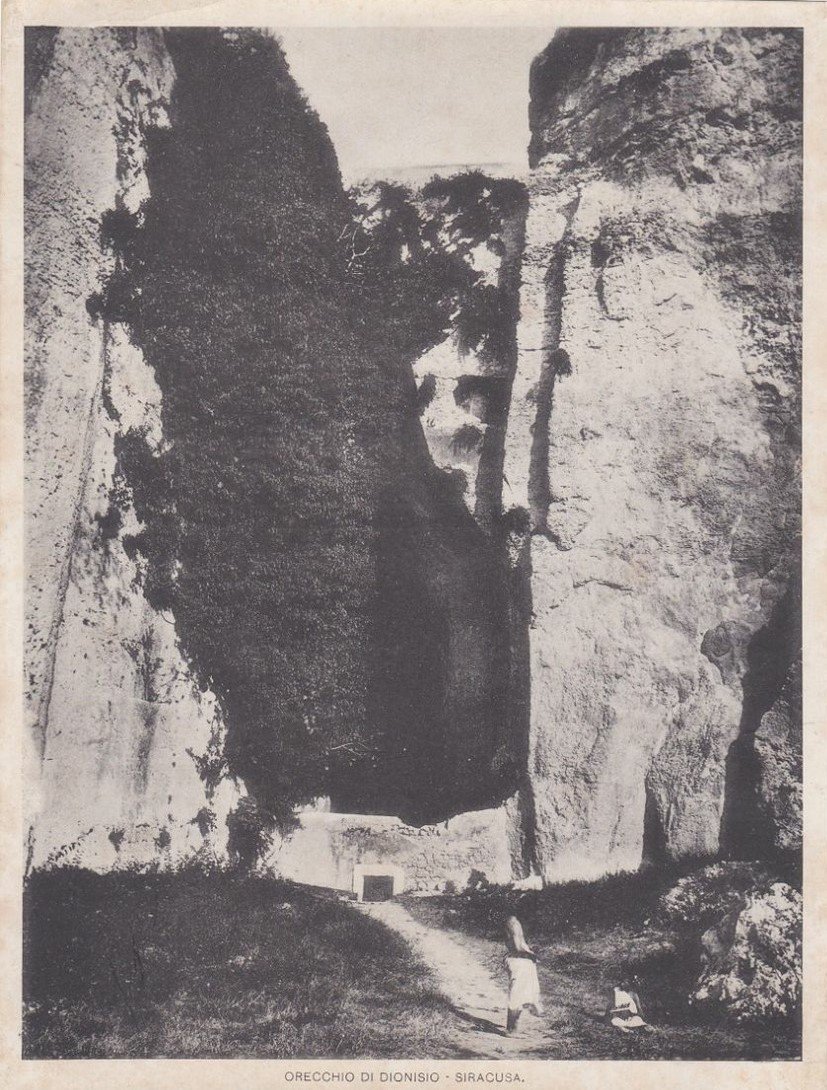
- Ear of Dionysius – Famed for its acoustics and legends.
- Roman Amphitheatre – One of Italy’s largest ancient arenas.
- Altar of Hieron II – The largest known altar from the ancient Greek world.
Combine these for a full-day historical immersion.
Cultural and Natural Significance
UNESCO World Heritage Context
The Grotta dei Cordari, as part of the Neapolis Archaeological Park, is within the UNESCO World Heritage Site "Syracuse and the Rocky Necropolis of Pantalica," embodying the city's ancient, layered history (UNESCO Siracusa Pantalica).
Architectural and Natural Features
The cave boasts vast chambers adorned with polychrome hues, mosses, and ferns, with natural light filtering through. Byzantine funerary hypogea carved into the walls point to its dual use as both industrial and burial space (Lasiciliainrete). The interplay of stone, water, and vegetation creates a unique environment that is both mysterious and evocative.
Role in Local Identity and Tourism
Reopened after decades of closure, Grotta dei Cordari is now a vibrant cultural venue hosting immersive performances and events. Its story of transformation—from quarry to industrial site to cultural landmark—makes it a cherished symbol of local ingenuity and resilience (Finestre sull’Arte).
Frequently Asked Questions (FAQ)
Q: What are the Grotta dei Cordari visiting hours?
A: Typically 8:30 AM to 7:00 PM (summer) and 8:30 AM to 5:00 PM (winter). Last entry is one hour before closing. Always check the official website for seasonal updates.
Q: How much does it cost to visit?
A: Admission is included in the Neapolis Archaeological Park ticket, around €10 for adults with concessions available.
Q: Is the cave accessible for those with disabilities?
A: Some uneven and slippery areas may challenge visitors with limited mobility. Contact the park in advance for accessibility details.
Q: Are guided tours available?
A: Yes, and they are highly recommended for deeper understanding.
Q: What else can I see nearby?
A: The Greek Theatre, Ear of Dionysius, Roman Amphitheatre, and Altar of Hieron II are all nearby within the park.
Visuals and Media Suggestions
Enhance your visit with:
- High-quality images of the cave’s interior: "Grotta dei Cordari Syracuse interior with stone pillars and ferns."
- Maps of the Neapolis Archaeological Park.
- Links to virtual tours, if available.
Plan Your Visit
Ready to explore Grotta dei Cordari and Syracuse historical sites?
- Check the latest ticketing and visiting hours at the official park website.
- Book tickets online for convenience.
- Download the Audiala app for immersive audio guides and maps.
- Follow us on social media for updates, tips, and event announcements.
Listen to the full story in the app
The whole Grotta Dei Cordari,
told well.
Audio guides for 1,100+ cities across 96 countries. History, stories, and local insight — offline ready.
Verified, and shown.
Researched and written by the Audiala editorial team from historical records, architectural archives, and local expertise.
Researched from Wikidata, Wikipedia & official sources · fact-checked · How we make our guides →