Plan and listen to Castello Eurialo with Audiala.
Audio guide in your pocket, itinerary in your browser. Built for the way you actually visit.
Introduction
Castello Eurialo, also known as the Euryalus Fortress, is an extraordinary testament to ancient Greek military engineering and Syracuse’s enduring legacy. Situated atop the Epipoli plateau, just northwest of Syracuse, Sicily, this imposing fortress dates back to the early 4th century BCE. Commissioned by Dionysius I, it was designed to protect one of the most powerful cities of Magna Graecia from external threats, particularly Carthaginian and later Roman incursions.
Visitors to Castello Eurialo are treated not only to the remarkable architectural features—massive limestone walls, deep rock-cut moats, towering bastions, and intricate underground tunnels—but also to panoramic views and a site that evolved through Hellenistic, Roman, Byzantine, and medieval periods. This guide provides essential information for planning your visit, including current hours, ticketing, accessibility, and tips to ensure a memorable experience at one of Sicily’s most important historical landmarks.
For up-to-date details, consult the official Archaeological Park of Neapolis website and the Syracuse cultural heritage portal.

Historical Background
Origins and Foundation
Castello Eurialo was constructed between 402 and 397 BCE under the rule of Dionysius I. After surviving both Athenian and Carthaginian sieges, Syracuse recognized the urgent need for robust defenses. Dionysius initiated a monumental project: fortifying the city with walls stretching approximately 27–32 kilometers and culminating in the fortress of Eurialo, which shielded the critical inland approaches (Italy Heaven; ItalyGuides.it).
The name "Eurialo" derives from the Greek "eurvelos," meaning "broad nail," a nod to the fortress’s formidable defensive structure (ItalyGuides.it).
Architectural Evolution
Greek Period: The fortress was a pioneering example of Greek poliorcetica (siegecraft), featuring:
- Limestone Walls: Up to 5 meters high, constructed with locally quarried stone.
- Five Towers: Strategically placed for overlapping defense.
- Triple Moats: Three deep, rock-cut ditches impeded invaders.
- Subterranean Tunnels: Over 480 meters of passages for defense and escape.
- Cisterns: Ensured water supply during sieges.
Roman and Byzantine Periods: The fortress adapted to evolving threats. During the Second Punic War, it played a key role in the Roman siege of Syracuse, with legendary defenses possibly involving Archimedes’ war machines. Post-conquest, the structure was maintained and refitted, notably by the Byzantines, who reduced its perimeter and reinforced its western section (Italy Heaven; ItalyGuides.it; Parco Archeologico di Siracusa).
Military Significance
Castello Eurialo’s design exemplifies ancient "active defense" strategies. Its multi-layered defenses—moats, towers, tunnels, and strongpoints—enabled flexible troop movements, surprise attacks, and effective use of artillery such as catapults, innovations attributed to Syracusan engineers. The fortress was never taken by direct assault, underscoring its strategic value throughout antiquity (Italy Heaven).
Visitor Information
Hours and Tickets
- Opening Hours: Generally open daily from 9:00 AM to 7:00 PM (last entry at 6:30 PM). Seasonal variations may apply; always check the official website before visiting.
- Ticket Prices: Adult admission ranges from €4 to €10, with discounts for EU citizens aged 18–25, students, and seniors. Children under 18 and Syracuse residents often enter free. Combination tickets for multiple sites are available (Italy Heaven; Parco Archeologico di Siracusa).
- Where to Buy: Tickets can be purchased onsite or online via the Syracuse cultural heritage portal. Online purchase is recommended to avoid queues.
Accessibility
- The site is rugged, with uneven ground, ancient steps, and steep ditches. Partial wheelchair accessibility is available, primarily in the upper sections. Contact the visitor center in advance if you require assistance.
Getting There
- By Car: About 7–8 km northwest of Syracuse city center (Viale Epipoli 270, Siracusa, 96100). Parking is available near the entrance (My Guide Sicily).
- By Public Transport: AST buses 25 and 26 (Monday–Saturday), and 11 (Sundays/holidays) stop near the castle. Buy tickets beforehand at tabacchi shops (Italy Heaven); check schedules as they can be limited.
- By Taxi: Readily available in Syracuse.
Guided Tours and Visitor Experience
- Guided Tours: Available daily in multiple languages; advance booking recommended, especially for specialty tours or 3D-enhanced experiences (All Events in Siracusa). Tours last around 90 minutes and deepen understanding of the site’s history and architecture.
- Self-Guided Visits: Informational panels, maps, and audio guides are available.
- Visitor Center and Antiquarium: See artifacts such as catapult balls, helmets, pottery, and a catapult relief (Parco Archeologico di Siracusa).
Nearby Attractions
- Archaeological Park of Neapolis: Includes the Greek Theatre and Roman Amphitheatre.
- Ortigia Island: The historic heart of Syracuse.
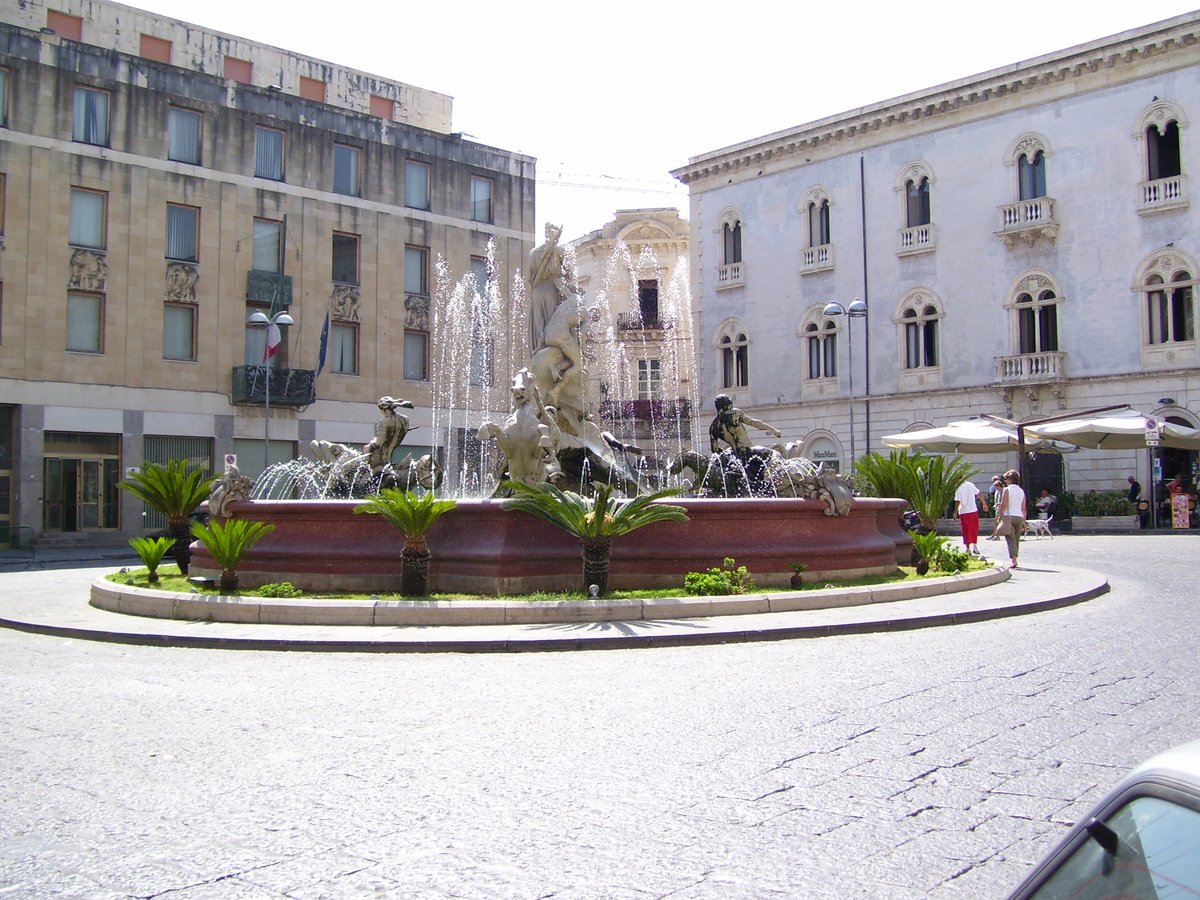
- Fonte Aretusa: A legendary freshwater spring on Ortigia.
- Necropoli di Pantalica: UNESCO-listed ancient burial site (UNESCO World Heritage - Syracuse).
Special Events
- The fortress hosts historical reenactments, educational workshops, and night tours throughout the year. Check the official site for event details.
Visuals and Media
- Interactive maps, virtual tours, and high-resolution images are available through the official websites and tourism platforms. Capture panoramic views from the ramparts and the atmospheric interiors of tunnels and moats (Italy Heaven).
Frequently Asked Questions (FAQ)
Q: What are the visiting hours?
A: Usually 9:00 AM – 7:00 PM, but always confirm on the official website.
Q: How much are tickets?
A: Adults €4–€10; discounts apply for EU youth, students, and children.
Q: Is the fortress accessible for people with disabilities?
A: Some access is possible, but the site is challenging for visitors with mobility impairments.
Q: Are guided tours available?
A: Yes; book in advance for the best experience.
Q: Can I bring children?
A: Absolutely—families are welcome, and children can safely explore most areas.
Q: Are there amenities on site?
A: Basic restrooms and a nearby pizzeria. Bring water and wear sturdy shoes.
Discover More
Castello Eurialo is a monumental symbol of ancient defensive ingenuity and Syracuse’s historical importance in the Mediterranean. Visitors can explore a site that seamlessly blends history, architecture, and stunning landscapes. To make the most of your visit, check current hours and ticket options on the official Archaeological Park of Neapolis website and consider booking a guided tour for deeper insights.
Download the Audiala app for exclusive content and local tips, and follow our social media channels for the latest updates and cultural events. Embark on a journey through Syracuse’s fascinating past—Castello Eurialo awaits!
Listen to the full story in the app
The whole Castello Eurialo,
told well.
Audio guides for 1,100+ cities across 96 countries. History, stories, and local insight — offline ready.
Verified, and shown.
Researched and written by the Audiala editorial team from historical records, architectural archives, and local expertise.
Researched from Wikidata, Wikipedia & official sources · fact-checked · How we make our guides →