Plan and listen to Walls Of Siena with Audiala.
Audio guide in your pocket, itinerary in your browser. Built for the way you actually visit.
Introduction
The Walls of Siena are among Italy’s most extraordinary medieval fortifications, encircling the historic heart of this Tuscan city with nearly 7 kilometers of enduring brick and stone. These ancient walls not only reflect Siena’s architectural and civic heritage but also serve as powerful emblems of the city’s autonomy, pride, and storied past—especially during centuries of rivalry with neighboring Florence. This detailed guide provides everything you need to plan a visit: historical insights, practical information on visiting hours and tickets, accessibility details, recommended walking routes, and travel tips. Whether you are a history buff, architecture lover, or simply a curious traveler, exploring the Walls of Siena offers a unique window into medieval life and spectacular views of the Tuscan landscape.
For the latest updates and resources, consult the Siena Official Tourism Website, Italia.it, and the UNESCO World Heritage listing.
Origins and Construction
The origins of Siena’s defensive walls trace back to the early Middle Ages, likely beginning as earthworks or simple barriers during the Lombard period (6th–8th centuries). As Siena grew into a prominent regional trading center, the fortifications expanded—especially between the 12th and 16th centuries, when the city flourished as an independent republic (Italia.it).
By the 13th and 14th centuries, the city undertook major expansion of the walls, ultimately enclosing about 170 hectares. The final circuit, completed by the mid-16th century, stretches approximately 7 kilometers and includes imposing gates and towers primarily built from brick and local stone. These defenses harmonize with Siena’s hilly terrain, following the contours of the city’s three hills (Visit Siena Official).
Strategic and Symbolic Role
Beyond their military function, the walls symbolized Siena’s sovereignty and civic pride. Governed by republican institutions, the walls became both a practical defense and a psychological deterrent—especially during frequent conflicts with Florence. During the 1554–1555 siege that marked the end of Siena’s independence, the walls enabled the city to withstand 18 months of assaults before surrendering to Spanish and Florentine forces (Eupedia).
Architectural Features
The walls are constructed primarily of dark-red Siena bricks, with stone reinforcements at bases and corners. Key architectural features include:
- Porta Camollia: The northern entrance, historically greeting travelers from Florence and pilgrims on the Via Francigena, inscribed with “Cor magis tibi Sena pandit” (“Siena opens its heart to you wider than this gate”) (architectureofcities.com).
- Porta Romana: The southern gateway, known for its imposing structure and frescoed vaults.
- Porta Tufi, Porta Ovile, and Porta Pispini: Each gate features unique defensive elements and artistic flourishes (savoringitaly.com).
Towers, bastions, and crenellated parapets punctuate the walls, while underground tunnels and aqueducts once supplied the city’s fountains (whc.unesco.org).
Visiting the Walls of Siena: Practical Information
Access and Walking Routes
- Pedestrian Access: The walls and their gates are open 24/7 for pedestrians, forming a continuous boundary around Siena’s historic center. Most visitors enter via Porta Camollia (north) or Porta Romana (south).
- Walking Routes: While the entire 7 km perimeter isn’t walkable atop the walls, several scenic segments offer panoramic city and countryside views. Popular walks include:
- Porta Camollia to Fortezza Medicea (Medici Fortress)
- Via delle Sperandie and Via di Fontebranda (western ramparts)
- Orto de’ Pecci, a tranquil garden inside the walls (thethinkingtraveller.com)
Visiting Hours
- General Access: The walls and gates themselves are open 24/7 for pedestrian entry.
- Specific Sites: Areas like the Medici Fortress and its gardens are typically open from early morning until sunset (e.g., 9:00 AM to 7:00 PM), with seasonal variations. Check official sources before visiting (discovertuscany.com).
Tickets and Guided Tours
- Free Access: Walking along public sections of the walls and through the main gates is free of charge.
- Tickets Required: Certain areas (e.g., fortress gardens, towers, or special exhibitions) and guided tours may require tickets (typically €5–€15). Tickets are available online, at visitor centers, or at entrances to specific sites.
- Guided Tours: Local associations like Le Mura di Siena offer expert-led tours, often including access to less-visited sections and in-depth historical commentary.
Accessibility
- Terrain: The walls encompass hilly, cobblestone streets with occasional steep and uneven sections.
- Wheelchair Access: Some gates and perimeter sections are accessible, but much of the historic center and the walls require mobility. The Medici Fortress area provides more accessible routes.
- Tips: Wear sturdy shoes, bring water, and check with the Siena tourism office for the latest accessibility updates.
Facilities and Amenities
- Restrooms: Available near main gates, parking lots, and major squares (often for a small fee).
- Luggage Storage: Lockers are near parking areas and the train station.
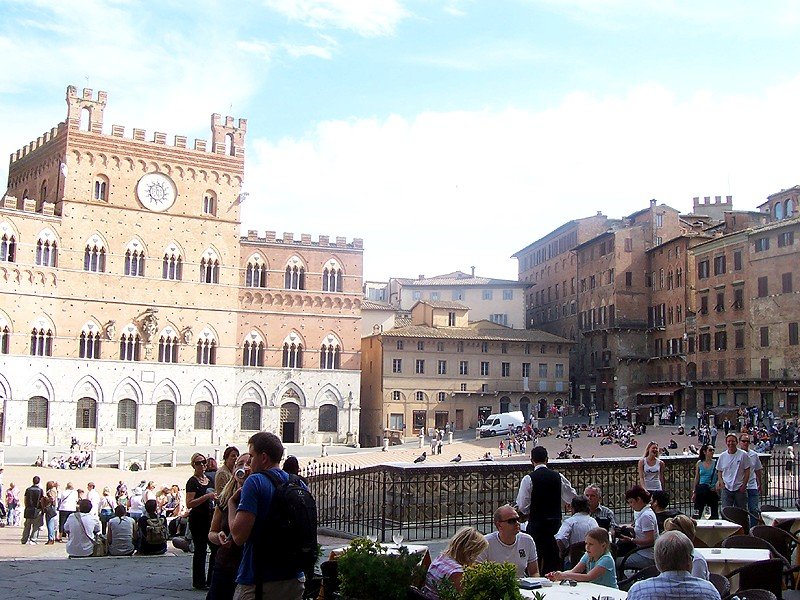
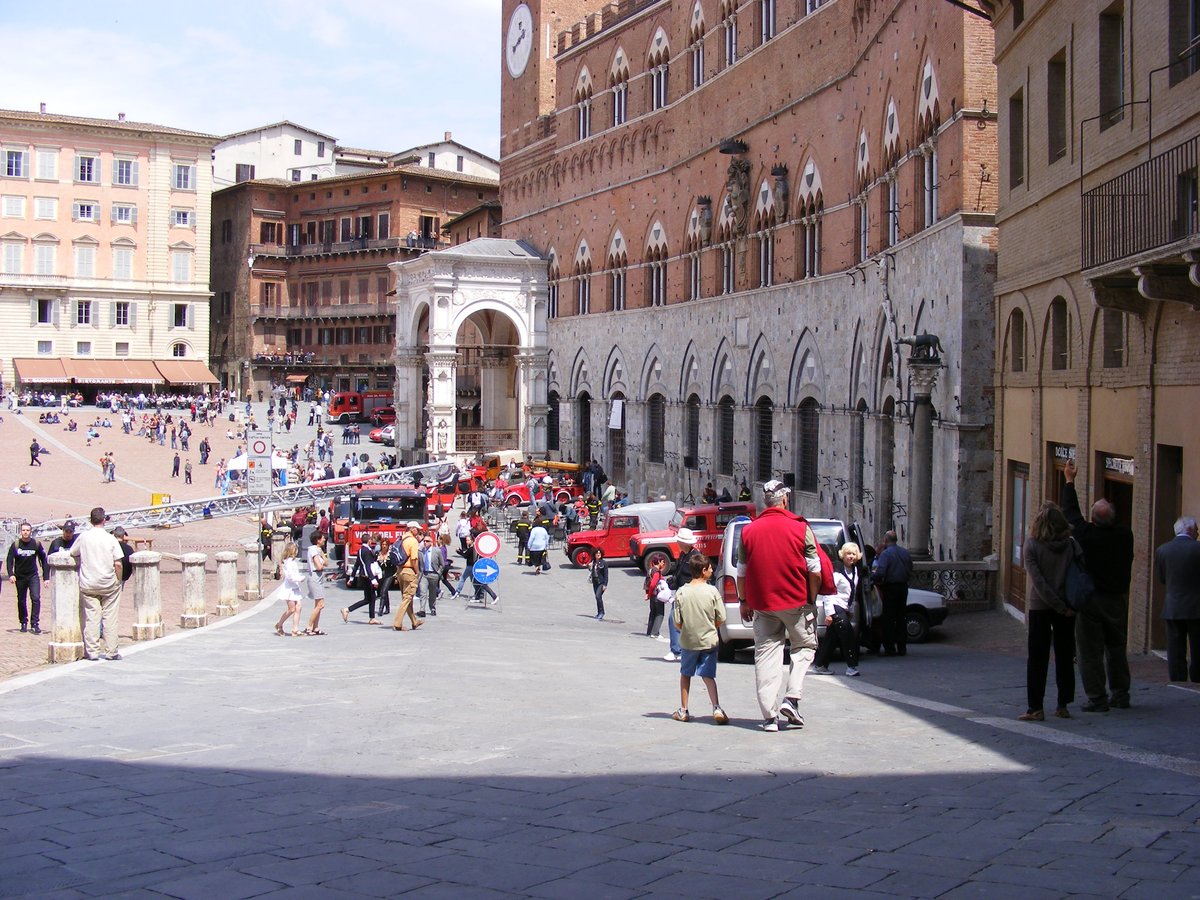
- Shops & Cafés: Numerous options can be found just inside the walls, especially near Porta Camollia and Piazza del Campo.
Getting There and Inside Navigation
Arrival and Parking
- By Car: Vehicles are not permitted within the historic center. Park outside the walls at designated lots—Santa Caterina (north), Il Campo (east), San Francesco (west), Porta Tufi (south). Shuttle buses and escalators connect parking lots to city gates (discovertuscany.com).
- By Public Transport: Siena is reachable by train and bus from Florence, Pisa, and Rome. The train station is outside the walls; local buses or a 20-minute uphill walk lead to the city center.
Inside the Walls
- The historic center is pedestrian-only, with clear signage at gates and intersections.
- Maps are available at tourist offices near Porta Camollia and Piazza del Campo.
- Look for markers of the 17 contrade (neighborhoods), each with unique emblems (breathingtravel.com).
Best Times to Visit
- Spring (April–May) & Autumn (September–October): Mild weather, vibrant landscapes, fewer crowds.
- Summer (June–August): Hot and busy, especially during the Palio (July 2 & August 16). Book accommodations and parking early.
- Winter (December–February): Quiet, atmospheric, occasional snow; some sites may have limited hours.
Notable Wall-Related Attractions
Fortezza Medicea (Medici Fortress)
- A massive 16th-century bastion northwest of the center, now hosting public gardens, panoramic views, wine tastings, and cultural events. Open daily; free entry (thethinkingtraveller.com).
Orto de’ Pecci
- A peaceful medieval garden southeast of Piazza del Campo, offering organic produce, picnic spots, and views of the ramparts.
Via Francigena
- The historic pilgrimage route to Rome passes through Porta Camollia. Pilgrims can have their passports stamped at Siena Cathedral (kalitravel.net).
Local Etiquette and Regulations
- Climbing or sitting on ancient ramparts is discouraged except in designated areas like fortress gardens.
- Photography is allowed; drones require special permission.
- During festivals such as the Palio, some gates or wall sections may be temporarily restricted for safety.
Suggested Walking Routes
- Short Circuit: Porta Camollia → Piazza del Campo → Via di Città → Medici Fortress gardens (2–3 km).
- Full Circuit: Enthusiasts can follow the 7 km perimeter, passing all major gates and scenic overlooks (kalitravel.net).
Frequently Asked Questions (FAQ)
Q: Are tickets required to access the Walls of Siena?
A: No, pedestrians can access the walls and gates freely. Some specific sites (e.g., fortress gardens, exhibitions, guided tours) may require tickets.
Q: What are the visiting hours?
A: The walls and gates are open 24/7. Sites like the Medici Fortress are open from early morning to sunset.
Q: Are the walls accessible for wheelchairs?
A: Some main gates and perimeter sections are accessible, but many interior streets are steep and uneven.
Q: Where are the best photo spots?
A: Panoramic views from the Medici Fortress, Orto de’ Pecci, and near Porta Camollia.
Q: Are guided tours available?
A: Yes, several operators offer guided walks of the walls and Siena’s defensive history. Booking in advance is recommended.
Q: Can I visit the walls during the Palio?
A: Yes, but some areas may be restricted during the festival for safety.
Preservation and UNESCO Recognition
Siena’s walls are central to the city’s UNESCO World Heritage designation due to their outstanding preservation and the integrity of the medieval urban landscape. Restoration projects use traditional materials and methods, ensuring authenticity and continued public enjoyment (whc.unesco.org).
Travel Tips
- Wear comfortable footwear for cobblestone and hilly paths.
- Bring water, sun protection, and a camera.
- Visit early morning or sunset for the best light and fewer crowds.
- Respect posted signs and regulations to help preserve the site.
Summary and Recommendations
The Walls of Siena offer a compelling journey through centuries of history, with their imposing gates, panoramic ramparts, and vibrant community traditions. Most sections are freely accessible, while guided tours and sites like the Medici Fortress provide deeper insights. Combine your wall explorations with visits to iconic sites like Piazza del Campo and the Duomo for a full Siena experience. For current information and maps, consult the Siena Official Tourism Website and explore expert-led tours with groups like Le Mura di Siena. Download the Audiala app for personalized guides and the latest updates.
Embrace Siena’s medieval charm, capture breathtaking views, and experience one of Tuscany’s most enduring treasures (Italia.it; Eupedia; Visit Siena Official).
Listen to the full story in the app
The whole Walls Of Siena,
told well.
Audio guides for 1,100+ cities across 96 countries. History, stories, and local insight — offline ready.

Verified, and shown.
Researched and written by the Audiala editorial team from historical records, architectural archives, and local expertise.
Researched from Wikidata, Wikipedia & official sources · fact-checked · How we make our guides →