Plan and listen to Palazzo Salimbeni with Audiala.
Audio guide in your pocket, itinerary in your browser. Built for the way you actually visit.
Introduction to Palazzo Salimbeni
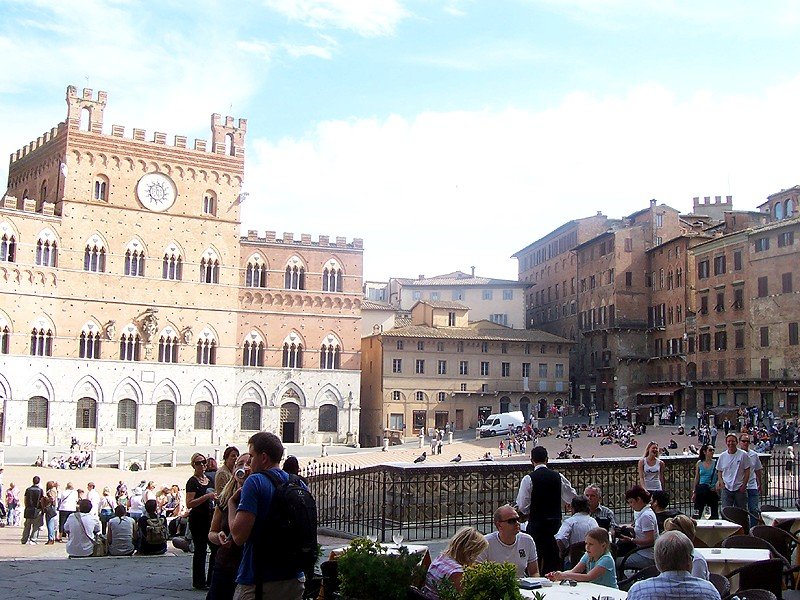
Palazzo Salimbeni rises in the heart of Siena, Italy, as a vivid testament to the city’s medieval origins and its influential role in the birth of modern banking. Serving as the headquarters of Monte dei Paschi di Siena (MPS)—the world’s oldest still-operating bank—since 1472, this palace is a striking symbol of Siena’s financial, cultural, and artistic legacy. Its Gothic and neo-Gothic architecture, central location on Piazza Salimbeni, and connection to centuries of civic life make it a must-see for visitors seeking to immerse themselves in the richness of Italian heritage.
Originally constructed in the 12th century as a fortified residence for the powerful Salimbeni family, the palace was transformed over time, most notably during the 19th-century neo-Gothic restoration by Giuseppe Partini. Today, Piazza Salimbeni, adorned by the statue of renowned economist Sallustio Bandini, is a vibrant urban space that encapsulates Siena’s enduring association with finance and intellectual life. While Palazzo Salimbeni remains an active bank headquarters and is not open for regular public tours, special guided visits and cultural events—especially during the Palio di Siena—offer rare glimpses into its historic interiors and art collections.
This guide provides a detailed overview of Palazzo Salimbeni’s history, architecture, visiting hours, ticket information, accessibility, and nearby attractions, helping you plan a meaningful visit to one of Siena’s most iconic sites. For up-to-date details, consult the official Monte dei Paschi di Siena website and local tourism resources (Holidify, Italyscapes, Palazzo Ravizza).


Medieval Foundations and the Salimbeni Family
Palazzo Salimbeni originated in the 12th century as a fortified residence for the Salimbeni family, one of Siena’s foremost merchant-banking dynasties. Their palace, located strategically on Via Banchi di Sopra, reflected both their prominence and the need for security amid the city’s turbulent medieval politics. By the 14th century, the structure had expanded and adopted the Gothic style, characterized by its robust crenellated façade and narrow, defensive windows (Holidify; Palazzo Ravizza).
Transition to Banking: Monte dei Paschi di Siena
In 1472, the Republic of Siena established the Monte Pio—a charitable pawn agency—at the palace, laying the foundation for what would become Monte dei Paschi di Siena, now the world’s oldest surviving bank (The Collector). Originally designed to combat usury by offering credit to Siena’s citizens, the bank’s name references the “paschi”—state-owned pastures in the Maremma—used as collateral to guarantee deposits, a pioneering financial mechanism introduced in 1624.
The Salimbeni Palace transitioned from a private noble residence to a civic banking institution, mirroring Siena’s broader move from feudal power structures to innovative, communal governance (Holidify).
Architectural Evolution and Restoration
Palazzo Salimbeni’s architecture is a blend of Sienese Gothic origins and 19th-century romantic revival. The most significant restoration occurred under Giuseppe Partini, who added neo-Gothic elements—such as triple mullioned windows and battlements—to harmonize the palace with Siena’s medieval urban landscape (Italyscapes). The palace is flanked by Palazzo Tantucci and Palazzo Spannocchi, creating a harmonious ensemble around Piazza Salimbeni (Palazzo Ravizza).
Subsequent interventions by architects Carlo Ariotti, Vittorio Mariani, and Pierluigi Spadolini further refined the palace’s stylistic unity throughout the 20th century.
Piazza Salimbeni and Sallustio Bandini
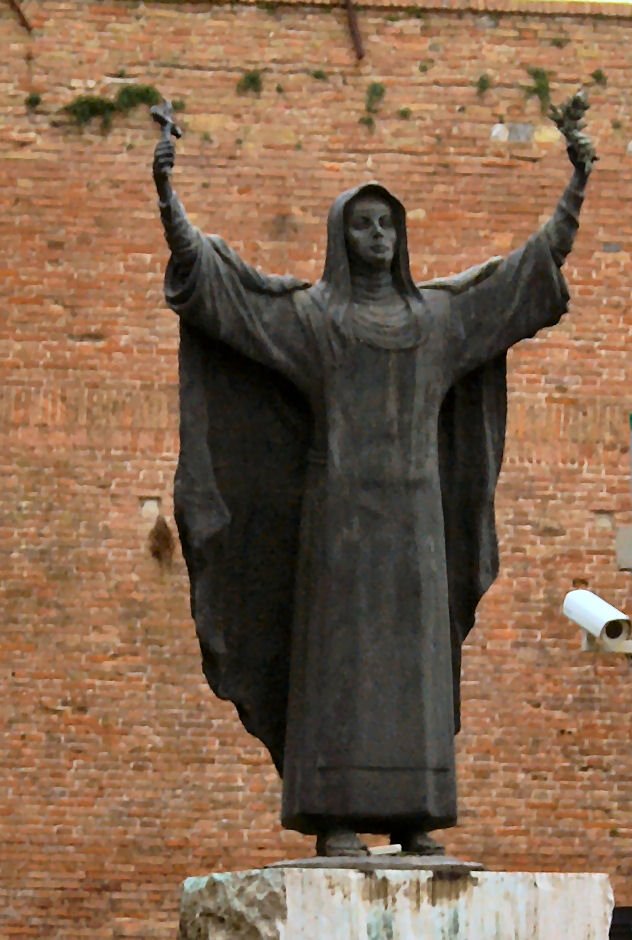
Piazza Salimbeni, redesigned in the 20th century, is defined by the imposing facades of its surrounding palaces. At its center stands a statue of Sallustio Bandini (1882), crafted by Tito Sarrocchi, commemorating Bandini’s role as a pioneering economist and his contributions to Siena’s intellectual heritage (Palazzo Ravizza). The square today is both a historical landmark and a lively meeting place for locals and tourists alike (Evendo).
Visiting Palazzo Salimbeni
Opening Hours and Ticket Information
As the headquarters of Monte dei Paschi di Siena, Palazzo Salimbeni is not regularly open to the public. Access is typically granted during special events, city-wide festivals like the Palio di Siena, or by prior arrangement through guided tours. The Museo di San Donato, located within the palace, occasionally opens for exhibitions and art displays (Provincedesienne).
- Typical Special Opening Hours: 9:00 AM–6:00 PM during events (subject to confirmation)
- General Admission: Free during public events; otherwise, access is restricted
- Guided Tours: Advance booking required; check the official website or contact the Siena tourist office
Accessibility and Visitor Tips
- Wheelchair Accessibility: Due to the palace’s medieval design, accessibility is limited. Some areas are accessible, but many historic sections have stairs and uneven floors. Contact the venue ahead for arrangements.
- Identification: Visitors may need to present ID, especially during guided tours, for security reasons.
- Dress Code: Dress respectfully, particularly if visiting areas used for official or religious purposes.
- Security: Expect security checks; large bags may be restricted.
Guided Tours and Special Events
Guided tours, when offered, provide access to select rooms, including grand reception halls and the Museo di San Donato. Tours are often in Italian, with English options available upon request. Special events may include temporary exhibitions, conferences, or cultural programs (Provincedesienne).
Architectural and Artistic Highlights
Gothic and Neo-Gothic Facade
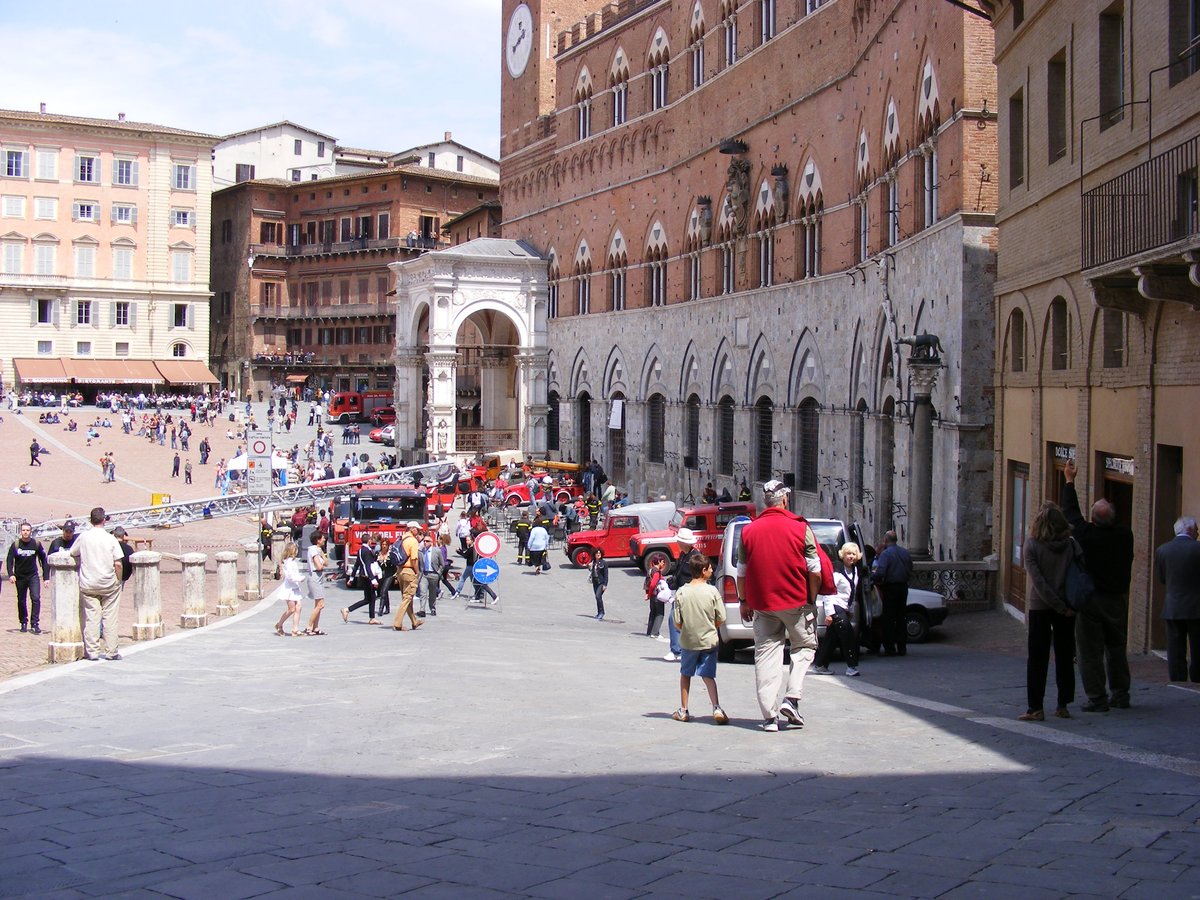
The palace’s Sienese Gothic facade—reimagined by Giuseppe Partini—features pointed arches, triple mullioned windows, battlements, and Lombard bands. These elements echo the style of Siena’s Palazzo Pubblico and reinforce the building’s fortress-like character (Italyscapes; Itinerary.expert; Wikipedia).
Courtyard and Interior Layout
Entering through the main portal, visitors encounter a tranquil courtyard with decorated columns and arches, a hallmark of Italian palatial architecture. The palace is organized around this central space, with rooms radiating outward. Its rear facade, constructed in terracotta and flanked by two medieval towers, reveals the site’s layered history (Italyscapes).
Artistic Collections and Hidden Features
Palazzo Salimbeni houses an extensive collection of Sienese art, assembled by Monte dei Paschi di Siena over centuries. Works by Pietro Lorenzetti, Sassetta, Jacopo della Quercia, and others are displayed in richly decorated rooms with period furnishings and frescoes (Italyscapes; Palazzo Ravizza). Hidden beneath the palace are ancient tunnels, remnants of its medieval defensive function (Guidetoeurope).
Nearby Attractions and Suggested Itineraries
When visiting Palazzo Salimbeni, consider exploring these nearby historical sites:
- Piazza del Campo: Siena’s famed shell-shaped main square, home to the Palio horse race
- Siena Cathedral (Duomo): A Gothic masterpiece with intricate marble inlays and art
- Palazzo Pubblico: City hall with the Torre del Mangia and Civic Museum
- Pinacoteca Nazionale: Siena’s principal art gallery
A half-day walking tour can easily combine these highlights, allowing you to experience Siena’s medieval and Renaissance heritage.
Practical Travel Information
- Location: Piazza Salimbeni, 1, Siena, Italy
- Getting There: Siena’s historic center is pedestrianized (ZTL zone); park outside the city walls and walk 10–15 minutes to Piazza Salimbeni (Triphobo).
- Transport: Siena train station is 2 km from the center; local buses and taxis are available.
- Best Time to Visit: Early morning (around 9:00 AM) for fewer crowds and optimal lighting.
- Photographic Tips: The facade and Piazza Salimbeni offer superb photo opportunities, especially in morning or late afternoon light.
Frequently Asked Questions (FAQ)
Q: Is Palazzo Salimbeni open to the public?
A: Regular access is restricted; the palace opens during special events or by guided tour appointment.
Q: How can I book a guided tour?
A: Reserve in advance through the official Monte dei Paschi di Siena website or the Siena tourist office.
Q: Are there photography restrictions?
A: Photography is generally restricted inside; always request permission before taking photos.
Q: Is the palace accessible for those with mobility challenges?
A: Accessibility is partial; contact the venue prior to your visit to discuss your needs.
Q: What are the best nearby attractions?
A: Siena Cathedral, Piazza del Campo, Palazzo Pubblico, and the Pinacoteca Nazionale are all within walking distance.
Listen to the full story in the app
The whole Palazzo Salimbeni,
told well.
Audio guides for 1,100+ cities across 96 countries. History, stories, and local insight — offline ready.
Verified, and shown.
Researched and written by the Audiala editorial team from historical records, architectural archives, and local expertise.
Researched from Wikidata, Wikipedia & official sources · fact-checked · How we make our guides →